The Ultimate Guide to Smarter Hiring Decision Making 2026
Master hiring decision strategies for 2026 with data driven insights, unbiased processes, and tech tools. Make smarter hires and build a stronger team today.
published
In 2026, every hiring decision can shape the future of your business. Competition for top talent is fierce, and the risks of making the wrong hiring decision have never been higher.
This guide is here to help you make smarter, data-driven hiring decisions that drive long-term success. With the right approach, you can avoid costly mistakes and build a high-performing team.
Structured, unbiased, and tech-enabled hiring processes are now essential. In the following sections, you'll learn how to define your needs, leverage technology, reduce bias, collaborate effectively, and stay ahead of future trends.
Ready to transform your hiring decision process? Discover actionable strategies and start building your best team yet.
Understanding the Modern Hiring Landscape in 2026
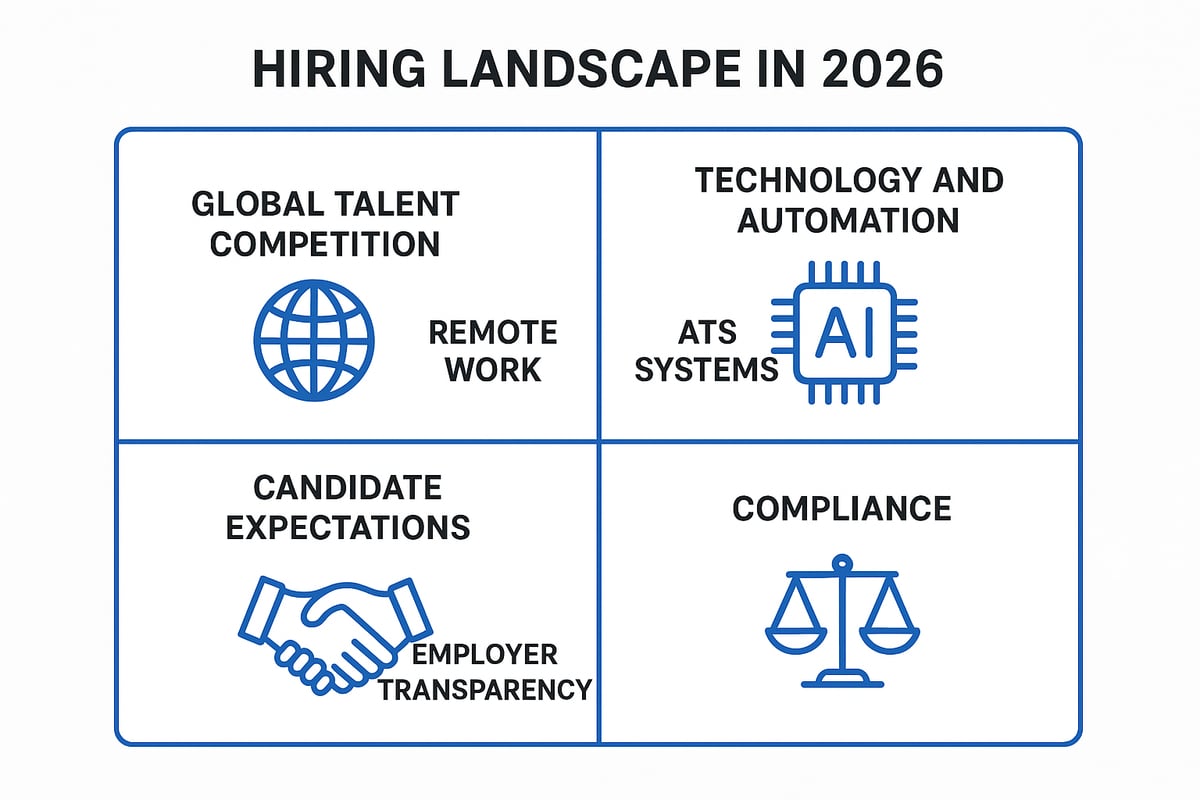
The hiring landscape in 2026 is a dynamic, complex environment. Rapid workplace changes, shifting candidate expectations, and advanced technology are all reshaping how companies approach the hiring decision. To succeed, businesses must understand these evolving factors and adapt their strategies accordingly.
The Evolving Job Market and Talent Competition
In 2026, the job market has become more global and competitive than ever. Remote and hybrid work models allow employers to access talent worldwide, but this also means increased competition for top candidates. Specialized and high-ticket roles, especially in digital, sales, and tech sectors, are in particularly high demand.
For example, Workable reported a surge in hiring decision tips, with 27,685 views in 2023. This reflects the urgent need for smarter hiring strategies to secure skilled professionals amid fierce competition.
Impact of Technology and Automation
Technology now plays a central role in every hiring decision. Automation streamlines screening and candidate matching, helping companies manage large volumes of applicants efficiently. Advanced applicant tracking systems and analytics tools enable structured interviews and objective assessments, such as interview scorecards.
Recent insights highlight how AI's Role in 2026 Hiring Trends is set to revolutionize recruitment by making the process more transparent and fair. However, human oversight remains essential to ensure balanced outcomes.
Candidate Expectations and Employer Branding
Candidates in 2026 expect transparency and a positive experience throughout the hiring decision process. Clear communication and timely feedback are now key differentiators for employers. Workable data from 2023 shows job quits rising and engagement dropping, underlining the importance of strong employer branding and candidate care.
Employers must foster trust by providing open dialogue and meaningful updates, which can influence a candidate’s decision to join or recommend the company.
Regulatory and Ethical Considerations
Regulatory compliance is a critical aspect of every hiring decision. Businesses must follow anti-bias and fair hiring laws, ensuring equal opportunity for all applicants. With the increased use of digital tools, safeguarding candidate data and upholding ethical standards has become even more important.
Companies need to regularly review their processes to address privacy concerns and demonstrate responsible use of technology in recruitment.
Key Insights
Today's hiring decision landscape is more intricate, competitive, and tech-driven than ever before. Organizations that adapt to these changes—by embracing structured processes, leveraging technology, and prioritizing fairness—will be best positioned for long-term success.
Step 1: Clearly Define Role Requirements and Success Criteria
Defining role requirements and success criteria is the cornerstone of an effective hiring decision. Without clarity at this stage, teams risk costly mis-hires, wasted resources, and frustration for both hiring teams and candidates.
Conducting a Thorough Job Analysis
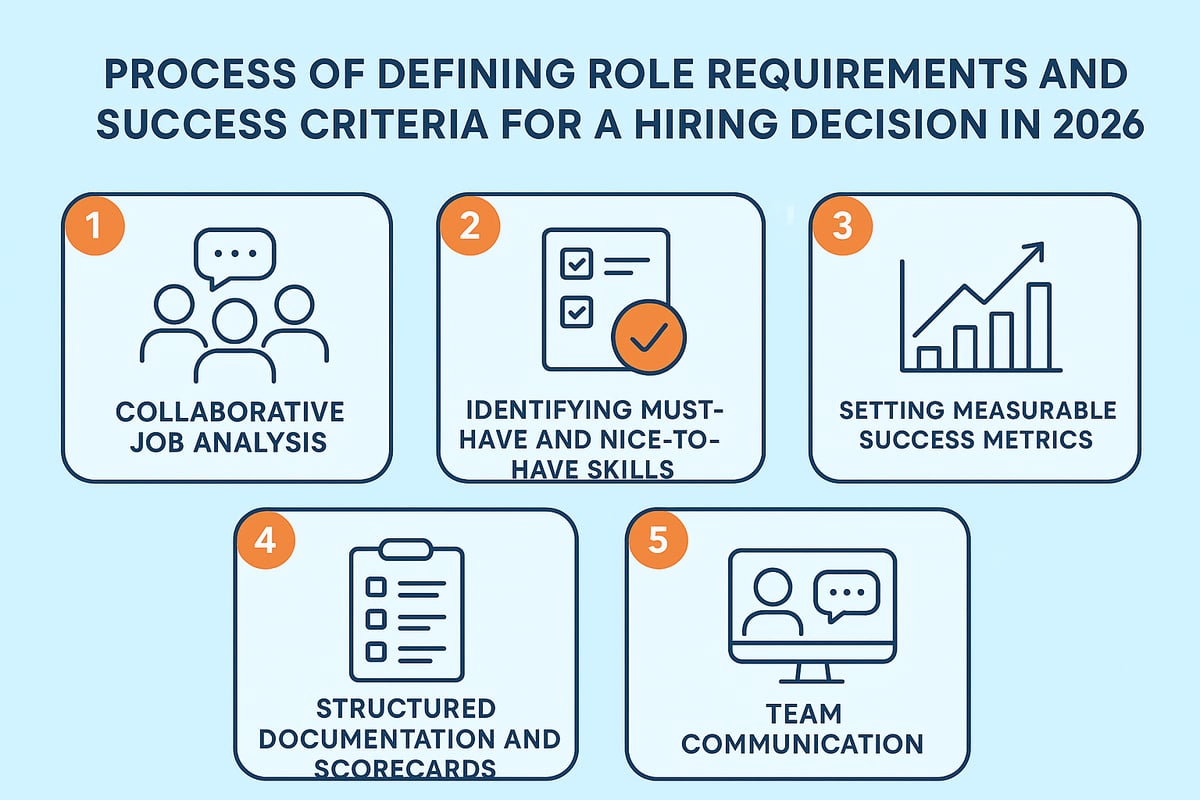
Start by collaborating with team members and key stakeholders to accurately define the role. Gather input from those who will work closely with the new hire. This ensures your hiring decision is based on real business needs, not assumptions.
Utilize proven job description templates to outline core duties, required skills, and desired experiences. Distinguish between must-have qualifications and those that are simply nice to have. Clarifying these points early helps streamline the hiring decision process and reduces confusion later on.
Involve direct supervisors and relevant team members
Review recent job performance data for similar roles
Update job descriptions to reflect current business needs
Setting Realistic Expectations
Avoid the common pitfall of searching for the "perfect" candidate. Market realities often require trade-offs between ideal profiles and available talent, especially in specialized fields.
Balance your expectations by consulting with department experts for roles outside your core knowledge. This approach prevents over-inflated requirements that can delay or derail a hiring decision.
Ask yourself:
Which skills are critical for immediate success?
What can be learned on the job?
Are expectations aligned with current market trends?
Setting realistic expectations makes your hiring decision more efficient and targeted.
Establishing Measurable Success Metrics
Define clear performance indicators for the role before launching the search. Align these metrics with your business goals to ensure every hiring decision supports broader objectives.
Consider using a table like the one below to clarify what success looks like:
Role | Key Metric | Target Value |
|---|---|---|
Sales Lead | Monthly Revenue | $X per month |
Project Mgr. | Project Delivery | On-time, on-budget |
Developer | Code Quality | <2% error rate |
For more on how to assess and select candidates who meet these criteria, see Evaluating for the right fit.
Having measurable metrics ensures your hiring decision is objective and data-driven.
Documenting and Communicating Requirements
Use structured documentation and interview scorecards to maintain consistency. Share these requirements transparently with everyone involved in the hiring decision.
Scorecards help interviewers rate candidates against the same criteria, reducing subjectivity. Documenting requirements also ensures compliance and allows for easier post-hire evaluation.
Best practices:
Use digital platforms to share candidate profiles and criteria
Hold kickoff meetings to align all participants
Update documentation as the search progresses
This transparent approach improves the accuracy and fairness of every hiring decision.
Key Arguments and Insights
Clear role definitions minimize hiring mistakes and reduce bias in every hiring decision. Bouncing ideal profiles off colleagues is a practical way to avoid tunnel vision.
Research from Workable (2023) highlights that structured interviews are among the strongest predictors of job performance. By investing time upfront to define success, teams make smarter and more defensible hiring decisions.
Ultimately, clarity at this stage sets the foundation for a successful, long-term hire.
Step 2: Implement Structured and Objective Hiring Processes
In today's rapidly evolving job market, making a confident hiring decision requires more than intuition or tradition. Structured and objective processes help organizations navigate talent competition, reduce risk, and build high-performing teams. By standardizing each step, businesses can ensure every hiring decision is grounded in fairness, data, and clear criteria.
Designing Structured Interviews and Assessments
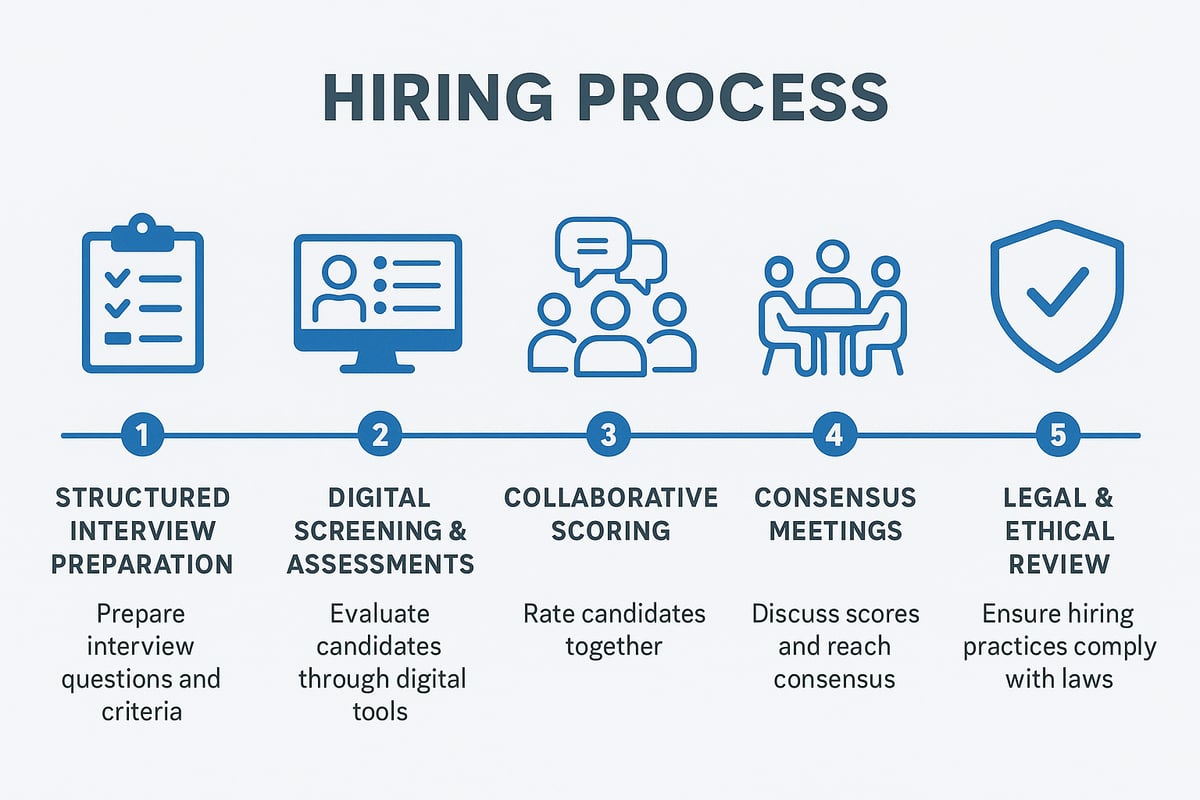
Structured interviews are the backbone of objective hiring. By preparing standardized questions aligned with the role's requirements, interviewers can evaluate candidates consistently. Using interview scorecards, teams assign grades to responses, removing much of the guesswork from the hiring decision.
For example, a sales manager role might use scenario-based questions to gauge negotiation skills or resilience. Scorecards help document impressions and support fair comparisons. This approach also provides a clear record for future reference, ensuring the hiring decision is both defensible and transparent.
Prepare a core set of questions for all candidates
Use rating scales for each competency
Document answers and grades in real time
Structured assessments, such as job simulations or skills tests, further strengthen the process. These tools objectively measure abilities crucial for success, allowing businesses to focus on real potential rather than subjective impressions.
Leveraging Technology for Fairness and Efficiency
Modern hiring platforms and applicant tracking systems (ATS) streamline the path to a hiring decision. Digital tools automate resume screening, reducing the risk of overlooking qualified candidates or introducing bias. Skills assessments and job simulations, delivered online, offer a data-driven way to compare applicants.
Platforms can anonymize applications, hiding names and other identifiers, which helps teams evaluate only relevant qualifications. Using collaborative dashboards, hiring teams can track feedback, compare scores, and identify top contenders with ease.
For organizations seeking to refine their process, exploring candidate recruitment best practices can provide valuable guidance on building unbiased and efficient systems. Leveraging technology ensures every hiring decision is made on a level playing field, balancing speed with quality.
Reducing Subjectivity and Bias
Subjectivity can easily creep into any hiring decision, especially when evaluation methods are unstructured. Training interviewers on structured note-taking, consistent scoring, and awareness of unconscious bias is essential. By using clear rubrics and criteria, teams can minimize personal preferences influencing outcomes.
Consensus meetings allow multiple perspectives to be heard, reducing the impact of individual biases. These sessions help align the team on the most important qualifications and ensure the hiring decision reflects a collective, well-rounded viewpoint.
Train all interviewers on structured evaluation
Encourage independent assessments before group discussions
Use blind review techniques when possible
Focusing on objective data helps organizations maintain fairness and integrity in every hiring decision.
Incorporating Multiple Perspectives
Involving cross-functional team members in interviews brings diverse viewpoints to the hiring decision. Each participant can focus on different aspects, such as technical skills, culture fit, or communication style. This approach reduces the risk of groupthink and ensures all facets of the candidate's abilities are considered.
A team-based hiring decision encourages buy-in from future colleagues and leads to stronger onboarding outcomes. Structured feedback sessions, where each interviewer shares independent notes before discussion, support a balanced and thorough evaluation.
Include stakeholders from different departments
Assign roles for each interviewer (skills, culture, etc.)
Hold consensus meetings to finalize the hiring decision
This collaborative approach not only enhances decision quality but also improves the candidate experience.
Ensuring Legal and Ethical Compliance
Every hiring decision must comply with anti-discrimination laws and ethical standards. Structured documentation, including clear reasons for selection or rejection, protects the organization and candidates alike. Adhering to best practices in privacy and fairness builds trust and safeguards reputation.
Hiring teams should regularly review their processes to ensure they meet current legal requirements. Documenting each step of the hiring decision process creates an auditable trail, reducing risk and supporting continuous improvement.
Key areas to monitor include:
Consistent application of selection criteria
Data privacy and secure storage
Transparent communication with candidates
A well-documented, compliant process gives businesses confidence in every hiring decision they make.
Key Arguments and Insights
Implementing structured and objective processes is not just a best practice, it is a necessity for effective hiring decision making. Objective methods minimize unconscious bias and help organizations select the best fit for every role. By leveraging technology, standardizing evaluations, and fostering collaboration, businesses can make hiring decisions that are fair, defensible, and aligned with long-term goals.
Step 3: Combat Unconscious Bias and Promote Inclusive Hiring
Unconscious bias remains one of the most significant obstacles to an effective hiring decision in 2026. Despite technological advances, human judgment is still influenced by subtle preferences and stereotypes. To build a fair and high-performing team, organizations must take deliberate steps to identify and address these biases throughout the hiring decision process.
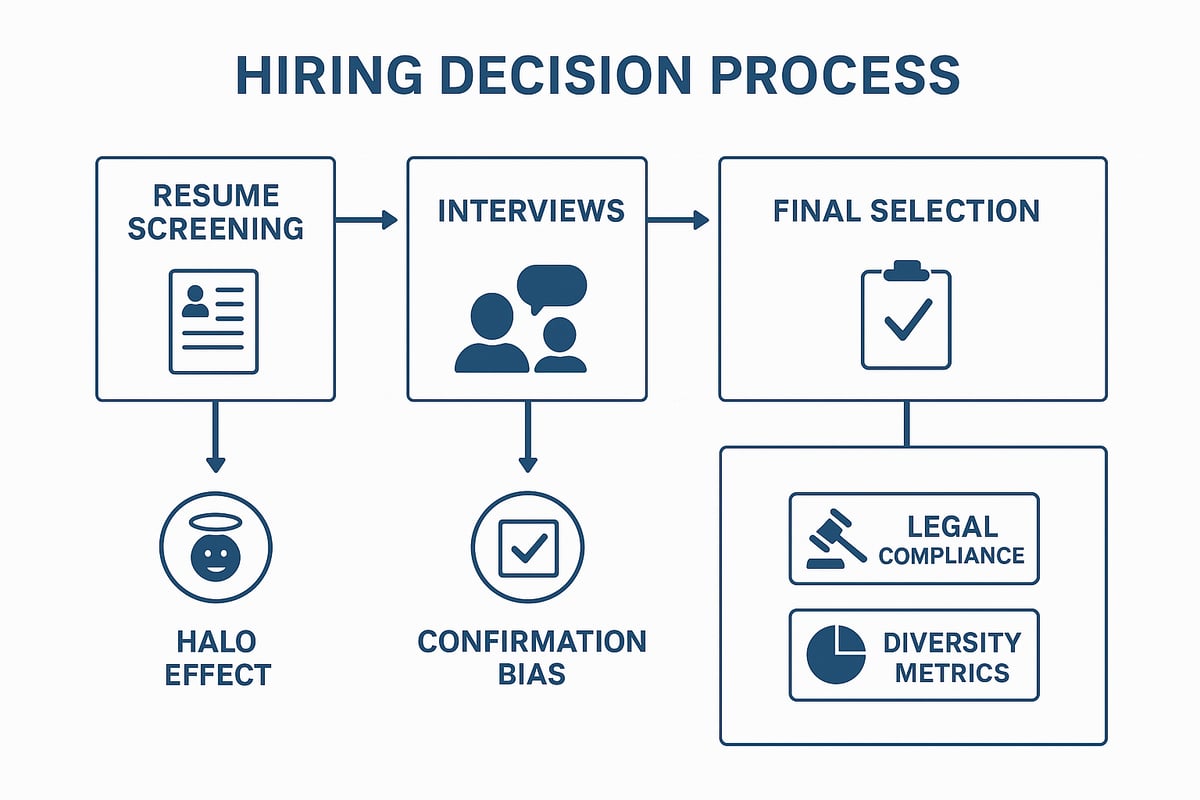
Identifying Common Hiring Biases
Recognizing bias is the first step toward a more objective hiring decision. Some of the most prevalent biases include the halo effect, where one positive trait overshadows others, and confirmation bias, where interviewers seek information that supports their initial impression. Anchor bias, another frequent issue, occurs when the first piece of information disproportionately influences the outcome.
Technology can both help and hinder this process. For example, recent research highlights how automated systems may develop self-preference, favoring their own generated content in hiring, introducing a new layer of bias. For a deeper understanding, see AI Self-Preference in Hiring Systems. Tools like Harvard’s Implicit Association Test can also help teams become aware of their own blind spots and improve the quality of every hiring decision.
Training and Education for Hiring Teams
Ongoing education is crucial to reducing bias in the hiring decision process. All hiring managers and interviewers should participate in regular training on bias awareness and mitigation. These sessions can include workshops, case studies, and self-reflection exercises.
Encouraging accountability is essential. Each team member should evaluate their own decisions and seek feedback from peers. This collective responsibility ensures that bias is consistently addressed, not just during initial training but as an integral part of every hiring decision.
Building Inclusive Hiring Practices
Standardization is key to making each hiring decision more inclusive. Use structured interviews and objective scorecards to evaluate all candidates by the same criteria. Blind hiring techniques, such as removing names or demographic details during early screening, can help focus attention on skills and experience.
List of inclusive practices:
Standardized interview questions
Skills-based assessments
Anonymous resume reviews
By embedding these steps into your hiring decision framework, you create a more level playing field for all applicants.
Legal Implications and Protected Characteristics
A compliant hiring decision must avoid any reference to protected characteristics such as age, gender, ethnicity, or disability. Laws and regulations in 2026 have become more stringent, requiring organizations to document the reasoning behind each hiring decision and to ensure it is based solely on job-related criteria.
Failure to comply can result in legal consequences and damage to employer reputation. Training on fair hiring laws and regular audits of hiring decision documentation help safeguard both the organization and candidates.
Monitoring and Improving Diversity Metrics
Tracking diversity and inclusion KPIs is vital for evaluating the effectiveness of your hiring decision strategies. Metrics might include the proportion of underrepresented groups advancing at each stage or the overall diversity of new hires.
Regularly reviewing this data allows organizations to identify bottlenecks and refine their approach. Adjusting sourcing channels, interview panels, and evaluation criteria based on these insights leads to continuous improvement of the hiring decision process.
Step 4: Leverage Technology and Data for Smarter Hiring Decisions
Modern hiring is evolving rapidly, and technology is at the core of this transformation. To make a hiring decision that stands up to scrutiny, organizations must embrace data-driven tools, automation, and collaborative platforms. Each step, from initial screening to final selection, benefits from smart integration of technology and vigilant attention to data privacy.
Role of Automation and Analytics in 2026
Automation now handles many repetitive tasks in the hiring decision journey. Applicant tracking systems prescreen resumes, flagging top candidates based on skills and experience. Analytics tools sift through past hiring data to uncover patterns linked to high performers. This approach allows hiring teams to focus on strategy, not paperwork.
Using automation also means less risk of human error and bias creeping into the hiring decision. For a deeper dive into the transformative power of automation and analytics in hiring, see AI's Impact on Hiring in 2026.
Integrating Assessments and Predictive Tools
Validated skills and personality assessments are essential for a robust hiring decision. These tools measure technical abilities, cognitive fit, and soft skills, providing data that goes beyond resumes and interviews. Predictive analytics match candidate traits to successful employees, increasing the odds of a strong hire.
Organizations can select from a variety of assessment platforms, each offering unique insights into candidate potential. The result is a more objective, fair, and data-backed hiring decision that aligns with business goals.
Enhancing Collaboration with Digital Platforms
Digital platforms have transformed how teams participate in the hiring decision process. Feedback is now shared instantly through collaborative dashboards, and evaluation scorecards make it easy to compare candidates side by side. These tools keep everyone aligned and minimize misunderstandings.
A collaborative approach ensures multiple perspectives are considered, reducing the chance of overlooking a great candidate. It also allows for transparent communication throughout the hiring decision, which boosts team confidence in the final outcome.
Protecting Candidate Data and Ensuring Privacy
With more data in play, securing candidate information is a top priority. Compliance with regulations like GDPR and CCPA is non-negotiable. Access controls, encryption, and regular audits are standard safeguards to protect sensitive hiring decision data.
Organizations must also clearly communicate privacy policies to candidates. This builds trust and demonstrates a commitment to ethical hiring decision practices in a tech-driven world.
Measuring and Optimizing Hiring Effectiveness
Continuous improvement is the hallmark of a smart hiring decision strategy. By tracking metrics such as time-to-hire, quality-of-hire, and retention rates, companies can pinpoint what works and what needs refinement. Analytics dashboards provide real-time insights for ongoing adjustments.
Regularly reviewing and adjusting the hiring decision process, backed by data, ensures organizations remain agile and competitive in a fast-changing talent landscape.
Step 5: Collaborative and Transparent Decision-Making
Modern organizations recognize that a collaborative, transparent approach to the hiring decision process leads to better results and stronger teams. By engaging the right stakeholders and ensuring open communication, businesses foster trust, alignment, and more accurate candidate evaluations.
Involving Key Stakeholders in the Process
A robust hiring decision process starts with engaging all key stakeholders. This means including hiring managers, direct team members, and recruiters from the outset. Each participant brings unique insights on the role’s requirements, team culture, and success criteria.
Involving a diverse group helps ensure that the hiring decision reflects organizational priorities and reduces the risk of overlooking important perspectives. For example, when recruiting for sales roles, structured vetting steps like those detailed in the Sales hiring vetting process can help standardize evaluations and promote fairness.
By collaborating early and often, teams are better equipped to make informed, balanced choices, minimizing the chance of a misaligned hiring decision.
Facilitating Consensus and Reducing Bottlenecks
Consensus-driven hiring decision practices streamline the process and eliminate delays. Regular meetings and structured feedback sessions allow all voices to be heard, while clear documentation of candidate evaluations keeps the process transparent.
To prevent bottlenecks, establish clear timelines for each hiring decision stage. Use shared scorecards and evaluation templates so feedback is uniform and accessible to all stakeholders.
Documenting the rationale behind each hiring decision supports accountability and compliance, while ensuring future reviews are easier and more objective.
Providing Timely and Constructive Candidate Feedback
Transparent communication is essential at every step of the hiring decision journey. Regardless of outcome, candidates expect timely updates and actionable feedback.
Providing specific, constructive input not only enhances the employer brand but also helps candidates develop professionally. This approach builds goodwill and can turn even rejected applicants into future advocates.
Structured feedback loops, paired with consistent messaging, ensure every hiring decision reflects the company’s values and commitment to fairness.
Avoiding Common Pitfalls in Group Hiring
Group-based hiring decision processes present unique challenges. Pitfalls such as groupthink, dominant personalities, or rushed evaluations can compromise objectivity.
To counter these risks:
Encourage independent assessments before group discussions.
Rotate team members to balance influence.
Set clear ground rules for evaluation and debate.
Promoting transparency and fostering open dialogue ensure that each hiring decision is based on merit, not bias or convenience.
Future Trends and Best Practices in Hiring Decision Making
The future of hiring decision making is shaped by rapid shifts in work models, technology, and candidate expectations. As 2026 approaches, businesses must adopt agile, data-driven best practices to stay competitive. By embracing innovation and focusing on people-centric strategies, organizations can ensure every hiring decision supports long-term success.
Adapting to Remote and Hybrid Workforces
Remote and hybrid workforces are now a standard part of the hiring decision process. Companies must evaluate candidates for digital collaboration, self-motivation, and communication skills in virtual settings. Digital-first interviews and remote onboarding are essential tools for assessing adaptability.
Key strategies include:
Using scenario-based interview questions to gauge remote readiness
Assessing familiarity with collaboration platforms
Prioritizing flexibility and accountability
A strong hiring decision in this context means selecting candidates who can thrive independently and contribute to team goals, no matter their physical location.
Embracing Continuous Learning and Process Improvement
Continuous improvement is vital for effective hiring decision making. Businesses should regularly review and update criteria in response to market changes and evolving job requirements. Feedback loops, such as post-hire performance data and candidate surveys, inform smarter strategies.
Best practices include:
Scheduling regular reviews of hiring criteria
Collecting feedback from both candidates and hiring teams
Analyzing outcomes to identify areas for improvement
A culture of learning ensures each hiring decision is informed by the latest insights, minimizing costly missteps and enhancing retention.
Staying Ahead with Ethical and Inclusive Technology
Technology is transforming every hiring decision, but ethical considerations must lead the way. Before adopting new tools, organizations should evaluate for bias, transparency, and compliance with evolving regulations.
Important steps:
Conducting audits for fairness in automated assessments
Monitoring legal and ethical developments in hiring technology
Training teams on responsible use of digital tools
By prioritizing ethics, companies protect candidate privacy and ensure every hiring decision is both fair and defensible.
Building a Resilient and Agile Hiring Strategy
Business needs change quickly, and a flexible hiring decision approach is critical. Maintaining a strong talent pipeline prepares organizations to scale or pivot as required. Strategies like workforce planning and proactive sourcing are essential.
For example, Recruiting top sales talent highlights methods for attracting high-performing candidates, which supports a resilient hiring decision process. Keeping a pool of pre-vetted talent enables rapid response to market shifts and reduces time-to-hire.
Future-focused organizations make every hiring decision with agility, ensuring lasting team strength.
As we look ahead to the ever-evolving hiring landscape of 2026, it’s clear that making smarter, data-driven decisions is critical for long-term business growth—especially when you’re building high-performing sales teams for high-ticket offers. By embracing structured processes, reducing bias, and leveraging the latest technology, you can attract and retain top-tier appointment setters and closers without the typical hiring headaches. If you’re ready to take your recruitment strategy to the next level and discover how pre-vetted sales talent can drive your success, Learn more.