Guide to Medical Device Sales Recruiters: 2026 Insights
Discover 2026 strategies for medical device sales recruiters with expert insights, industry trends, and actionable steps to secure top sales talent for your team.
published
The race to attract and retain top sales professionals in the medical device industry has never been more intense. As innovation and competition accelerate, both employers and candidates face new challenges and opportunities.
This guide to medical device sales recruiters in 2026 delivers the latest data and expert insights to help you navigate this evolving landscape. You’ll discover industry trends, the recruiter’s role, step-by-step hiring strategies, and how to identify the right partner for your needs.
Use these insights to sharpen your hiring approach or advance your career in medical device sales.
The Evolving Landscape of Medical Device Sales Recruitment
The landscape for medical device sales recruiters is changing rapidly as we approach 2026. Unprecedented industry growth is fueling competition for top sales talent. According to Medical Device Market Growth Projections, the global medical device market is expected to see robust expansion through 2035, with North America leading the way. This surge means employers and candidates alike must adapt recruitment strategies to stay competitive.
Emerging technologies are reshaping the types of expertise medical device sales recruiters seek. Digital health, robotics, and AI-driven diagnostics require sales professionals with deep technical knowledge and agility. At the same time, regulatory changes are adding layers of complexity, making compliance knowledge a must-have for candidates in this sector.
Digital transformation is also influencing how medical device sales recruiters operate. Remote selling has become standard, and recruiters now prioritize candidates who thrive in virtual environments. Companies are moving away from passive job postings toward proactive, network-driven talent acquisition. This means recruiters are actively sourcing and engaging with both active and passive candidates to fill roles faster and with greater precision.
The competition for talent is now truly global. Medical device sales recruiters are tapping into international talent pools, offering companies access to highly specialized skill sets. Leading recruitment firms leverage expansive databases—sometimes exceeding five million candidates—to match employers with niche sales professionals across borders.
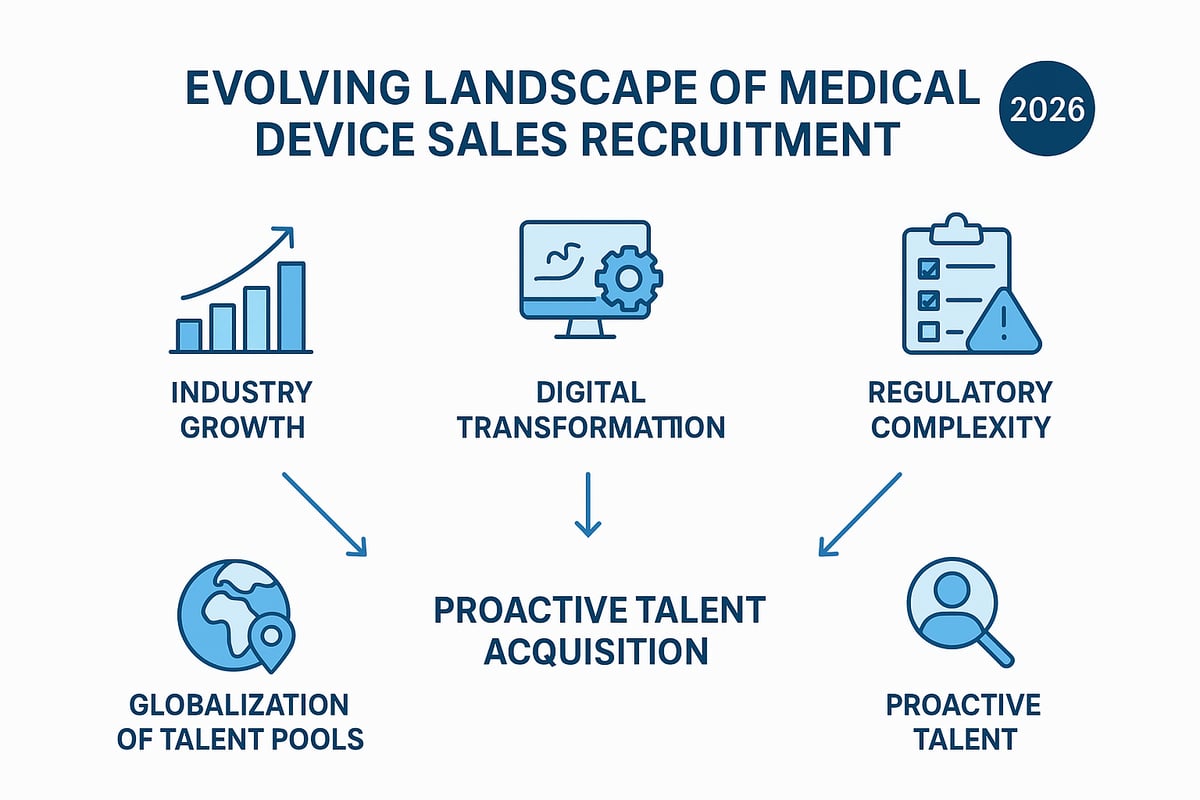
Here’s a summary of key trends shaping this evolving landscape:
Trend | Impact on Recruitment |
|---|---|
Industry Growth | Higher demand for skilled sales talent |
Digital Transformation | Need for digital-savvy, remote-ready reps |
Regulatory Complexity | Increased focus on compliance expertise |
Globalization of Talent Pools | Broader search for specialized candidates |
Proactive Talent Acquisition | Shift from passive to active sourcing |
As a result, the number of medical device sales roles is expected to increase significantly by 2026. Industry estimates suggest thousands of new positions will open, particularly in high-growth areas like digital health and minimally invasive technology.
Traditional recruiting methods simply cannot keep pace with these changes. Medical device sales recruiters must now use data-driven strategies, extensive networks, and deep industry insight to deliver results. Employers relying solely on outdated approaches risk missing out on top performers who can drive business growth.
The evolving landscape demands a new level of agility and expertise from both recruiters and employers. By embracing proactive, network-focused recruitment and adapting to digital and regulatory shifts, companies can secure the sales talent needed for future success.
What Medical Device Sales Recruiters Do—and Why They Matter
Medical device sales recruiters play a unique and critical role in connecting top-tier sales professionals with companies navigating a complex, ever-evolving industry. Unlike generalist recruiters, these specialists bring a deep understanding of the medical device sector, including its demanding regulatory environment, product innovation cycles, and sales strategies.
What sets medical device sales recruiters apart is their industry expertise. They know the specific challenges faced by sales teams, from product launches to navigating compliance and shifting market demands. This expertise allows them to identify talent who not only excel in sales but also understand the nuances of medical devices, reimbursement models, and customer relationships.
Recruiters in this space rely on advanced methodologies to stay ahead. They leverage industry data, employment trend forecasting, and competitor insights to anticipate hiring needs. For example, firms like Korn Ferry use these tools to match candidates with the right company culture and sales structure. This proactive approach is a step beyond traditional recruiting, which often depends only on active job seekers or simple job postings.
One of the greatest strengths of medical device sales recruiters is their access to passive candidates. Many top-performing sales professionals are not actively looking for new roles. Through broad networks, referrals, and ongoing relationships, recruiters tap into this hidden talent pool, presenting opportunities to candidates who might otherwise remain out of reach for employers.
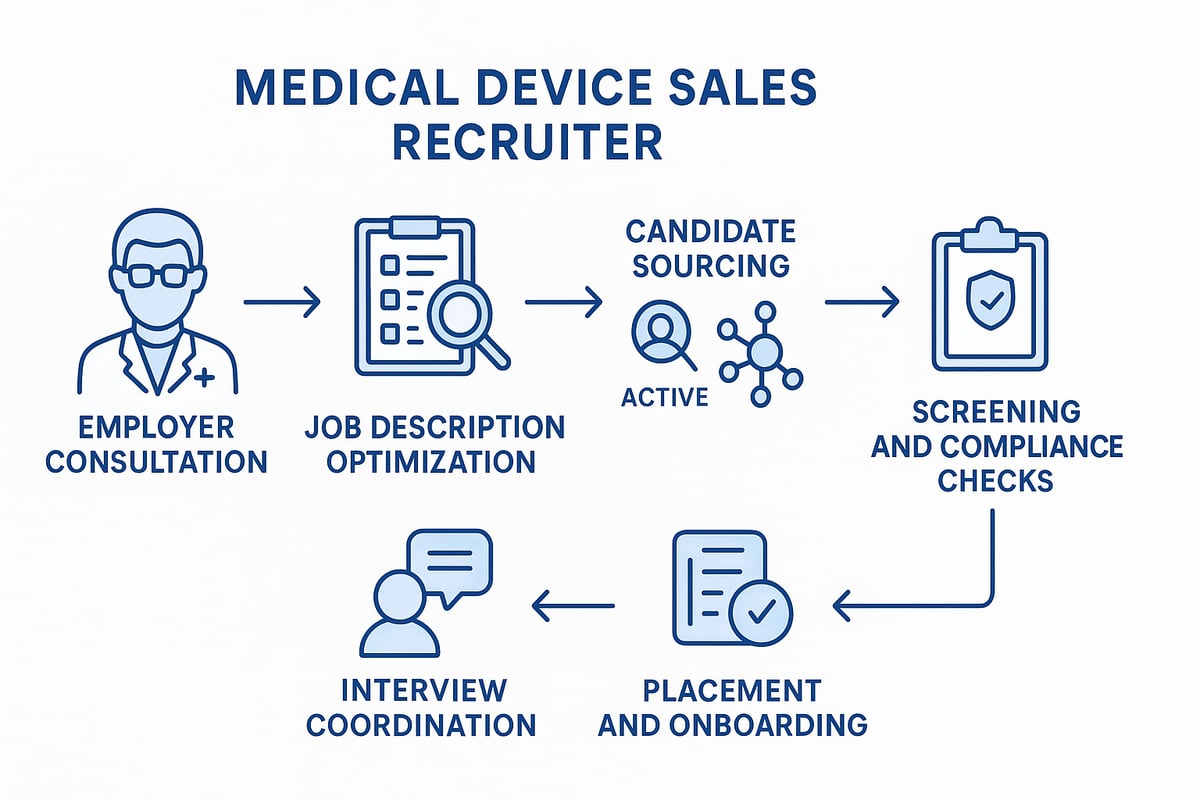
A customized search process is another hallmark of medical device sales recruiters. They work closely with employers to craft optimized job descriptions, ensuring alignment with the company’s unique selling proposition, values, and strategic goals. For instance, Insight Global’s process involves curating targeted candidate lists tailored to specific business needs, allowing for rapid delivery—often within 24 to 48 hours.
Specialized recruiters also add value by conducting thorough vetting and screening. This includes evaluating sales acumen, product expertise, compliance readiness, and cultural fit. The result is higher-quality placements and a reduced risk of costly hiring mistakes. You can learn more about the differences between generalist and specialized recruiters in this Medical sales headhunters guide.
The return on investment for using medical device sales recruiters is significant. While in-house hiring processes can be time-consuming and may miss top talent, specialized recruiters streamline every step, from candidate sourcing to onboarding. The speed of curated placements, as demonstrated by Insight Global’s ability to deliver lists within 24-48 hours, means employers can fill critical roles faster and with greater confidence.
Beyond filling immediate vacancies, medical device sales recruiters offer a consultative partnership. They provide ongoing talent strategy advice, help anticipate future needs, and contribute to building a resilient, high-performing sales force. This long-term approach ensures that both employers and candidates are positioned for sustained success in a competitive market.
Ultimately, medical device sales recruiters matter because they bridge the gap between innovative companies and the skilled sales professionals who drive growth. Their industry insight, network reach, and tailored processes make them indispensable partners in today’s medical device landscape.
Step-by-Step Guide: How to Hire Top Medical Device Sales Talent in 2026
Hiring the best sales professionals in the medical device sector has never been more complex or competitive. As the market evolves, organizations must rethink their approach and partner with medical device sales recruiters who understand the nuances of this field. Here is a comprehensive, actionable guide for employers looking to secure top-tier sales talent in 2026.
1. Define Your Ideal Candidate Profile
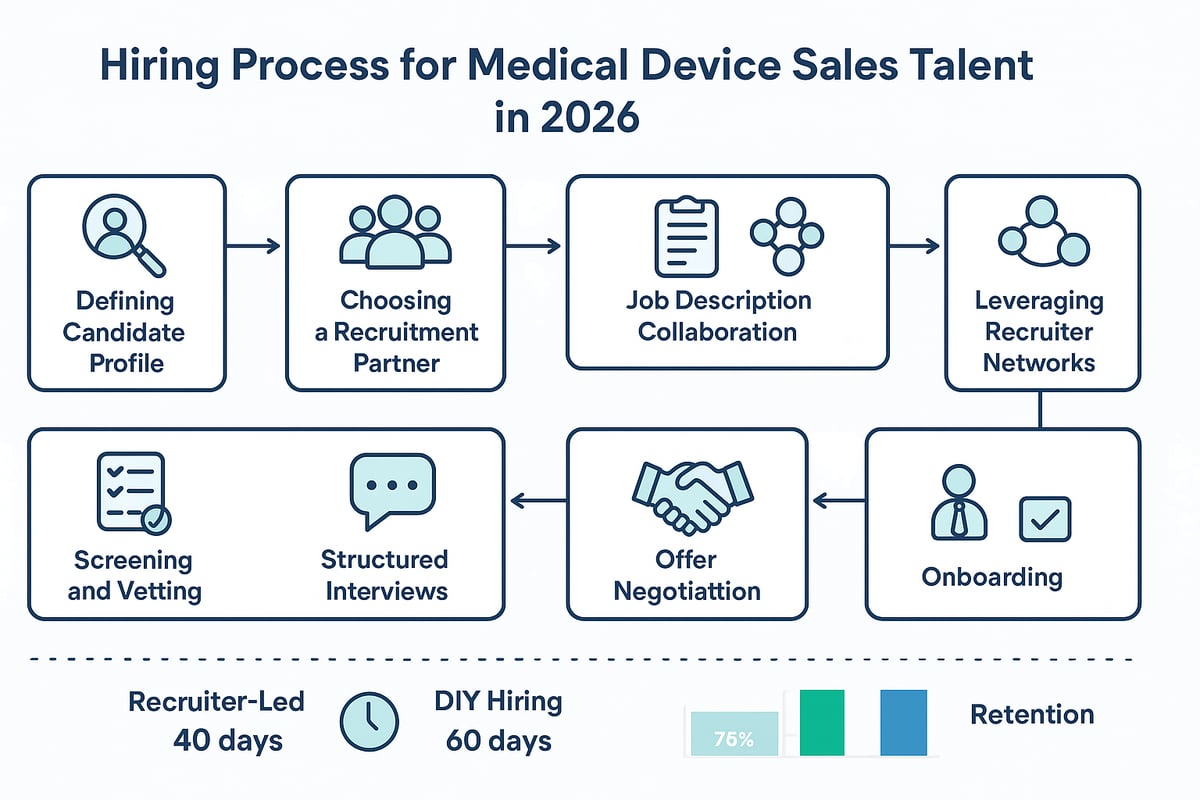
Begin by clearly outlining the skills, experience, and attributes your organization needs. Consider technical expertise, sales performance history, knowledge of compliance requirements, and cultural fit. Leading medical device sales recruiters recommend a thorough needs assessment, similar to Korn Ferry’s approach, where understanding your unique business challenges is the foundation for a successful search.
List the must-have qualifications and identify any desirable traits, such as adaptability to digital sales tools or prior experience in similar medical device segments. This clarity ensures alignment throughout the recruitment process.
2. Choose the Right Recruitment Partner
Selecting the right recruitment partner is crucial. Evaluate medical device sales recruiters based on their industry specialization, track record, network size, and consultative approach. Ask about their sourcing methods, average placement times, and guarantees.
Red flags include a lack of understanding of medical device sales, limited talent pools, or unclear fee structures. Look for recruiters who demonstrate transparency and have a proven process for accessing both active and passive candidates.
3. Collaborate on Job Description and Employer Branding
Work closely with your chosen recruiter to create a compelling, accurate job description. Highlight not only the responsibilities and qualifications but also your company culture, growth opportunities, and commitment to compliance.
Employer branding plays a growing role in attracting top talent. Medical device sales recruiters can advise on best practices to ensure your organization stands out in a crowded marketplace.
4. Leverage Recruiter Networks for Active and Passive Candidates
Top recruiters maintain extensive databases and networks, allowing access to high-performing representatives who may not be actively job hunting. This proactive approach vastly improves the quality of your talent pool compared to traditional job postings.
By leveraging the reach and expertise of medical device sales recruiters, employers gain a competitive edge in sourcing candidates with specialized skill sets and a proven record of success.
5. Screen and Assess for Sales Acumen, Industry Knowledge, and Adaptability
A rigorous screening and vetting process is essential to identify candidates who meet your specific requirements. Recruiters use multi-stage assessments, reference checks, and live scenario evaluations to gauge sales ability, industry expertise, and adaptability.
For a detailed look at effective candidate assessment, review the Recruiting and vetting process, which outlines best practices for evaluating compliance awareness and cultural alignment. This step is critical in industries where regulatory standards and ethical selling are paramount.
6. Structured Interviews and Feedback Loops
Implement structured interviews, using consistent questions and scoring rubrics to ensure fairness and objectivity. Medical device sales recruiters facilitate these sessions, offering guidance to both employers and candidates.
Feedback loops after each interview round help refine the search, clarify expectations, and maintain candidate engagement. This collaborative process reduces the risk of misalignment or missed opportunities.
7. Offer Negotiation and Onboarding Support
Once the ideal candidate is identified, recruiters assist with offer negotiation, ensuring competitive compensation and a positive candidate experience. Their market insight helps bridge gaps and prevent delays.
Support does not end at offer acceptance. Medical device sales recruiters often provide onboarding resources and guidance to promote retention and early success, setting both the employee and employer up for long-term achievement.
Comparing Recruiter-Led and DIY Hiring
Metric | Recruiter-Led Hiring | DIY Hiring |
|---|---|---|
Average Time-to-Hire | 4-6 weeks | 8-12 weeks |
First-Year Retention | 85-90% | 60-70% |
Access to Passive Talent | Extensive | Limited |
Compliance Screening | Comprehensive | Variable |
Data compiled from industry sources and recruiter benchmarks (see Medical Device Sales Hiring Insights 2025-26) demonstrates the efficiency and effectiveness of a streamlined, recruiter-led process.
Why Expert-Driven Processes Matter
The medical device sales landscape is too complex to rely on outdated, reactive strategies. By following these steps and partnering with specialized medical device sales recruiters, employers reduce risk, accelerate hiring, and build high-performing sales teams equipped for the challenges of 2026.
How to Select the Right Medical Device Sales Recruiter for Your Needs
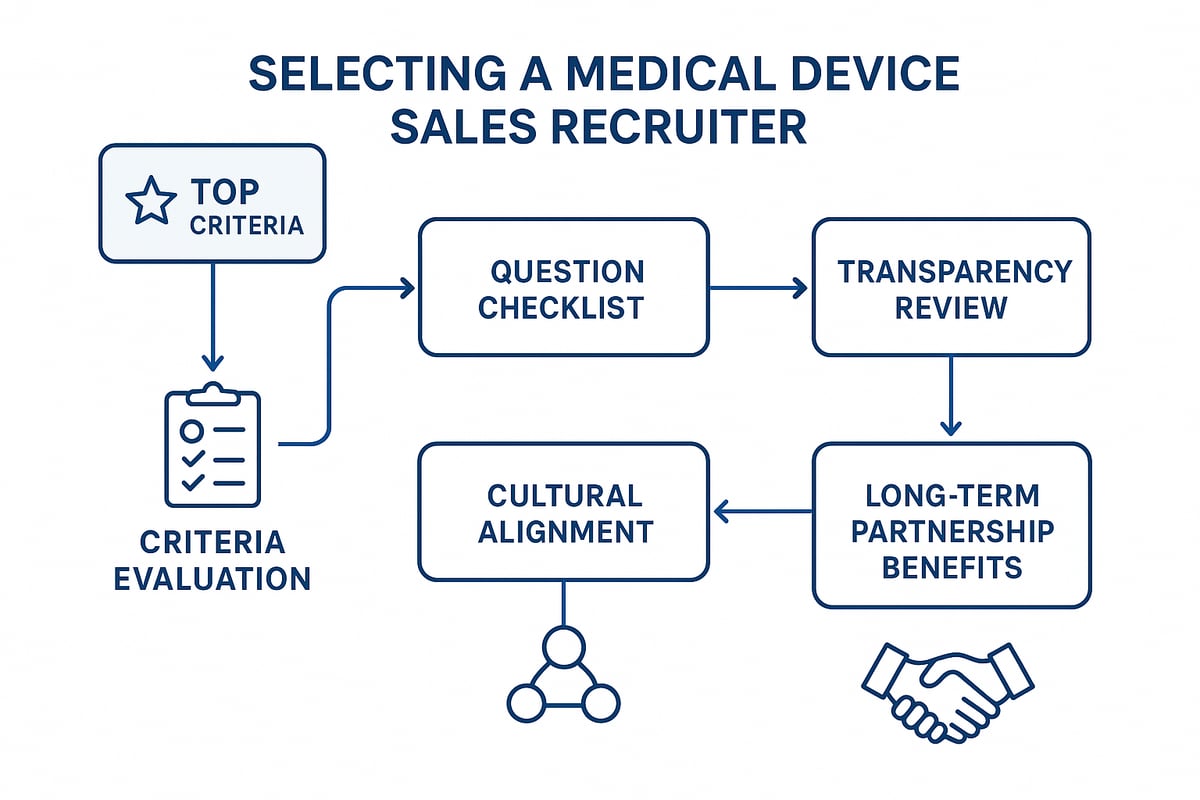
Choosing among medical device sales recruiters is a pivotal decision that can shape your company’s growth and sales force quality for years to come. The right recruiter acts as a partner, not just a service provider, ensuring you access the talent that drives competitive advantage. Let’s break down a proven approach for making this critical selection.
Key Criteria for Evaluating Recruiters
Start by identifying what sets exceptional medical device sales recruiters apart. Prioritize industry specialization, demonstrated track record, and the size of their candidate network. A strong vetting process is essential, ensuring only candidates who meet your compliance and cultural standards are presented.
Look for recruiters with a consultative approach, who invest time to understand your business model and sales structure. Agencies like Insight Global, which places over 50,000 consultants yearly, exemplify the scale and depth needed in fast-moving markets. For a broader view of leading agencies, explore this list of top sales recruiting firms.
Essential Questions to Ask
Before engaging medical device sales recruiters, prepare a set of targeted questions. Ask about their typical candidate sourcing methods—do they rely on active outreach, database mining, or passive candidate networks? Inquire about average placement times and what guarantees or replacement policies are in place.
Further, request specific examples of successful placements in your segment. Clarify how they handle references and compliance vetting. This due diligence ensures you align with recruiters who understand the nuances of medical device sales.
Assessing Transparency and Alignment
Transparency is non-negotiable when working with medical device sales recruiters. Review their fee structures—are payments contingent on successful hires, or are there upfront costs? Insight Global, for instance, operates with a “pay only if you hire” model and no upfront fees, minimizing risk.
Evaluate payment terms, replacement timelines, and how performance is measured. Open communication about expectations, deliverables, and timelines builds trust and prevents misunderstandings.
Cultural and Value Alignment
An effective relationship with medical device sales recruiters extends beyond transactions. Assess whether the recruiter’s values, communication style, and approach to diversity and inclusion mirror your own. Cultural alignment ensures they represent your employer brand authentically to candidates.
Consider their willingness to tailor the search process, collaborate on job descriptions, and provide feedback on employer branding. This partnership approach leads to better candidate matches and long-term retention.
Strategic Value of Long-Term Partnerships
Engaging medical device sales recruiters for ongoing needs offers strategic benefits. A recruiter who understands your evolving business and culture becomes a proactive talent advisor. According to industry data, companies that form long-term partnerships with specialized recruiters consistently report faster time-to-hire and higher retention rates.
A case study from Insight Global highlights how deep expertise and extensive networks enabled a rapid, successful hire for a complex sales role. Ultimately, investing in the right recruiter is not just about filling a vacancy—it is about future-proofing your sales organization for the challenges of 2026 and beyond.
The Future of Medical Device Sales Recruitment: 2026 and Beyond
The future for medical device sales recruiters is dynamic and filled with both challenges and opportunities. As the medtech industry continues to evolve at a rapid pace, both employers and candidates must stay ahead of emerging trends to remain competitive. According to recent industry insights, the global medical device market is projected to see sustained growth through 2026, fueling an increasing demand for skilled sales professionals. This growth is driven by advances in digital health, remote monitoring, and the expansion of care delivery models, all of which directly impact how medical device sales recruiters operate and source talent. For additional details on where the industry is heading, see Medtech Industry Trends 2026.
Emerging Trends Reshaping Recruitment
Medical device sales recruiters are navigating a landscape defined by rapid technological innovation and shifting market demands. The adoption of digital tools, including virtual selling platforms and data-driven candidate assessments, is transforming traditional recruitment processes. Recruiters are now sourcing talent from global candidate pools, enabling companies to access specialized expertise regardless of location.
Regulatory changes continue to play a major role. With increased scrutiny on compliance, ethical selling, and product knowledge, recruiters must ensure every candidate is prepared to meet evolving industry standards. This often requires close collaboration with legal and compliance teams to develop rigorous vetting and onboarding processes.
Remote work is also expanding opportunities. Companies are no longer limited to local talent, and recruiters are leveraging global networks to fill roles quickly. According to Deloitte, medtech companies are realigning portfolios and shifting care delivery, which is reshaping the way sales teams are structured and recruited (Medtech Industry Trends 2026).
Skills and Qualities for the Future
As the industry transforms, the skills required for success in medical device sales are changing. While technical product knowledge remains essential, employers are placing greater emphasis on adaptability, consultative selling, and the ability to navigate complex regulatory environments. The rise of digital health and remote monitoring means sales professionals must be comfortable with new technologies and virtual engagement tools.
Medical device sales recruiters are prioritizing candidates with strong communication skills, resilience, and a proven ability to learn quickly. Soft skills such as empathy, problem-solving, and cultural awareness are becoming critical differentiators. Diversity, equity, and inclusion are also at the forefront, with recruiters seeking talent that reflects the broad patient populations served by medtech companies.
Behavioral assessments and multi-stage interview processes are now standard, ensuring that candidates align with both the technical and cultural needs of employers. The focus on ongoing training and compliance education is growing, as companies recognize the value of long-term professional development.
Strategic Partnerships and Future-Proofing Sales Teams
To remain competitive, organizations are forging deeper partnerships with medical device sales recruiters. These relationships go beyond transactional placements, evolving into strategic collaborations focused on long-term talent planning and risk mitigation. Recruiters are advising clients on market trends, compensation benchmarks, and workforce planning, helping companies anticipate and adapt to future changes.
Data-driven recruitment is becoming the norm. Advanced analytics and digital sourcing tools enable recruiters to identify high-potential candidates faster and with greater accuracy. According to a report by MedReps, the number of medical device sales roles is expected to grow by approximately 5% annually through 2026, reflecting ongoing expansion in the sector (MedReps, 2023).
Looking ahead, the most successful companies will be those that invest in proactive recruitment strategies, foster ongoing training, and embrace the evolving partnership between employers and recruiters. By focusing on future-ready skills and leveraging the expertise of specialized recruiters, organizations can build resilient sales teams ready to thrive in an ever-changing marketplace.
As we’ve explored, finding the right medical device sales recruiter in 2026 means understanding industry shifts, new technologies, and the growing need for compliance and adaptability. If you want to confidently build a high-performing sales team without the hassle of endless hiring cycles, there are experts ready to help you navigate these challenges. Whether you’re a business leader aiming to streamline your recruitment process or a professional looking to advance your career in medical device sales, you don’t have to go it alone.
Learn more about how specialized recruiters can support your goals and set you up for success.