
Sales Rec Guide: Master the Essentials for 2026 Success
Master sales rec with expert strategies for hiring, team building, and future trends. Unlock proven frameworks to build high performing sales teams for 2026 success.
published
In 2026, the stakes of building a world-class sales team have never been higher. The right sales rec strategy can make or break your growth, especially as markets evolve and competition intensifies. This guide equips you with proven methods to master sales rec, adapt to new challenges, and secure top talent. You will discover step-by-step hiring frameworks, key skills and tools, team-building tactics, and future trends. Ready to transform your approach? Implement these strategies now for immediate, lasting results.
Understanding the 2026 Sales Recruitment Landscape
Sales recruitment, or sales rec, is experiencing rapid transformation as businesses race to stay ahead in a digital-first era. To build world-class sales teams, leaders must adapt their approach to hiring, development, and retention. Understanding the new landscape is the first step toward sustainable success.

The Evolving Role of Sales in Modern Business
In 2026, sales teams are at the forefront of business evolution. Digital transformation has empowered buyers with unprecedented access to information. As a result, sales rec now demands professionals who can go beyond pitching products. Top performers must build trust, nurture relationships, and consistently deliver results.
For example, software and SaaS companies increasingly require consultative sales skills. Sellers must guide informed buyers through complex solutions, adding genuine value at every stage. As one competitor insight notes, “Customers have changed. Buyers have more information at their fingertips than ever before.” Today’s sales rec is about finding talent who can excel in this new, relationship-driven environment.
Key Challenges Facing Sales Recruitment in 2026
The competition for elite sales talent is fiercer than ever. Industries are vying for candidates who possess specialized abilities, such as AI literacy, virtual selling expertise, and data-driven decision-making skills. This has made sales rec a strategic function, not just an HR task.
Tenure among sales professionals is shorter, and turnover rates are on the rise. Win and conversion rates remain flat, while traditional sales techniques are losing their impact. Organizations must rethink their sales rec strategies to attract, engage, and retain the right people in this challenging landscape.
The Cost of a Bad Sales Hire
A single misstep in sales rec can have serious consequences. The cost of a bad sales hire includes lost clients, missed revenue targets, and wasted onboarding resources. Team morale can also take a hit, stalling momentum and growth.
Impact Area | Example Effect |
|---|---|
Financial | Missed quotas, lost deals |
Reputational | Damaged client trust |
Productivity | Wasted time, slow ramp-up |
As highlighted in the Cost of a bad sales hire, these mistakes can drain budgets and hinder business objectives. Competitors agree: “A weak hire can stall growth, waste time, and hurt your team’s momentum.” Effective sales rec processes are essential to avoiding these pitfalls.
Essential Qualities of High-Performing Sales Talent
Successful sales rec in 2026 hinges on identifying candidates with key qualities. Intellectual curiosity, adaptability, and a strong drive are now non-negotiable. High performers also demonstrate inclusive leadership and operational insight, ensuring they thrive in diverse, fast-paced teams.
Proven track records matter, but culture fit is equally critical. Organizations are turning to pre-hire assessments and structured interviews to validate these traits during sales rec. This approach helps secure talent who will deliver results and strengthen team cohesion.
The Need for a Strategic, Data-Driven Approach
Sales rec is shifting from reactive hiring to proactive, analytics-driven strategies. Benchmarking candidates against high-performing “Success Profiles” allows companies to make smarter decisions and build sustainable teams.
With these essentials in mind, businesses can navigate the complex world of sales rec and position themselves for long-term growth.
Step-by-Step Sales Recruitment Process for 2026
Mastering the sales rec process in 2026 requires a precise, proactive approach. Each step in this roadmap is designed to help companies attract, assess, and secure elite sales talent that drives real growth. Let’s break down the critical actions for effective sales rec.

Step 1: Define Your Ideal Sales Candidate Profile
Start your sales rec journey by analyzing your current team’s strengths and pinpointing gaps. Evaluate which skills are essential for the specific role, such as cold outreach, complex deal management, or relationship building.
Gather data and feedback from your highest performers. Use these insights to refine your requirements and create a clear, actionable candidate profile. This ensures your sales rec process is targeted and aligns with your business objectives.
List must-have traits and skills:
Experience with your sales cycle length
Proficiency in virtual selling
Ability to adapt to rapid market shifts
A well-defined profile is the cornerstone of successful sales rec.
Step 2: Create Compelling and Transparent Job Descriptions
Transparency is key in sales rec. Write job descriptions that detail day-to-day tasks, sales targets, and expectations. Clearly outline required skills and the metrics for success.
Be upfront about challenges and opportunities for growth. This honesty attracts candidates who are not only qualified but also genuinely motivated to thrive in your environment.
Include in your descriptions:
Specific sales goals and KPIs
Required technical or product expertise
Realistic portrayals of team dynamics
Clarity and honesty drive better outcomes in sales rec.
Step 3: Build and Promote an Attractive Employer Brand
An effective sales rec strategy depends on a strong employer brand. Showcase your company’s values, mission, and culture across online platforms and industry events.
Share testimonials and success stories from your current sales team. Highlight what makes your workplace unique and supportive of growth.
Ways to strengthen your employer brand for sales rec:
Use social media to share team achievements
Feature employee spotlights on your careers page
Participate in industry webinars and panels
Candidates are drawn to organizations that celebrate wins and support career development.
Step 4: Source Talent Across Multiple Channels
To excel in sales rec, diversify your sourcing methods. Relying on job boards alone is not enough. Combine approaches such as social media outreach, employee referrals, and participation in industry groups.
Engage passive candidates who may not be actively searching. Tap into alumni networks and host virtual events to expand your reach. For high-ticket teams, consider High-ticket sales recruitment strategies to refine your approach.
Effective channels for sales rec include:
LinkedIn and professional networks
Industry-specific job boards
Alumni and peer groups
A multi-channel strategy widens your talent pool and increases your chances of finding top performers.
Step 5: Leverage Technology and Pre-Hire Assessment Tools
Modern sales rec is powered by technology. Use recruitment software to streamline screening and collaboration between decision-makers. Implement behavioral and skills assessments to predict job fit and future performance.
Assessment tools can evaluate:
Motivation and adaptability
Communication and negotiation skills
Alignment with company culture
These innovations reduce guesswork in sales rec and provide actionable data to guide decisions.
Step 6: Conduct Structured Interviews and Practical Evaluations
Structured interviews are essential for objective sales rec. Use scenario-based questions and real-world role play to assess how candidates handle challenges.
Involve multiple stakeholders to gain diverse perspectives. Standardize your evaluation criteria so that each candidate is measured fairly and consistently.
Effective interview techniques for sales rec:
Simulated sales calls or presentations
Panel interviews with team leaders
Behavioral interview frameworks
This process ensures a fair comparison and helps uncover the best fit for your sales rec needs.
Step 7: Make Data-Informed Hiring Decisions and Onboard Effectively
Finalize your sales rec process by synthesizing all data from interviews, assessments, and references. Prioritize candidates who not only have the skills but also demonstrate strong culture fit and long-term potential.
Develop a robust onboarding plan to ensure rapid integration and early success. Assign mentors and set clear milestones to help new hires ramp up quickly.
A strategic approach to onboarding supports retention and maximizes the impact of every sales rec decision.
Essential Skills and Tools for Building a High-Performing Sales Team
Building an elite sales team in 2026 requires more than just hiring experienced professionals. The landscape is evolving, and sales rec strategies must adapt to ensure teams have both the foundational skills and the cutting-edge tools needed to thrive. Below, we break down the essential competencies, assessment methods, technologies, training, and retention strategies to ensure your team stays ahead.

Core Competencies for 2026 Sales Professionals
The most successful sales rec efforts in 2026 will focus on a new set of core competencies. Digital literacy is now non-negotiable, as sales teams rely on software for client management and communication. Consultative selling skills are critical, enabling reps to act as trusted advisors rather than just product pushers.
AI tool proficiency is increasingly important, especially as automation tools become standard in sales workflows. Emotional intelligence and resilience help reps navigate long sales cycles and handle rejection. Finally, the ability to work remotely and collaborate virtually ensures productivity regardless of location.
The Power of Pre-Hire Assessments and Behavioral Analytics
Modern sales rec demands more than gut instinct during hiring. Pre-hire assessments and behavioral analytics reduce bias and help predict long-term success. These tools evaluate skills like motivation, adaptability, and communication, offering objective insights that lead to better hiring decisions.
Platforms such as TeamTrait specialize in sales-specific evaluations, allowing leaders to benchmark candidates against high-performing team members. For a comprehensive overview of structured assessment methods, see the Sales talent vetting process explained. By leveraging these resources, organizations can increase retention and build stronger, more adaptable teams.
Implementing Sales Enablement Technologies
Effective sales rec also involves equipping teams with the right tools. CRM platforms streamline client interactions and data management, while sales engagement software automates outreach and follow-ups. Analytics dashboards provide real-time visibility into pipeline health and individual performance.
AI integration enables smarter lead scoring and more accurate forecasting. Data from these systems supports benchmarking and continuous improvement, making it easier to align team efforts with broader business objectives. Investing in these technologies ensures your sales force remains agile and competitive.
Training and Continuous Development Strategies
Sustainable sales rec is not just about hiring but also about development. Structured onboarding programs help new hires ramp up quickly, while ongoing coaching keeps skills sharp. Peer support networks and access to industry certifications foster a culture of growth.
Companies that prioritize continuous learning see higher engagement and better results. Providing regular feedback, encouraging knowledge sharing, and offering clear pathways for advancement are all essential. These practices help teams stay ahead of industry trends and adapt to changing buyer behaviors.
Compensation, Incentives, and Retention Best Practices
Finally, competitive compensation is a cornerstone of effective sales rec. Benchmark salaries and commission structures to attract top talent. Consider bonuses, benefits, and flexible work options to improve retention.
A strong offer typically includes a base salary, commission, and additional perks. Recognize and reward top performers to build loyalty and motivation. By aligning incentives with company goals and employee aspirations, you create a high-performing, stable sales organization.
Sales Match: Elite Sales Talent Placement for High-Ticket Teams
For high-ticket businesses seeking a premium sales rec solution, Sales Match delivers pre-vetted appointment setters and closers tailored to your unique offer and culture. Every candidate undergoes a rigorous 8-step vetting process, ensuring only top performers make it to your team.
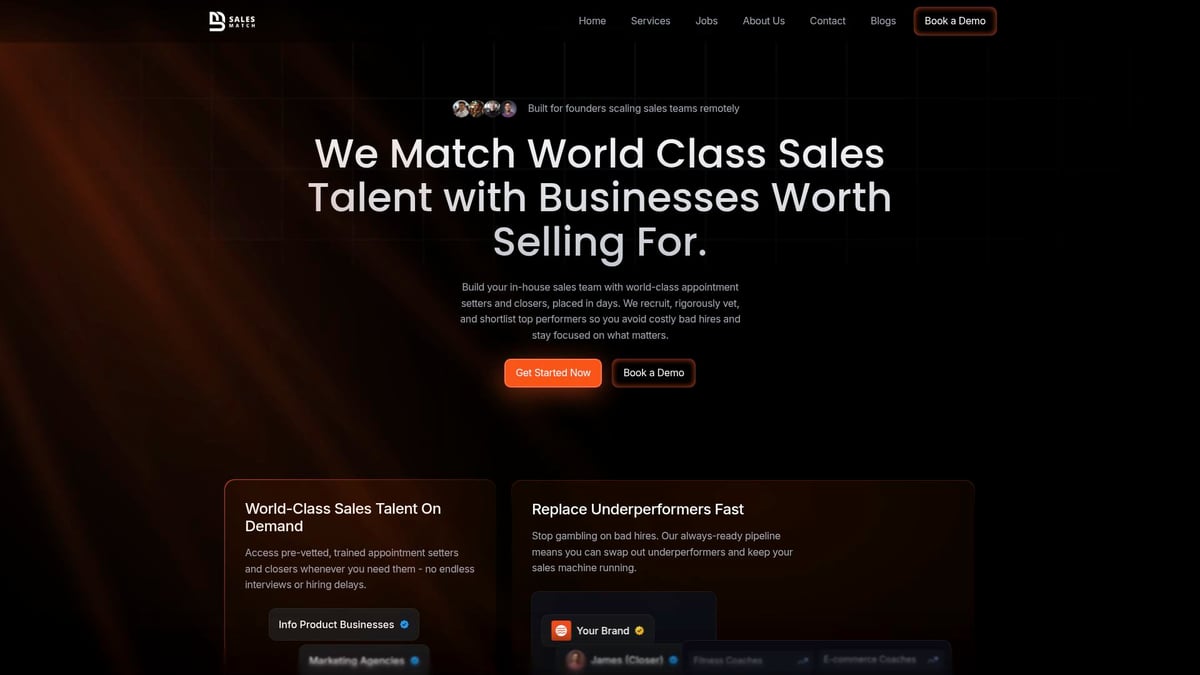
Sales Match stands out by providing rapid candidate delivery in just 7 to 14 days. You gain full in-house team ownership, with the flexibility to scale up or down as your sales needs evolve. Their risk-free replacement policy adds peace of mind, minimizing costly mis-hires.
This service is ideal for founders and sales leaders who want to avoid the headaches of traditional sales rec. If your business generates over $30K per month—whether you are in coaching, consulting, agency, SaaS, or info products—Sales Match offers a streamlined path to building a high-performing, efficient sales team.
Building and Scaling a Sales Team for Sustainable Growth
Building and scaling a sales team is at the heart of sales rec success. As businesses evolve, having a structured yet agile sales organization is vital for sustainable growth. Let us explore how to set up, nurture, and expand your team for long-term results in the 2026 landscape.
Structuring Your Sales Organization for Agility and Results
A well-structured sales team is the backbone of effective sales rec. Begin by defining clear roles such as appointment setters, closers, sales managers, and support staff. Align each position with your business goals and the complexity of your sales process.
For example, SaaS companies often differentiate between inbound and outbound sales teams to address different buyer journeys. This deliberate structure enhances agility, allowing your team to adapt quickly to shifting market demands.
For an in-depth look at how to set up your team, see this Effective sales department structuring resource. It offers frameworks that can be tailored to your sales rec strategy.
Onboarding for Fast Ramp-Up and Early Wins
A robust onboarding process is essential for sales rec effectiveness. Develop a 30-60-90 day plan that outlines learning goals, product training, and performance milestones. This plan helps new hires become productive swiftly.
Assign mentors or buddies to guide newcomers, fostering early connections and knowledge transfer. Use sales playbooks and real-life scenarios to accelerate learning. Engaged onboarding leads to early wins and boosts long-term retention.
Fostering a High-Performance Sales Culture
Sustaining growth through sales rec requires a high-performance culture. Encourage collaboration through regular team meetings and open communication channels. Recognize and reward top performers to motivate continued excellence.
Create an environment where feedback is valued and shared openly. Implement knowledge sharing sessions, so everyone benefits from each other's experience. This kind of culture not only drives results but also attracts ambitious sales professionals.
Implementing Performance Tracking and Analytics
Effective sales rec depends on data-driven decision making. Use dashboards to monitor key performance indicators such as conversion rates, average deal size, and sales cycle length.
Benchmark individual and team metrics against industry standards. Weekly reports and analytics reveal trends, highlight coaching opportunities, and ensure accountability. This systematic tracking helps your sales team stay aligned with business objectives.
Managing and Reducing Turnover
Turnover is a major challenge in sales rec. Identify early warning signs like declining engagement or missed targets. Offer career advancement and upskilling opportunities to keep top talent motivated.
Conduct exit interviews to understand why team members leave and refine your hiring and retention strategies. Proactive management reduces churn, preserves team momentum, and protects your investment in sales rec.
Scaling Your Team with Demand
As your business grows, scaling your sales rec process is essential. Build a recruitment pipeline that allows for rapid expansion during peak periods. Consider on-demand staffing solutions to address sudden increases in demand.
Plan for succession and leadership development within your sales team. This forward-thinking approach ensures you have the talent needed to support ongoing growth and adapt to market changes.
Future Trends and Innovations in Sales Recruitment
The landscape of sales rec is poised for transformation as we approach 2026. Businesses that anticipate emerging trends will secure a crucial advantage in attracting, hiring, and retaining elite sales talent. Let's explore the innovations shaping the future of sales recruitment and how you can leverage them for your organization's long-term success.
The Rise of AI and Automation in Sales Hiring
Artificial intelligence is revolutionizing sales rec by streamlining candidate sourcing, screening, and evaluation. AI-powered platforms can rapidly analyze thousands of applications, identify top performers, and remove human bias from the process. Predictive analytics now forecast long-term success by matching candidates’ attributes with high-performing sales profiles. According to insights from AI-driven recruitment in 2026, automation is not just a trend, but a necessity for efficiency and accuracy. As AI continues to evolve, expect more seamless integration with applicant tracking systems, enabling sales rec teams to make faster, data-backed hiring decisions.
Remote and Hybrid Sales Teams: Opportunities and Challenges
Remote work is here to stay, making sales rec for distributed teams essential. Organizations must adapt by developing virtual interview processes and digital onboarding programs. The key to success lies in leveraging collaboration tools, clear communication channels, and flexible management styles. For practical strategies, the Remote inside sales hiring guide offers proven tactics for sourcing, assessing, and integrating remote sales talent. Companies that prioritize remote readiness in their sales rec efforts will access a much broader talent pool, increase diversity, and drive performance in a globalized market.
Diversity, Equity, and Inclusion in Sales Recruitment
Diversity, equity, and inclusion (DEI) are now core pillars of effective sales rec. Forward-thinking companies are using unbiased job descriptions, targeted outreach, and structured assessment tools to attract candidates from all backgrounds. Inclusive leadership is increasingly recognized as a must-have trait for modern sales teams. By embedding DEI into every stage of sales rec, organizations foster innovation, improve team morale, and resonate with a wider customer base. Success in 2026 will hinge on building sales teams that reflect the diversity of the markets they serve.
Gamification and Innovative Assessment Methods
Traditional interviews are being replaced by gamified assessments and real-world simulations in sales rec. Interactive role plays, scenario-based tasks, and virtual challenges reveal candidates’ sales instincts and adaptability much faster than resumes ever could. Gamification not only makes the process engaging, but it also helps identify true top performers. Data shows that these innovative methods accelerate hiring and reduce mis-hires, ensuring sales rec efforts result in teams ready to thrive in high-stakes environments.
Candidate Experience and Employer Branding 2.0
The candidate journey is now a critical focus within sales rec. From first contact through onboarding, every interaction shapes your employer brand. Companies are leveraging feedback, transparent communication, and tailored touchpoints to create memorable experiences. Listening to candidate feedback and adjusting processes demonstrates genuine care and builds loyalty, even among those not hired. In a competitive market, a positive candidate experience can be a game-changer for sales rec success, setting your organization apart and attracting top-tier sales professionals.
Preparing for the Next Generation of Sales Talent
Gen Z and millennials are reshaping the sales rec landscape with new expectations around flexibility, purpose, and personal growth. Recruitment messaging must now emphasize career progression, work-life balance, and values-driven missions. Organizations that adapt their sales rec strategies to highlight these benefits will consistently attract high-potential talent. By understanding what motivates the next generation, your sales rec initiatives will remain relevant and effective, ensuring a steady pipeline of future sales leaders.
As you look to build a high performing sales team ready for the challenges of 2026, you know that success hinges on having the right people in place—those who can adapt, drive results, and fit seamlessly into your company culture. We’ve explored the essentials, from defining your ideal candidate to leveraging modern recruitment tools and strategies. If you’re ready to take the next step and want practical guidance on sourcing and placing world class sales talent without the usual hiring headaches, I encourage you to Learn more about how you can transform your sales recruitment approach today.