The Sales Company Guide: Strategies for Success in 2026
Discover proven strategies for building and scaling the sales company in 2026. Explore trends, tech, team building, and leadership to achieve lasting sales success.
published
The sales company landscape in 2026 is changing faster than ever. Intense competition and rapid innovation are redefining what it takes to succeed.
Emerging technologies, evolving buyer behaviors, and ongoing economic shifts are rewriting the rules for the sales company that wants to stay ahead.
How can your organization adapt, thrive, and future-proof itself in this environment? This guide delivers proven strategies for building, scaling, and sustaining a successful sales company in 2026.
You will discover the latest market trends, insights on tech adoption, expert advice for team building, process optimization tips, and leadership skills for tomorrow’s sales leaders.
Understanding the 2026 Sales Landscape
The sales company faces a marketplace in 2026 that is dramatically different from just a few years ago. Rapid shifts in technology, buyer preferences, and global markets are rewriting the rules for success. To stay ahead, leaders must understand these evolving dynamics and adapt their strategies accordingly.
Evolving Buyer Behaviors and Expectations
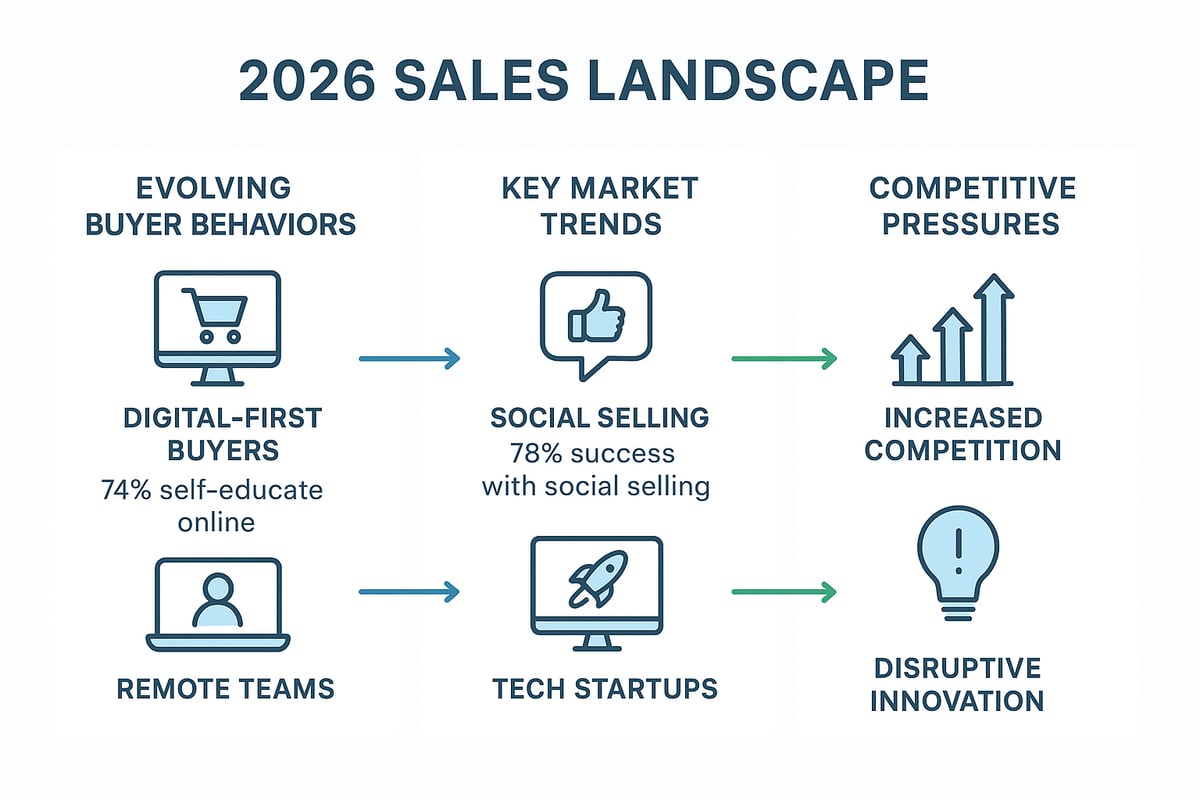
In 2026, the sales company must engage buyers who are more informed and independent than ever. Digital-first behaviors dominate, with buyers spending more time researching on their own before speaking to sales. In fact, 74% of B2B buyers now conduct independent online research, according to Gartner (2023). This means the sales company must provide valuable, accessible resources across digital channels.
Omnichannel engagement is now the standard. Buyers expect seamless experiences whether interacting via email, video, chat, or social media. Personalization is key, as clients want tailored recommendations and consultative guidance, not generic pitches.
Subscription models and recurring revenue streams are on the rise, shifting the focus from single transactions to long-term relationships. These trends are confirmed by recent B2B Buyer Behavior Statistics 2025 that detail the growing preference for flexible, ongoing solutions.
To thrive, the sales company must adapt its approach to align with these expectations, ensuring each touchpoint is relevant and value-driven.
Key Market Trends Impacting Sales Companies
The sales company in 2026 operates in an ecosystem shaped by remote work, globalization, and digital communities. Remote and hybrid selling models have expanded, allowing teams to connect with clients across time zones and continents. This shift not only broadens the talent pool but also requires new management and communication practices.
Globalization means that the sales company can reach diverse markets, but it also faces increased competition from international firms. Social selling has become a powerful tool, with LinkedIn reporting that 78% of social sellers outperform those who do not use social media (LinkedIn State of Sales, 2023). Engaging in digital communities builds trust and visibility.
Data privacy and compliance are also top priorities. Stricter regulations like GDPR and CCPA demand that the sales company handle client data responsibly. Regular audits, transparent policies, and ongoing staff training are essential to maintain compliance and client confidence.
By embracing these trends, the sales company positions itself as a modern, agile competitor in a crowded field.
Competitive Pressures and Opportunities
The sales company faces mounting pressure from tech-savvy startups that are redefining traditional sales models. These disruptors leverage automation, analytics, and innovative outreach to win market share quickly. Established companies must respond by adopting new tools and refining their processes.
However, competition also brings opportunity. Specializing in a niche market or targeting specific industry verticals allows the sales company to differentiate itself and deliver expert value. Economic uncertainty adds another layer of complexity, often leading to longer sales cycles and smaller deal sizes. Flexibility and efficiency become vital.
To succeed, the sales company should focus on its core strengths, invest in continuous improvement, and remain attentive to both threats and emerging opportunities in the evolving marketplace.
Building a Future-Ready Sales Team
Building the right team is the foundation of the sales company in 2026. As sales environments grow more complex, future-ready teams need a blend of technical skills, adaptability, and strong cultural alignment. To compete, companies must rethink how they recruit, develop, and motivate their sales professionals.
Recruiting and Retaining Top Sales Talent
Attracting and keeping elite performers is now a primary challenge for the sales company. The competition for skilled professionals is fierce, with 61% of sales leaders citing talent acquisition as their biggest concern (Salesforce State of Sales, 2023). To succeed, leaders must use a structured approach:
Rigorous vetting for skills and culture fit
Strong employer branding and clear compensation structures
Targeted outreach to high-performing remote candidates
Remote work has expanded the talent pool, but it also requires new recruitment strategies. Streamlining onboarding ensures rapid integration and sustained performance. For a deeper dive into effective sourcing, see Recruiting elite sales talent.
Retention hinges on building a supportive environment. Regular check-ins, transparent growth paths, and performance incentives keep top talent engaged. The sales company must prioritize these practices to prevent turnover and maintain a robust team.
Investing in Sales Training and Development
Continuous learning is non-negotiable for the sales company. With technology and buyer expectations evolving quickly, teams must stay updated. Traditional training is giving way to microlearning, which delivers bite-sized, on-demand lessons that fit into busy schedules.
Key approaches include:
Microlearning modules for just-in-time skill updates
Gamification to drive engagement and healthy competition
Performance tracking for personalized feedback
Interactive training, such as role-plays and scenario-based exercises, sharpens real-world skills. The sales company can also leverage peer learning through mentorship programs and regular knowledge-sharing sessions.
Ultimately, investing in professional development not only boosts individual performance but also signals a commitment to employee growth, which strengthens retention.
Fostering a High-Performance Sales Culture
Culture is the heartbeat of the sales company. High-performance environments thrive on accountability, motivation, and collaboration. Establish clear expectations and measurable goals to keep teams aligned and focused.
Best practices include:
Publicly recognizing top performers
Encouraging open communication and regular feedback
Building diverse teams for broader perspectives
Diversity and inclusion drive innovation and enable teams to connect with a wider range of clients. The sales company should also celebrate wins, both large and small, to reinforce a sense of achievement.
A supportive culture reduces burnout and increases job satisfaction, directly impacting long-term success.
Sales Match: Recruiting Elite Sales Talent for High-Ticket Businesses
Sales Match specializes in helping the sales company build remote-first, high-performing teams for high-ticket online businesses. Their process emphasizes rapid placement, rigorous candidate vetting, and custom talent matching.

Benefits include:
Access to pre-vetted appointment setters and closers
Fast, efficient hiring with minimal downtime
Alignment with coaches, consultants, agencies, and service providers selling online
Sales Match streamlines recruitment, eliminating lengthy hiring cycles. Their 60-day replacement policy and founder-level support provide peace of mind, ensuring the sales company can scale confidently and maintain high standards for every new hire.
Leveraging Technology and Automation in Sales
Staying ahead in the digital era requires the sales company to fully embrace advanced technology and automation. The right tools not only streamline operations but also unlock new levels of efficiency and insight. As we move deeper into 2026, leveraging these advancements is critical for sales leaders seeking to outperform competitors and meet evolving customer expectations.
Essential Sales Tech Stack for 2026
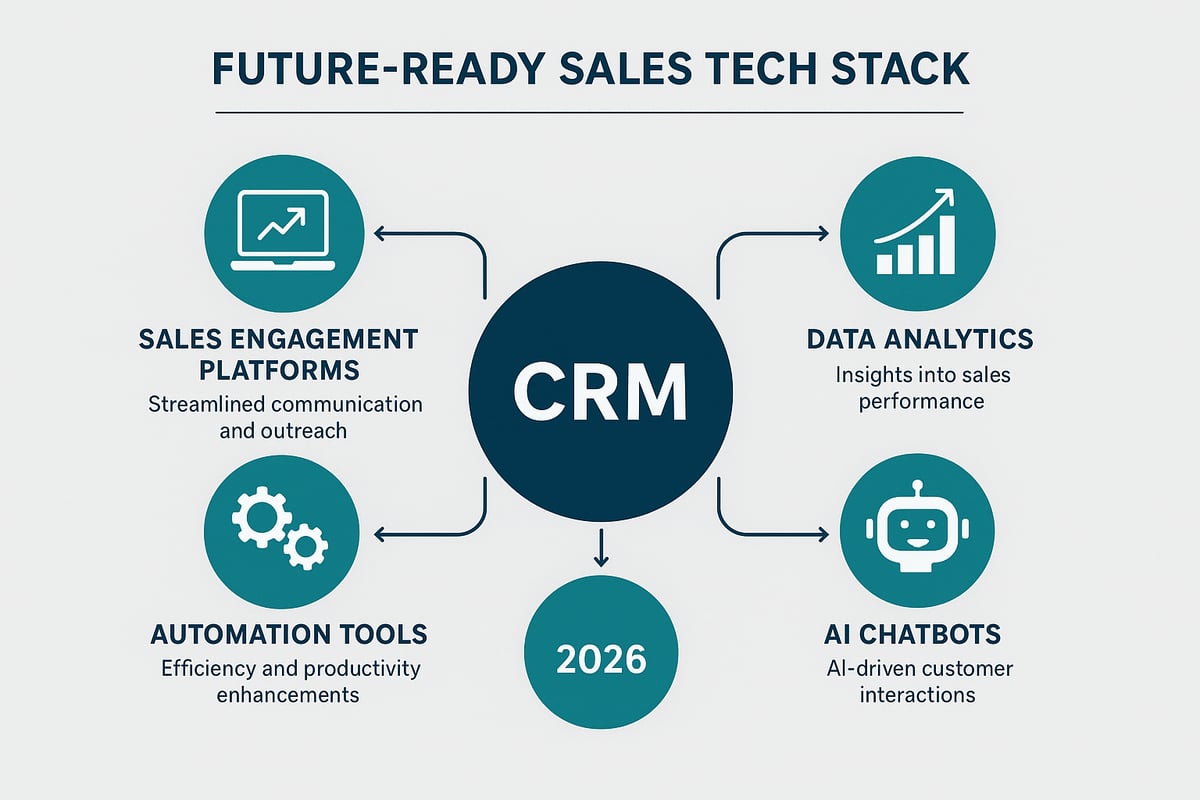
The backbone of the sales company’s operations is a robust, integrated tech stack. Customer Relationship Management (CRM) platforms remain the central hub, ensuring all customer data and interactions are accessible and actionable. Sales engagement platforms empower teams to orchestrate multi-channel outreach, making it easier to reach prospects where they are.
Data analytics tools are now indispensable. These platforms help the sales company forecast revenue, track performance, and identify emerging trends. To illustrate the core components, consider the following table:
Tech Stack Component | Purpose |
|---|---|
CRM Platform | Centralizes customer data |
Sales Engagement Platform | Enables multi-channel outreach |
Data Analytics Tool | Provides forecasting and insights |
Automation Software | Streamlines repetitive tasks |
Compliance Management Tool | Ensures data security and privacy |
A future-ready sales company builds its stack with integration in mind, enabling seamless workflows and better decision-making at every stage.
Automation and AI-Driven Solutions
Automation now plays a pivotal role in the sales company’s daily operations. By automating routine tasks, teams can focus on building relationships and closing deals. Common automation use cases include:
Scheduling meetings and follow-ups
Lead scoring and qualification
Data entry and sync across platforms
AI-driven chatbots have become standard for initial prospect engagement. According to Drift’s 2023 report, 58% of B2B companies now use chatbots for lead generation. Predictive analytics further helps the sales company identify high-potential leads, optimizing outreach strategies and resource allocation.
The result is a streamlined workflow where technology handles repetitive work, allowing the sales company to prioritize high-value opportunities and deliver personalized experiences at scale.
Integrating Sales and Marketing Technologies
Seamless integration between sales and marketing platforms is no longer optional for the sales company. Modern tools enable a unified approach, ensuring prospects move smoothly from marketing-qualified to sales-qualified status. Account-based marketing (ABM) platforms allow precise targeting of high-value clients, while personalization engines tailor outreach based on real-time data.
Personalization is now expected. According to the 2023 G2 Software Buyer Behavior Report, software buyers increasingly favor solutions that leverage AI for tailored recommendations and seamless experiences.
By connecting sales and marketing systems, the sales company eliminates silos and builds a holistic customer journey, resulting in more effective campaigns and higher conversion rates.
Ensuring Data Security and Compliance
With the increased reliance on technology, the sales company must prioritize data security and compliance. Adhering to regulations such as GDPR and CCPA protects both company and client data. Best practices include:
Regular security audits
Employee training on data handling
Using encrypted platforms for data storage and transfer
Compliance management tools support the sales company in tracking changes in privacy laws and maintaining up-to-date policies. Regular reviews and transparent practices build trust with clients, ensuring the sales company remains both competitive and reputable in a data-driven world.
Optimizing Sales Processes for Scalability
Scaling the sales company in 2026 demands more than just growth in numbers. To thrive, leaders must build robust processes that support efficiency, accountability, and adaptability as teams expand and markets shift. A well-optimized sales process sets the foundation for consistent results, regardless of size or structure.
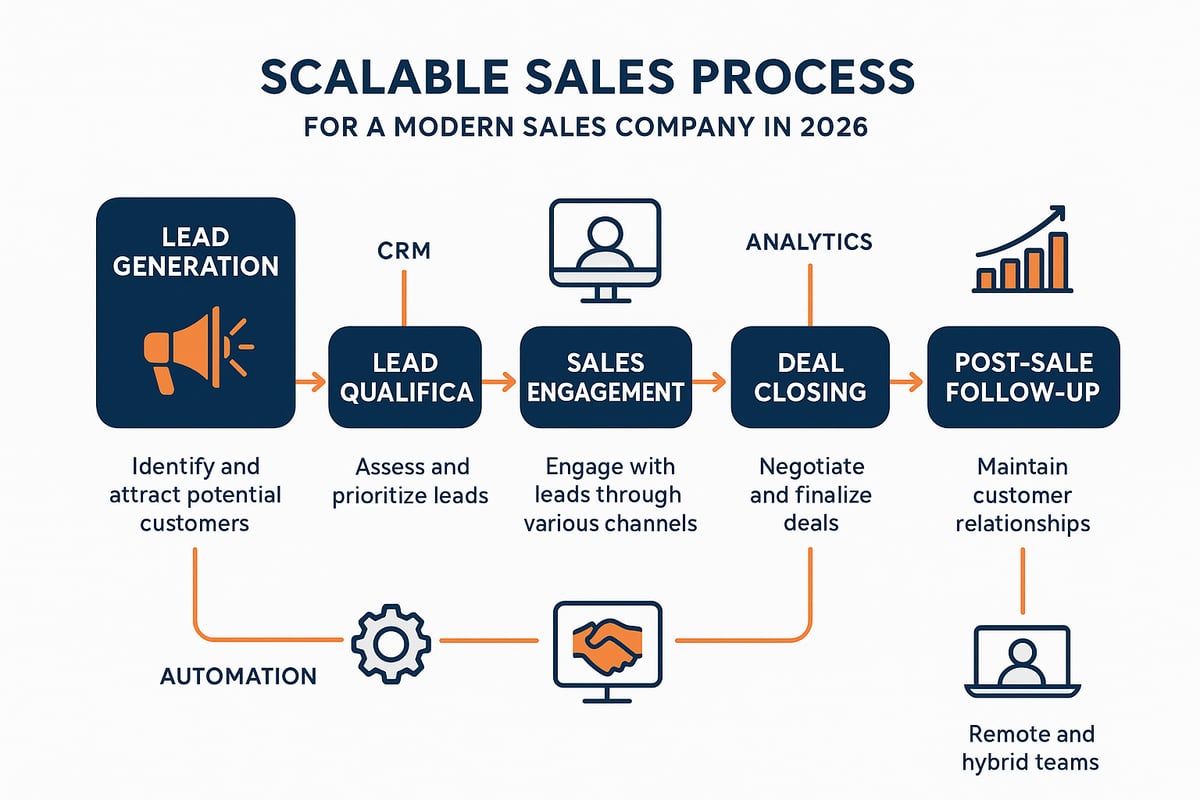
Mapping and Standardizing the Sales Process
For the sales company, mapping the sales journey is essential for repeatable success. Every stage, from lead generation to post-sale follow-up, must be clearly defined and documented. Playbooks and templates help ensure consistency among team members, making onboarding smoother and minimizing errors.
Research from Harvard Business Review shows that companies with standardized sales processes see 28 percent higher revenue growth compared to those with misaligned workflows. For further insight, see the Harvard Business Review on Sales Process Alignment. By mapping out each milestone, the sales company can quickly identify bottlenecks and areas for improvement.
Standardization also makes it easier to scale operations, as new hires can follow established guidelines with minimal disruption. In a competitive landscape, clear processes give the sales company a measurable edge.
Implementing Performance Metrics and KPIs
Tracking performance is crucial for the sales company to maintain transparency and drive accountability. Key metrics include conversion rates, average deal size, and sales cycle length. Real-time dashboards make these data points accessible to everyone, keeping the team focused on shared goals.
A simple table can summarize essential KPIs:
Metric | Purpose | Example Tool |
|---|---|---|
Conversion Rate | Measures closing efficiency | CRM Dashboard |
Average Deal Size | Tracks revenue per deal | Analytics Suite |
Sales Cycle Length | Monitors process speed | Pipeline Reports |
Regularly reviewing these metrics helps the sales company spot trends and adjust strategies quickly. Data-driven insights empower leaders to make informed decisions and foster continuous improvement.
Enhancing Lead Qualification and Nurturing
The sales company benefits from a structured approach to lead qualification and nurturing. Lead scoring models prioritize prospects based on fit and engagement, ensuring that sales reps focus on the most promising opportunities.
Automated nurture campaigns keep leads engaged throughout the funnel. These campaigns use personalized content and scheduled touchpoints to guide prospects toward a buying decision. Alignment between sales and marketing teams on lead definitions reduces friction and ensures that every qualified lead receives the right attention.
By refining lead qualification, the sales company improves conversion rates and shortens sales cycles, supporting sustainable growth.
Streamlining Communication and Collaboration
Effective communication is a pillar of scalability for the sales company. Tools like Slack and Microsoft Teams connect remote and on-site employees, making information sharing seamless. Cross-functional alignment with marketing, product, and customer success teams eliminates silos and fosters a unified approach to client engagement.
Regular check-ins and shared project boards help teams track progress and address challenges in real time. When everyone stays informed, the sales company can respond swiftly to market changes and maintain a high level of service.
Adapting Processes for Remote and Hybrid Teams
Adapting workflows for remote and hybrid environments is now standard for the sales company. Best practices include virtual onboarding, regular video coaching sessions, and transparent performance reviews. Technology platforms track productivity and engagement, giving managers visibility into team health.
Distributed teams require clear documentation and accessible resources. By investing in the right tools and training, the sales company ensures that every team member, regardless of location, can perform at their best. Scalable processes support flexibility while maintaining consistency across the organization.
Customer-Centric Selling Strategies
Putting the customer at the center is critical for the sales company aiming to thrive in 2026. Today’s buyers expect much more than a polished pitch. They want relevant solutions, honest communication, and a partner who truly understands their goals. The sales company that adapts to these expectations will differentiate itself and foster long-term growth.
Adopting a Consultative Sales Approach
Modern buyers are no longer satisfied with transactional exchanges. They expect the sales company to act as an advisor, focusing on their unique challenges and business goals. This shift means sales professionals must ask thoughtful questions, listen actively, and co-create solutions with prospects.
Consultative selling builds credibility and positions the sales company as a trusted partner. According to Forrester (2023), 82% of buyers want sellers who understand their business, not just their product. Teams that master this approach can uncover deeper needs, drive higher value, and build loyalty that lasts beyond a single deal.
By investing in relationships over quick wins, the sales company can navigate complex buying cycles and stand out in crowded markets.
Personalization at Scale
Personalization is no longer optional for the sales company. Buyers expect tailored messaging, relevant offers, and a seamless experience across every interaction. To deliver this at scale, teams must harness data from digital channels, CRM systems, and customer feedback.
A recent 2023 B2B Commerce Growth Strategies Survey highlights that B2B organizations investing in personalization see higher engagement and conversion rates. The sales company can implement segmentation strategies, dynamic content, and personalized video outreach to connect with buyers on their terms.
Personalization Tactic | Benefit |
|---|---|
Segmentation | Targeted messaging |
Dynamic content | Higher engagement |
Personalized video | Stronger connection |
By leveraging these tools, the sales company delivers relevant solutions that resonate and drive results.
Building Trust and Long-Term Relationships
Trust is the foundation of every successful sales company. Buyers judge credibility based on transparency, consistency, and the value delivered after the sale. It starts with open communication and honest pricing, ensuring there are no surprises.
Consistent follow-up demonstrates commitment and keeps clients engaged. Implementing customer success programs, such as onboarding support or regular check-ins, helps nurture relationships and encourages repeat business. The sales company that prioritizes long-term value over short-term gains is more likely to benefit from referrals and positive word-of-mouth.
In a crowded market, trust becomes a key differentiator that sets the sales company apart from competitors.
Gathering and Acting on Customer Feedback
Listening to customers is essential for continuous improvement. The sales company should make feedback collection a standard practice, using surveys, interviews, and Net Promoter Score (NPS) tools to capture insights.
Integrating this feedback into product or service development ensures offerings remain relevant and competitive. It also signals to clients that their opinions matter. Closing the loop by updating customers on changes made as a result of their input further strengthens the relationship.
The sales company that values feedback not only adapts quickly but also builds deeper loyalty with its client base.
Leading Sales Teams Through Change and Uncertainty
Navigating change is now a defining skill for the sales company. Rapid shifts in buyer behavior, technology, and economic climates require leaders who can guide teams through uncertainty with confidence. The following strategies equip leaders to build resilience, foster adaptability, and position the sales company for sustained success—no matter what the future holds.
Developing Adaptive Leadership Skills
The core of successful leadership in the sales company is adaptability. Leaders must quickly assess new situations, respond to shifting markets, and adjust strategies with agility. According to Gartner (2023), 72% of sales leaders identify adaptability as the most important leadership trait for navigating uncertainty.
Key adaptive leadership skills include:
Embracing continuous learning to keep up with evolving trends
Encouraging experimentation and calculated risk-taking
Building resilience by celebrating small wins and learning from setbacks
In the sales company, fostering a growth mindset is essential. Leaders who model adaptability inspire their teams to face change with optimism and confidence. By prioritizing flexibility, the sales company positions itself to thrive in unpredictable environments.
Communicating Vision and Change Effectively
Effective communication anchors the sales company during times of transition. Leaders should articulate a clear vision that aligns with organizational goals and market realities. Transparent updates about changes, whether in structure, goals, or processes, help build trust and minimize uncertainty.
Involve team members in problem-solving and decision-making. Open forums and regular feedback sessions encourage dialogue, ensuring everyone feels heard. When the sales company communicates openly, employees become active participants in the change process, fostering buy-in and shared purpose.
Managing Remote and Hybrid Team Dynamics
Remote and hybrid work models are now standard for the sales company. Success depends on intentional team management and robust infrastructure. Leaders must address challenges like time zones, cultural differences, and potential isolation.
Best practices include:
Establishing clear expectations around performance and communication
Using virtual team-building activities to strengthen connections
Implementing recognition programs to celebrate achievements
For detailed strategies on structuring distributed teams, explore Building a remote sales department. By leveraging digital tools and fostering a culture of inclusivity, the sales company can unite remote teams and maintain high morale.
Supporting Mental Health and Wellbeing
Supporting mental health is a top priority for the sales company. The pressures of sales, combined with rapid change, can increase stress and risk of burnout. Leaders must recognize early signs of mental fatigue and proactively address them.
Actionable steps include:
Providing access to mental health resources and support services
Encouraging flexible schedules and work-life balance
Normalizing conversations about stress and wellbeing
When the sales company invests in wellbeing, it not only protects its people but also enhances productivity and engagement.
Preparing for the Future of Sales Leadership
The future of the sales company depends on developing the next generation of leaders. Succession planning ensures continuity, while leadership development programs build necessary skills for tomorrow’s challenges.
Key focus areas:
Ongoing education on emerging trends and technologies
Creating mentorship opportunities within the sales company
Regularly reviewing and updating leadership competencies
By making learning and growth a core part of the culture, the sales company remains agile and future-ready, no matter how the landscape evolves.
As we look ahead to 2026, it’s clear that the sales landscape is changing faster than ever—new technologies, evolving buyer behaviors, and the pressure to build agile teams are pushing all of us to rethink our strategies. If you’re ready to future proof your sales company, streamline team building, and tap into pre vetted sales professionals who truly understand high ticket online selling, this guide is just the beginning. You don’t have to navigate these changes alone—let’s explore how you can build a winning sales team and stay ahead of the curve. Learn more