High Ticket Remote Closer Guide: Master the Art in 2026
Master the high ticket remote closer role in 2026 with expert strategies, tech insights, and step by step guidance to boost your sales career and income.
published
The world of remote sales is booming, and high-value deals are reshaping the way professionals work in 2026. Businesses are seeking experts who can close major transactions from anywhere, making this field both lucrative and highly competitive.
In this guide, you will learn how to become a high ticket remote closer, building the skills and strategies needed to thrive in this fast-evolving industry. Discover what sets top performers apart, which tools matter most, and how to adapt as the market changes.
Ready to future-proof your career? Follow this step-by-step guide to unlock remote flexibility, master high-value sales skills, and position yourself at the forefront of high ticket remote closing in 2026.
Understanding the High Ticket Remote Closer Role
In today’s digital-first sales environment, mastering the high ticket remote closer role is essential for professionals aiming to excel in high-value transactions. This section breaks down what the role involves, the core skills needed, industries served, remote versus in-person dynamics, and how the landscape is set to evolve by 2026.
What is a High Ticket Remote Closer?
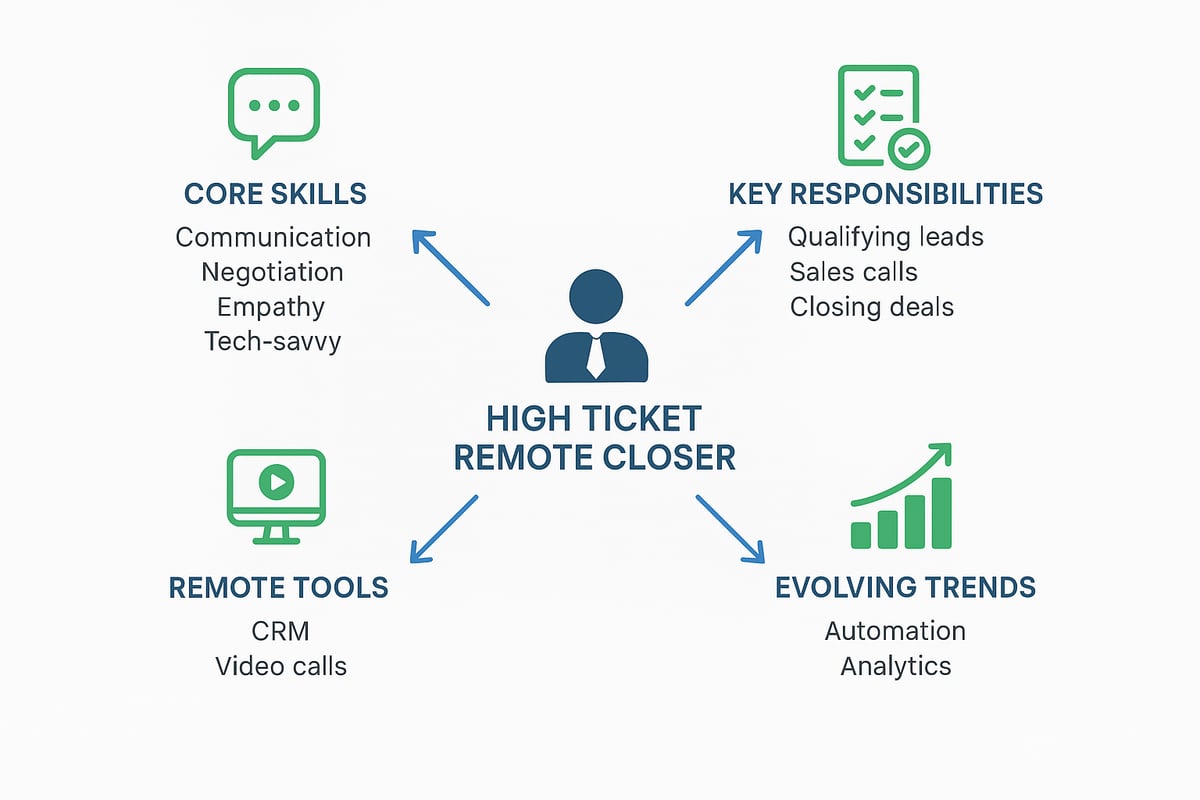
A high ticket remote closer is a sales professional who specializes in closing deals typically valued at $2,500 or more, all while working remotely instead of in a traditional office setting. Unlike standard sales roles, this position focuses on complex, high-value transactions that require deeper relationship-building and tailored communication.
Remote closing differs from traditional sales by leveraging digital tools to qualify leads, conduct virtual sales calls, and close deals without face-to-face interaction. Key responsibilities include identifying qualified prospects, managing the sales pipeline, and ensuring client satisfaction post-sale. The demand for high ticket remote closer roles has surged since 2020, fueled by the growth of online coaching and consulting businesses. For a deeper dive into the specifics and career path, see Remote High Ticket Closer Insights.
Core Skills and Qualities Required
To succeed as a high ticket remote closer, candidates must develop a well-rounded skill set. Strong communication and persuasive abilities are essential to build trust and present high-value offers with confidence. Active listening and empathy allow closers to understand client pain points and tailor solutions effectively.
Effective objection handling and negotiation skills are critical, as high ticket sales often involve complex decision-making processes. Self-motivation and discipline are required for remote work, where autonomy and accountability drive results. Adaptability is also key, as high ticket remote closers must quickly learn new technologies and adjust to evolving sales processes.
Typical Industries and Clients Served
High ticket remote closer opportunities span a diverse range of industries. The most common sectors include coaching, consulting, digital marketing agencies, SaaS, and other service-based businesses. Both B2B and B2C environments offer roles for closers, with B2B deals often involving longer sales cycles and multiple decision-makers.
Examples of high ticket offers include online courses, masterminds, and digital services. According to The Sales Connection, 68% of high ticket remote sales roles are concentrated in the coaching and consulting sectors, underscoring the strong demand in these markets. This landscape gives professionals the flexibility to specialize and build industry-specific expertise as a high ticket remote closer.
Remote vs. In-Person Closing: Pros and Cons
The shift to remote sales has introduced both advantages and challenges for the high ticket remote closer. Remote roles offer flexibility, access to a global client base, and the ability to work from anywhere. However, building rapport virtually can require more intentional effort, and managing time zones may complicate scheduling.
In-person closing has the advantage of reading body language and leveraging in-room energy to influence outcomes. Modern tools such as Zoom and Google Meet help bridge the gap, making it easier for high ticket remote closers to connect with clients effectively despite the distance.
Aspect | Remote Closing | In-Person Closing |
|---|---|---|
Flexibility | High | Limited |
Rapport | Requires virtual strategies | Easier with body language |
Reach | Global | Local/regional |
Tools Needed | CRM, video conferencing | Minimal digital tools |
The Evolving Landscape in 2026
By 2026, the high ticket remote closer role will continue to evolve as technology and automation further streamline the sales process. Sales professionals will face increasing competition and higher client expectations, driven by more informed buyers and a global talent pool.
Data-driven decision-making will become standard, with closers leveraging integrated CRM systems and analytics to optimize their approach and improve closing rates. For example, seamless integration of CRM and analytics platforms enables high ticket remote closers to track every stage of the pipeline, adapt strategies in real time, and deliver a personalized buying experience.
Step-by-Step: How to Become a High Ticket Remote Closer in 2026
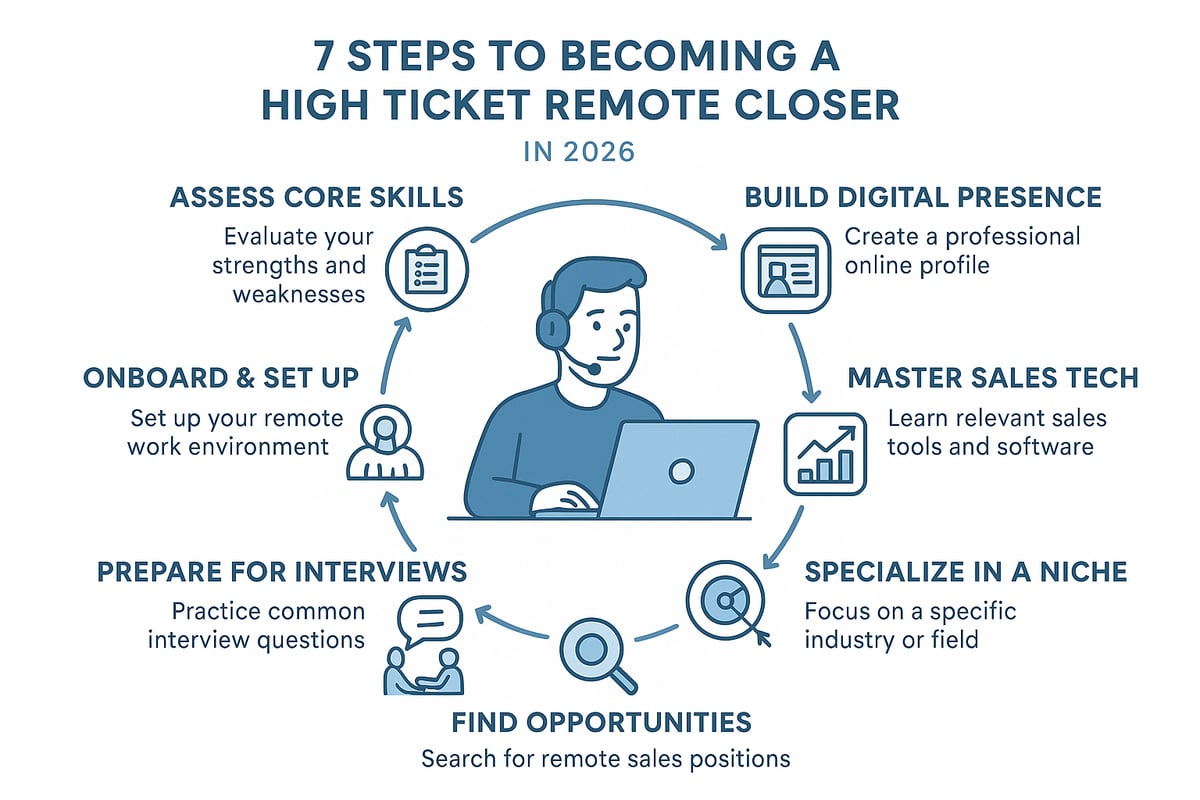
Becoming a high ticket remote closer in 2026 requires a strategic, skill-focused approach. Whether you are starting from scratch or leveling up your sales career, following these steps will help you build a solid foundation and stand out in a competitive landscape.
Step 1: Assess and Develop Core Sales Skills
Start by evaluating your current strengths and areas for improvement as a high ticket remote closer. Core skills include communication, confidence, resilience, and adaptability.
Leverage resources such as online sales courses, mentorship programs, and immersive sales bootcamps to advance your skills. Practicing mock calls and roleplay scenarios is essential for building real-world confidence.
For a detailed roadmap on developing these abilities, explore the High Ticket Sales Closer Guide. Dedicating time to skill-building ensures you are well-prepared for the demands of the high ticket remote closer role.
Step 2: Build Your Digital Presence and Personal Brand
A compelling online presence is crucial for any high ticket remote closer in 2026. Begin by optimizing your LinkedIn profile and other professional social media platforms to highlight your expertise and achievements.
Showcase testimonials and document your sales successes to build trust with potential employers or clients. Engage in industry-specific online communities to expand your network and gain visibility.
Remember, your digital reputation often precedes you in remote sales. Establishing authority and credibility online can open doors to new high ticket remote closer opportunities.
Step 3: Master Remote Sales Technology
Success as a high ticket remote closer relies on mastering the essential technology stack. Familiarize yourself with CRM systems such as Salesforce or HubSpot for managing leads and tracking your pipeline.
Become proficient with video conferencing tools like Zoom and Google Meet, as these are the primary platforms for remote sales calls. E-signature and proposal management platforms streamline the closing process.
According to The Sales Connection, 85 percent of top-performing closers report CRM mastery as critical. Staying current with these tools is key for every high ticket remote closer.
Step 4: Specialize in a Niche Market
Specializing in a specific industry can set you apart as a high ticket remote closer. Niche expertise builds trust with clients and often leads to higher conversion rates.
Research growing markets such as coaching, SaaS, or digital agencies to determine where your skills best align. By focusing your efforts, you can tailor your approach and messaging for maximum impact.
A targeted strategy allows a high ticket remote closer to become the go-to expert in their chosen field, increasing both value and demand.
Step 5: Find High Ticket Opportunities
Identifying the right opportunities is a vital step for any high ticket remote closer. Explore job boards, leverage LinkedIn, and tap into your professional network to uncover remote sales roles.
Reach out directly to agencies and businesses with established high ticket offers. Carefully evaluate each opportunity, considering the commission structure, lead quality, and company support.
Choosing the right fit ensures that a high ticket remote closer can thrive and achieve long-term success in the role.
Step 6: Prepare for the Interview and Vetting Process
Preparation is crucial when interviewing for a high ticket remote closer position. Expect questions assessing your sales experience, remote work discipline, and ability to handle objections.
Be ready to demonstrate your closing skills through live roleplay scenarios or trial periods. Gather references and testimonials to reinforce your track record.
A strong interview performance helps a high ticket remote closer stand out from the competition and secure the best roles.
Step 7: Onboarding and Setting Up for Success
Once hired, effective onboarding sets the stage for your growth as a high ticket remote closer. Study the company’s sales scripts, familiarize yourself with their processes, and integrate smoothly with remote sales teams.
Set clear KPIs and use tracking tools to monitor your performance. Consistent communication and collaboration with your team will help you adapt quickly.
By following these onboarding best practices, a high ticket remote closer can accelerate their ramp-up period and begin closing deals confidently.
Tools, Tech, and Systems for High Ticket Remote Closers
Success as a high ticket remote closer in 2026 relies on mastering the right tools, tech, and systems. The digital landscape is rapidly evolving, making it crucial to stay current with the latest platforms and security standards. Let’s break down the essential technology stack, data strategies, automation, and compliance practices every high ticket remote closer should know.
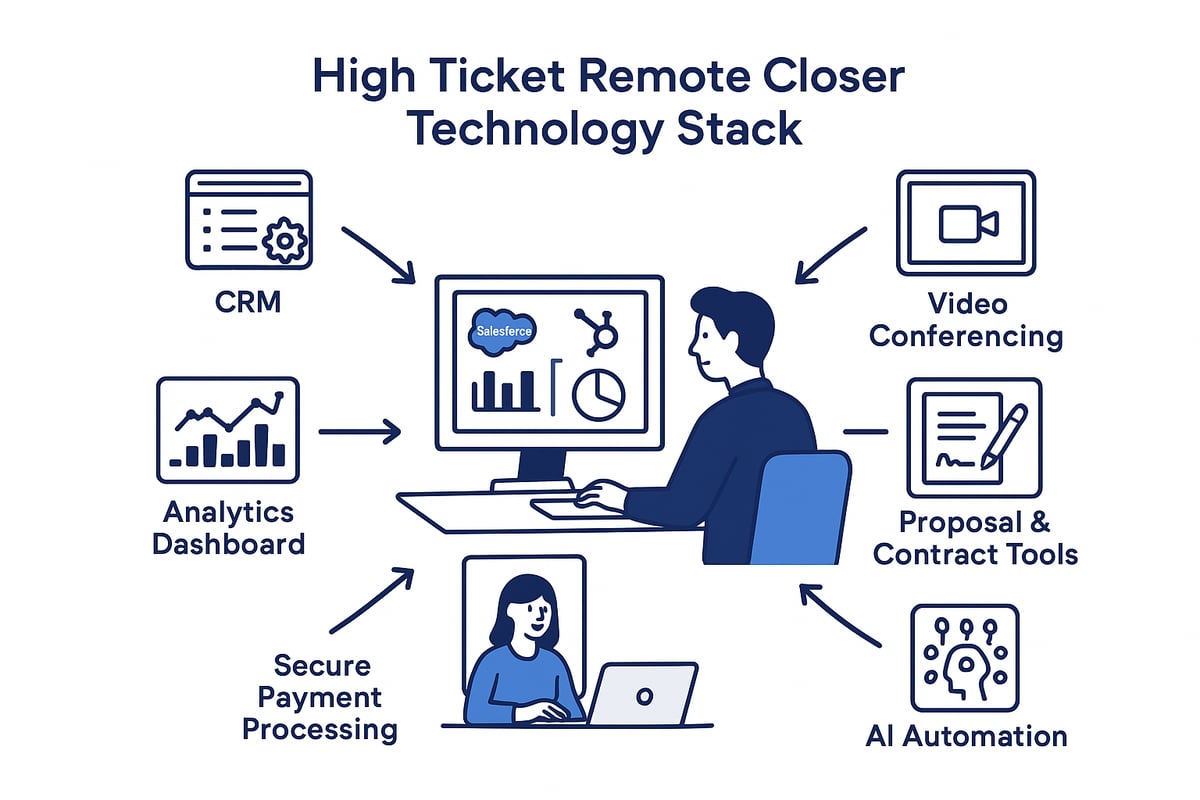
Essential Sales Technology Stack
For any high ticket remote closer, a robust tech stack is non-negotiable. Customer Relationship Management (CRM) systems, such as Salesforce or HubSpot, help organize leads and manage pipelines efficiently. Video conferencing platforms like Zoom and Google Meet are vital for running sales calls and building rapport with clients globally.
Proposal and contract management tools, including PandaDoc or DocuSign, streamline closing by automating e-signatures and document workflows. Automated scheduling apps, such as Calendly, significantly reduce no-shows by simplifying appointment booking. For a deeper dive into the necessary systems, see High Ticket Remote Sales Explained.
A high ticket remote closer who invests in mastering these tools will set themselves apart in a competitive market.
Leveraging Data and Analytics
Data-driven strategies are now standard for every high ticket remote closer. Tracking conversion rates, deal velocity, and activity metrics within your CRM and analytics dashboards enables you to optimize your performance over time.
Top closers rely on visual dashboards to quickly assess their pipeline and identify bottlenecks. This focus on measurable results pays off: companies leveraging data-driven sales processes see 5–10% higher close rates, according to The Sales Connection.
Regularly reviewing analytics allows a high ticket remote closer to adjust strategies in real time, ensuring continued growth and adaptability.
Automation and AI in Remote Closing
Automation is transforming the high ticket remote closer’s workflow. AI-powered lead scoring helps prioritize prospects most likely to convert, while automated follow-ups ensure no opportunity slips through the cracks. Chatbots and virtual assistants can pre-qualify leads, freeing up time for more impactful conversations.
The key is balance. While automation handles repetitive tasks, the human touch remains essential for high ticket deals. Personalizing communication and addressing unique objections still require the expertise of a high ticket remote closer.
By integrating automation thoughtfully, professionals can boost efficiency without sacrificing relationship quality.
Staying Secure and Compliant
Security and compliance are critical for every high ticket remote closer handling sensitive client data and large transactions. Ensure your CRM and communication tools use encryption to protect information. Secure payment processing platforms, such as Stripe or PayPal Business, help safeguard high-value transactions.
Compliance with international sales regulations, including GDPR or CCPA, is vital. Always keep client confidentiality top of mind and stay updated on evolving privacy laws.
A high ticket remote closer who prioritizes security builds trust and credibility, which is essential for long-term success in remote sales.
Advanced Closing Strategies for 2026
Unlocking success as a high ticket remote closer in 2026 demands more than following scripts. Advanced strategies are essential for building trust, handling objections, and nurturing relationships—entirely online. Let’s break down the techniques that will set you apart in a rapidly evolving digital marketplace.
Building Trust and Rapport Remotely
Establishing trust is the foundation for every high ticket remote closer. Without face-to-face interaction, you must leverage video calls and personalized outreach to create genuine connections. Begin each conversation by researching your prospect’s business and referencing specifics during the call.
Use the client’s first name
Mirror communication style
Ask open-ended questions to show interest
Simple gestures, like recalling a detail from a previous conversation, can make your approach feel tailored and authentic. As the Remote High-Ticket Sales Growth in 2025 article highlights, the demand for remote closers continues to rise, making these trust-building skills even more vital. As a high ticket remote closer, mastering rapport virtually is a game-changer.
Objection Handling and Negotiation Tactics
Objections are inevitable, especially in high ticket sales. The best high ticket remote closer anticipates concerns and addresses them confidently. Common objections include price, timing, or uncertainty about value.
Consider using a simple objection-handling framework:
Objection Type | Response Strategy |
|---|---|
Price | Emphasize ROI, payment options |
Timing | Identify urgency, future pacing |
Value | Share success stories, clarify outcomes |
Role-playing these scenarios sharpens your skills. Practice active listening, validate concerns, and always negotiate with integrity. By refining these tactics, a high ticket remote closer can turn hesitation into commitment.
The Psychology of High Ticket Buyers
Understanding the mindset of a high ticket buyer gives you an edge as a high ticket remote closer. Buyers making significant investments weigh emotional triggers like trust and aspiration alongside logic and ROI.
High ticket purchases often stem from a desire to solve pressing problems or achieve ambitious goals. Listen for cues about pain points or ambitions during discovery calls. Address both the emotional and rational aspects in your pitch.
Awareness of buyer psychology helps you tailor your approach, ensuring you speak directly to their needs and motivations. This insight is critical for every high ticket remote closer aiming for consistent results.
Storytelling and Value-Based Selling
Storytelling transforms your offer from a commodity into a solution with real impact. As a high ticket remote closer, use narratives to illustrate how your product or service changes lives or businesses.
Share case studies (without making earning claims)
Highlight before-and-after scenarios
Focus on the long-term value and transformation
Value-based selling means demonstrating clear ROI and aligning your offer with the client’s goals. When you frame your pitch around outcomes, you engage both the logic and emotion of your prospect, increasing your effectiveness as a high ticket remote closer.
Follow-Up and Nurturing Leads
Persistence is key in remote high ticket sales. Research from The Sales Connection shows that 80% of sales require at least five follow-ups. As a high ticket remote closer, you should implement structured, multi-channel follow-up sequences.
Schedule reminder emails and calls
Use SMS or LinkedIn for touchpoints
Offer valuable insights in each follow-up
Nurturing leads builds trust over time and keeps your solution top of mind. Consistent, personalized follow-up is a hallmark of a high ticket remote closer who closes deals in a competitive market.
Continuous Improvement and Feedback Loops
Top-performing high ticket remote closers never stop learning. After each call, seek feedback from peers or mentors and review what worked—and what didn’t.
Analyze lost deals to identify patterns or missed opportunities. Invest in new training, stay updated on sales trends, and refine your approach regularly.
Creating feedback loops, both self-driven and team-based, ensures you evolve with the market. By prioritizing growth, you’ll remain a sought-after high ticket remote closer in 2026 and beyond.
Career Growth, Income, and Future-Proofing in High Ticket Remote Closing
Career growth for a high ticket remote closer offers diverse and rewarding avenues. As you gain experience, you can transition from closing deals to overseeing larger sales teams, providing training, or even launching your own remote sales agency. Many professionals focus on specific industries or products, establishing themselves as niche experts. This specialization often leads to higher trust from clients and more consistent opportunities.
Some high ticket remote closers choose to mentor new talent or consult for businesses looking to scale their remote sales operations. Others expand into roles like enterprise sales or international account management, leveraging their skills to handle complex deals. Regardless of your chosen path, continuous learning and adaptability are vital for sustainable growth in this evolving field.
Compensation Structures and Earning Potential
Understanding compensation models is crucial for any high ticket remote closer. Most roles offer either commission-only or a base salary plus commission. The structure often depends on the industry, company size, and the complexity of the sales cycle.
Key factors influencing pay include deal size, sales volume, and your track record. Some organizations provide additional incentives such as performance bonuses or profit-sharing. For a comprehensive breakdown of models and what to expect, review the Commission Structures in Remote Sales guide.
Here's a quick comparison:
Model | Description | Common in |
|---|---|---|
Commission Only | Earn a percentage per sale | Agencies, consulting |
Base + Commission | Fixed salary plus sales commission | SaaS, enterprise sales |
Performance Bonuses | Extra pay for exceeding targets | All industries |
No matter the structure, understanding your compensation agreement and negotiating terms is essential for long-term satisfaction.
Navigating Competition and Standing Out
The high ticket remote closer landscape is becoming increasingly competitive. To stand out, focus on developing advanced sales skills and building a portfolio of client testimonials and references. Specializing in a profitable niche can help you become the go-to expert for specific solutions or industries.
Active networking in online communities and continuous professional development are also key. Sharing insights, success stories, and thought leadership content on platforms like LinkedIn boosts your personal brand. By consistently delivering results and adapting to market changes, you can maintain a strong reputation and secure premium opportunities.
Future Trends and Industry Outlook for 2026
The future for high ticket remote closer roles is promising, with remote work models continuing to expand. Automation and data-driven sales processes are streamlining workflows, allowing professionals to focus more on building relationships and closing complex deals. According to Remote and Hybrid Work Statistics in Sales, remote and hybrid roles have become standard in the sales industry, opening global talent pools and increasing flexibility.
Staying ahead means embracing new technologies and adapting to changing buyer behaviors. As competition grows and clients expect more personalized experiences, those who invest in ongoing training and digital skills will future-proof their careers.
How Sales Match Can Help High Ticket Remote Closers and Businesses
Sales Match stands out as a specialized recruiting partner for businesses and professionals seeking excellence in the high ticket remote closer space. For companies selling products or services above $2,500, finding reliable remote sales talent with proven results is a major challenge. Sales Match addresses this by connecting businesses with elite appointment setters and high ticket remote closer candidates who have demonstrated outstanding sales abilities.

What sets Sales Match apart is its rigorous 8-step vetting process. Every candidate is assessed for communication, sales acumen, industry experience, and culture fit. This ensures that only top-performing, pre-vetted professionals reach your team, reducing turnover and increasing the likelihood of successful placements.
For organizations looking to scale quickly, Sales Match offers rapid placement, typically within 7 to 14 days. The matching process is tailored to your specific offer, sales process, and team environment, so new hires integrate smoothly and are ready to contribute from day one. Unlike outsourcing solutions, Sales Match candidates become part of your in-house sales team, giving you full control over performance and training.
Businesses appreciate the flexible payment options and the 60-day replacement guarantee, which provide peace of mind during the hiring process. Sales Match is ideal for coaches, consultants, marketing agencies, SaaS companies, and service-based businesses with a steady flow of qualified leads. These industries, as highlighted in resources like Industries Hiring Remote High-Ticket Closers, are leading the demand for high ticket remote closer talent.
Whether you are building a new sales team or expanding an existing one, Sales Match eliminates the most time-consuming aspects of hiring. By delivering high ticket remote closer professionals who are ready to perform, Sales Match enables businesses to focus on growth instead of recruitment headaches.
If you are a business owner or a high ticket remote closer seeking a role with a proven team, Sales Match offers a streamlined, reliable path forward. Take the next step to scale your sales operations with confidence and control.
As you’ve seen throughout this guide, mastering high ticket remote closing in 2026 is about combining the right skills, embracing technology, and strategically positioning yourself in a competitive market. Whether you’re refining your sales approach or building a high performing team for your business, having access to pre vetted talent can make all the difference. If you’re ready to take the next step—whether to accelerate your own career or scale your company’s sales capacity—I encourage you to Learn more about how Sales Match connects high ticket businesses with top tier remote closers.