The Essential Appt Setter Guide for 2026
Master the appt setter role in 2026 with expert strategies, essential tech, and future trends. Empower your business or career with this complete appointment setting guide.
published
In 2026, appointment setting has become the backbone of high-ticket online sales. The appt setter role is no longer just about booking calls; it now demands strategic thinking as buyer behaviors shift and digital sales trends accelerate.
Businesses and professionals who excel in appointment setting can unlock new growth opportunities in today's competitive online landscape. This guide delivers actionable strategies, future-focused insights, and proven frameworks designed to help you become or hire a world-class appt setter.
Explore the evolution of the role, essential skills, must-have tools, step-by-step processes, effective recruitment methods, and emerging trends for 2026 and beyond.
The Evolution of the Appointment Setter Role in 2026
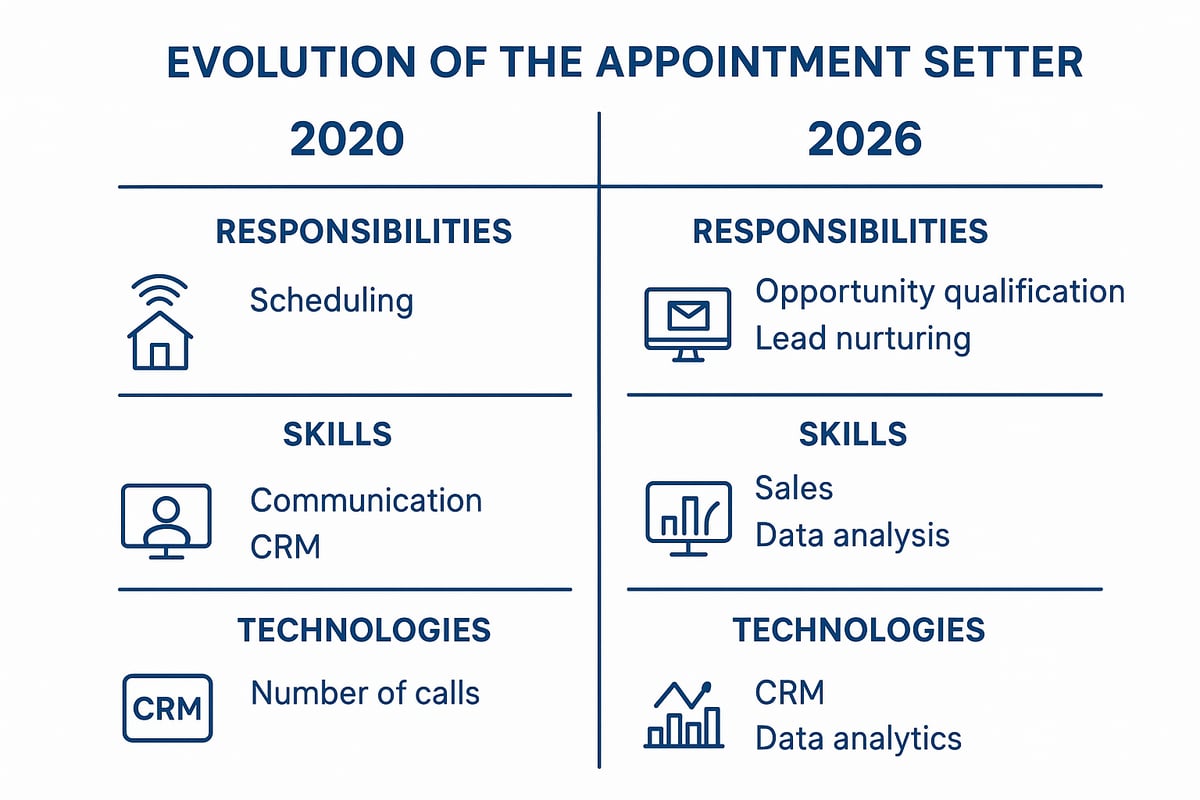
The appt setter role in 2026 is almost unrecognizable compared to just a few years ago. Today, businesses rely on appt setters not only to schedule calls but to act as strategic operators within the sales pipeline.
This shift is driven by several major trends. The appt setter is no longer focused on volume alone. They are now responsible for research, relationship building, and orchestrating personalized outreach across multiple channels. The modern appt setter is expected to manage more complex buyer journeys, adapting to prospects who are informed, cautious, and demand tailored experiences.
Remote work and globalization have transformed the daily life of the appt setter. Companies now recruit talent from around the world, expanding both the talent pool and the competitive landscape. As a result, appt setters must be culturally aware and able to communicate effectively across time zones and regions. If you’re interested in exploring the realities and opportunities of this new landscape, you can learn more about remote appointment setter careers.
Buyer behaviors have changed dramatically. Prospects are more skeptical, with access to vast information and competing offers. They expect every interaction to be relevant and personalized. Decision cycles are longer, and buyers often engage across several platforms before committing to a call.
Key shifts in buyer behavior include:
Increased skepticism and need for credibility
Demand for highly personalized outreach
Longer, multi-touch consideration cycles
Technology is now at the core of the appt setter workflow. Setters leverage powerful sales engagement platforms, automation, and data enrichment tools to manage outreach and track engagement. Multi-channel appointment setting is the norm, covering email, social media, SMS, and even video messaging. This approach ensures that the appt setter reaches prospects where they are most responsive.
Performance metrics have also evolved. Success isn’t just about the number of dials or emails sent. Instead, appt setters are measured on engagement rates, show rates, and the quality of appointments booked.
Here’s a side-by-side look at how the appt setter job description has changed:
Year | Key Responsibilities | Required Skills | Metrics Used |
|---|---|---|---|
2020 | Book calls, basic CRM | Good phone/email skills | Dials, emails sent |
2026 | Pipeline strategy, multi-channel, research | Digital fluency, data analysis, consultative communication | Engagement, show rates, pipeline health |
According to HubSpot’s 2024 Sales Trends Report, 63% of businesses now include appt setters as a core part of their sales strategy. This mainstream adoption brings new challenges.
Modern appt setters face:
Information overload from multiple platforms
Tool fatigue due to a crowded tech stack
Higher qualification standards and expectations
As the role continues to evolve, those who master these new skills and embrace technology will remain indispensable in the high-ticket sales ecosystem.
Core Skills and Qualities of a Top Appt Setter
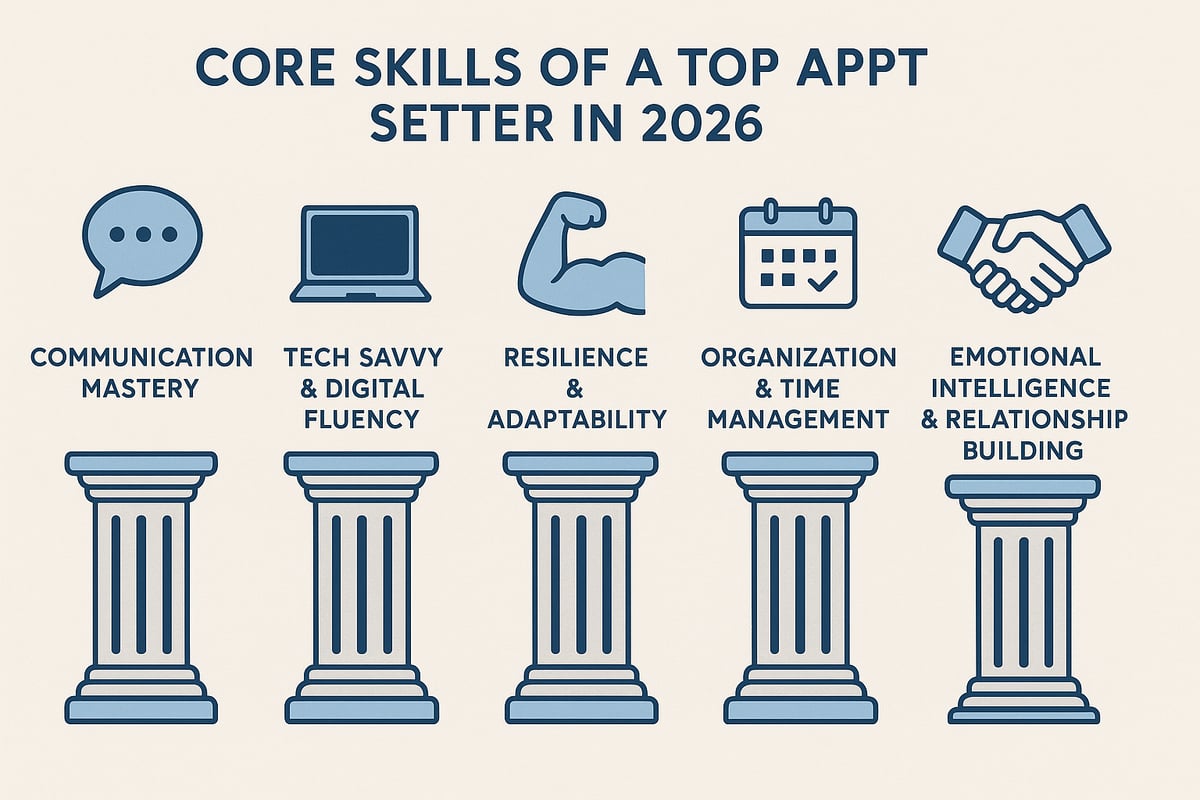
Becoming a top appt setter in 2026 requires more than just booking calls. The role demands a blend of advanced communication, digital fluency, emotional intelligence, and organizational prowess. Let us break down the essential skills and qualities every high-performing appt setter must master.
Communication Mastery
Exceptional communication is the foundation of every successful appt setter. Active listening allows setters to understand prospects' true needs, while consultative questioning uncovers deeper motivations. Personalizing messages for each buyer persona increases engagement and builds trust.
Handling objections with empathy and authority is a must. This skill ensures that conversations stay positive and productive, even when faced with skepticism. Many top teams use role-play exercises to sharpen these abilities, simulating real buyer interactions and refining responses.
For those seeking to deepen their expertise, exploring the Core Skills of Appointment Setters can provide additional insights into what separates elite performers from the rest.
Tech Savvy & Digital Fluency
In 2026, a top appt setter must navigate a complex digital landscape. Mastery of CRM platforms, calendar tools, and sales engagement software is non-negotiable. Setters use video and asynchronous tools to reach prospects on their terms, adapting to shifting communication preferences.
Understanding data privacy and compliance regulations is crucial when handling sensitive information during outreach. Gartner’s 2025 report highlights that 78% of sales teams require digital competency in new hires, reflecting the rising expectations for technology skills.
Staying current with platform updates and exploring emerging outreach channels helps the appt setter remain effective and compliant in a fast-evolving environment.
Resilience & Adaptability
Every appt setter faces rejection. What sets the best apart is their resilience. They maintain motivation through setbacks, viewing each "no" as a step closer to a "yes."
Adaptability is equally vital. Market conditions, scripts, and offers change rapidly. Setters who can pivot quickly and embrace new strategies are more likely to succeed in dynamic sales environments.
Cultivating a growth mindset helps the appt setter turn challenges into opportunities for improvement.
Organization & Time Management
With busy pipelines, organization is key for the modern appt setter. Prioritizing high-value leads ensures that time is spent where it matters most.
Structuring daily workflows, blocking calendar time for outreach, and using reminders all contribute to greater productivity.
A disciplined approach to scheduling and follow-up helps the appt setter consistently hit targets and reduce missed opportunities.
Emotional Intelligence & Relationship Building
Emotional intelligence enables the appt setter to build rapport quickly, especially in remote or digital-first settings. Recognizing and responding to subtle buying signals can mean the difference between a booked meeting and a lost lead.
Relationship-building is not just about charisma. It is about understanding prospect needs, showing genuine interest, and creating trust from the first interaction.
By nurturing these connections, the appt setter lays the groundwork for successful, long-term business relationships.
The 2026 Appt Setter Tech Stack: Tools You Need to Succeed
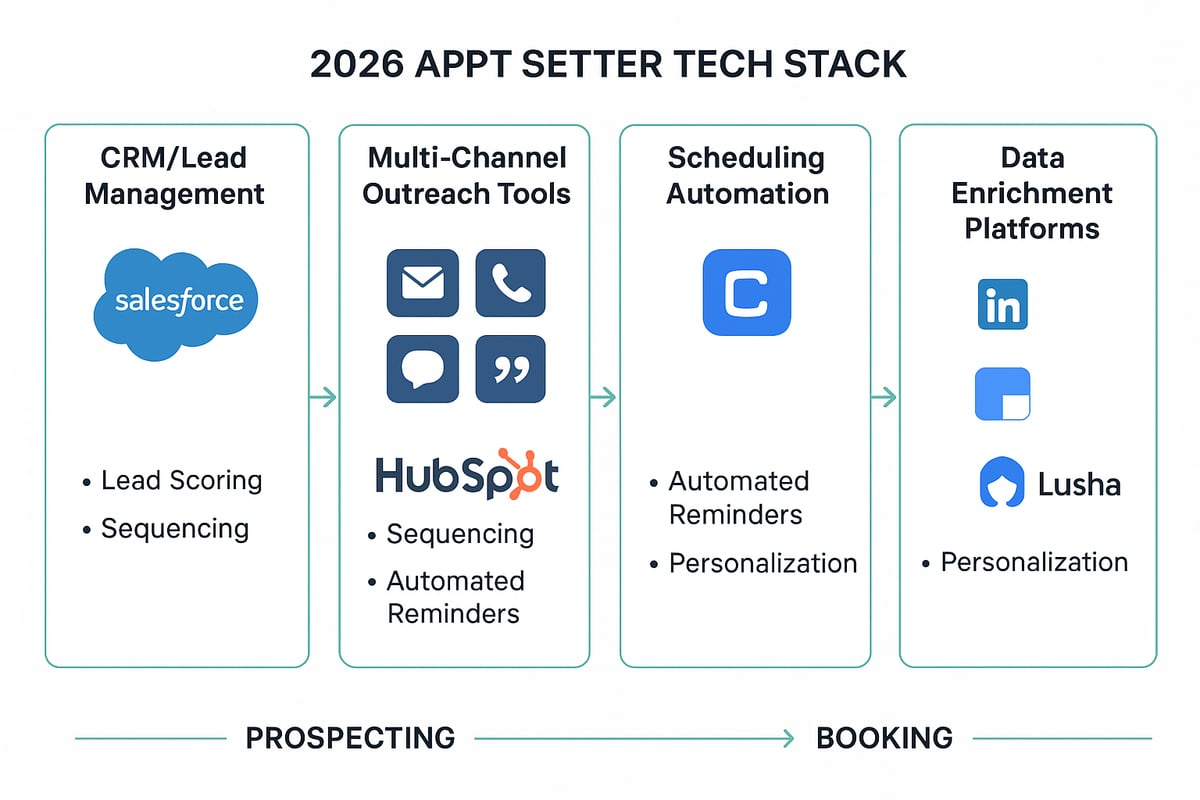
The modern appt setter relies on a robust, integrated tech stack to streamline every step of the appointment setting process. With digital sales evolving rapidly, having the right platforms and tools is essential for maximizing efficiency, boosting engagement, and maintaining a competitive edge. Let us explore the core components every appt setter must master in 2026.
CRM & Lead Management Platforms
A powerful CRM is the backbone of any appt setter’s workflow. In 2026, platforms like Salesforce, HubSpot, and Pipedrive continue to dominate, offering advanced features tailored for high-volume appointment setting.
Key capabilities to look for include:
Lead scoring to prioritize prospects based on engagement and fit.
Automated reminders that notify both setters and prospects of upcoming appointments.
Rich activity tracking to monitor every touchpoint and outcome.
A well-integrated CRM helps the appt setter centralize contacts, manage follow-ups, and ensure no opportunity falls through the cracks. The ability to sync calendars, log communications, and generate real-time reports means every appt setter can work smarter and deliver better results.
Sales Engagement & Outreach Tools
Today’s appt setter must orchestrate outreach across multiple channels to break through noise and reach decision-makers. Email, SMS, LinkedIn automation, and even video messaging are now standard in the sales toolkit.
Sequencing tools allow setters to build custom outreach cadences, increasing reply and show rates.
Personalization features let setters tailor messages for each prospect at scale.
Analytics dashboards track opens, clicks, replies, and engagement trends.
Notably, campaigns using three or more channels have been shown to earn 287% higher engagement, according to Omnichannel Outreach Evolution. This data underscores why a multi-channel approach is now a non-negotiable for the modern appt setter.
Calendar & Scheduling Automation
Efficient scheduling is crucial for any appt setter working at scale. Tools like Calendly and Chili Piper make it simple for prospects to book time, while automated reminders and confirmations keep no-shows to a minimum.
Benefits of scheduling automation include:
Instant booking links that sync with calendars and prevent double-booking.
Automated reminders sent via email or SMS to both parties.
Customizable availability to align with team and prospect preferences.
For an appt setter, minimizing manual scheduling tasks means more time focused on high-value conversations and less on administrative follow-up. This results in a smoother experience for both setter and prospect.
Data Enrichment & Research Tools
Personalization and relevance are non-negotiable for the successful appt setter in 2026. Data enrichment platforms like Clearbit and Lusha empower setters to gather actionable insights about prospects before outreach begins.
Core features include:
Real-time contact and company data for accurate targeting.
Social and intent signals to prioritize outreach.
Compliance tools to ensure data privacy standards are met.
Accurate data allows the appt setter to craft messages that resonate and avoid wasted effort on unqualified leads. With buying cycles growing longer and prospects more selective, investing in quality data tools is a must.
Step-by-Step: The Modern Appointment Setting Process in 2026
Appointment setting in 2026 is a precise, multi-step workflow. The modern appt setter leverages data, technology, and human connection at every stage. Below, discover the step-by-step process top professionals follow to book high-quality appointments in today’s competitive digital landscape.
Step 1: Prospect Research & List Building
The first step for any appt setter is building a targeted list of prospects who fit your Ideal Customer Profile (ICP). In 2026, this means using advanced research tools and data platforms to filter leads by industry, company size, buying signals, and decision-maker roles.
Start with platforms like LinkedIn Sales Navigator to create segmented lists. Use intent data, firmographics, and recent activity indicators to refine your search. A modern appt setter needs to be analytical, knowing when to prioritize high-fit prospects over generic lists.
Key tactics include:
Defining ICP criteria and using filters to match them.
Researching recent news, funding rounds, or tech stack updates about prospects.
Verifying contact data for accuracy before outreach.
For those interested in pursuing a career as an appt setter, check out Appt setter job openings to see the latest opportunities.
Step 2: Personalized Multi-Channel Outreach
Once your list is set, the next move is crafting and sending personalized outreach across multiple channels. The modern appt setter does not rely on a single medium. In 2026, effective outreach includes email, LinkedIn, SMS, and even short video messages.
Personalization goes beyond using a prospect’s name. Reference recent company news, industry trends, or mutual connections to stand out. Timing and cadence are crucial, too. According to Omnisend (2023), campaigns using three or more channels achieve 287% higher engagement than single-channel efforts.
Best practices for multi-channel outreach:
Sequence touchpoints: start with a LinkedIn connect, follow with a personalized email, then a concise SMS.
Use outreach platforms to automate follow-ups but always review for relevance.
Track engagement metrics to optimize timing and message content.
A sample 4-step sequence:
This approach increases the likelihood your outreach will be noticed and acted upon.
Step 3: Qualifying Leads & Handling Objections
After initial engagement, the appt setter must qualify leads to ensure they meet the criteria for a high-ticket offer. Qualification frameworks like BANT (Budget, Authority, Need, Timeline) and MEDDIC (Metrics, Economic Buyer, Decision Criteria, Decision Process, Identify Pain, Champion) have evolved for 2026, but their core remains: ask targeted questions and listen carefully.
Common qualification questions:
What business challenges are you facing right now?
Who else is involved in the decision process?
What is your timeline for finding a solution?
Handling objections is another key task. Modern buyers are well-informed and may express skepticism or concerns about time, fit, or value. The appt setter should respond with empathy, authority, and relevant case studies or social proof.
Tips for objection handling:
Acknowledge the concern, then clarify or reframe.
Share short, relevant success stories or statistics.
Offer to answer additional questions before booking.
Role-playing common objections during training helps sharpen these skills.
Step 4: Booking & Confirming Appointments
Once qualified, the appt setter’s job is to secure the meeting. Use intelligent scheduling tools like Calendly or Chili Piper to offer real-time availability, reducing friction for the prospect. Automated calendar invites with clear details minimize confusion.
Best practices for booking:
Send a calendar invite immediately after verbal agreement.
Include agenda, call duration, and platform link in the invite.
Set automated reminders 24 hours and 1 hour before the meeting.
To reduce drop-off, confirm attendance the day before, and provide a quick checklist or resource to prepare the prospect. This step ensures both parties arrive informed and ready for a productive conversation.
Step 5: Prepping for the Appointment Handoff
A seamless handoff is essential for maximizing conversion rates. The appt setter must share all relevant context with the closer or sales rep, including prospect pain points, decision criteria, and previous interactions.
Key steps:
Summarize qualification notes in the CRM.
Align internally on call objectives and desired outcomes.
Share any unique insights or preferences the prospect expressed.
Clear communication between the appt setter and the sales team prevents misunderstandings and sets the stage for a smooth closing process.
Step 6: Post-Booking Follow Up & Nurture
After booking, the appt setter’s work is not done. Keeping leads engaged before the call is crucial to avoid no-shows. Use nurture sequences—short, value-driven emails or SMS—to remind prospects of the upcoming meeting and reinforce the benefits.
Examples:
Send a “What to expect on our call” email.
Share a relevant case study or resource.
Offer to answer any last-minute questions.
This proactive approach builds trust and boosts show rates.
By following these steps, any appt setter can create a repeatable, data-driven process for consistently booking qualified appointments. Mastery of this workflow is what sets top performers apart in 2026.
Recruiting, Training, and Retaining Elite Appointment Setters
Recruiting, training, and retaining elite appt setter talent is a top priority for high-ticket sales teams in 2026. As organizations compete for skilled professionals, understanding the landscape and building a robust strategy is essential for long-term success.
The Talent Shortage: Why Great Setters Are in Demand
The demand for skilled appt setter professionals has reached new heights. According to LinkedIn’s 2025 Workforce Report, sales development and appointment setting roles experience higher turnover and longer fill times compared to other sales positions.
This shortage is driven by the growing importance of remote and digital-first sales, which has expanded the talent pool globally. However, finding candidates who combine digital fluency, resilience, and the ability to build rapport virtually is increasingly challenging. As more companies transition to remote high-ticket sales models, the value of a top-performing appt setter continues to rise.
Recruitment Best Practices
To secure elite appt setter talent, organizations must refine their recruitment processes. Start by targeting candidates with proven experience in digital sales environments, especially those comfortable with remote work.
Effective interview strategies include:
Scenario-based questions to assess problem-solving and adaptability
Role-play exercises simulating real-world outreach and objections
Evaluation of communication skills and digital platform proficiency
Reference checks remain vital, especially for remote roles. Leveraging a comprehensive vetting process for setters is crucial to ensure candidates meet high standards and fit your culture.
Additionally, consider expanding recruitment to include professionals seeking remote high-ticket sales jobs, as this widens your access to diverse and motivated appt setter candidates. Invest time in thorough background checks and portfolio reviews to minimize turnover and maximize performance.
Training for Success
A structured onboarding and training program sets your appt setter up for success. Start with clear playbooks outlining product knowledge, buyer personas, and outreach workflows. Incorporate regular coaching sessions and feedback loops to accelerate skill development.
Encourage shadowing experienced setters and provide detailed script feedback to build confidence. Use performance analytics to identify strengths and areas for improvement. Continuous education ensures your appt setter adapts to evolving sales tactics and technologies.
Retention Strategies
Retaining elite appt setter talent requires a multi-faceted approach. Offer competitive incentives and transparent career growth paths to keep team members engaged.
Key retention strategies include:
Flexible remote work arrangements
Recognition programs and performance bonuses
Regular check-ins and opportunities for skill advancement
Cultivate a culture that values learning, collaboration, and individual achievements. High retention rates reduce recruitment costs and foster a stable, high-performing sales pipeline.
How Sales Match Simplifies Setter Recruitment
Sales Match specializes in placing pre-vetted, high-ticket appointment setters for online businesses. Their custom matching process delivers rapid placement, reduced hiring risk, and ongoing support, helping companies scale their sales teams confidently and efficiently.

Future Trends: Where Appointment Setting is Headed by 2026 and Beyond
The world of the appt setter is moving at a rapid pace. As digital sales environments become more advanced, the appt setter role is evolving far beyond simply booking calls. New technologies, shifting buyer expectations, and global compliance challenges are reshaping what it means to excel in this field.
AI and Automation Take Center Stage
Artificial intelligence is transforming daily appt setter tasks. Activities such as lead scoring, outreach personalization, and follow-up reminders are increasingly automated. Setters now rely on advanced algorithms to prioritize prospects and optimize timing.
For a deeper dive into how AI is shaping this space, check out AI's Role in Appointment Setting. These innovations are making it possible for appt setters to work smarter and focus on building genuine connections.
Voice, Video, and Predictive Analytics
Voice and video channels are becoming a staple in the appt setter toolkit. Prospects often engage more with real-time interactions, which help build trust and rapport quickly. Predictive analytics are also revolutionizing lead selection by identifying the best time and method to reach each contact.
With these tools, the appt setter can deliver a more personalized and timely experience. Forrester predicts that by 2027, 40% of B2B sales interactions will begin with an appt setter, highlighting their growing influence.
Evolving Buyer Preferences and Compliance
Modern buyers demand flexibility and control. Asynchronous communication, such as recorded video messages and self-booking links, is now standard. These trends allow prospects to engage on their own schedule, raising the bar for every appt setter.
Hyper-personalization is also critical. To learn more about this shift, see Hyper-Personalization in Scheduling. At the same time, global data privacy laws are forcing setters to adapt outreach strategies to remain compliant.
The Rise of Niche-Specialized Setters
Another trend is the emergence of niche-focused appt setters. Businesses in SaaS, coaching, and other high-ticket sectors seek setters with deep industry knowledge. This specialization increases the value of the appt setter and leads to higher conversion rates.
Setters must stay current with compliance regulations, data security protocols, and changing buyer expectations. Those who adapt quickly will stand out in a crowded market.
How to Future-Proof Your Appointment Setting Strategy
To remain competitive, businesses and professionals should:
Invest in ongoing training for new sales technologies.
Embrace multi-channel outreach and asynchronous tools.
Develop expertise in niche markets.
Prioritize data privacy and compliance.
The appt setter who combines digital fluency, empathy, and adaptability will be best equipped to thrive in 2026 and beyond.
As we’ve explored, mastering appointment setting in 2026 means combining strategic communication, digital fluency, and the right tech tools to stay ahead in high-ticket online sales. Whether you’re looking to strengthen your in-house team or streamline your approach to finding top-tier setters, understanding these evolving trends and best practices will set you apart. If you’re ready to take the next step and discover how you can access pre-vetted sales talent tailored to your business needs, I encourage you to Learn more about building your ideal appointment-setting team for the future.