
High Ticket Closer Jobs: What You Need to Know in 2026
Discover everything about high ticket closer jobs, from skills and responsibilities to finding the right opportunities in 2026's sales landscape.
published
The sales landscape has transformed dramatically over the past few years, with high ticket closer jobs emerging as one of the most sought-after positions in the digital economy. These specialized sales professionals focus on converting qualified leads into customers for premium products and services, typically priced above $2,500. As businesses increasingly shift to virtual sales models through platforms like Zoom and Google Meet, the demand for skilled closers who can navigate complex sales conversations remotely has surged. Whether you're a business looking to build your sales team or a sales professional exploring career opportunities, understanding the nuances of high ticket closer jobs is essential in 2026's competitive market.
Understanding High Ticket Closer Jobs
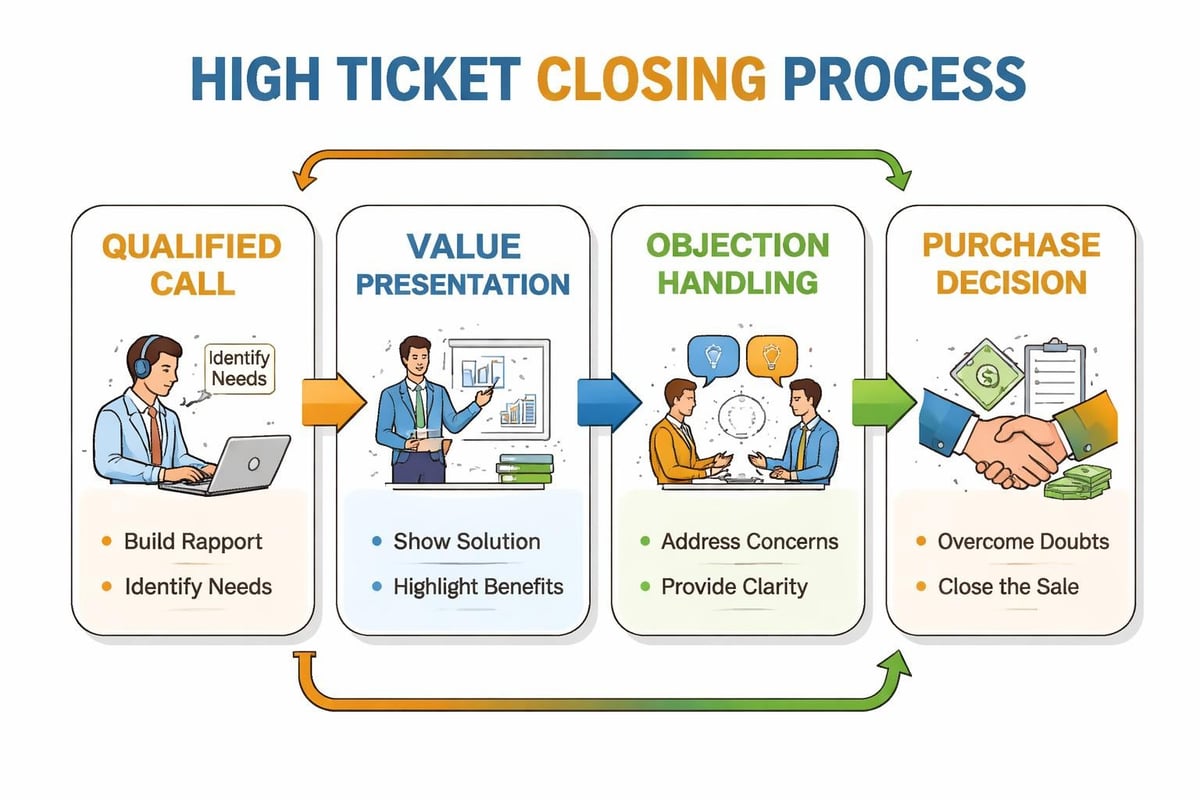
High ticket closer jobs represent a specialized segment of the sales profession where professionals focus exclusively on closing deals for premium-priced products and services. Unlike traditional sales roles that may involve the entire sales cycle, closers typically enter the conversation after a prospect has been qualified by appointment setters or marketing automation.
The core responsibility involves conducting consultative sales conversations that address sophisticated objections, demonstrate value propositions, and guide prospects toward purchase decisions. These conversations require deep product knowledge, emotional intelligence, and the ability to build trust quickly through virtual communication channels.
Key Responsibilities and Daily Activities
High ticket closers manage several critical functions throughout their workday:
Conducting scheduled sales calls with pre-qualified prospects
Navigating complex objections and concerns about premium pricing
Presenting comprehensive solutions tailored to individual prospect needs
Following up with prospects who require additional information or time
Collaborating with appointment setters to refine lead quality
Maintaining detailed records in CRM systems
Participating in ongoing training and skill development
The role demands exceptional communication skills, particularly in virtual environments where non-verbal cues are limited. Closers must create rapport quickly, ask probing questions to uncover true pain points, and articulate value in terms that resonate with each prospect's unique situation.
Most high ticket closer jobs operate on performance-based compensation structures that reward results. According to research on current industry opportunities, compensation typically includes a base salary or retainer combined with commission percentages ranging from 5% to 20% depending on the industry and product price point.
Essential Skills for Success
The most successful high ticket closers possess a distinctive combination of interpersonal abilities and technical competencies. These skills separate exceptional performers from average ones in this competitive field.
Communication and Persuasion
Active listening stands as the foundation of effective closing. Top performers spend more time listening than talking, using strategic questions to guide prospects toward recognizing their own needs. This consultative approach builds trust and positions the closer as an advisor rather than a pushy salesperson.
Storytelling ability helps closers illustrate concepts and overcome objections through relatable narratives. When prospects can see themselves in success stories or understand complex solutions through simple analogies, they move closer to purchase decisions.
Objection handling requires both preparation and improvisation. While common objections about price, timing, and fit can be anticipated, closers must think quickly to address unique concerns that arise during conversations.
Skill Category | Specific Competencies | Why It Matters |
|---|---|---|
Communication | Active listening, questioning techniques, clarity | Builds trust and uncovers true motivations |
Emotional Intelligence | Empathy, patience, reading tone | Creates connection in virtual environments |
Product Knowledge | Features, benefits, use cases | Provides credible answers and customization |
Time Management | Scheduling, follow-up systems, prioritization | Maximizes conversations with qualified leads |
Technical and Industry Knowledge
Understanding the products or services being sold is non-negotiable. For businesses in coaching, consulting, marketing agencies, or software-as-a-service, closers must grasp both the technical aspects and the transformation clients can expect. This knowledge enables them to speak confidently about implementation, results timelines, and potential challenges.
Familiarity with high ticket sales methodologies provides frameworks for structuring conversations effectively. Whether using SPIN selling, the Sandler method, or consultative approaches, having a systematic process creates consistency in results.
Finding Quality High Ticket Closer Jobs
The market for high ticket closer jobs has expanded significantly, but not all opportunities offer the same quality of support, compensation, or growth potential. Identifying the right positions requires strategic research and careful evaluation.
Where to Search for Opportunities
Multiple platforms host high ticket closer job listings, each with distinct advantages. Professional networks like LinkedIn aggregate hundreds of current openings from established companies, providing detailed job descriptions and employer information.
Specialized platforms focused on remote sales roles offer curated opportunities specifically for virtual closers. Sites like Uplift Rev emphasize remote positions with vetted clients, which can provide more stability than freelance arrangements.
Direct applications to companies in your target industries often yield the best matches. Researching businesses that sell coaching programs, consulting services, or marketing solutions above $2,500 allows you to approach them proactively about their sales team needs.
Evaluating Opportunity Quality
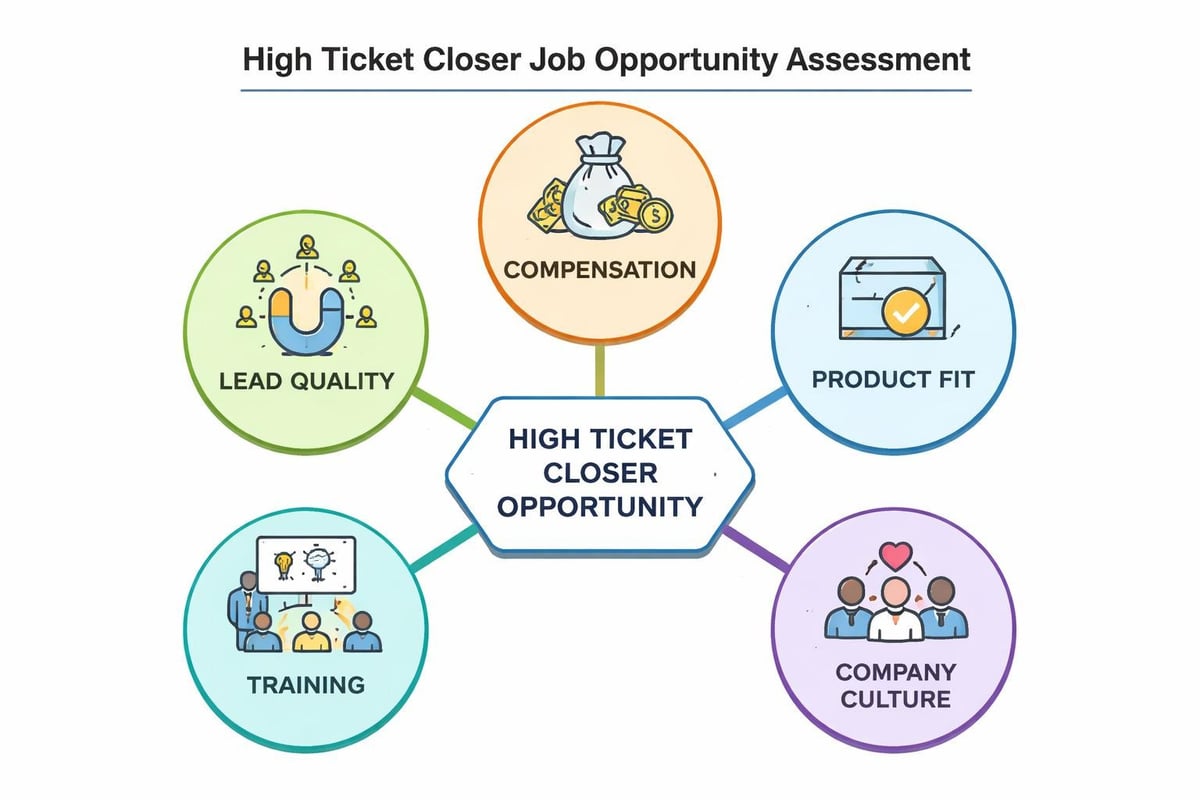
Not every high ticket closer job offers the same value proposition. Before committing to a position, evaluate these critical factors:
Lead quality and volume - How many qualified appointments will you receive weekly?
Product-market fit - Does the offering solve a genuine problem with proven demand?
Training and support - What onboarding, ongoing coaching, and resources are provided?
Compensation structure - Is the commission sustainable and competitive?
Company reputation - What do current and former team members say about the organization?
Companies that invest in proper vetting processes for their sales talent typically also maintain high standards for lead generation, product quality, and team support. This correlation often indicates a professional organization worth joining.
Industries Hiring High Ticket Closers
High ticket closer jobs span numerous industries, though certain sectors demonstrate particularly strong demand in 2026. Understanding which industries align with your interests and expertise helps target your job search effectively.
Coaching and Consulting
Business coaches, life coaches, and specialized consultants represent one of the largest segments hiring high ticket closers. These professionals typically offer transformation-focused programs priced between $3,000 and $50,000, requiring skilled closers who can articulate intangible value propositions.
The coaching industry continues expanding as entrepreneurs and executives seek personalized guidance. Closers in this space must understand adult learning principles, transformation timelines, and how to address skepticism about coaching effectiveness.
Marketing Agencies
Digital marketing agencies selling comprehensive service packages need closers who understand marketing fundamentals, ROI calculations, and agency-client relationships. These positions often involve selling retainer agreements worth $5,000 to $25,000 monthly.
Successful agency closers can discuss SEO, paid advertising, content marketing, and conversion optimization with authority. They translate technical marketing concepts into business outcomes that resonate with decision-makers.
Software and Technology Services
While traditional SaaS companies employ account executives, specialized software solutions and technology services often require dedicated high ticket closers for enterprise packages. These roles demand technical aptitude and the ability to navigate longer sales cycles with multiple stakeholders.
Education and Course Creation
Online course creators and educational platforms offering comprehensive certification programs or mastermind experiences regularly hire closers. These positions suit individuals passionate about education who can communicate learning outcomes and career transformation effectively.
The table below compares key characteristics across major industries:
Industry | Typical Price Range | Average Sale Cycle | Primary Objections |
|---|---|---|---|
Coaching/Consulting | $3,000-$50,000 | 1-4 weeks | ROI uncertainty, trust |
Marketing Agencies | $5,000-$25,000/month | 2-6 weeks | Past agency failures, cost |
Technology Services | $10,000-$100,000+ | 4-12 weeks | Implementation complexity |
Education/Courses | $2,500-$15,000 | 1-3 weeks | Time commitment, completion rates |
Building Your Career Path
High ticket closer jobs can serve as entry points into broader sales careers or become long-term specializations. Intentional career development maximizes your professional growth and compensation trajectory.
Starting Without Experience
Breaking into high ticket closing without prior sales experience is challenging but achievable. Many successful closers begin by demonstrating transferable skills from customer service, account management, or other client-facing roles.
Consider these entry strategies:
Join training programs offered by companies that hire and develop new closers
Start with appointment setting to learn the industry and transition into closing
Offer commission-only arrangements initially to prove your capabilities
Focus on industries where you have existing knowledge or credibility
Practice extensively through role-playing and studying recorded sales calls
Organizations like Sales Match specialize in placing both experienced closers and those transitioning into high ticket sales roles, providing businesses with qualified talent while helping sales professionals find suitable opportunities.
Advancing Your Closing Career
Experienced closers can increase their value through several advancement paths. Some specialize deeper in their current industry, becoming subject matter experts who command premium compensation. Others develop skills in adjacent areas like sales training, team leadership, or business development.
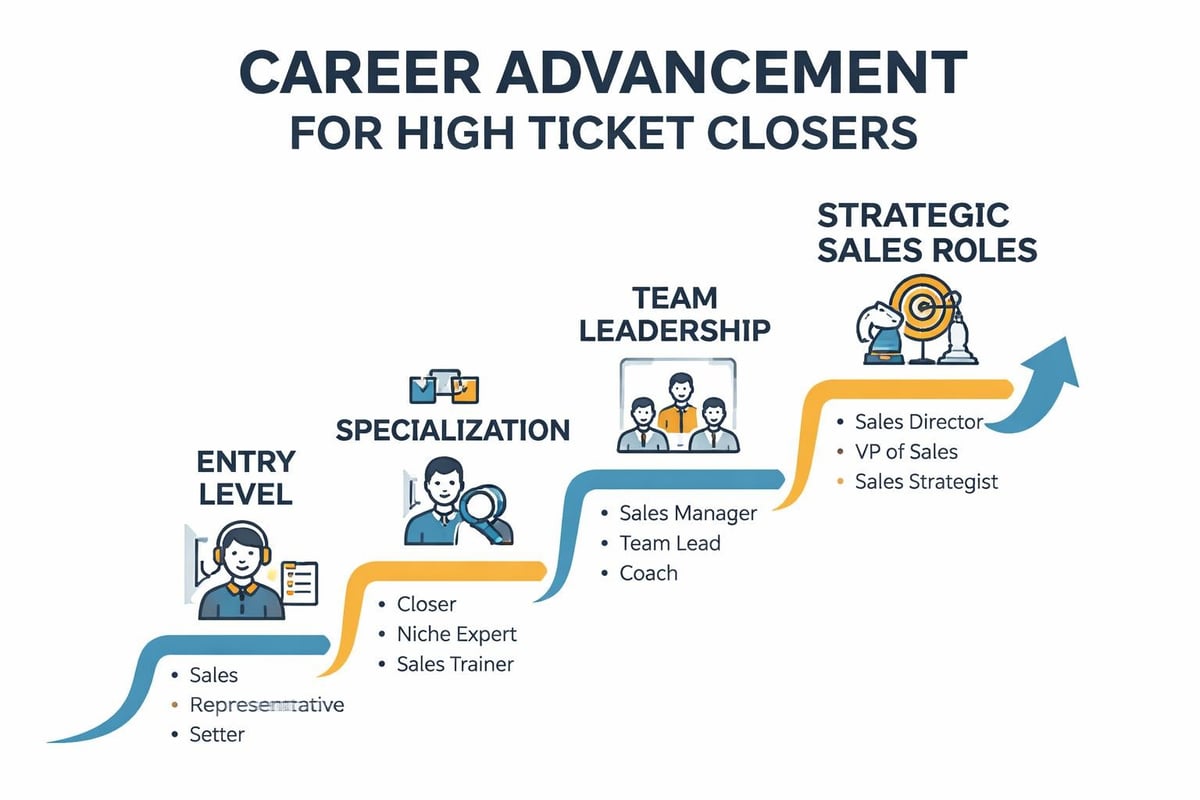
Specialization options include focusing on specific methodologies, industries, or deal sizes. A closer who becomes known for successfully selling consulting packages above $100,000 can often write their own ticket in terms of compensation and working conditions.
Leadership roles emerge for top performers who can train, mentor, and manage other closers. Sales managers and directors oversee teams, develop processes, and maintain quality standards across multiple closers.
Entrepreneurial paths allow experienced closers to launch their own agencies, offering closing services to multiple clients simultaneously. This model provides unlimited income potential but requires business development and client management skills beyond pure closing.
Remote Work and Flexibility
The vast majority of high ticket closer jobs in 2026 operate remotely, leveraging video conferencing technology to connect with prospects globally. This shift has democratized access to opportunities while creating new challenges for both closers and employers.
Advantages of Remote Closing
Working remotely as a high ticket closer offers compelling benefits that attract top talent. Geographic limitations disappear, allowing closers to work with premium companies regardless of location. A skilled closer in a small town can serve clients in major metropolitan markets without relocating.
Schedule flexibility enables closers to design workdays around peak productivity hours and personal commitments. While appointments must be honored, the absence of commutes and office politics creates more autonomy over time management.
Reduced overhead costs benefit both closers and companies. Without office expenses, businesses can allocate more resources toward compensation and lead generation, while closers save on commuting, wardrobe, and meal costs.
Challenges to Navigate
Remote high ticket closer jobs also present obstacles that require proactive solutions. Isolation from team members can hinder learning and motivation, making structured communication channels and regular team interactions essential.
Technology dependencies mean closers must maintain reliable internet, professional video setups, and backup systems for inevitable technical failures. A dropped call during a critical moment can cost thousands in lost revenue.
Work-life boundaries blur when your home becomes your office. Successful remote closers create dedicated workspaces, establish clear working hours, and develop rituals that separate professional time from personal life.
What Employers Look for When Hiring
Businesses seeking to fill high ticket closer jobs prioritize specific qualities and experiences that predict success. Understanding employer perspectives helps candidates position themselves effectively during the application and interview process.
Proven Track Record
While companies sometimes hire promising candidates without direct closing experience, demonstrated sales success carries the most weight. Employers want evidence of consistent performance, whether through previous closing roles, appointment setting with high conversion rates, or other customer-facing achievements.
Quantifiable metrics matter significantly. Rather than stating "successful at sales," top candidates present specific data: "Maintained 28% close rate across 200+ calls" or "Generated $450,000 in closed revenue over six months."
Cultural and Industry Fit
Companies selling coaching, consulting, or specialized services need closers who genuinely believe in their offerings. Authenticity cannot be faked during sales conversations, and prospects detect when closers lack conviction about what they're selling.
Understanding the target customer's pain points, aspirations, and decision-making processes demonstrates cultural alignment. A closer interviewing with a business coaching company should understand entrepreneurial challenges, while someone joining a marketing agency needs to grasp the pressures facing CMOs and business owners.
Employers increasingly use comprehensive evaluation processes to assess candidates. According to insights about vetted candidates, thorough screening includes role-playing exercises, personality assessments, reference checks, and trial periods to ensure mutual fit before full commitment.
Self-Management and Initiative
Remote high ticket closer jobs require exceptional self-discipline. Employers seek candidates who demonstrate proactive learning, consistent follow-through, and the ability to maintain performance without direct supervision.
Evidence of self-management includes:
Structured daily routines and time-blocking practices
Proactive skill development through courses, books, or coaching
Systematic follow-up processes for prospects requiring nurture
Honest communication about challenges and performance gaps
Initiative in suggesting improvements to processes or scripts
Compensation Structures and Considerations
Understanding how high ticket closer jobs typically structure compensation helps both candidates evaluate opportunities and employers design attractive packages that retain top talent.
Common Payment Models
Pure commission arrangements offer the highest percentage splits, often 10-20% of closed revenue, but provide no guaranteed income. This model suits experienced closers confident in their abilities and risk tolerance.
Base plus commission structures provide stability through guaranteed monthly payments ranging from $2,000 to $5,000, combined with lower commission percentages of 5-12%. This approach attracts skilled closers seeking predictable income while maintaining performance incentives.
Tiered commission structures increase percentages as closers hit volume or revenue thresholds, rewarding consistency and growth. A closer might earn 8% on the first $50,000 monthly, 10% on the next $50,000, and 12% on all revenue above $100,000.
Retainer plus commission models guarantee monthly payments for a minimum number of calls or hours, combined with commissions on closed deals. This arrangement works well for newer programs building sales systems where lead volume may fluctuate.
Evaluating Total Compensation
The commission structure represents just one element of total compensation. Smart candidates and employers also consider:
Lead quality and conversion rates expected
Average deal size and typical monthly volume
Benefits like health insurance, paid time off, or professional development
Performance bonuses or incentives beyond standard commission
Equity or profit-sharing for long-term team members
Calculating realistic monthly income requires honest assessment of conversion rates, lead volume, and ramp-up timelines. A position offering 15% commission on $10,000 sales might sound attractive, but if you only receive two qualified appointments weekly with industry-standard 20% close rates, monthly income remains modest during early months.
Building High-Performing Sales Teams
For businesses selling premium products and services, assembling the right sales team represents a critical success factor. The approach to finding and integrating high ticket closers significantly impacts revenue growth and team stability.
Internal Development vs. External Hiring
Companies face strategic decisions about whether to develop closers internally or hire experienced talent. Internal development through promoting appointment setters or training enthusiastic team members builds loyalty and cultural continuity but requires substantial time investment.
External hiring provides immediate expertise and proven methodologies but demands careful screening to ensure alignment. The challenge intensifies as businesses must compete for top talent in a market where skilled closers have numerous options.
Specialized recruitment services streamline the hiring process by maintaining networks of pre-screened sales professionals. This approach reduces time-to-hire while improving candidate quality through professional vetting.
Creating Systems for Success
Even talented closers struggle without proper infrastructure supporting their efforts. High-performing sales teams require:
Consistent lead flow from marketing and appointment setting functions
Comprehensive training on products, objections, and sales methodologies
Quality assurance processes including call reviews and feedback loops
CRM systems that track prospects, conversations, and performance metrics
Ongoing coaching to refine techniques and maintain motivation
Organizations that view building sales teams as strategic initiatives rather than administrative tasks achieve better retention and performance outcomes. This perspective includes investing in team culture, recognizing achievements, and creating growth paths for top performers.
Scaling Considerations
As businesses grow, sales team structures must evolve. Early-stage companies might operate with one or two closers handling all qualified leads. Scaling requires systematizing processes, documenting best practices, and potentially creating specialized roles.
Some organizations develop separate closing teams for different products, price points, or customer segments. Others maintain generalist closers but implement tiered systems where senior team members handle larger deals or more complex objections.
The decision to expand closing capacity should align with reliable lead generation capabilities. Hiring additional closers before sufficient appointment flow exists creates frustration and turnover, while waiting too long results in lost revenue from qualified prospects who aren't contacted promptly.
High ticket closer jobs represent a dynamic and rewarding career path for sales professionals while serving as a critical function for businesses selling premium products and services over virtual platforms. Success in this field requires developing consultative skills, choosing quality opportunities aligned with your values, and continuously refining your craft through practice and feedback. If you're building a sales team for your coaching, consulting, or service business, Sales Match connects you with pre-vetted closers and appointment setters who can drive revenue growth without lengthy hiring processes, allowing you to focus on delivering exceptional results for your clients.