Sales From Home: Building High-Performing Remote Teams
Discover how to build effective sales from home teams. Expert strategies for remote sales success, talent acquisition, and team management.
published
The landscape of professional selling has undergone a fundamental transformation. Sales from home has evolved from an occasional necessity to a strategic business model that offers unprecedented flexibility, access to global talent, and operational efficiency. For high-ticket businesses selling premium products and services through virtual channels, building effective remote sales teams represents both an opportunity and a challenge. Understanding how to leverage remote sales talent, implement robust management systems, and create performance-driven cultures becomes essential for sustained growth and competitive advantage in today's digital-first marketplace.
The Remote Sales Revolution
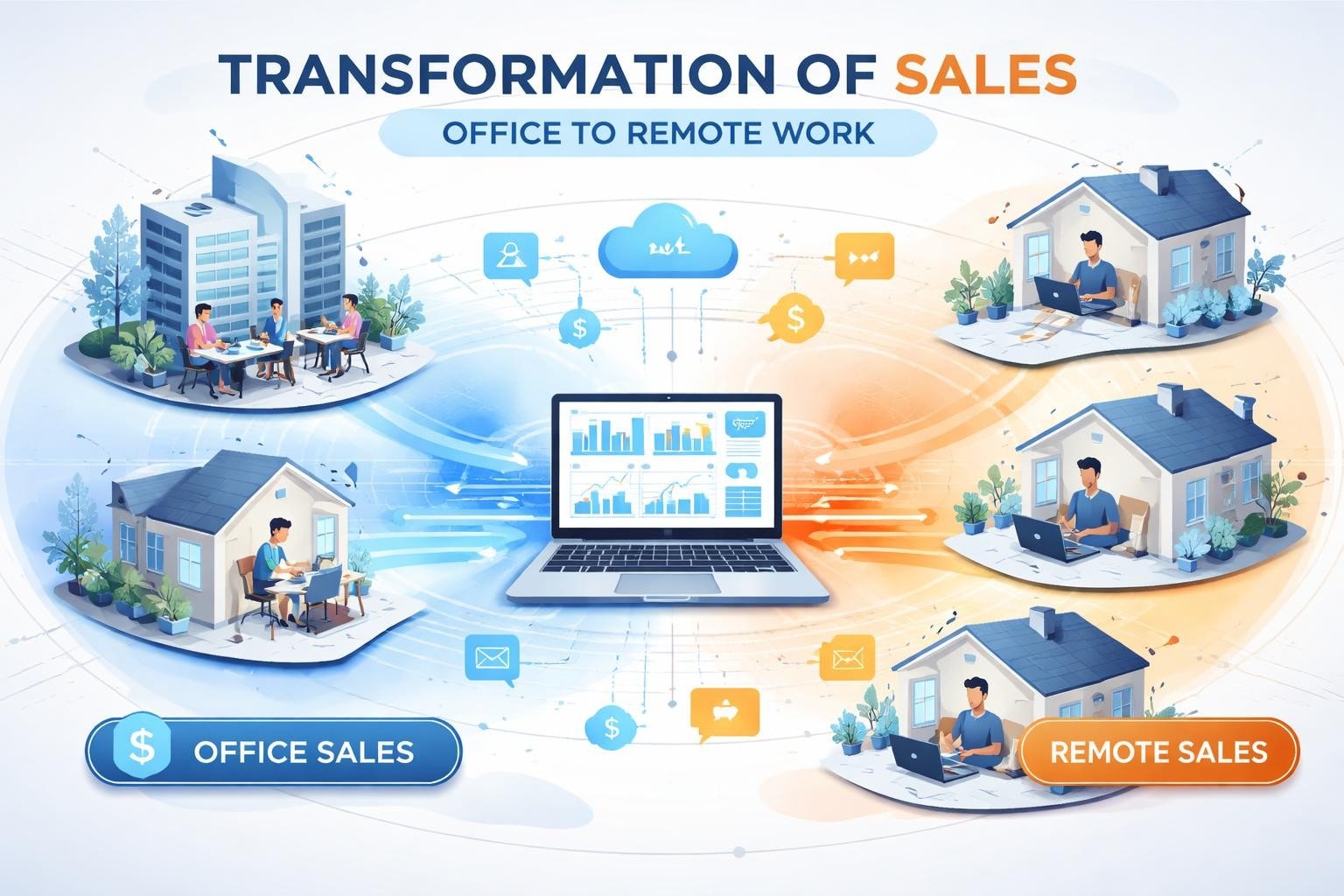
The shift toward sales from home operations accelerated dramatically in recent years. According to data from HubSpot, 53% of sales professionals now work remotely more than 50% of the time, marking a permanent change in how organizations structure their sales departments. This transformation affects every aspect of the sales process, from prospecting and appointment setting to closing high-value deals.
Remote work statistics reveal compelling advantages. Research shows that 45% of sales professionals believe remote work has improved their work-life balance, while 78% say it allows them to focus more on customer needs. These benefits translate directly into performance improvements when organizations implement proper systems and support structures.
Why High-Ticket Businesses Choose Remote Sales
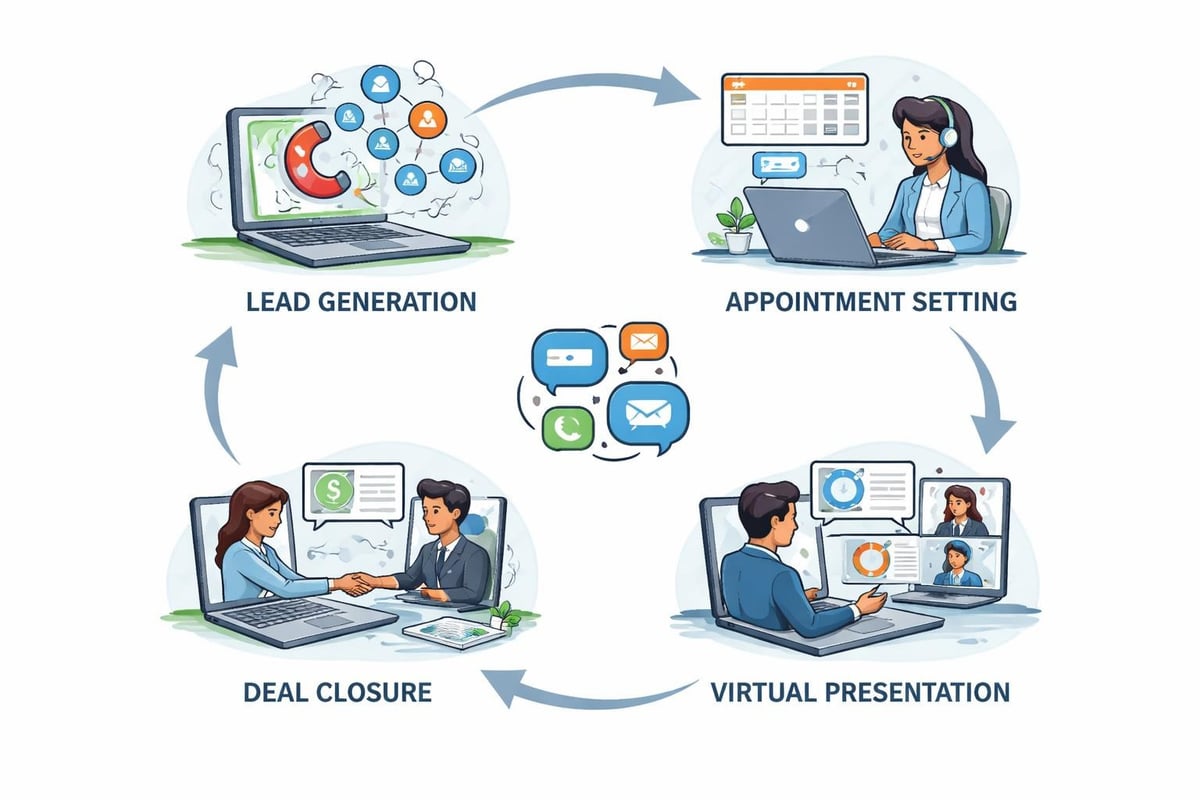
High-ticket businesses selling services above $2,500 discover unique advantages in remote sales models. Geographic limitations disappear when your sales team operates virtually, allowing you to access top talent regardless of location. Marketing agencies, coaches, consultants, and service-based businesses find that virtual sales align naturally with their delivery model.
Key advantages include:
Expanded talent pool: Access skilled appointment setters and closers from anywhere
Reduced overhead costs: Eliminate office space requirements and associated expenses
Scalability: Grow your sales team rapidly without physical infrastructure constraints
Better work-life integration: Attract and retain high performers who value flexibility
The economics prove compelling. Companies reduce real estate costs while simultaneously accessing broader talent markets. For businesses already conducting sales through Zoom or Google Meet, maintaining a sales from home structure creates operational consistency throughout the customer journey.
Building Your Remote Sales Infrastructure
Creating successful sales from home operations requires deliberate infrastructure planning. Technology forms the foundation, but systems, processes, and culture determine ultimate success. Organizations must establish clear frameworks before expanding their remote sales teams.
Essential Technology Stack
Your technology requirements extend beyond basic video conferencing. Comprehensive remote sales operations demand integrated systems that support every stage of the sales process.
Tool Category | Primary Function | Impact on Performance |
|---|---|---|
CRM Platform | Contact management, pipeline tracking | Centralizes customer data and sales activity |
Communication Suite | Video calls, instant messaging, email | Enables real-time collaboration and customer engagement |
Sales Intelligence | Prospect research, contact discovery | Accelerates lead qualification and personalization |
Performance Analytics | Activity tracking, conversion metrics | Provides visibility into individual and team performance |
Training Platforms | Onboarding, skill development | Ensures consistent sales methodology across distributed teams |
Integration between systems matters as much as individual tool selection. Sales professionals working remotely need seamless workflows that eliminate friction and maintain productivity throughout their day.
Process Documentation and Standardization
Remote environments magnify the importance of documented processes. When team members work from distributed locations, implicit knowledge transfer breaks down. Everything from lead qualification criteria to objection handling frameworks requires explicit documentation.
Successful organizations create comprehensive playbooks covering:
Lead handling procedures: Response time expectations, qualification questions, scheduling protocols
Discovery frameworks: Question sequences, pain point identification, needs assessment structures
Presentation standards: Deck templates, demonstration flows, value proposition delivery
Closing techniques: Pricing discussions, objection responses, contract procedures
Follow-up sequences: Timing, messaging, re-engagement strategies
These documented systems ensure consistency regardless of which team member engages with prospects. For businesses focused on high-ticket sales, standardization protects brand reputation while maintaining conversion rates.
Hiring and Onboarding Remote Sales Talent
Identifying qualified sales professionals for remote work presents distinct challenges. The skills required for sales from home success differ somewhat from traditional office-based selling. Self-motivation, communication clarity, and technical proficiency become critical differentiators.
Evaluating Remote Sales Candidates
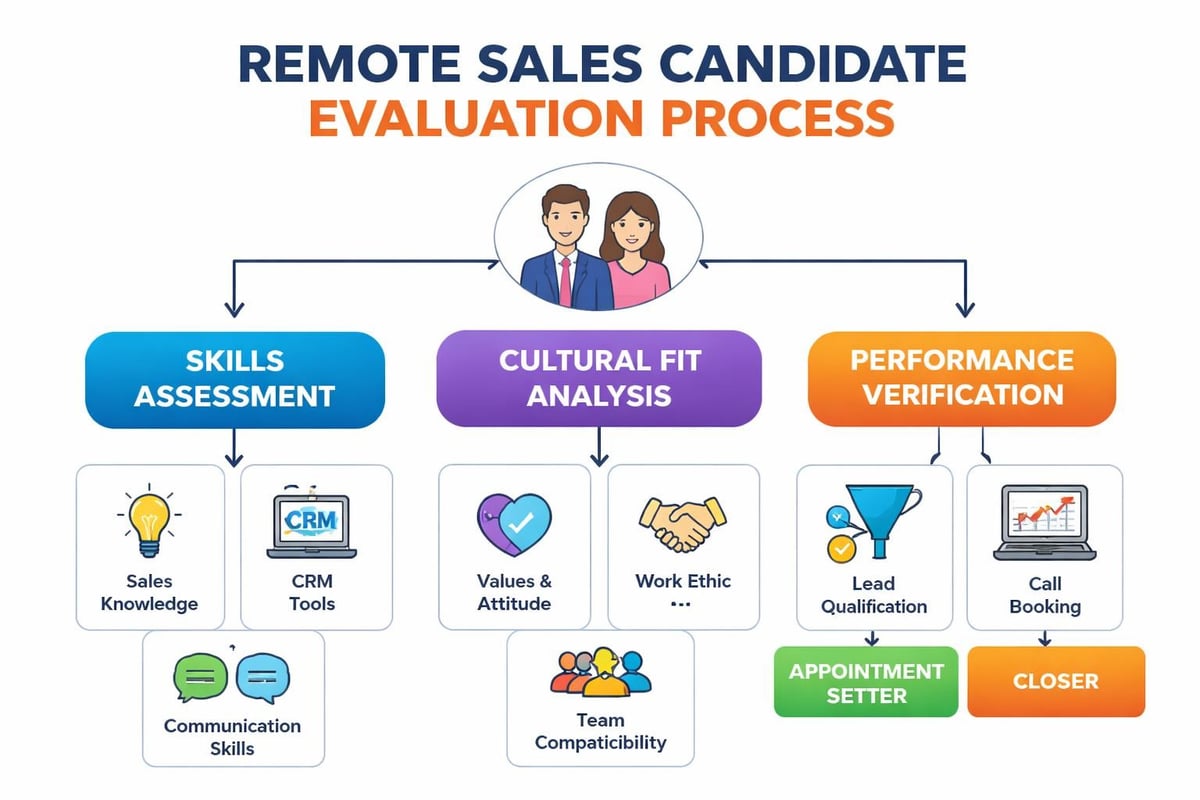
Assessment criteria for remote sales professionals should emphasize both traditional sales competencies and remote-specific capabilities. Technical aptitude matters more when troubleshooting falls to individual team members rather than in-office IT support.
Critical evaluation areas:
Communication skills: Clarity in written and verbal communication across digital channels
Self-management: Demonstrated ability to maintain productivity without direct supervision
Technical competence: Comfortable navigating multiple software platforms simultaneously
Track record: Previous success in remote or autonomous work environments
Coachability: Receptiveness to feedback delivered through virtual channels
Organizations investing in pre-vetted sales talent streamline this process significantly. Thorough vetting eliminates candidates lacking essential remote work characteristics before they enter your hiring pipeline.
Structured Onboarding Programs
Remote onboarding requires more intentional design than office-based programs. New hires lack the ambient learning that occurs through proximity to experienced team members. Structured programs compensate through systematic knowledge transfer and scheduled interaction.
Effective remote onboarding spans 30-60 days and includes:
Technical setup (Days 1-3): System access, software installation, tool familiarization
Product education (Week 1-2): Offering details, competitive positioning, customer personas
Process training (Week 2-3): CRM workflows, communication protocols, documentation requirements
Shadowing period (Week 3-4): Observing senior team members, call reviews, live examples
Supervised selling (Week 4-6): Initial prospect engagement with manager oversight and feedback
This phased approach builds competence systematically while maintaining quality standards. Companies seeking to hire a sales team efficiently benefit from templated onboarding processes that reduce time-to-productivity.
Managing Performance in Remote Environments
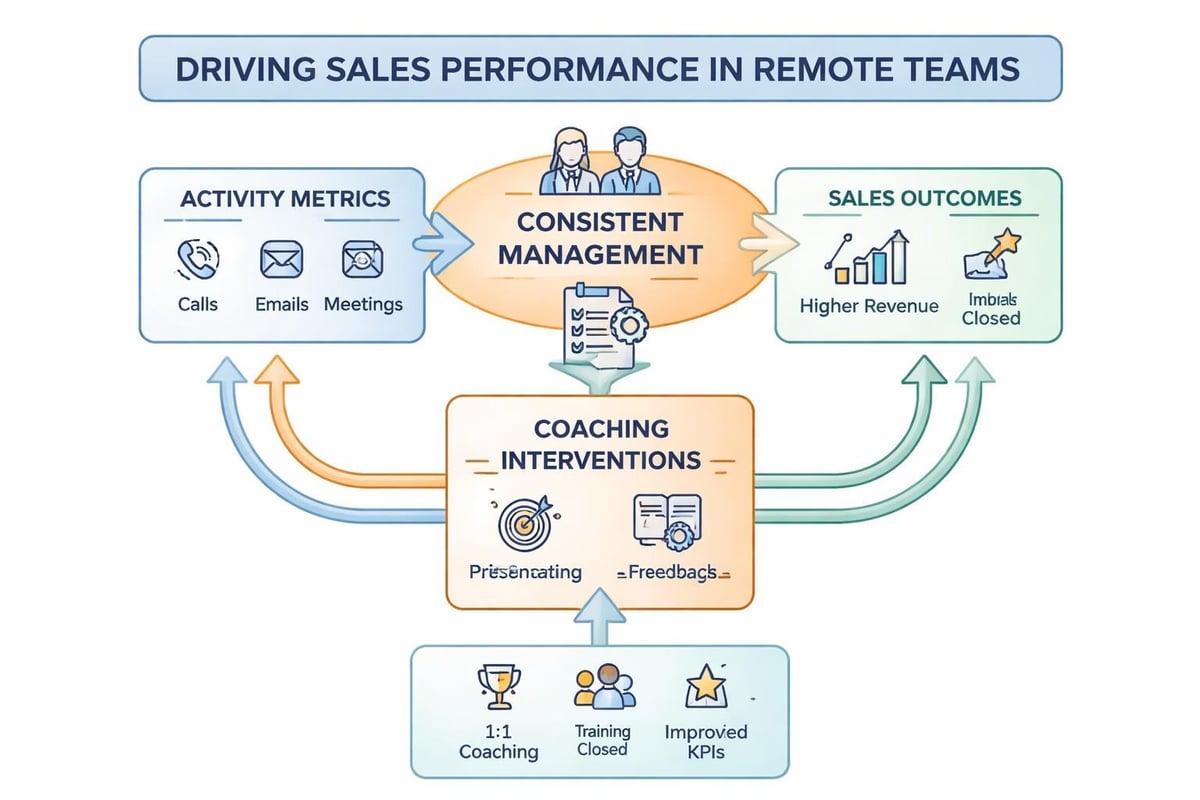
Performance management for sales from home teams demands different approaches than traditional models. Visibility decreases when managers cannot observe daily activity directly. Successful organizations replace physical presence with robust metrics and regular communication rhythms.
Activity Metrics and Accountability
Remote sales management relies heavily on quantifiable activity metrics. While outcome metrics (deals closed, revenue generated) remain important, leading indicators provide earlier visibility into performance trends.
Essential activity metrics include:
Daily outreach volume (calls, emails, messages)
Appointment setting rates and show percentages
Conversation-to-opportunity conversion rates
Pipeline velocity and stage progression
Response time to inbound inquiries
Tracking these metrics requires discipline from both salespeople and managers. However, data-driven management reduces ambiguity and creates objective performance conversations. Research indicates that 67% of sales managers find managing remote teams more challenging than expected, making systematic metrics even more critical.
Communication Cadence and Coaching
Regular communication prevents isolation and maintains alignment across distributed teams. Establishing predictable rhythms helps remote salespeople feel connected to broader organizational goals while receiving necessary guidance.
Communication Type | Frequency | Primary Purpose |
|---|---|---|
One-on-one meetings | Weekly | Individual performance review, obstacle removal, coaching |
Team standups | Daily or 3x weekly | Activity updates, quick wins, collaborative problem-solving |
Pipeline reviews | Bi-weekly | Deal progression analysis, forecasting, strategy refinement |
Skills training | Monthly | Capability development, technique practice, knowledge sharing |
All-hands meetings | Monthly | Company updates, culture reinforcement, recognition |
This structured communication framework provides multiple touchpoints without creating meeting overload. The key involves making each interaction purposeful and valuable for participants.
Compensation and Motivation Strategies
Designing effective compensation for sales from home positions requires balancing motivation with business sustainability. High-ticket sales typically involve longer sales cycles and higher deal values, affecting how you structure payment models.
Competitive Compensation Structures
Your commission structure directly impacts both talent acquisition and performance outcomes. Remote positions attract significant applicant volume, but top performers gravitate toward packages offering substantial upside potential.
Common compensation models for remote sales roles:
Base plus commission: Provides income stability while rewarding performance
Tiered commission rates: Increases percentage as salespeople exceed targets
Accelerators: Bonus multipliers for surpassing quota thresholds
Team-based incentives: Encourages collaboration on complex deals
Performance bonuses: Quarterly or annual rewards for sustained excellence
For appointment setters focused on calendar filling rather than closing, base compensation typically represents a larger percentage of total compensation. Closers handling high-ticket transactions often work with higher commission percentages reflecting their direct revenue impact.
Non-Financial Motivation in Remote Settings
Financial compensation forms just one component of comprehensive motivation strategies. Remote workers particularly value recognition, development opportunities, and career progression visibility.
Recognition programs adapted for remote environments include:
Public acknowledgment: Highlighting achievements in team meetings and communication channels
Leaderboard visibility: Transparent performance rankings that celebrate top performers
Career pathing: Clear advancement opportunities from appointment setter to closer to team lead
Skill development: Investment in training, certifications, and professional growth
Flexibility rewards: Additional time off or schedule flexibility for consistent high performers
These non-financial elements create sustainable motivation beyond transaction-based incentives. They also improve retention by demonstrating organizational investment in individual success.
Technology for Remote Sales Success
Beyond basic infrastructure, specific technologies enhance remote sales effectiveness. The right tools eliminate friction points that otherwise slow down sales from home operations.
Communication and Collaboration Tools
Sales professionals need frictionless communication with both prospects and internal team members. Platform selection should prioritize reliability, ease of use, and professional presentation quality.
Practical tips for remote selling emphasize leveraging technology thoughtfully rather than overwhelming prospects with excessive tools. Video conferencing platforms like Zoom and Google Meet dominate high-ticket sales environments because they're familiar to prospects and provide sufficient functionality for complex presentations.
Screen sharing, recording capabilities, and virtual backgrounds enhance professional presentation without requiring technical expertise. Integration with calendar systems streamlines scheduling, reducing friction in the appointment-setting process.
Sales Enablement Platforms
Modern sales enablement technology provides remote teams with instant access to relevant content, competitive intelligence, and customer success stories. These platforms centralize resources that salespeople need during customer conversations.
Key features include:
Content libraries: Organized by prospect type, objection, or sales stage
Presentation builders: Templates that maintain brand consistency while allowing customization
Email sequences: Pre-written follow-up campaigns triggered by prospect actions
Battle cards: Quick-reference guides for competitive situations
ROI calculators: Interactive tools demonstrating value proposition quantitatively
Equipping remote salespeople with these resources reduces the knowledge gap between experienced and newer team members. Everyone accesses the same high-quality materials regardless of location or tenure.
Scaling Your Remote Sales Team
Growth brings new challenges for sales from home operations. What works with three remote salespeople often breaks at ten or fifteen team members. Anticipating these scaling challenges prevents performance disruptions.
Team Structure and Specialization
As your remote sales team expands, specialization becomes advantageous. Separating appointment-setting functions from closing responsibilities allows individuals to develop deep expertise in specific competencies.
Common specialization models:
SDR/AE split: Appointment setters qualify and schedule; account executives close
Industry vertical teams: Different salespeople specialize in specific market segments
Geographic distribution: Time zone coverage enabling faster response across regions
Product specialization: Different team members own different service offerings
This specialization improves both efficiency and effectiveness. It also creates clearer career progression paths as individuals advance from setting appointments to closing deals to managing teams.
Quality Assurance and Consistency
Maintaining quality across a distributed sales team requires systematic monitoring and feedback mechanisms. Call recording and review programs ensure adherence to methodology and identify coaching opportunities.
Implement quality programs through:
Random call sampling: Managers review representative conversations weekly
Self-assessment: Salespeople evaluate their own performance against rubrics
Peer review: Team members provide feedback to colleagues
Scorecards: Standardized evaluation criteria applied consistently
Calibration sessions: Management alignment on quality standards
These quality assurance practices prevent methodology drift that naturally occurs when team members work independently. They also accelerate improvement by providing specific, actionable feedback.
Attracting Top Remote Sales Talent
Competition for skilled remote salespeople intensifies as more companies embrace distributed work models. Data shows that remote job postings attract significantly more applicants than on-site positions, but standing out requires deliberate positioning.
Employer Brand for Remote Positions
Your reputation as an employer directly affects applicant quality and volume. Top sales professionals research companies thoroughly before applying, evaluating factors beyond compensation.
Elements of strong employer brands for remote sales:
Clear growth trajectories: Documented paths from entry-level to senior positions
Training investment: Commitment to ongoing skill development
Technology quality: Modern tools that facilitate rather than hinder selling
Team culture: Evidence of collaboration, recognition, and support
Performance transparency: Clear expectations and fair evaluation criteria
Organizations that articulate these elements attract higher-caliber candidates. Your job descriptions should emphasize not just requirements but also what you provide to support success.
Recruitment Efficiency Through Specialization
Building internal recruitment capabilities for remote sales positions requires significant investment. Many organizations find that partnering with specialized firms accelerates candidate recruitment while improving quality outcomes.
Specialized recruitment provides several advantages:
Pre-screened candidates: Reduced time spent on unqualified applicants
Proven vetting processes: Systematic evaluation of remote work capabilities
Faster time-to-hire: Streamlined processes that fill positions quickly
Reduced hiring risk: Replacement guarantees that protect your investment
Market intelligence: Insights into compensation trends and talent availability
For businesses focused on growth, these efficiency gains justify recruitment partnerships. The cost of extended vacancies or poor hiring decisions typically exceeds recruitment service fees.
Challenges and Solutions in Remote Sales
Despite numerous advantages, sales from home models present distinct challenges. Awareness of common obstacles enables proactive mitigation rather than reactive problem-solving.
Isolation and Team Cohesion
Remote workers often report feelings of disconnection from colleagues and company culture. For salespeople accustomed to energetic team environments, this isolation impacts both satisfaction and performance.
Strategies to build cohesion remotely:
Virtual coffee chats pairing team members randomly for informal conversation
Dedicated Slack channels for non-work discussion and relationship building
Quarterly in-person gatherings when financially feasible
Team competitions with collaborative elements rather than pure individual rankings
Celebration rituals for wins that involve the entire team
These initiatives create social bonds that transcend transactional work relationships. They also reduce turnover by fostering genuine team connection despite physical distance.
Maintaining Productivity Standards
Without direct observation, some remote salespeople struggle with discipline and focus. Home environments introduce distractions that don't exist in dedicated office spaces.
Productivity support includes:
Structured schedules: Expected working hours with defined availability
Accountability partnerships: Paired team members who check in daily
Environment optimization: Guidance on creating dedicated workspace
Break protocols: Scheduled downtime preventing burnout
Performance dashboards: Real-time visibility into activity completion
These systems create external structure that replaces the natural accountability of office environments. They also identify struggling team members earlier, enabling intervention before performance completely deteriorates.
Future Trends in Remote Sales
The trajectory toward sales from home continues accelerating. Understanding emerging trends positions organizations to adapt proactively rather than reactively.
Technology Evolution
Artificial intelligence and automation increasingly augment human sales capabilities. These technologies handle routine tasks, freeing salespeople to focus on relationship building and complex problem-solving.
Emerging technologies include:
Conversational intelligence: Automated call analysis providing coaching insights
Predictive analytics: Identification of high-probability prospects and optimal contact timing
Automated follow-up: Intelligent sequencing based on prospect behavior
Virtual assistants: Scheduling, data entry, and administrative task automation
Enhanced personalization: Dynamic content customization at scale
While these tools enhance productivity, human expertise remains central to high-ticket sales. Technology amplifies capable salespeople rather than replacing them.
Hybrid Work Models
Some organizations experiment with hybrid approaches combining remote work flexibility with periodic in-person collaboration. These models attempt balancing autonomy benefits with relationship-building advantages of physical presence.
Hybrid considerations include:
Model Type | Structure | Best For |
|---|---|---|
Flexible remote | Fully remote with optional office access | Geographically distributed teams |
Fixed hybrid | Specific in-office days (e.g., Tuesday/Thursday) | Local or regional teams |
Team-based | Departments choose their own approach | Large organizations with diverse needs |
Individual choice | Employees select preferred arrangement | Retention-focused cultures |
Each model creates different management requirements and technology needs. The optimal approach depends on your specific business context, team preferences, and customer expectations.
Sales from home represents more than a temporary accommodation; it's a strategic advantage for high-ticket businesses selling through virtual channels. The key lies in implementing robust systems, hiring qualified talent, and maintaining performance standards across distributed teams. Sales Match specializes in connecting businesses with pre-vetted appointment setters and closers who excel in remote environments, eliminating the lengthy hiring processes that slow growth. If you're ready to build or scale your remote sales team with world-class talent, explore how Sales Match can accelerate your hiring success.