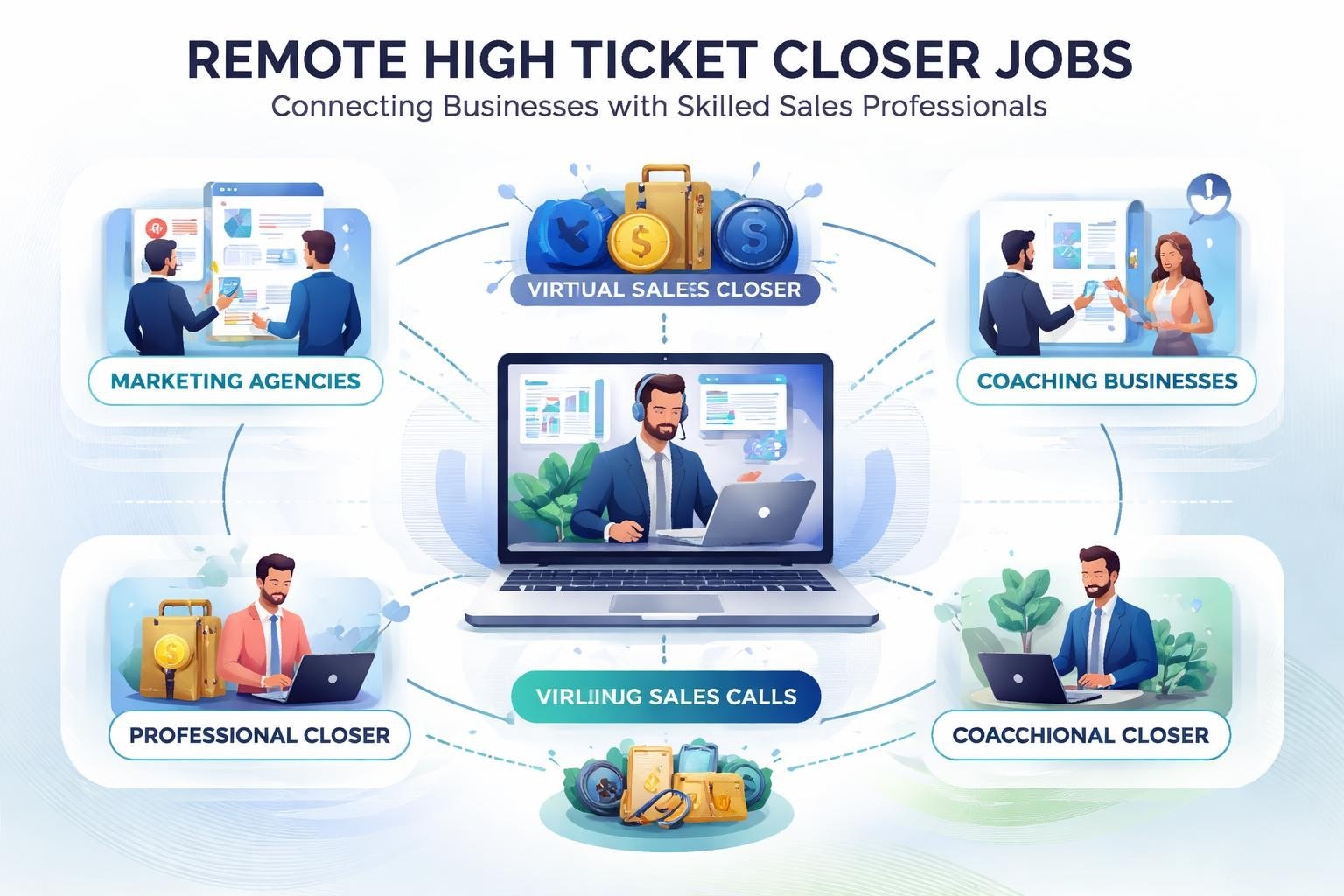
Remote High Ticket Closer Jobs: A 2026 Guide
Discover the landscape of remote high ticket closer jobs in 2026. Learn what businesses need to know about hiring elite sales talent remotely.
published
The landscape of sales has transformed dramatically over the past few years, with remote work becoming the standard rather than the exception. Remote high ticket closer jobs represent one of the most lucrative opportunities in this new economy, particularly for businesses selling premium products and services over virtual platforms. These specialized sales professionals close deals valued at $2,500 or more through video conferencing platforms, making them essential team members for coaching businesses, marketing agencies, and high-end service providers. Understanding what makes these positions unique, how to identify quality talent, and what businesses should expect when building a remote sales team has become critical knowledge for companies scaling their operations in 2026.
The Evolution of Remote Sales Positions
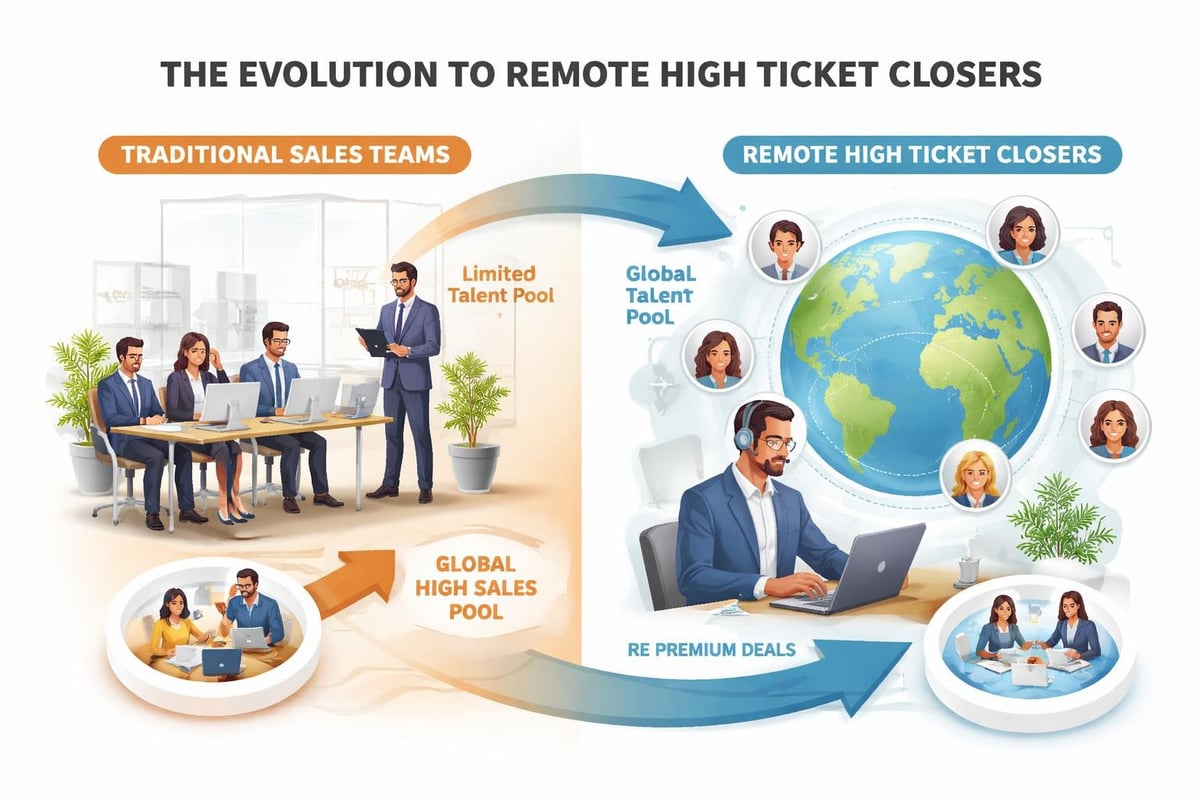
The shift toward remote work accelerated significantly during 2020, but the changes have cemented themselves permanently into business operations. According to Gartner's research, 39% of global knowledge workers now operate in fully remote or hybrid arrangements, fundamentally changing how companies build their sales teams. Remote high ticket closer jobs have emerged as particularly valuable because they eliminate geographic limitations while accessing a broader talent pool.
High-ticket sales require specialized skills that differ substantially from traditional sales roles. These professionals navigate longer sales cycles, handle complex objections, and build relationships with prospects considering significant financial commitments. The remote nature of these positions demands additional competencies: exceptional virtual communication skills, self-discipline, and the ability to create rapport without in-person interaction.
What Distinguishes High-Ticket Closing
High-ticket closing operates on entirely different principles than transactional sales. These sales professionals engage with prospects who are making substantial investments, often ranging from $2,500 to well over $50,000. The decision-making process involves multiple touchpoints, careful consideration, and significant trust-building between the closer and the prospect.
Key characteristics of high-ticket closing include:
Consultative selling approaches that prioritize understanding client needs
Longer sales cycles that may span several weeks or months
Deeper product knowledge and the ability to articulate complex value propositions
Advanced objection handling skills for addressing legitimate concerns
Relationship-building capabilities that extend beyond a single transaction
The businesses benefiting most from remote high ticket sales typically operate in coaching, consulting, marketing services, software solutions, and specialized professional services. These companies conduct their entire sales process over platforms like Zoom or Google Meet, making the remote closer's virtual skills paramount to success.
Essential Competencies for Remote Closers
Identifying talented closers requires understanding the specific competencies that drive success in remote environments. Unlike appointment setters who focus on booking qualified meetings, closers must possess the gravitas and expertise to guide prospects through complex purchasing decisions.
Communication Excellence
The foundation of effective remote closing rests on communication mastery. Without body language and physical presence to establish authority, remote closers rely heavily on voice tonality, pacing, and verbal articulation. They must project confidence through a screen while remaining approachable and trustworthy.
Top-tier closers demonstrate active listening skills that allow them to identify unspoken concerns and adapt their approach in real-time. They ask probing questions that uncover the prospect's true motivations and pain points, then position their offering as the logical solution.
Technical Proficiency and Self-Management
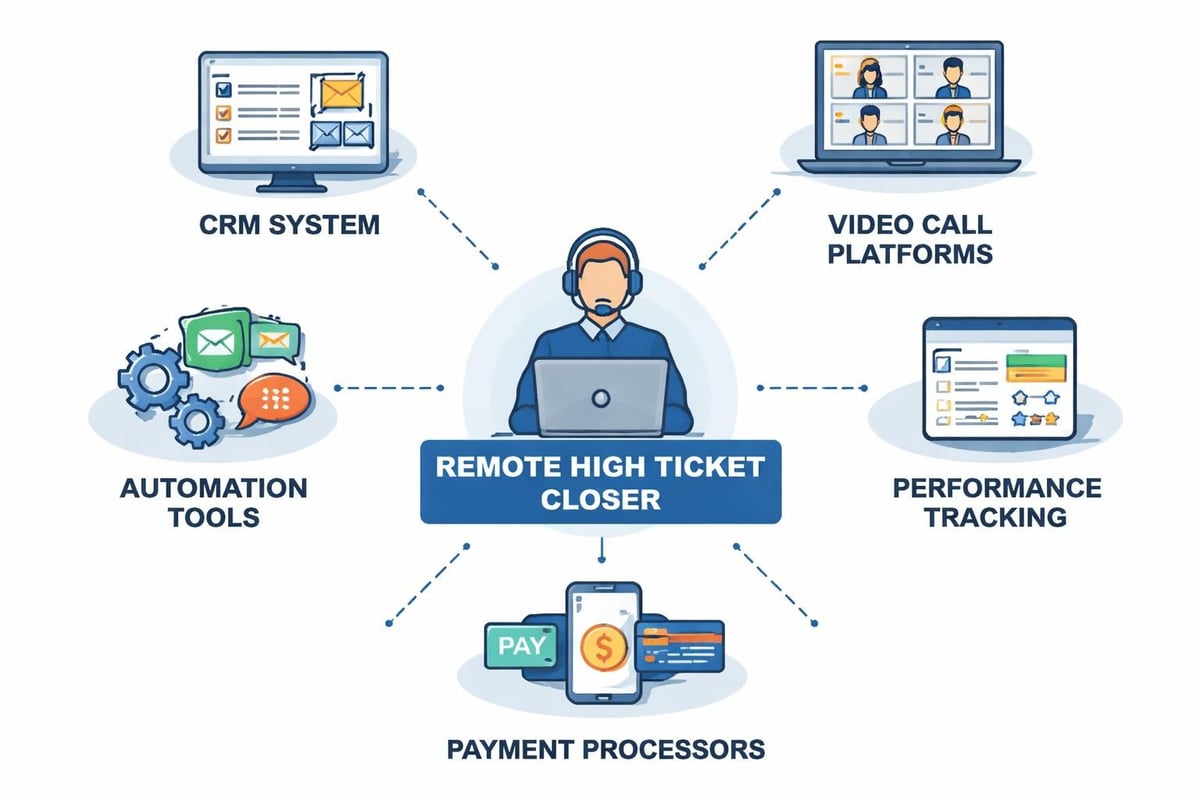
Working remotely demands comfort with various technological platforms and tools. Successful remote high ticket closer jobs require professionals who seamlessly navigate CRM systems, video conferencing platforms, screen sharing tools, and digital payment processing.
Beyond technical skills, these positions demand exceptional self-management. Without direct supervision, closers must maintain productivity, manage their time effectively, and stay motivated through inevitable rejection. The best performers establish structured daily routines, track their own metrics, and continuously refine their approaches based on results.
Core Competency | Why It Matters | Assessment Method |
|---|---|---|
Consultative Selling | Builds trust with high-value prospects | Role-play scenarios with complex objections |
Virtual Communication | Establishes presence without physical interaction | Video interview evaluation and presentation exercises |
CRM Management | Maintains pipeline organization and follow-up | System demonstration and process explanation |
Self-Discipline | Ensures consistent performance remotely | Reference checks and past performance metrics |
Objection Handling | Overcomes legitimate concerns professionally | Response to common industry objections |
The Hiring Challenge for Businesses
Businesses selling premium products face unique challenges when building remote sales teams. Traditional hiring processes often consume months of time, involve extensive screening, and still result in questionable outcomes. According to the U.S. Bureau of Labor Statistics, the average cost of a bad hire can equal 30% of that employee's first-year compensation, making mistakes particularly expensive in high-ticket sales roles.
Many companies struggle with several common obstacles:
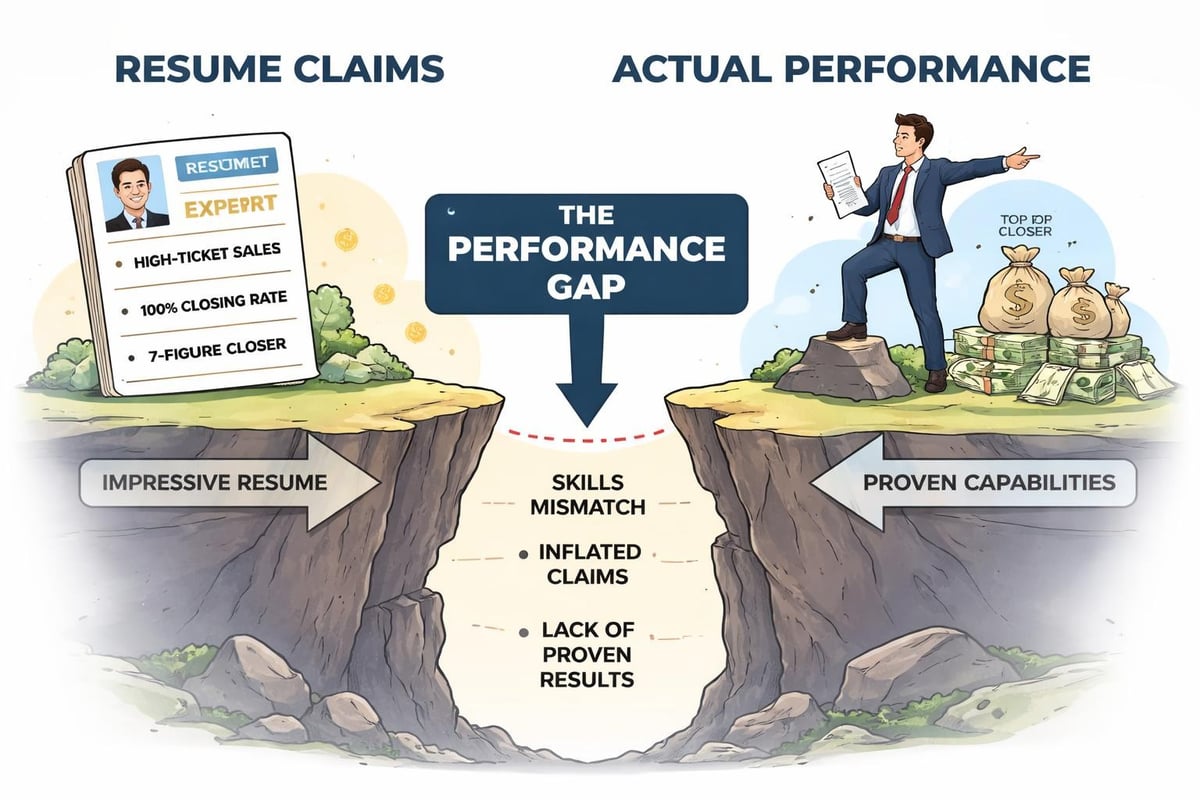
Identifying genuine talent among inflated resumes
Assessing actual sales skills beyond interview performance
Verifying track records in previous closing roles
Determining cultural fit for remote team dynamics
Evaluating whether candidates can handle specific product complexity
The vetting process for remote high ticket closer jobs must go beyond standard interviewing. Businesses need to evaluate real-world performance through role-playing exercises, examine verifiable sales achievements, and assess how candidates handle the specific objections common to their industry.
Industry-Specific Requirements
Different industries require specialized knowledge and approaches. A closer excelling in real estate coaching may struggle with software sales due to different buyer psychology and product complexity. Marketing agencies selling comprehensive services need closers who understand digital marketing concepts, while coaching businesses benefit from closers who appreciate transformation and personal development.
Businesses must clearly define their specific requirements before beginning the search. This includes understanding whether they need someone with existing industry knowledge or if they're willing to train the right candidate on product specifics while leveraging their fundamental closing skills.
Compensation Structures and Expectations
Remote high ticket closer jobs typically operate on performance-based commission structures that align closer success with company revenue. While compensation models vary significantly, most arrangements include some combination of base salary, commission percentages, and performance bonuses.
Understanding how to structure compensation appropriately requires balancing several factors: the complexity of your product, the average sale value, the length of your sales cycle, and the level of support provided to closers. Some businesses offer higher commission rates with minimal base salary, while others provide more stable base compensation with lower commission percentages.
Performance Metrics That Matter
Rather than focusing solely on close rates, sophisticated businesses track multiple performance indicators:
Conversion rates at each stage of the sales process
Average deal size and upsell success
Time to close from first contact
Customer lifetime value of closed deals
Show-up rates for scheduled calls
Follow-up consistency and pipeline management
These metrics provide a comprehensive view of closer performance and help identify areas for coaching and improvement. The best closers consistently demonstrate strong performance across all metrics, not just raw closing percentages.
Building Effective Remote Sales Systems
Hiring talented closers represents only the first step in building successful remote sales operations. Businesses must establish systems that enable these professionals to perform at their highest level.
Onboarding and Training Infrastructure
Even experienced closers need comprehensive onboarding when joining a new organization. They must understand your specific value proposition, ideal customer profile, common objections, and unique selling points. Successful businesses develop structured onboarding programs that typically span two to four weeks.
Effective onboarding includes:
Detailed product knowledge training
Ideal customer profile and avatar development
Common objection responses and handling techniques
CRM and technology stack orientation
Company culture and communication protocols
Shadow sessions with existing top performers
Many professionals develop their skills through specialized training programs before entering the field, but they still require company-specific education to succeed in your particular environment.
Technology and Tools
Remote sales teams require robust technological infrastructure to function efficiently. This extends beyond basic video conferencing to include comprehensive CRM systems, call recording and review capabilities, digital signature platforms, and payment processing solutions.
The technology stack should facilitate rather than hinder the sales process. Closers need quick access to prospect information, easy scheduling capabilities, seamless proposal delivery, and straightforward payment collection. Businesses that invest in quality tools see significantly higher conversion rates and closer satisfaction.
Red Flags in Candidate Evaluation
Identifying potentially problematic candidates before hiring saves significant time, money, and frustration. Several warning signs should trigger additional scrutiny during the evaluation process.
Candidates who make unrealistic promises about their capabilities or refuse to participate in skills assessments often lack genuine experience. Similarly, professionals unable to articulate their sales methodology or who speak negatively about all previous employers may bring cultural challenges to your team.
Red Flag | What It Indicates | Verification Strategy |
|---|---|---|
Vague performance metrics | Lack of real success or tracking | Request specific numbers and context |
Resistance to role-playing | Insufficient actual experience | Make skills demonstration mandatory |
Over-focus on compensation | Wrong motivational drivers | Assess passion for product and sales |
No questions about product | Lack of consultative approach | Evaluate curiosity and preparation |
Generic sales talk | Template-based rather than adaptive | Probe for specific scenario handling |
Businesses should also watch for candidates who focus excessively on scripts rather than principles. While frameworks provide valuable structure, the best closers adapt dynamically to each unique conversation rather than robotically following predetermined paths.
Industry Trends Shaping Remote Sales
The remote sales landscape continues evolving rapidly. Understanding current trends helps businesses position themselves competitively when recruiting and retaining top talent.
Video selling has become increasingly sophisticated, with top performers understanding lighting, background optimization, and digital presence creation. The sales professionals who excel today treat their home office setup with the same professionalism as traditional office environments once demanded.
The Rise of Specialization
Remote high ticket closer jobs are becoming increasingly specialized by industry and product type. Rather than generalist closers who can sell anything, businesses increasingly seek professionals with specific expertise in their vertical. This specialization allows for shorter ramp-up times and more credible conversations with sophisticated prospects.
The coaching industry has developed its own closer subculture, as have software sales, marketing agency services, and consulting. Each vertical has unique language, common objections, and buyer psychology that specialized closers navigate more effectively than generalists.
Performance Analytics and Optimization
Modern sales organizations leverage data analytics to optimize performance continuously. Call recording analysis, conversion funnel tracking, and A/B testing of different approaches provide insights that weren't available in traditional sales environments.
Businesses using these analytics identify top performer patterns and replicate them across their teams. They discover which objection responses work best, optimal call lengths for their product, and the most effective follow-up sequences. This data-driven approach to sales management represents a significant competitive advantage.
The Strategic Value of Pre-Vetted Talent
The traditional hiring process for remote high ticket closer jobs often spans 60 to 90 days from initial job posting through final hire. This timeline includes posting positions, reviewing hundreds of applications, conducting multiple interview rounds, checking references, and negotiating offers. Even after this investment, businesses face significant risk that their new hire won't perform as expected.
Working with specialized recruitment firms that focus on sales talent dramatically compresses this timeline while improving outcomes. These organizations maintain pools of pre-screened candidates who have already demonstrated legitimate closing capabilities through rigorous evaluation processes.
The value proposition extends beyond speed. Recruitment specialists understand the nuances that separate average closers from exceptional ones. They can match specific business needs with candidates who possess complementary strengths, industry knowledge, and cultural alignment.
Building Versus Buying Talent
Some businesses prefer developing closers internally, bringing in individuals with strong potential and training them specifically for their product. This approach offers the advantage of complete customization but requires significant time investment and carries higher risk during the development period.
Others prioritize hiring experienced high ticket sales professionals who can contribute immediately. These candidates command higher compensation but typically generate revenue faster and require less hand-holding during onboarding.
The optimal strategy often involves a hybrid approach: building a core team of experienced closers who can mentor and train newer team members, creating a sustainable talent development pipeline while maintaining consistent revenue production.
Legal and Compliance Considerations
Operating remote sales teams introduces specific legal considerations that vary by jurisdiction. Businesses must understand employment classification rules, ensuring that closers are properly designated as employees or independent contractors based on actual working relationships rather than preference.
Interstate and International Complications
When hiring remote high ticket closer jobs across state lines or international borders, tax obligations, employment law requirements, and benefits administration become more complex. Companies must register to do business in states where they employ workers, withhold appropriate taxes, and comply with local employment regulations.
Many businesses underestimate these administrative requirements until facing penalties or legal challenges. Consulting with employment law specialists and establishing proper systems before scaling remote teams prevents costly problems later.
Quality Assurance and Ongoing Development
Hiring talented closers represents the beginning rather than the end of building effective sales operations. Continuous development, performance monitoring, and quality assurance separate high-performing teams from mediocre ones.
Effective ongoing development includes:
Regular call review and feedback sessions
Continuous product knowledge updates
Industry trend education and adaptation
Peer learning and best practice sharing
Advanced technique training and skill refinement
The best remote sales closer professionals never stop improving their craft. They study behavioral psychology, refine their questioning techniques, and adapt to changing market conditions. Businesses that foster this growth mindset through structured development programs consistently outperform competitors who treat closing as a static skill set.
Performance Monitoring Without Micromanagement
Remote environments require thoughtful performance monitoring that maintains accountability without creating oppressive oversight. The goal involves ensuring consistency and identifying coaching opportunities rather than controlling every moment of a closer's day.
Effective monitoring focuses on outcomes and key activities rather than minute-by-minute surveillance. Businesses track metrics like daily call volume, conversion rates, pipeline development, and follow-up consistency while trusting professionals to manage their own schedules and approaches.
Market Demand and Competitive Landscape
The demand for skilled remote high ticket closer jobs continues growing as more businesses transition to virtual sales models. This increased demand creates competitive pressure when recruiting top talent, particularly for professionals with proven track records in specific industries.
According to LinkedIn's Emerging Jobs Report, sales development and closing roles have seen consistent growth year over year, with remote positions growing even faster than traditional office-based roles. This trend shows no signs of reversing as businesses recognize the efficiency and scalability advantages of remote sales teams.
Companies competing for elite talent must offer more than competitive compensation. Top closers evaluate opportunity based on product quality, company reputation, growth potential, team culture, and leadership quality. They recognize that joining the right organization accelerates their career development while providing more stable commission opportunities.
Understanding what attracts quality candidates helps businesses position their opportunities effectively. This includes clearly articulating your value proposition, demonstrating strong product-market fit, and showcasing existing team success without making inappropriate claims.
Creating Competitive Advantage Through Sales Talent
In markets where multiple companies offer similar products or services, sales team quality often determines competitive outcomes. Two businesses with comparable offerings will see dramatically different results based purely on their closer capabilities and effectiveness.
Businesses that recognize sales talent as a strategic asset rather than a replaceable commodity build sustainable competitive advantages. They invest in recruiting exceptional people, provide comprehensive support systems, and create cultures where top performers want to remain long-term.
This strategic approach to talent acquisition and retention manifests in multiple ways: faster revenue growth, higher customer lifetime values, better market reputation, and increased referral business. The compounding effects of quality sales teams cannot be overstated, as satisfied customers become advocates who refer additional qualified prospects.
The Cost of Mediocrity
Conversely, businesses that settle for mediocre sales talent or prioritize minimizing compensation costs typically achieve mediocre results. They experience higher turnover, inconsistent revenue, customer satisfaction issues, and damaged market reputation from poor sales experiences.
The mathematics prove straightforward: a closer converting at 30% generates significantly more value than one converting at 15%, even if the higher performer costs more to employ. When calculating true value, businesses must consider not just the direct commission expense but the opportunity cost of lost deals and suboptimal customer experiences.
Remote high ticket closer jobs have evolved into specialized roles requiring specific competencies, industry knowledge, and virtual communication mastery. For businesses selling premium products and services over video calls, building effective remote sales teams represents one of the most critical success factors in 2026. Rather than navigating lengthy hiring processes and uncertain outcomes independently, companies can access pre-vetted, world-class sales talent through specialized recruitment services. Sales Match connects high-ticket businesses with proven closers and appointment setters, eliminating the guesswork and delay from building your remote sales team so you can focus on scaling your business with confidence.