Sales Executive Headhunters: Your Guide to Elite Talent
Discover how sales executive headhunters find top talent for high-ticket businesses. Learn about recruitment strategies, vetting processes, and trends.
published
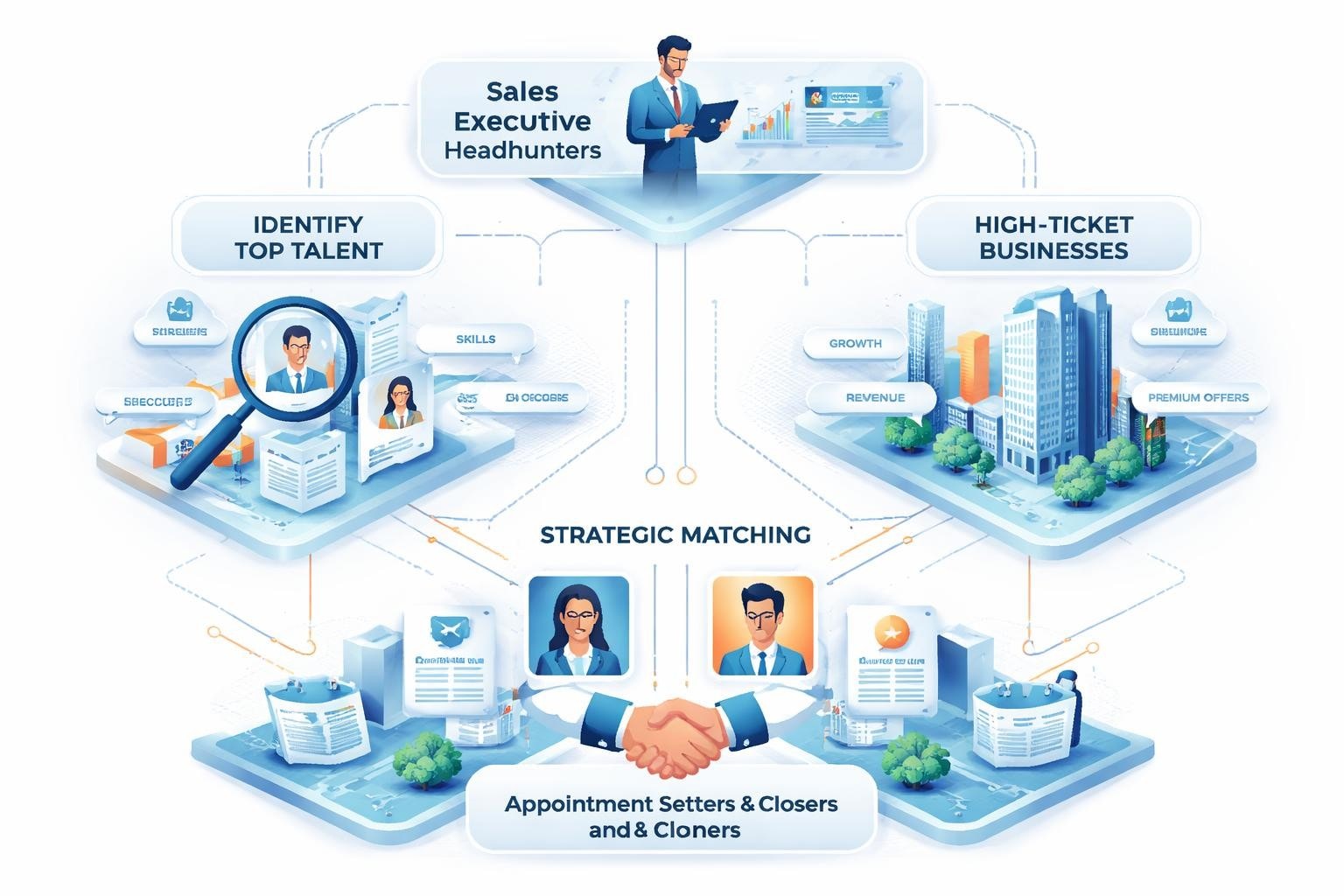
Finding exceptional sales talent capable of closing high-ticket deals requires more than posting job ads and hoping for the best. For businesses selling premium services and products over $2,500, partnering with sales executive headhunters who understand the nuances of consultative selling, relationship building, and complex sales cycles becomes essential. These specialized recruiters focus exclusively on identifying, vetting, and placing top-tier sales professionals who can drive significant revenue growth for marketing agencies, coaching businesses, consultants, and service-based companies operating in the digital sales environment.
Understanding the Role of Sales Executive Headhunters
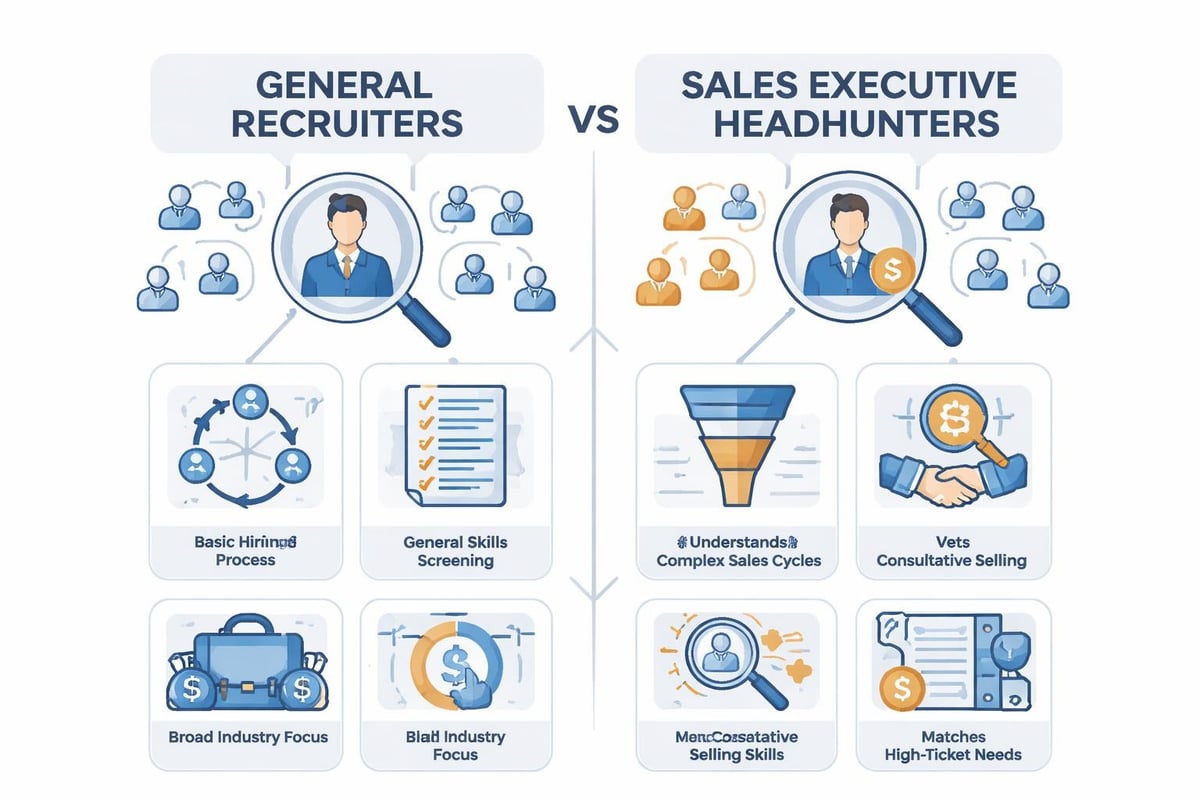
Sales executive headhunters operate differently from traditional recruiters. While standard recruitment agencies may handle various positions across multiple industries, specialized headhunters dedicate their expertise to sourcing sales professionals with proven track records in specific market segments.
The distinction matters significantly for high-ticket businesses. According to research on effective sales headhunter techniques, top recruiters employ advanced networking strategies and rigorous screening processes that go far beyond resume reviews. They build extensive networks within sales communities, maintain relationships with high performers, and use sophisticated evaluation methods to assess both technical capabilities and cultural alignment.
Why Specialized Recruitment Matters for High-Ticket Sales
High-ticket sales environments demand professionals with distinct skill sets. These roles require:
Consultative selling expertise to guide prospects through complex purchasing decisions
Strong relationship-building abilities to nurture leads over extended sales cycles
Technical fluency to demonstrate sophisticated products or services effectively
Resilience and emotional intelligence to handle objections and maintain motivation
Generic recruiters often lack the industry knowledge necessary to evaluate these competencies accurately. Sales executive headhunters immerse themselves in the high-ticket sales ecosystem, understanding the differences between appointment setters who qualify leads and closers who finalize deals.
The Vetting Process That Separates Elite from Average
One of the most significant advantages of working with sales executive headhunters is access to their comprehensive vetting process. This multi-layered evaluation ensures that only qualified candidates reach your interview stage.
Initial Screening and Assessment
Professional headhunters begin with thorough background research. They verify employment history, assess previous performance metrics, and conduct preliminary interviews to gauge communication skills. This initial phase eliminates candidates who lack the fundamental requirements for high-ticket sales roles.
The assessment typically includes:
Resume verification to confirm accuracy of stated experience
Reference checks with previous employers and colleagues
Skills assessment through role-playing scenarios or sales simulations
Cultural fit evaluation to ensure alignment with client company values
Motivation analysis to understand career goals and commitment level
Advanced Evaluation Techniques
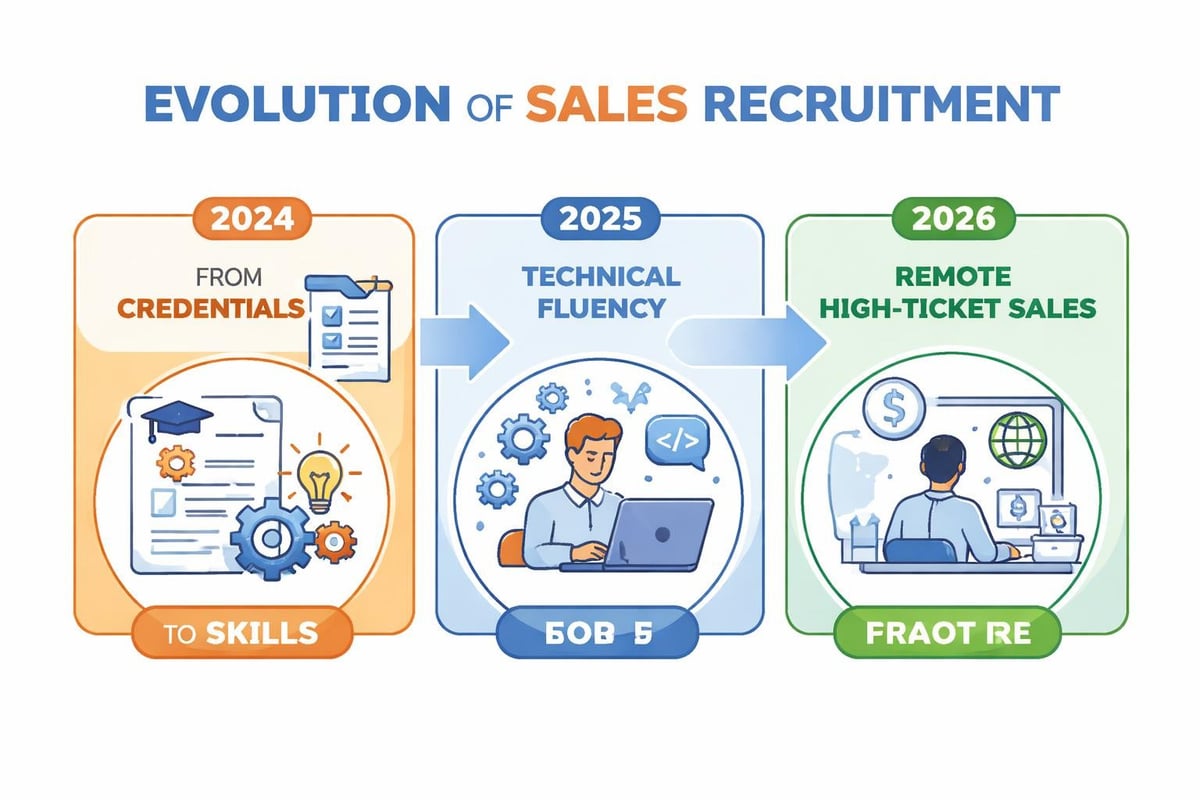
Beyond basic screening, specialized recruiters employ sophisticated methods to identify top performers. They analyze how candidates handle objections, structure their discovery calls, and navigate complex sales conversations. According to emerging sales recruitment trends for 2026, the industry increasingly emphasizes skills-based hiring over traditional credential evaluation.
Evaluation Method | Purpose | Key Indicators |
|---|---|---|
Sales Simulation | Test real-world skills | Objection handling, closing techniques |
Behavioral Interview | Assess past performance | Specific examples, measurable results |
Technical Assessment | Verify product knowledge | Industry understanding, learning ability |
Culture Evaluation | Ensure team fit | Communication style, work preferences |
This rigorous approach significantly reduces hiring mistakes. When businesses attempt to recruit independently, they often miss critical red flags that experienced headhunters identify immediately.
Market Knowledge and Industry Insights
Sales executive headhunters bring valuable market intelligence to the recruitment process. They understand current compensation trends, evolving skill requirements, and competitive dynamics that influence talent acquisition.
The executive search market continues to grow substantially. According to industry analysis, the headhunting market shows strong expansion patterns through 2035, reflecting increasing demand for specialized talent acquisition services across sectors.
Compensation and Package Structuring
Professional headhunters help businesses develop competitive offers that attract top talent without overspending. They provide data-driven insights on:
Base salary ranges for different experience levels
Commission structure best practices for high-ticket sales
Performance bonus frameworks that motivate excellence
Benefits packages that differentiate your opportunity
This expertise proves particularly valuable when competing for sales professionals who have multiple offers. Understanding what motivates top performers and how to position your opportunity strategically can make the difference between securing your first choice or settling for a backup candidate.
Staying Current with Industry Evolution
The sales landscape transforms rapidly. Sales workforce trends for 2024 highlight the growing importance of soft skills alongside technical capabilities, as well as the increasing integration of automation tools in sales processes. Sales executive headhunters monitor these shifts and adjust their candidate evaluation criteria accordingly.
Building Effective Partnerships with Headhunters
Maximizing the value of sales executive headhunters requires strategic collaboration. The relationship functions best when both parties communicate clearly and maintain realistic expectations.
Defining Your Ideal Candidate Profile
Before engaging a headhunter, invest time in creating a detailed profile of your ideal sales professional. This goes beyond listing required skills to include:
Essential Qualifications:
Minimum years of experience in high-ticket sales
Industry background (same or adjacent markets)
Proven track record with specific sales methodologies
Technical proficiency with relevant tools and platforms
Cultural and Soft Skills:
Alignment with company values and mission
Communication style that matches your team dynamic
Self-motivation and accountability levels
Coachability and growth mindset
The more specific your requirements, the more effectively headhunters can target appropriate candidates. Resources like this practical guide for hiring sales leadership emphasize the importance of clearly defining roles before beginning the search process.
Communication and Feedback Loops
Successful partnerships require ongoing dialogue. Establish regular check-ins with your headhunter to:
Review candidate submissions and provide detailed feedback
Refine search criteria based on initial results
Discuss market conditions affecting candidate availability
Adjust timeline expectations if necessary
Address any concerns or questions promptly
When businesses provide specific, constructive feedback about why certain candidates don't fit, headhunters can calibrate their search more precisely. Vague responses like "not quite right" don't help refine the process.
Time and Cost Considerations
Engaging sales executive headhunters represents an investment in your company's growth infrastructure. Understanding the financial and temporal aspects helps set appropriate expectations.
Fee Structures and Engagement Models
Different headhunters use various pricing models:
Model Type | How It Works | Best For |
|---|---|---|
Contingency | Fee paid only upon successful placement | Single position fills |
Retained | Upfront payment plus completion bonus | Executive searches, multiple hires |
Contract | Monthly fee for ongoing recruitment support | Building high-ticket sales teams |
Each model has advantages depending on your hiring needs. Contingency arrangements minimize upfront risk, while retained searches often provide more dedicated attention and faster results.
Timeline Expectations
Quality recruitment takes time. While some services offer pre-vetted sales talent available quickly, thorough executive searches typically span several weeks to months.
Typical Timeline Breakdown:
Week 1-2: Strategy development and candidate sourcing
Week 3-4: Initial screenings and first-round interviews
Week 5-6: Advanced assessments and client interviews
Week 7-8: Reference checks and offer negotiations
Rushing this process often leads to poor hiring decisions. The true cost of a bad sales hire includes lost revenue, damaged client relationships, and the expense of starting the search again.
Remote Sales Talent and Geographic Flexibility
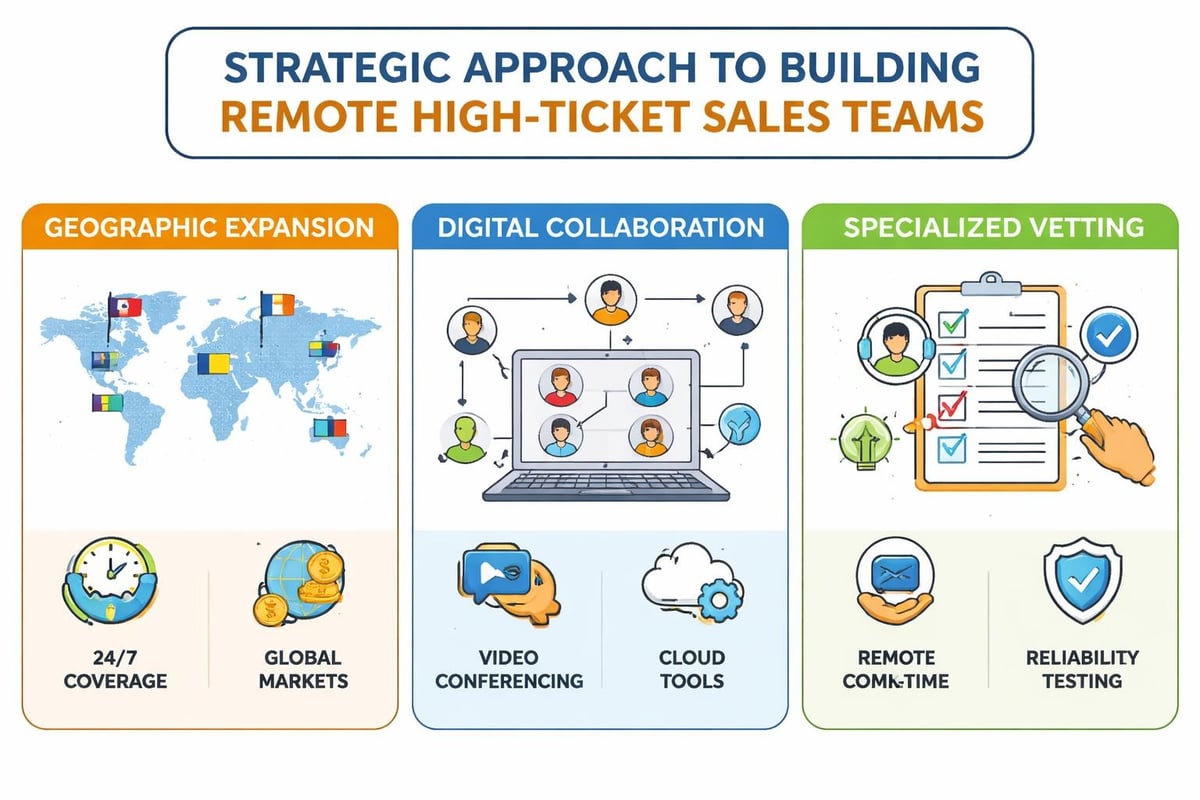
The shift toward remote work has fundamentally changed how sales executive headhunters operate. For businesses conducting sales via Zoom or Google Meet, geographic limitations no longer constrain talent acquisition.
Advantages of Remote Sales Recruitment
Expanding your search nationally or internationally provides access to significantly larger talent pools. This geographic flexibility enables:
Access to remote high-ticket closers with specialized expertise
Cost savings from hiring in lower-cost-of-living markets
Ability to build diverse teams with varied perspectives
Flexibility to hire based purely on talent rather than location
According to 2026 sales hiring trends, the premium on technical fluency continues rising as remote sales environments demand proficiency with digital collaboration tools, CRM systems, and virtual presentation platforms.
Challenges and Solutions
Remote hiring introduces unique considerations. Sales executive headhunters who specialize in remote sales recruitment help navigate:
Challenge: Assessing cultural fit without in-person interaction Solution: Structured video interviews, team collaboration exercises, and trial projects
Challenge: Verifying self-motivation and accountability Solution: Behavioral interview questions focused on remote work experience and reference checks specifically addressing independence
Challenge: Ensuring effective onboarding and training Solution: Hiring candidates with proven remote sales experience who require less intensive support
Specialized Roles: Appointment Setters vs. Closers
Sales executive headhunters understand the critical distinction between different sales functions. High-ticket businesses often need both appointment setters and closers, each requiring unique skill sets.
The Appointment Setter Function
Appointment setters focus on lead qualification and calendar booking. Their responsibilities include:
Conducting discovery conversations to assess prospect fit
Qualifying leads based on specific criteria
Educating prospects about your offering's value proposition
Scheduling qualified appointments for closing team members
Maintaining CRM accuracy and follow-up consistency
Effective appointment setters possess strong communication skills, attention to detail, and the ability to handle initial objections. They serve as the critical bridge between marketing efforts and sales conversations.
The Closer's Domain
Closers take qualified prospects through the final stages of the sales journey. This role demands:
Deep product knowledge to address sophisticated questions
Advanced objection handling to overcome final hesitations
Negotiation skills to structure appropriate deals
Relationship building to create long-term client partnerships
Strategic thinking to customize solutions for different prospects
The closing function in high-ticket sales requires significant experience and refined consultative selling abilities. According to research on recruiting top sales executives, offering professional development opportunities and fostering collaborative culture significantly improves retention of elite closers.
Evaluating Headhunter Quality and Fit
Not all sales executive headhunters deliver equivalent value. Selecting the right recruitment partner requires careful evaluation of their expertise, processes, and track record.
Key Selection Criteria
When evaluating potential headhunters, assess:
Industry Specialization: Does the recruiter focus specifically on high-ticket sales? Do they understand the unique challenges of selling premium services over digital channels? Generalist recruiters often lack the nuanced knowledge necessary for sophisticated sales roles.
Network Depth: How extensive are their connections within the sales community? Top headhunters maintain relationships with passive candidates who aren't actively job searching but would consider the right opportunity.
Process Transparency: Can they clearly articulate their vetting methodology? Do they provide regular updates and detailed candidate assessments? Quality recruiters maintain open communication throughout the search process.
Success Metrics: What percentage of their placements remain with clients after 90 days, six months, and one year? High retention rates indicate effective matching between candidates and opportunities. However, verify any statistics with supporting documentation.
Questions to Ask Potential Partners
Before committing to a headhunter relationship, obtain clarity on:
What is your specific experience recruiting for high-ticket sales roles?
How do you source passive candidates versus active job seekers?
What assessment tools and methodologies do you employ?
How do you verify past performance claims from candidates?
What is your typical timeline from engagement to placement?
What guarantees or replacement policies do you offer?
Understanding replacement policies before engagement protects your investment if a placement doesn't work out.
Integration with Your Existing Hiring Process
Sales executive headhunters work most effectively when integrated thoughtfully into your broader talent acquisition strategy. They shouldn't replace your internal hiring capabilities but rather complement and enhance them.
Division of Responsibilities
Clarify which aspects of recruitment the headhunter handles versus what remains internal:
Responsibility | Headhunter | Internal Team |
|---|---|---|
Candidate sourcing | Primary | Support |
Initial screening | Primary | Review |
Skills assessment | Primary | Validation |
Cultural fit evaluation | Support | Primary |
Final interviews | Support | Primary |
Offer negotiation | Support | Primary |
This division leverages the headhunter's sourcing expertise while ensuring your team maintains control over final selection decisions and cultural alignment assessment.
Maintaining Candidate Experience
Even when working with external recruiters, your employer brand remains at stake. Ensure headhunters representing your company:
Communicate your values and mission accurately
Respond to candidate inquiries promptly
Provide transparent information about roles and expectations
Treat all candidates respectfully regardless of fit
Deliver timely feedback throughout the process
Strong candidate experiences attract top talent and protect your reputation within sales communities.
Technology and Modern Recruitment Methods
While the core principles of headhunting remain consistent, technology has transformed how sales executive headhunters identify and evaluate candidates. Modern recruitment leverages various tools to enhance efficiency and accuracy.
Data-Driven Candidate Assessment
Contemporary headhunters utilize data analytics to identify patterns associated with successful placements. They analyze factors like:
Previous company growth rates and market positions
Specific sales methodologies candidates have mastered
Tenure patterns and career progression trajectories
Educational background correlations with performance
Geographic and demographic diversity considerations
This analytical approach complements traditional relationship-based recruiting, creating a more comprehensive evaluation framework.
Digital Sourcing Strategies
Professional headhunters maintain presence across multiple platforms where top sales talent congregates. They engage potential candidates through:
Professional Networks:
LinkedIn for relationship building and talent mapping
Industry-specific forums and communities
Sales-focused events and conferences (virtual and in-person)
Passive Candidate Outreach:
Direct messaging to high performers at competitor companies
Engagement with thought leaders and content creators
Participation in sales methodology discussions and groups
These strategies help headhunters maintain pipelines of qualified candidates even before specific searches begin.
Future Trends Shaping Sales Recruitment
The landscape of sales recruitment continues evolving. Understanding emerging trends helps businesses and headhunters adapt their strategies effectively.
Skills Over Credentials
The traditional emphasis on degrees and certifications continues shifting toward demonstrated competencies. Sales executive headhunters increasingly prioritize:
Proven performance metrics from previous roles
Specific technical skills relevant to your sales environment
Continuous learning and adaptation capabilities
Cross-functional collaboration experience
This skills-first approach often uncovers exceptional talent that credential-focused searches would overlook.
Emphasis on Diversity and Inclusion
Forward-thinking businesses recognize that diverse sales teams bring varied perspectives that resonate with broader customer bases. Quality headhunters actively work to:
Expand sourcing channels to reach underrepresented groups
Eliminate bias from job descriptions and requirements
Structure interviews to evaluate competencies objectively
Present diverse candidate slates for consideration
These efforts create more inclusive teams while expanding the available talent pool.
Hybrid Skill Requirements
Modern high-ticket sales increasingly demand hybrid capabilities. Sales professionals need both traditional relationship skills and technical fluencies like:
CRM platform expertise and data interpretation
Digital marketing understanding for lead nurturing
Video presentation and virtual selling proficiency
Basic automation and workflow optimization knowledge
Sales executive headhunters adjust their evaluation criteria to assess these multifaceted competencies.
Identifying and securing elite sales talent requires specialized expertise, extensive networks, and sophisticated evaluation processes that most businesses lack internally. By partnering with sales executive headhunters who understand high-ticket sales environments, companies gain access to pre-vetted professionals capable of driving significant revenue growth. Whether you need to hire a complete sales team or add specific roles like appointment setters and closers, Sales Match provides world-class sales talent specifically vetted for high-ticket businesses selling premium services over digital channels.