Job Telemarketing: Skills, Opportunities & Career Path
Explore job telemarketing opportunities, required skills, and career paths. Learn how telemarketing roles fit into modern sales teams in 2026.
published
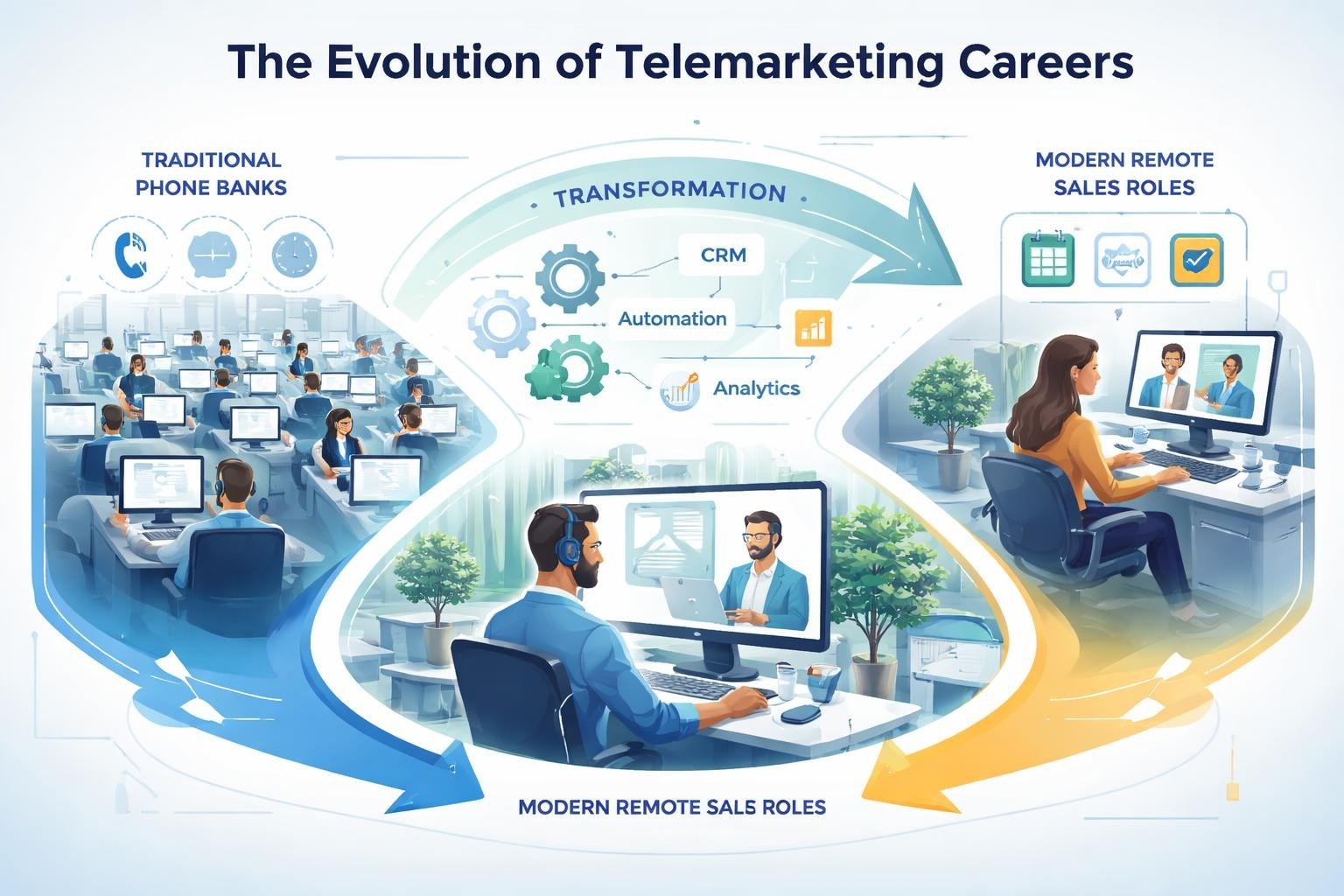
Job telemarketing has undergone a significant transformation over the past decade, evolving from traditional cold-calling centers into specialized sales development roles that drive revenue for businesses across industries. In 2026, the landscape of telemarketing positions continues to adapt to changing consumer preferences, technological advancements, and the growing demand for remote work opportunities. For businesses selling high-ticket products and services online, understanding the role of job telemarketing within their sales infrastructure has become essential for building scalable, efficient revenue engines that convert prospects into paying customers.
Understanding the Modern Job Telemarketing Landscape
The telemarketing profession has shifted dramatically from its origins as a volume-based calling operation to a skill-intensive role requiring relationship building, active listening, and strategic communication abilities. Today's job telemarketing positions often serve as the critical first touchpoint between businesses and potential customers, particularly in industries where complex buying decisions require multiple conversations before commitment.
According to Data USA's comprehensive statistics on telemarketers, the profession continues to employ a substantial workforce, with professionals earning varying compensation based on their specialization, industry, and performance metrics. The data reveals important demographic and geographic trends that help employers understand where talent pools exist and how competitive compensation packages need to be structured.
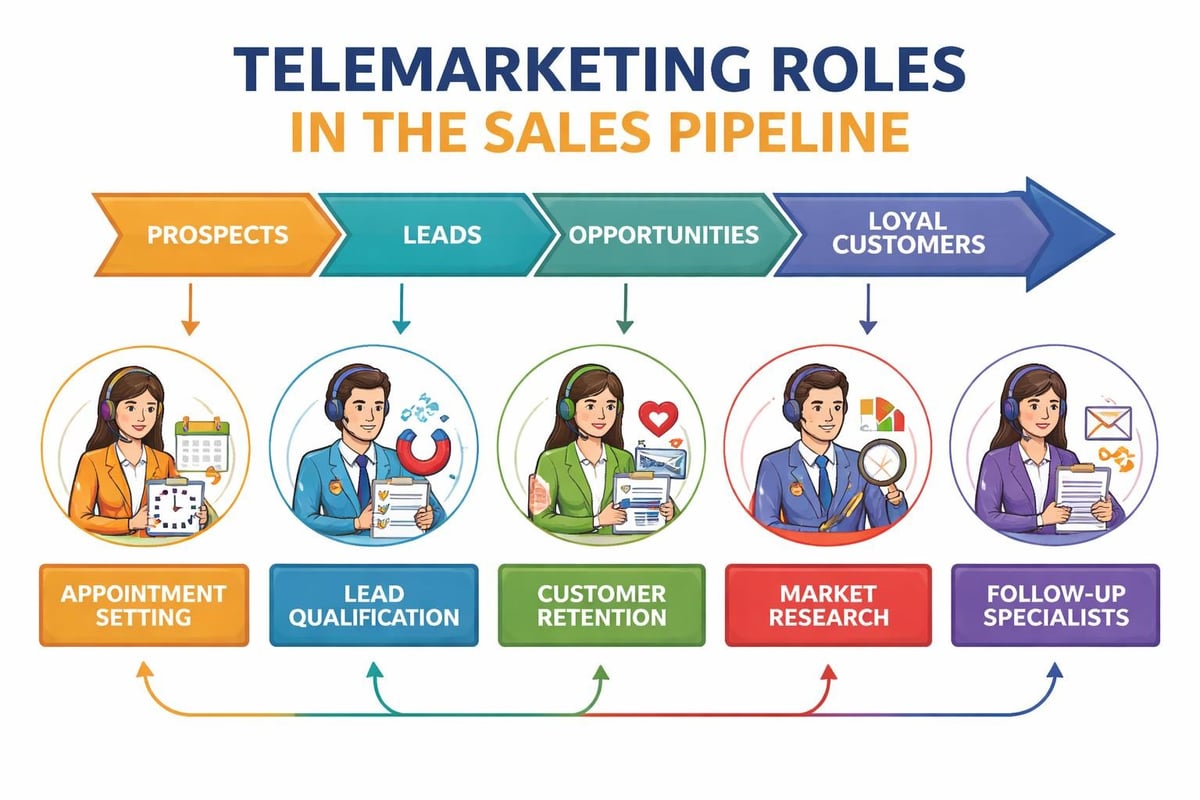
Modern job telemarketing roles have fragmented into several distinct categories:
Outbound appointment setters who qualify leads and schedule discovery calls
Lead qualification specialists who assess prospect fit before passing to closers
Customer retention representatives who reduce churn through proactive outreach
Market research callers who gather competitive intelligence and customer feedback
Follow-up specialists who nurture prospects through extended sales cycles
Core Skills Required for Success in Job Telemarketing
Professionals pursuing job telemarketing positions need a specific combination of technical abilities and soft skills that extend far beyond simply making phone calls. My Next Move's telemarketer profile outlines the typical tasks and necessary competencies, providing valuable insights for both job seekers and hiring managers.
The most critical skills for modern job telemarketing professionals include:
Active listening capabilities that allow representatives to identify prospect pain points
Objection handling techniques that address concerns without being pushy
Time management skills that maximize productive calling hours
CRM proficiency for tracking conversations and maintaining accurate records
Emotional intelligence to read vocal cues and adjust approach accordingly
Script adaptation abilities that balance structure with authentic conversation
Persistence tempered with respect for prospect boundaries
Businesses seeking to build effective sales departments must prioritize these competencies during the hiring process, as technical skills can be taught but foundational communication abilities require natural aptitude combined with deliberate practice.
Geographic and Industry Distribution of Job Telemarketing Positions
Employment patterns for job telemarketing roles vary significantly across the United States, with certain states offering more opportunities due to favorable business climates, lower operational costs, or historical industry concentrations. Statista's data on states with the highest telemarketing employment demonstrates that California, Texas, Florida, and Arizona consistently rank among the top locations for these positions.
State | Key Advantages | Typical Industries |
|---|---|---|
California | Large market, tech concentration | SaaS, coaching, consulting |
Texas | Business-friendly environment | Financial services, insurance |
Florida | No state income tax, lower costs | Healthcare, education |
Arizona | Growing tech sector | Marketing agencies, real estate |
For companies operating in the high-ticket online sales space, the geographic distribution matters less in 2026 than it did historically. The widespread adoption of remote work has enabled businesses to access remote appointment setter talent regardless of physical location, expanding the available talent pool exponentially.
Industry-Specific Applications of Job Telemarketing
Job telemarketing positions serve fundamentally different purposes depending on the industry context. Marketing agencies use telemarketers to set appointments for strategy sessions, while software companies employ them to qualify inbound leads before scheduling product demonstrations.
High-ticket service businesses particularly benefit from specialized job telemarketing talent because the initial conversation sets the tone for the entire customer relationship. When products or services exceed $2,500, prospects require multiple touchpoints and substantial education before making purchasing decisions, making the telemarketer's role in relationship development crucial.
Service-based businesses selling through virtual meetings need telemarketers who understand:
How to articulate complex value propositions clearly
When to probe deeper versus when to schedule next steps
How to identify genuine buying intent versus casual research
The appropriate balance between persistence and pressure
The Economics of Job Telemarketing Positions
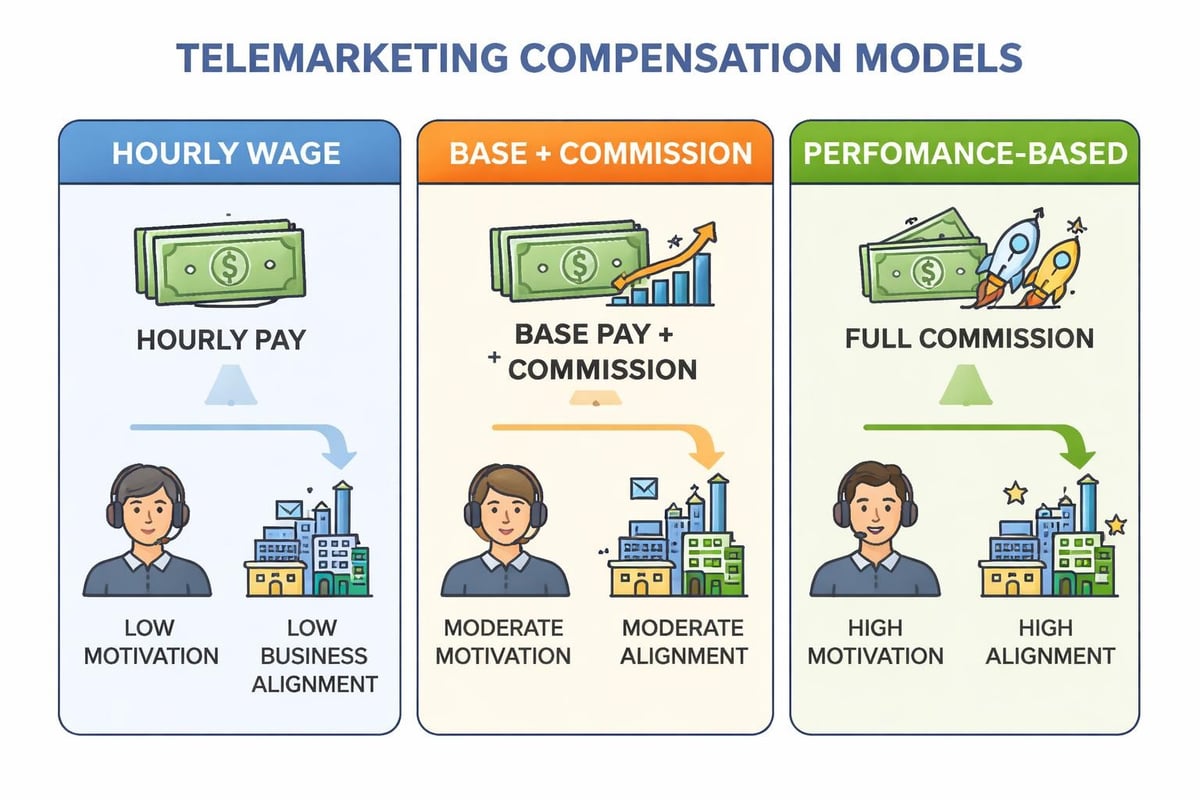
Compensation structures for job telemarketing roles have evolved considerably as the profession has specialized. Traditional hourly wage models have given way to performance-based compensation that aligns representative incentives with business outcomes, creating opportunities for skilled professionals to significantly exceed baseline compensation through results-driven work.
The IBISWorld statistics on telemarketing and call center businesses reveal an industry that continues adapting to market demands, with businesses experimenting with various employment models to attract and retain top talent.
Building Effective Compensation Packages
Businesses designing compensation for job telemarketing positions must balance several competing priorities:
Predictable costs that allow accurate financial forecasting
Performance incentives that motivate results-focused behavior
Competitive base compensation that attracts quality candidates
Transparent commission structures that build trust and clarity
Understanding the appropriate commission structure for your specific business model determines whether you attract professionals who view the role as a career versus those treating it as temporary employment. High-ticket businesses typically offer higher commission percentages on smaller volumes, while volume-based operations provide lower per-sale commissions on larger transaction counts.
Career Progression and Long-Term Opportunities
One persistent challenge within job telemarketing has been the perception of limited career advancement potential. However, the evolution of sales organizations has created clear progression paths for professionals who demonstrate consistent performance and develop advanced skills over time.
The career outlook for telemarketers indicates changing dynamics as businesses recognize the strategic value of experienced sales development representatives and create specialized roles that retain institutional knowledge.
Typical career progression in modern sales organizations follows this pattern:
Entry-level appointment setter focused on volume metrics
Senior appointment setter handling more complex prospect categories
Lead qualification specialist with decision-making authority
Sales development team leader managing other representatives
Transition to closing roles or sales operations management
For ambitious professionals, job telemarketing serves as an entry point into lucrative sales careers, particularly in high-ticket sales where experienced closers command substantial compensation through commission-based arrangements.
Transitioning from Telemarketing to Closing Roles
Many successful closers began their careers in job telemarketing positions, developing fundamental skills that translate directly to revenue-generating activities. The transition requires additional competencies around negotiation, proposal presentation, and deal structuring, but the foundation built through telemarketing provides essential preparation.
Businesses benefit from creating internal advancement paths that allow proven telemarketers to move into remote sales closer positions, reducing recruitment costs while retaining professionals who already understand the company's products, processes, and customer base.
Recruitment Challenges and Solutions for Job Telemarketing Positions
Finding qualified candidates for job telemarketing roles presents distinct challenges that differ from recruiting for other positions. The high turnover rates historically associated with these roles, combined with the specific skill requirements, create ongoing talent acquisition difficulties for businesses dependent on consistent appointment setting.
J. Kent Staffing's telemarketer job overview highlights key responsibilities and required skills, demonstrating the professional expectations that serious businesses maintain for these positions.
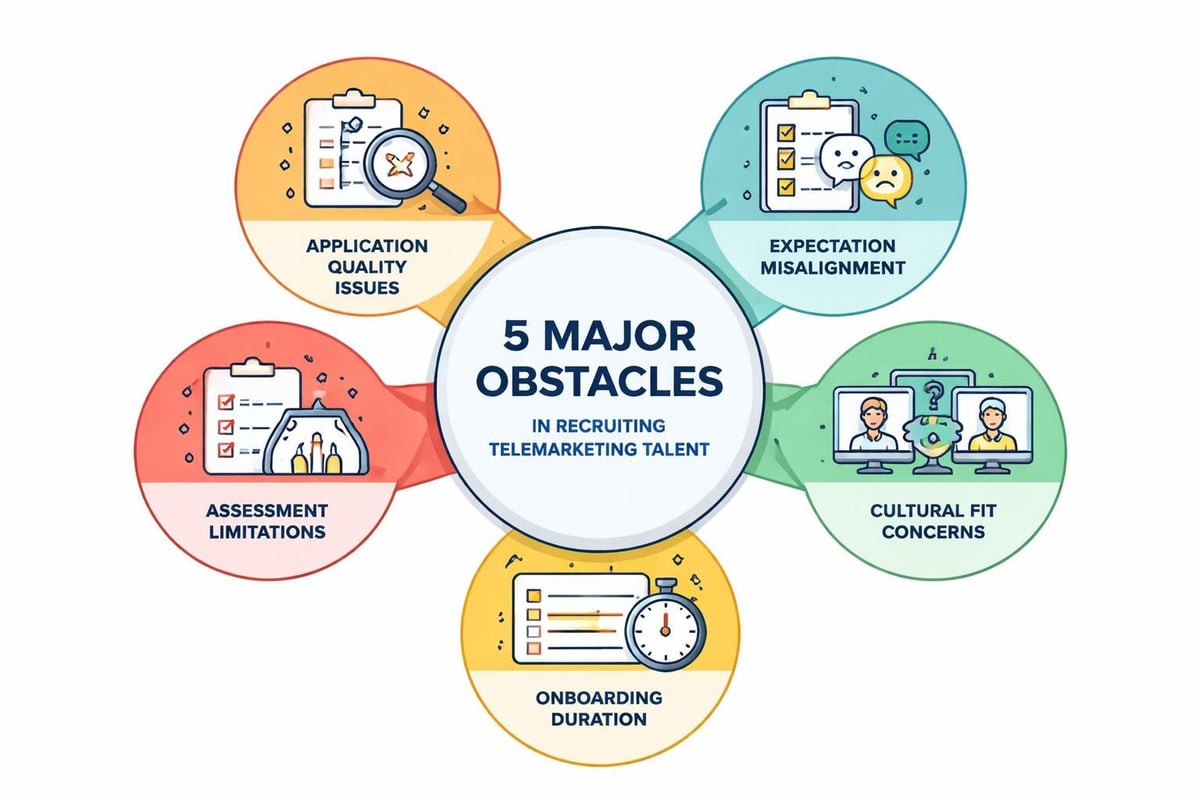
Common recruitment obstacles include:
High application volumes with low quality-to-quantity ratios
Misaligned expectations between candidates and actual role requirements
Limited assessment capabilities for evaluating phone presence before hiring
Extended onboarding periods before new hires reach productive capacity
Cultural fit challenges when building remote teams across geographies
Streamlining the Hiring Process Through Specialized Recruitment
Rather than managing the complex, time-consuming process of sourcing, screening, and onboarding job telemarketing candidates internally, many high-ticket businesses partner with specialized sales recruiting firms that focus exclusively on identifying and placing sales talent.
This approach offers several advantages:
Traditional Hiring | Specialized Recruitment |
|---|---|
4-8 week timeline | 1-2 week placement |
Unvetted candidates | Pre-screened talent |
Generic job boards | Targeted sourcing |
Internal training burden | Ready-to-produce professionals |
High early turnover risk | Performance guarantees |
Businesses selling high-ticket products through virtual sales processes benefit particularly from accessing vetted candidates who have demonstrated success in similar environments, reducing the risk inherent in traditional hiring approaches.
Technology's Impact on Job Telemarketing Roles
The technological infrastructure supporting job telemarketing has advanced dramatically, transforming how representatives conduct their daily work and how businesses measure performance. Cloud-based phone systems, integrated CRM platforms, and automated dialing technologies have eliminated many of the administrative burdens that previously consumed productive time.
Modern job telemarketing positions leverage:
Power dialers that maximize talk time by eliminating manual dialing
CRM integration that surfaces relevant prospect information during calls
Call recording for quality assurance and training purposes
Real-time analytics that help representatives optimize their approach
Script management tools that guide conversations without sounding robotic
For businesses building remote sales teams, technology enables distributed workforces to maintain consistent quality standards and collaboration despite physical separation. Representatives working from home offices can access the same tools, training, and support as those in traditional call center environments.
Training and Development for Remote Telemarketers
The shift toward remote work for job telemarketing positions necessitates different training approaches than those used in centralized call centers. Businesses must create self-directed learning resources, implement regular coaching sessions via video conferencing, and establish clear performance metrics that provide ongoing feedback.
Effective training programs for remote telemarketers include:
Recorded script practice sessions with feedback from experienced closers
Weekly group coaching calls that address common objections
Shadowing opportunities where new hires listen to successful conversations
Progressive responsibility increases as competency develops
Continuous education on product updates and industry trends
Building Sustainable Job Telemarketing Teams
High-performing sales organizations recognize that job telemarketing positions require the same strategic approach to team building as any other revenue-critical function. Creating sustainable teams means focusing on cultural fit, professional development, and long-term retention strategies rather than treating positions as disposable and easily replaced.
Companies successfully hiring placement for telemarketing roles prioritize:
Clear career progression that rewards performance with advancement
Competitive total compensation that includes base, commission, and benefits
Supportive management that provides coaching rather than just oversight
Recognition programs that celebrate achievements and milestones
Work-life balance that prevents burnout from repetitive rejection
The businesses that view job telemarketing as a professional career rather than entry-level grunt work attract fundamentally different caliber candidates and experience dramatically lower turnover rates as a result.
Integration with Broader Sales Operations
Job telemarketing functions most effectively when properly integrated with broader sales operations rather than operating as an isolated department. Appointment setters need regular communication with closers to understand what constitutes a quality lead, while closers benefit from feedback loops that help setters improve qualification criteria over time.
This integration requires:
Regular meetings between setting and closing teams
Shared dashboards showing pipeline progression
Collaborative goal-setting that aligns team objectives
Cross-functional training that builds mutual understanding
Attribution models that fairly credit both roles for closed business
Businesses seeking to hire a sales team must consider how job telemarketing positions fit within the complete sales infrastructure, ensuring appropriate handoff processes, communication protocols, and performance measurement systems.
Compliance and Legal Considerations
Job telemarketing remains one of the most regulated sales activities, with federal and state laws governing when calls can be made, what can be said, and how consumer information must be handled. The Telephone Consumer Protection Act, National Do Not Call Registry, and various state-specific regulations create a complex compliance landscape that businesses must navigate carefully.
Responsible telemarketing operations implement:
Do Not Call list scrubbing before every campaign
Call time restrictions respecting quiet hours and time zones
Clear identification of caller and company at conversation start
Opt-out mechanisms that immediately honor removal requests
Recording consent in two-party consent states
Data protection protocols that secure customer information
Violations of telemarketing regulations carry substantial penalties that can threaten business viability, making compliance infrastructure non-negotiable for legitimate operations. Training programs for job telemarketing positions must include comprehensive compliance education that prevents inadvertent violations.
Building Ethical Telemarketing Cultures
Beyond legal compliance, ethical considerations shape how businesses approach job telemarketing and the reputation they build in their markets. High-pressure tactics, misleading claims, and aggressive persistence may generate short-term results but damage long-term brand value and customer relationships.
Ethical telemarketing practices include:
Respecting verbal and explicit opt-out requests immediately
Providing accurate information about products, pricing, and terms
Avoiding manipulation or pressure tactics during conversations
Training representatives to recognize and respect boundaries
Prioritizing long-term customer relationships over single transactions
Companies operating in high-ticket spaces particularly benefit from ethical approaches, as their extended sales cycles and relationship-dependent business models make reputation preservation essential for sustained success.
The Future of Job Telemarketing in Sales Organizations
Looking ahead through 2026 and beyond, job telemarketing will continue evolving as businesses refine their understanding of where human interaction creates the most value in sales processes. While automation handles increasingly sophisticated tasks, the complex, nuanced conversations required for high-ticket sales remain firmly in human territory.
Several trends will shape job telemarketing positions:
Increased specialization with roles focusing on specific prospect segments
Higher skill requirements as basic functions become automated
Performance-based compensation replacing hourly wage structures
Remote-first operations becoming standard rather than exceptional
Integration with digital outreach creating omnichannel engagement strategies
Businesses that view job telemarketing as a strategic function rather than a cost center will continue investing in talent development, technology infrastructure, and process optimization that maximize the return on this critical revenue-generating activity.
Preparing Your Organization for Modern Telemarketing Success
Organizations ready to build or upgrade their job telemarketing capabilities must make several strategic decisions about structure, technology, and talent acquisition. The choices made today regarding these foundational elements determine performance outcomes for years to come.
Key decisions include:
Whether to build in-house teams versus partnering with specialized sales recruitment services
What technology stack provides optimal productivity without excessive complexity
How to structure compensation to attract top performers while controlling costs
Which metrics most accurately predict long-term success versus vanity numbers
How to create advancement paths that retain institutional knowledge
Companies selling high-ticket products through virtual channels face unique requirements for their job telemarketing functions, as the stakes of each conversation justify higher investment in talent quality and supporting infrastructure compared to volume-based operations.
Building effective job telemarketing capabilities requires strategic planning, quality talent, and appropriate systems that support consistent performance. For high-ticket businesses selling through virtual channels, partnering with specialists who understand the unique requirements of appointment setting and lead qualification can dramatically accelerate team development while reducing the risks inherent in traditional hiring approaches. Sales Match provides access to pre-vetted appointment setters and closers who specialize in high-ticket sales environments, enabling businesses to build productive sales teams without lengthy recruitment cycles or uncertain candidate quality.