High Ticket Sales Salary: Complete 2026 Compensation Guide
Discover what high ticket sales professionals earn in 2026. Explore base salaries, commission structures, and factors affecting compensation.
published
Understanding compensation structures in high ticket sales is essential for both sales professionals considering career opportunities and business owners building their sales teams. The high ticket sales salary landscape has evolved significantly, with companies offering increasingly competitive packages to attract top talent capable of closing deals valued at $2,500 or more. This comprehensive guide examines the compensation models, influencing factors, and market realities that define what sales professionals can expect when entering or advancing in this specialized field.
Understanding High Ticket Sales Compensation Models
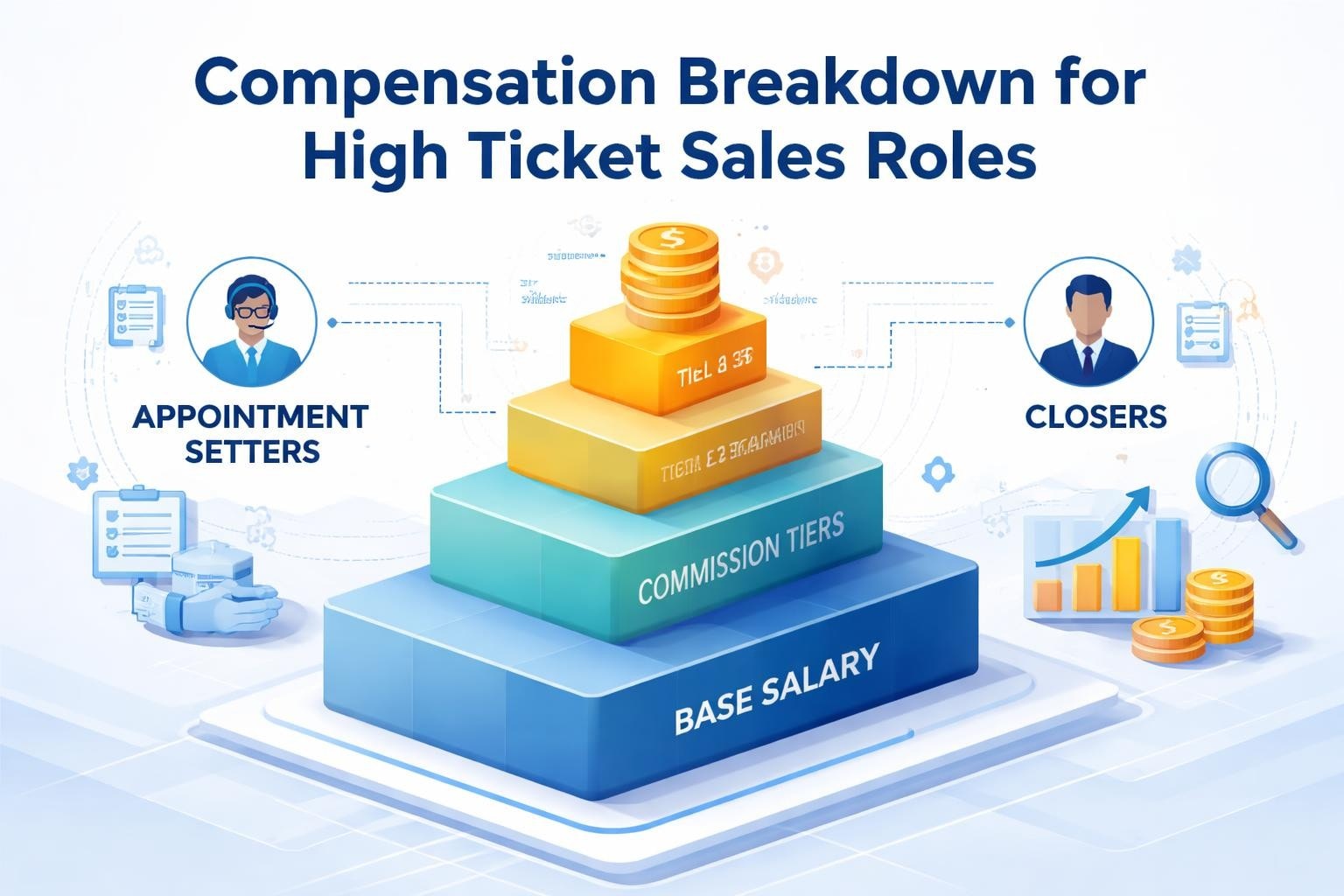
The compensation structure for high ticket sales roles differs substantially from traditional sales positions. Rather than relying solely on base salaries, these positions typically combine guaranteed income with performance-based earnings that reflect the value of closed transactions.
Most high ticket sales positions operate on a hybrid model. This approach provides financial stability through base compensation while incentivizing performance through commission structures. The balance between these components varies significantly depending on the role, company, and experience level.
Base Salary Components
Base salaries in high ticket sales serve as the foundation of compensation packages. According to Glassdoor data from 2026, base salaries for appointment setters typically range from $40,000 to $65,000 annually, while closers command base salaries between $55,000 and $85,000.
Factors influencing base salary include:
Geographic location and cost of living adjustments
Company size and funding stage
Industry vertical and average deal size
Years of relevant sales experience
Proven track record in similar roles
The base component provides predictability for sales professionals while ensuring companies maintain consistent sales team coverage regardless of monthly performance fluctuations.
Commission Structures and Performance Incentives
Commission represents the performance-driven element of high ticket sales salary packages. Understanding how these structures work is crucial for evaluating total compensation potential.
Standard commission structure models in high ticket sales typically fall into three categories:
Commission Type | Structure | Best For |
|---|---|---|
Flat Percentage | Fixed percentage per deal | Consistent deal sizes |
Tiered | Increasing percentages at thresholds | Encouraging quota exceeding |
Residual | Ongoing payments for retained clients | Subscription-based models |
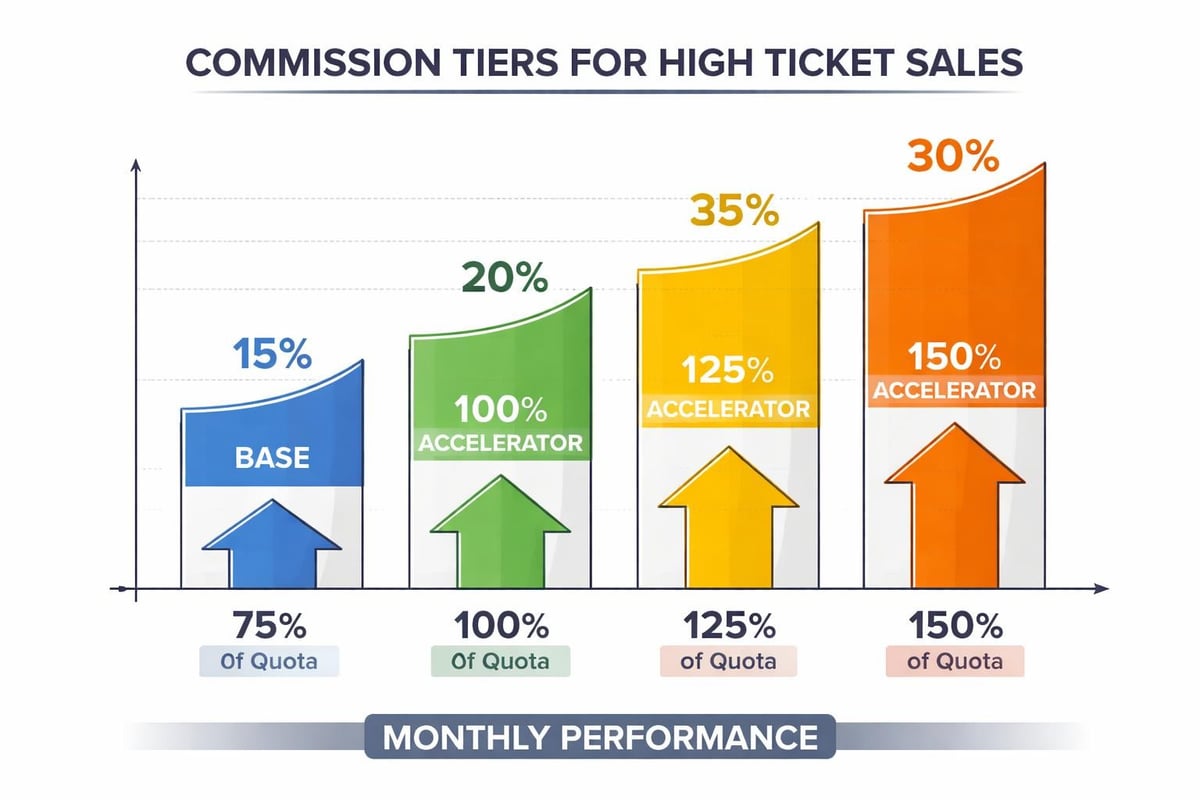
Most high ticket businesses selling products or services over $2,500 implement tiered commission structures. These models reward sales professionals for exceeding quotas with progressively higher commission rates.
Appointment Setter Compensation
Appointment setters play a critical role in the high ticket sales ecosystem. Their compensation typically emphasizes volume and quality of qualified meetings scheduled.
According to 2026 market data from ZipRecruiter, appointment setters in high ticket environments earn between $45,000 and $75,000 total compensation. The commission component usually ranges from $50 to $200 per qualified appointment that shows up and meets minimum criteria.
Some companies structure appointment setter pay differently:
Base salary plus per-appointment bonuses
Base salary plus percentage of closed deals from their appointments
Draw against commission with quarterly reconciliation
Hybrid models combining multiple incentive types
The remote appointment setter market has expanded compensation expectations, with top performers accessing opportunities across multiple time zones and industries.
Closer Compensation Benchmarks
Closers represent the final conversion point in high ticket sales processes. Their compensation packages reflect the direct revenue impact of their performance.
The high ticket closer salary guide indicates that experienced closers often achieve total compensation between $80,000 and $200,000 annually, with top performers exceeding these ranges significantly.
Commission rates for closers typically range:
5% to 10% for deals under $5,000
10% to 15% for deals between $5,000 and $15,000
15% to 20% for deals exceeding $15,000
These percentages vary based on whether the closer sources their own leads, works exclusively with setter-generated appointments, or operates in a hybrid model.
Deal Size Impact on Total Compensation
The average deal size directly influences high ticket sales salary outcomes. A closer working with $3,000 products needs to close significantly more volume than someone selling $25,000 services to achieve comparable compensation.
Consider this comparison:
Average Deal Size | Commission Rate | Monthly Closes Needed | Monthly Commission |
|---|---|---|---|
$3,000 | 10% | 15 | $4,500 |
$10,000 | 12% | 8 | $9,600 |
$25,000 | 15% | 4 | $15,000 |
Marketing agencies, coaches, consultants, and service-based businesses typically fall into the $2,500 to $15,000 range, creating diverse compensation scenarios based on specific business models.
Geographic and Remote Work Considerations
Location significantly impacts high ticket sales salary expectations. While remote work has created more geographic flexibility, compensation still varies by company headquarters location and where sales talent resides.
Remote high ticket sales positions have become increasingly common since 2020. According to a 2025 FlexJobs report, 68% of high ticket sales roles now offer remote or hybrid options, compared to just 23% in 2019.
Geographic salary variations:
Sales professionals in major metropolitan areas (New York, San Francisco, Los Angeles) typically command 15% to 30% higher base salaries
Remote positions often align compensation with company location rather than employee location
International remote sales roles may adjust for purchasing power parity
Companies building remote sales teams increasingly focus on performance metrics rather than geographic constraints, creating opportunities for talented closers regardless of location.
Industry Vertical Differences
The specific industry vertical significantly influences high ticket sales salary structures. Different sectors have varying sales cycles, deal complexities, and margin structures that affect how they compensate sales talent.
Software-as-a-Service (SaaS) companies typically offer lower commission rates (5% to 10%) but provide higher base salaries and benefits. Coaching and consulting businesses often offer higher commission rates (15% to 25%) with lower base compensation.
High Ticket Business Categories
Different business types structure compensation uniquely:
Marketing Agencies: Average deal sizes $3,000-$10,000, commissions 10%-15%
Business Coaches: Average deal sizes $5,000-$25,000, commissions 15%-20%
Consultants: Average deal sizes $10,000-$50,000, commissions 10%-15%
Service Providers: Average deal sizes $2,500-$15,000, commissions 12%-18%
These businesses selling over the internet through platforms like Zoom or Google Meet have standardized remote sales processes, making compensation structures more transparent and performance-based.
Experience Level and Skill Development
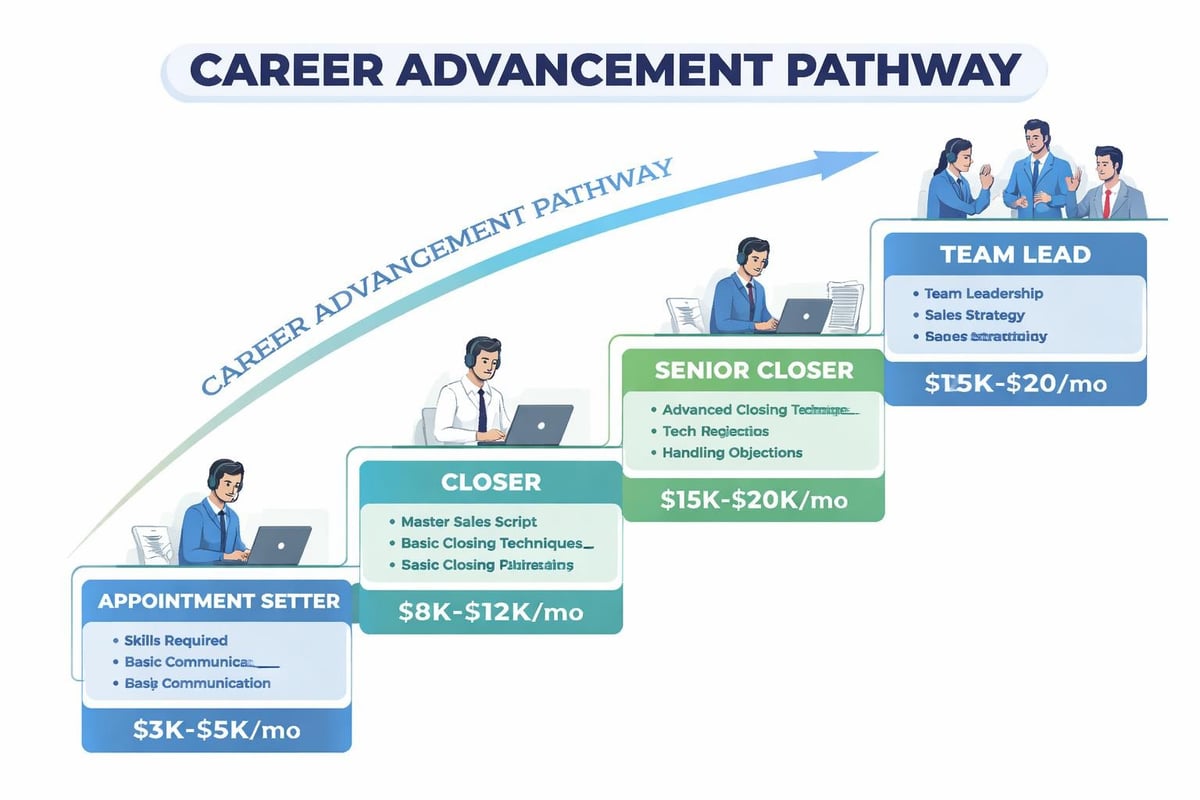
High ticket sales salary progression correlates directly with experience, skill refinement, and proven performance history. Entry-level professionals typically start at lower compensation tiers, advancing as they demonstrate consistent results.
According to LinkedIn's 2026 Sales Talent Report, sales professionals see average compensation increases of 12% to 18% annually during their first three years in high ticket sales, compared to 3% to 5% in traditional sales roles.
Career progression timeline:
Months 0-6: Base salary focus, limited commission opportunity during training
Months 6-12: Full commission activation, typically 60%-80% of quota achievement
Years 1-2: Quota attainment and exceeding, establishing track record
Years 3+: Senior closer or team lead opportunities, highest compensation tiers
Sales professionals who invest in continuous skill development, particularly in objection handling, consultative selling, and relationship building, consistently outperform peers in compensation achievement.
Total compensation breakdown showing base salary, commission, bonuses, equity, and benefits as components of a complete high ticket sales package
Additional Compensation Components
Beyond base salary and commission, comprehensive high ticket sales salary packages often include additional components that enhance total compensation value.
Common additional benefits include:
Performance bonuses: Quarterly or annual bonuses for exceeding targets (typically $5,000-$25,000)
Equity or profit sharing: Ownership stakes in growing companies
Health and wellness benefits: Medical, dental, vision coverage
Professional development budgets: Training, conferences, coaching ($2,000-$10,000 annually)
Technology stipends: Equipment, software, internet reimbursement
Some companies offer accelerators, which increase commission percentages when sales professionals exceed specific thresholds. For example, hitting 125% of quota might increase commission rates by 2% on all deals, while 150% achievement might trigger a 5% increase.
Market Trends Affecting Compensation
The high ticket sales salary landscape continues evolving based on market dynamics, talent availability, and business model innovations. Understanding these trends helps both companies and sales professionals make informed decisions.
The shift toward performance-based compensation has accelerated. A 2026 Sales Compensation Survey by Xactly Corporation found that high ticket sales roles now derive 55% to 65% of total compensation from variable pay, up from 45% to 55% in 2022.
Talent Competition and Salary Inflation
Demand for experienced high ticket sales talent has intensified. Companies compete aggressively for proven closers, driving compensation packages higher. According to Glassdoor economic research, high ticket sales salaries increased by an average of 14% between 2024 and 2026, outpacing the general labor market increase of 4%.
This talent scarcity has led companies to work with specialized recruitment partners who maintain networks of vetted candidates ready for immediate placement.
Structuring Offers for Sales Talent
Business owners building sales teams must balance competitive compensation with sustainable business economics. Understanding what constitutes market-rate compensation ensures successful recruitment without overpaying or undervaluing talent.
When structuring high ticket sales salary offers, companies should consider:
Competitive market research: Analyze comparable roles in similar industries and geographies
Deal economics: Ensure commission structures align with product margins
Ramp time expectations: Account for 60-90 day onboarding before full productivity
Performance metrics: Define clear quota expectations and measurement periods
Role | Base Salary Range | Commission Target | Total OTE |
|---|---|---|---|
Junior Setter | $40,000-$50,000 | $15,000-$25,000 | $55,000-$75,000 |
Senior Setter | $50,000-$65,000 | $25,000-$40,000 | $75,000-$105,000 |
Junior Closer | $55,000-$70,000 | $35,000-$60,000 | $90,000-$130,000 |
Senior Closer | $70,000-$85,000 | $65,000-$115,000 | $135,000-$200,000 |
On-target earnings (OTE) represent the expected total compensation when sales professionals achieve 100% of quota. Top performers typically exceed OTE by 20% to 50%.
Evaluating Compensation Offers
Sales professionals evaluating high ticket sales salary opportunities should look beyond headline numbers to understand total package value and realistic achievement potential.
Critical evaluation factors:
Quota attainment rates: What percentage of the team hits quota?
Ramp time support: How long before commission eligibility begins?
Lead quality and volume: Are sufficient qualified opportunities provided?
Average deal size and close rates: Do the economics support stated OTE?
Company growth trajectory: Is the business scaling or contracting?
According to The Bridge Group's 2026 SaaS Sales Compensation Report, only 58% of sales professionals achieve 100% of quota, making it essential to understand realistic performance expectations rather than optimistic projections.
Non-Monetary Compensation Factors
While high ticket sales salary represents primary compensation, non-monetary factors significantly impact overall job satisfaction and career success.
Important non-financial considerations:
Quality of sales training and ongoing coaching
Product-market fit and competitive positioning
Sales cycle length and complexity
Team culture and leadership quality
Career advancement opportunities
Work-life balance and schedule flexibility
Remote high ticket closer roles often provide lifestyle benefits that complement financial compensation, including location independence, flexible scheduling, and reduced commuting costs.
Building Sustainable Sales Team Compensation
Companies establishing or scaling sales teams must create compensation structures that attract talent while maintaining profitability. Sustainable models balance competitiveness with business viability.
When working with sales recruitment partners, businesses benefit from market intelligence about current compensation trends, helping them position offers competitively without overpaying.
Key principles for sustainable compensation design:
Align with customer lifetime value: Ensure commission payouts don't exceed sustainable economics
Create clear progression paths: Define how compensation increases with experience and performance
Balance individual and team incentives: Encourage collaboration while rewarding individual achievement
Regular market benchmarking: Review compensation annually against market rates
Transparent communication: Clearly explain how compensation is calculated and earned
High-performing sales organizations revisit their compensation structures quarterly, making adjustments based on business performance, market conditions, and competitive intelligence.
Understanding high ticket sales salary structures empowers both professionals seeking opportunities and businesses building teams to make informed, strategic decisions. The combination of base compensation, performance-based commissions, and additional benefits creates diverse packages across industries, experience levels, and geographic markets. If you're ready to build a world-class sales team with experienced appointment setters and closers who understand high ticket compensation structures, Sales Match provides pre-vetted sales talent on demand, eliminating lengthy hiring processes and connecting you with professionals ready to drive revenue from day one.