
High Ticket Closer: Skills, Strategies & Hiring Tips
Discover what makes a high ticket closer essential for premium sales success. Learn key skills, training strategies, and how to build elite teams.
published
The landscape of premium sales has evolved dramatically over the past decade, creating specialized roles that require distinct skill sets and strategic approaches. Among these specialized positions, the high ticket closer has emerged as a critical component for businesses selling products and services valued at $2,500 or higher. These professionals focus exclusively on converting qualified prospects into paying customers for high-value offerings, employing sophisticated sales techniques that differ substantially from traditional transactional selling methods. Understanding this role is essential for business owners in coaching, consulting, marketing agencies, and service-based industries who conduct sales conversations remotely through platforms like Zoom and Google Meet.
Understanding the High Ticket Closer Role
A high ticket closer specializes in navigating complex sales conversations where significant financial commitments are at stake. Unlike traditional sales representatives who might handle dozens of quick transactions daily, these professionals engage in fewer, more intensive conversations that require deep product knowledge, exceptional emotional intelligence, and the ability to build genuine trust with prospective clients.
The responsibilities extend far beyond simply pitching a product or service. A skilled high ticket closer must understand the prospect's business challenges, personal motivations, and decision-making criteria. They serve as consultative advisors who guide potential clients through comprehensive evaluation processes, addressing concerns and demonstrating value in ways that justify premium pricing.
Core Responsibilities and Daily Activities
The workload of a high ticket closer centers on several key activities that distinguish them from other sales roles:
Conducting in-depth discovery calls to uncover prospect needs and pain points
Delivering customized presentations that align solutions with specific business objectives
Handling sophisticated objections related to pricing, timing, and implementation
Managing multi-touch follow-up sequences that nurture relationships over extended sales cycles
Collaborating with marketing and customer success teams to ensure seamless client experiences
Most high ticket closers spend their time preparing for conversations, researching prospects, and refining their approach based on performance metrics. The preparation-to-conversation ratio often exceeds traditional sales roles, with top performers investing substantial time understanding each prospect's unique situation before the actual sales call.

Essential Skills That Define Success
The skill set required for high ticket closer training goes beyond basic sales fundamentals. These professionals must master communication strategies that build credibility and trust in remote environments where body language cues are limited.
Communication and Emotional Intelligence
Exceptional verbal communication forms the foundation of effective high ticket closing. These professionals must articulate complex concepts clearly, adapt their communication style to different personality types, and read subtle vocal cues that indicate interest, concern, or hesitation. According to research from the American Management Association, 85% of job success comes from having well-developed soft skills and people skills, while only 15% comes from technical skills and knowledge.
Active listening represents perhaps the most underrated skill in this profession. A high ticket closer must identify unspoken concerns, recognize buying signals, and understand the emotional drivers behind purchasing decisions. This requires maintaining focus throughout lengthy conversations while processing information at multiple levels.
Skill Category | Specific Competencies | Business Impact |
|---|---|---|
Communication | Active listening, questioning frameworks, storytelling | Builds rapport and uncovers true objections |
Emotional Intelligence | Empathy, self-awareness, emotional regulation | Creates trust and handles high-pressure situations |
Product Expertise | Deep knowledge, use case understanding, ROI calculation | Demonstrates credibility and justifies investment |
Process Management | CRM proficiency, follow-up systems, pipeline organization | Ensures consistent conversion rates |
Technical Proficiency and Industry Knowledge
Modern high ticket closers must navigate various technological platforms while maintaining conversational flow. Proficiency with video conferencing tools, CRM systems, screen-sharing applications, and digital presentation software is non-negotiable. The ability to troubleshoot technical issues quickly prevents disruptions that could derail important conversations.
Industry-specific knowledge also plays a crucial role. Understanding high ticket sales dynamics requires familiarity with market conditions, competitive offerings, and emerging trends that affect buyer behavior. This contextual awareness enables more sophisticated conversations that position the closer as a trusted advisor rather than just a salesperson.
Training and Development Pathways
Developing expertise as a high ticket closer requires intentional training that addresses both foundational sales principles and advanced closing techniques. Mastering the art of premium sales involves structured learning combined with practical application under experienced mentorship.
Many successful closers begin their journey by studying proven frameworks for consultative selling, objection handling, and value-based pricing discussions. However, theoretical knowledge alone proves insufficient. The real development happens through role-playing exercises, call reviews, and direct feedback from experienced mentors who can identify subtle areas for improvement.
Structured Learning Components
Comprehensive training programs typically include several core components:
Discovery Call Frameworks: Learning systematic approaches to uncover prospect challenges and desired outcomes
Value Articulation: Developing the ability to connect product features to specific business results
Objection Handling Protocols: Building responses to common concerns about pricing, timing, and alternative solutions
Closing Techniques: Mastering various closing strategies appropriate for different buyer personalities
Follow-up Systems: Creating consistent processes for nurturing prospects through extended sales cycles
The investment in proper training yields substantial returns. Companies that provide comprehensive sales training see 50% higher net sales per employee compared to those with less effective training programs, according to research published by the Association for Talent Development.
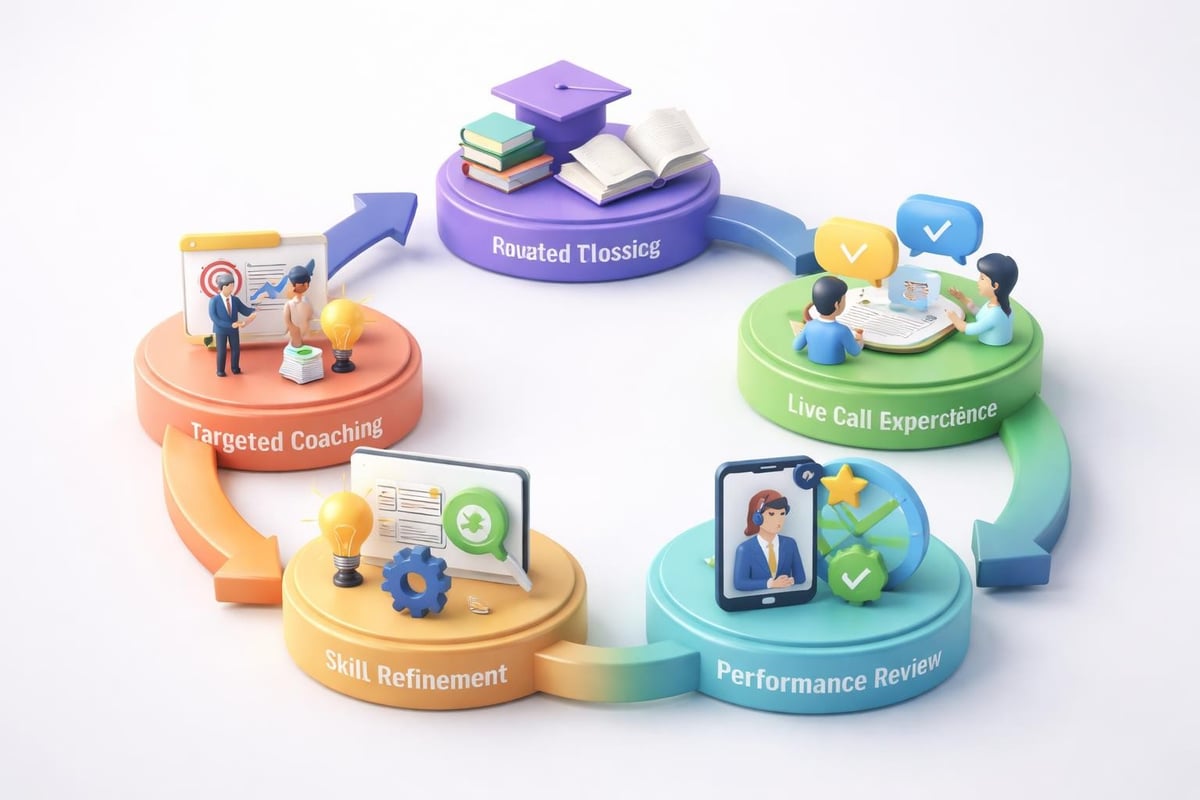
Continuous Skill Refinement
Elite high ticket closers never stop improving their craft. They regularly review their own sales calls, study successful conversations from top performers, and stay current with evolving buyer preferences. Many participate in ongoing coaching relationships where they receive personalized feedback on specific aspects of their performance.
Strategies for Closing Premium Deals
Closing premium deals with confidence requires methodical approaches that differentiate high-value sales from transactional selling. The strategies employed by successful closers focus on building genuine relationships and demonstrating undeniable value rather than relying on high-pressure tactics.
The Consultative Approach
The most effective high ticket closers position themselves as strategic partners rather than vendors. This consultative approach begins with comprehensive discovery, where the closer invests time understanding the prospect's current situation, desired future state, and obstacles preventing progress. This foundation enables personalized presentations that speak directly to the prospect's specific circumstances.
Trust-building represents a critical component throughout the process. Sales techniques for high-ticket items emphasize relationship development over quick closes. Successful closers demonstrate expertise through thoughtful insights, industry knowledge, and genuine interest in the prospect's success, creating an environment where the prospect feels comfortable making substantial commitments.
Value Demonstration Methods
Articulating value for premium offerings requires moving beyond feature lists to quantifiable business outcomes. Skilled closers develop custom value propositions that calculate specific financial returns, time savings, or strategic advantages the prospect will gain. This might include ROI calculators, case study comparisons, or implementation timelines that make abstract benefits concrete.
The presentation format also matters significantly in remote sales environments. Successful closers use visual aids, screen sharing, and interactive demonstrations that maintain engagement throughout lengthy presentations. They structure information logically, building from problem identification through solution explanation to implementation planning.
Building and Managing High-Performance Teams
For business owners seeking to scale their sales operations, assembling a team of skilled high ticket closers presents unique challenges. The specialized nature of this role requires careful selection, comprehensive onboarding, and ongoing performance management.
Recruitment Considerations
Identifying candidates with the right combination of skills, experience, and cultural fit demands rigorous evaluation processes. Pre-vetted sales talent can significantly reduce hiring risks, but understanding what to assess remains crucial for business owners.
Key evaluation criteria include:
Track Record: Demonstrated success in similar sales environments with comparable deal sizes
Communication Style: Ability to build rapport quickly while maintaining professionalism
Resilience: Capacity to handle rejection and maintain motivation through challenging sales cycles
Learning Orientation: Commitment to continuous improvement and skill development
Technical Comfort: Proficiency with remote selling tools and platforms
The vetting process should include multiple touchpoints that reveal how candidates perform under various conditions. Role-playing scenarios, presentation assessments, and behavioral interviews provide insights that resumes alone cannot capture.
Team Structure and Support Systems
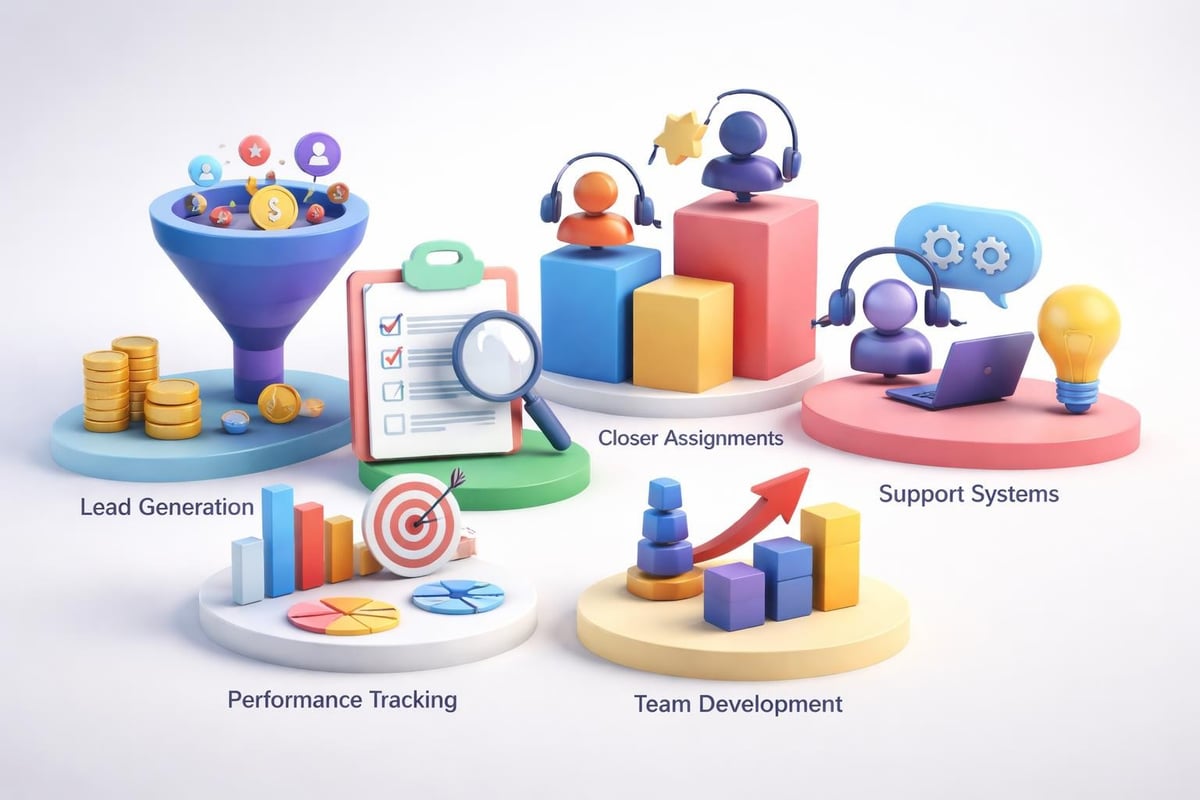
Successful high ticket sales teams operate within well-defined structures that clarify roles, responsibilities, and performance expectations. Clear commission structures, territory assignments, and lead distribution protocols prevent confusion and internal competition that can undermine team performance.
Team Element | Best Practice | Common Pitfall |
|---|---|---|
Lead Assignment | Rotating qualified opportunities based on performance metrics | Favoring certain closers without objective criteria |
Commission Structure | Transparent, competitive rates aligned with industry standards | Overly complex calculations that confuse team members |
Performance Tracking | Real-time dashboards with clear conversion metrics | Focusing solely on revenue without measuring activity levels |
Professional Development | Regular training sessions and skill-building workshops | Assuming experienced closers need no ongoing development |
Supporting infrastructure also proves essential. High-performing teams need robust CRM systems, quality lead sources, effective appointment setting, and responsive customer service that handles post-sale implementation. When any of these elements falters, even skilled closers struggle to maintain consistent results.
Remote Selling Dynamics and Best Practices
The shift toward remote high ticket closing has fundamentally changed how premium sales conversations unfold. While technology enables global reach and operational efficiency, it also introduces unique challenges that require specific adaptations.
Creating Connection in Virtual Environments
Building the trust necessary for high-value commitments proves more challenging when physical presence is absent. Successful remote closers compensate through heightened engagement techniques, including strategic use of video, intentional vocal variety, and interactive elements that maintain prospect attention.
The environment matters significantly. Professional backgrounds, quality audio equipment, and reliable internet connections demonstrate competence and respect for the prospect's time. Technical difficulties during critical conversations can irreparably damage credibility, making preparation and backup systems essential.
Adapting Traditional Techniques for Digital Platforms
Many classic closing techniques require modification for virtual settings. The traditional "assumptive close" where a salesperson begins filling out paperwork must translate to screen-shared digital documents. The "puppy dog close" that offers trial periods needs clear digital onboarding processes. Understanding how to execute proven strategies within technological constraints separates effective remote closers from those who struggle to adapt.
Follow-up processes also differ in remote environments. Email sequences, video messages, and scheduled check-ins replace casual office visits or coffee meetings. Maintaining momentum between conversations requires deliberate touchpoints that keep prospects engaged without creating perceived pressure.
Compensation Models and Performance Metrics
Understanding how compensation structures work helps both business owners designing incentive programs and sales professionals evaluating opportunities. High ticket closer compensation typically includes base salaries, commission percentages, and performance bonuses that together create competitive total packages.
Common Compensation Structures
Most high ticket sales roles utilize one of several standard compensation models:
Base Plus Commission: Fixed salary covering living expenses with additional commission on closed deals
Tiered Commission: Increasing percentages as closers exceed specific revenue thresholds
Draw Against Commission: Guaranteed payments that are recouped from future commissions
Profit-Sharing Models: Participation in company profitability based on individual contribution
The appropriate structure depends on factors including deal size, sales cycle length, company stage, and competitive market conditions. Well-designed compensation plans align closer incentives with business objectives while providing stability and growth opportunity.
Key Performance Indicators
Measuring high ticket closer effectiveness requires tracking metrics beyond simple revenue numbers. Comprehensive performance evaluation includes:
Conversion Rate: Percentage of qualified opportunities that result in closed deals
Average Deal Size: Mean value of closed transactions
Sales Cycle Length: Average time from first contact to signed agreement
Activity Metrics: Number of presentations, follow-up calls, and prospect interactions
Pipeline Value: Total potential revenue in various stages of the sales process
Top performers typically demonstrate consistent excellence across multiple metrics rather than exceptional performance in just one area. This balanced approach ensures sustainable results rather than sporadic wins followed by extended dry periods.
Common Challenges and Solutions
Even experienced high ticket closers encounter obstacles that can derail deals or damage conversion rates. Recognizing these challenges and implementing proven solutions maintains performance consistency.
Handling Sophisticated Objections
Premium offerings naturally generate complex objections that simple responses cannot overcome. Price concerns, implementation worries, competitive comparisons, and timing issues all require nuanced handling that acknowledges legitimate concerns while reframing perspective.
Effective objection handling begins with complete understanding. Many closers make the mistake of responding before fully comprehending the underlying concern. Patient questioning that explores the root cause of hesitation often reveals that stated objections mask deeper worries that, once addressed, eliminate multiple surface-level concerns simultaneously.
Managing Extended Sales Cycles
High-value purchases rarely happen in single conversations. How to become a high ticket closer involves developing patience and systematic follow-up processes that nurture prospects through decision-making journeys that may span weeks or months.
Maintaining momentum without creating pressure requires careful balance. Strategic touchpoints that provide additional value, such as relevant industry insights, case studies addressing specific concerns, or introductions to existing clients, keep conversations progressing while demonstrating ongoing commitment to the prospect's success.
Industry-Specific Considerations
Different sectors require unique approaches to high ticket closing. Marketing agencies, coaching programs, consulting services, and software platforms each present distinct sales dynamics that influence strategy and technique.
Service-Based Business Sales
For coaching and consulting offers, the closer often sells transformation rather than tangible products. This requires ability to articulate abstract outcomes in concrete terms, painting vivid pictures of future states that prospects find compelling. Success stories, before-and-after comparisons, and detailed implementation roadmaps help prospects visualize the journey from current challenges to desired results.
The personal brand of the service provider also plays a significant role. Closers must effectively communicate the expertise, methodology, and unique approach that differentiate their offering from competitors. This demands deep understanding of the service delivery model and ability to translate technical expertise into client benefits.
Technology and Software Solutions
When closing deals for software platforms or technical solutions, demonstrating functionality through live demonstrations proves essential. However, the guide to high ticket closer responsibilities emphasizes that technical features alone rarely close deals. Successful closers connect capabilities to business outcomes, showing how specific features solve particular problems or enable strategic objectives.
Integration concerns, learning curves, and migration challenges represent common objections in technology sales. Addressing these proactively through clear implementation plans, training commitments, and support guarantees reduces friction in the decision-making process.
The Future of High Ticket Closing
The profession continues evolving as buyer behaviors shift, technology advances, and market conditions change. Staying ahead requires awareness of emerging trends and willingness to adapt proven techniques to new contexts.
Buyer sophistication continues increasing as information becomes more accessible. Modern prospects often complete substantial research before engaging with sales professionals, entering conversations with predetermined questions and comparison frameworks. This shifts the closer's role toward validating research, providing insider perspectives, and offering customized applications that generic information cannot deliver.
Personalization expectations also continue rising. Generic presentations and one-size-fits-all approaches increasingly fail to resonate with prospects who expect customized solutions addressing their specific circumstances. This trend favors closers who invest time in deep discovery and custom presentation development over those relying on standardized pitches.
Evolving Skill Requirements
Tomorrow's elite high ticket closers will need skills beyond today's requirements. Data literacy, understanding of multiple communication platforms, and ability to synthesize information from diverse sources will become increasingly important. The integration of various technologies into sales processes demands continuous learning and adaptation.
However, fundamental human skills remain irreplaceable. Empathy, authentic relationship building, and genuine interest in client success will continue distinguishing top performers from average ones regardless of technological changes. The most successful closers will blend technological proficiency with timeless interpersonal excellence.
Mastering the high ticket closer role requires dedication to continuous improvement, strategic thinking, and genuine commitment to client success. For businesses seeking to build or upgrade their sales capabilities, partnering with specialists who understand the nuances of premium sales recruitment can accelerate team development significantly. Sales Match provides pre-vetted, world-class sales professionals specifically trained for high-value sales environments, eliminating lengthy hiring processes while ensuring quality talent that drives consistent results. Whether you need to build an entire team or replace an underperformer, working with experts who specialize in this unique role ensures your sales organization operates at peak performance.