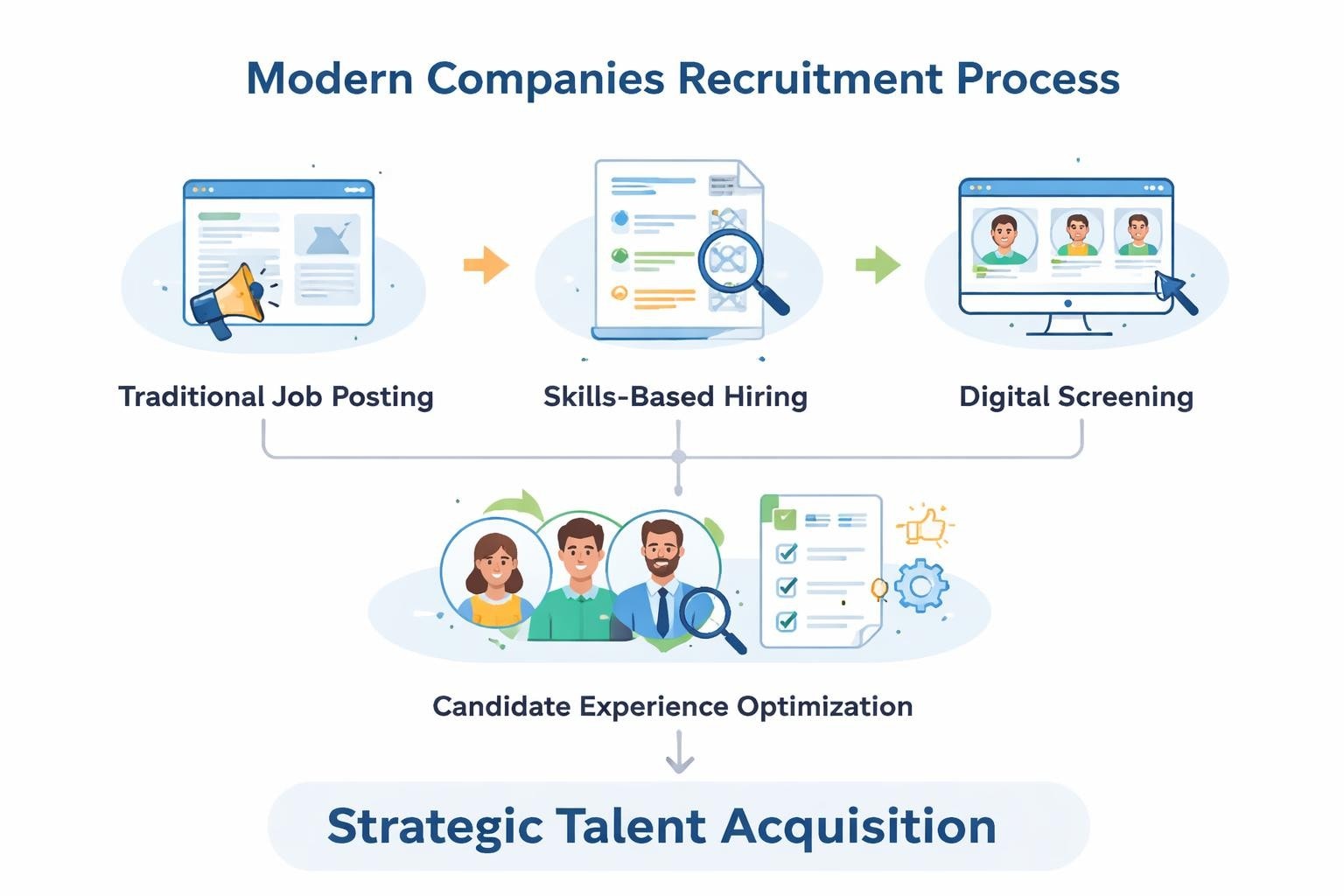
Companies Recruitment: Modern Strategies for 2026
Discover how companies recruitment has evolved in 2026. Learn proven strategies, best practices, and trends to attract world-class talent.
published
The landscape of companies recruitment has transformed dramatically over the past few years, driven by technological advances, changing workforce expectations, and the critical need for specialized talent. For businesses selling high-ticket products and services, the stakes are particularly high when it comes to building sales teams that can effectively close complex deals. The traditional approaches of posting job ads and waiting for resumes no longer deliver the caliber of talent needed to compete in today's market. Instead, successful organizations are adopting sophisticated recruitment strategies that prioritize skills, streamline processes, and create compelling candidate experiences that attract top performers.
The Evolution of Companies Recruitment in 2026
Companies recruitment has shifted from a reactive hiring process to a proactive talent acquisition strategy. Organizations no longer have the luxury of lengthy hiring cycles that stretch for months while competitors snap up the best candidates.
According to Forbes research on workplace trends, skills-based hiring has become the dominant approach, with companies moving away from traditional degree requirements. This shift has opened up talent pools significantly, allowing businesses to identify candidates based on demonstrated competencies rather than educational credentials.
Why Traditional Recruitment Methods Fall Short
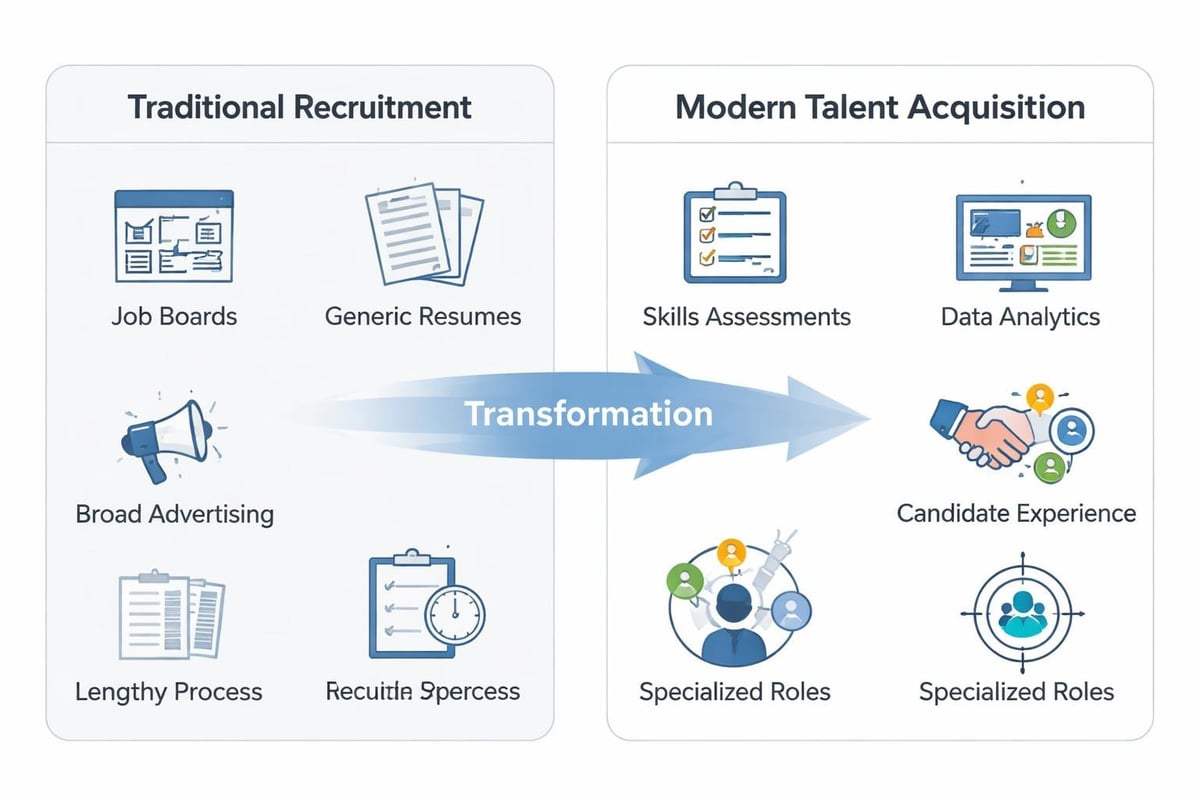
The conventional approach to companies recruitment typically involves several inefficiencies:
Posting on multiple job boards without targeted outreach
Relying solely on inbound applications from passive candidates
Extended interview processes that lose top talent to faster competitors
Inadequate screening that wastes time on unqualified applicants
Generic job descriptions that fail to attract specialized professionals
These outdated practices create bottlenecks that prevent businesses from scaling their sales operations effectively. High-ticket businesses particularly struggle when generic recruitment approaches fail to identify candidates with the specific consultative selling skills required for complex sales cycles.
Strategic Approaches to Modern Companies Recruitment
Successful companies recruitment requires a multifaceted strategy that addresses both immediate hiring needs and long-term talent pipeline development.
Building a Compelling Employer Brand
Your employer brand serves as the foundation for attracting quality candidates. Recruitment strategy best practices emphasize that companies with strong employer brands reduce hiring costs by up to 50% while attracting higher-quality applicants.
For businesses selling high-ticket services through digital channels, your employer brand should communicate:
Growth Opportunities: Top sales professionals want to know how they'll develop their skills and advance their careers within your organization.
Performance Recognition: Demonstrate how exceptional performance is acknowledged and rewarded beyond basic compensation structures.
Company Mission: Articulate the value your services provide to clients and how sales team members contribute to that impact.
Work Environment: Showcase the flexibility, autonomy, and support systems that enable sales professionals to perform at their peak.
Optimizing the Candidate Experience
The candidate experience directly impacts your ability to close top talent. Just as your sales team focuses on customer experience, your recruitment process should treat candidates as valued prospects.
Stage | Candidate Expectation | Best Practice |
|---|---|---|
Application | Simple, mobile-friendly process | Streamline to 10 minutes or less |
Initial Contact | Response within 48 hours | Automated acknowledgment + personal follow-up |
Interview | Clear process and timeline | Communicate all steps upfront |
Decision | Transparent evaluation criteria | Provide feedback regardless of outcome |
According to Talent MSH research on hiring trends, 60% of candidates have quit an application process due to its length or complexity. For competitive sales roles, this percentage increases as top performers have multiple opportunities.
Leveraging Technology in Companies Recruitment
Technology has revolutionized how organizations identify, assess, and engage talent. However, the most effective companies recruitment strategies balance automation with human connection.
Data-Driven Candidate Screening
Modern screening processes utilize multiple data points to evaluate candidate fit:
Skills assessments that measure actual competencies rather than resume claims
Behavioral evaluations that predict performance in specific sales scenarios
Communication analysis to assess presentation and persuasion abilities
Track record verification through reference checks and performance documentation
Cultural alignment indicators that predict long-term retention
These comprehensive evaluation methods help businesses avoid costly hiring mistakes. The average cost of a bad sales hire can exceed $240,000 when considering training investments, lost opportunities, and team disruption.
Remote Recruitment Capabilities
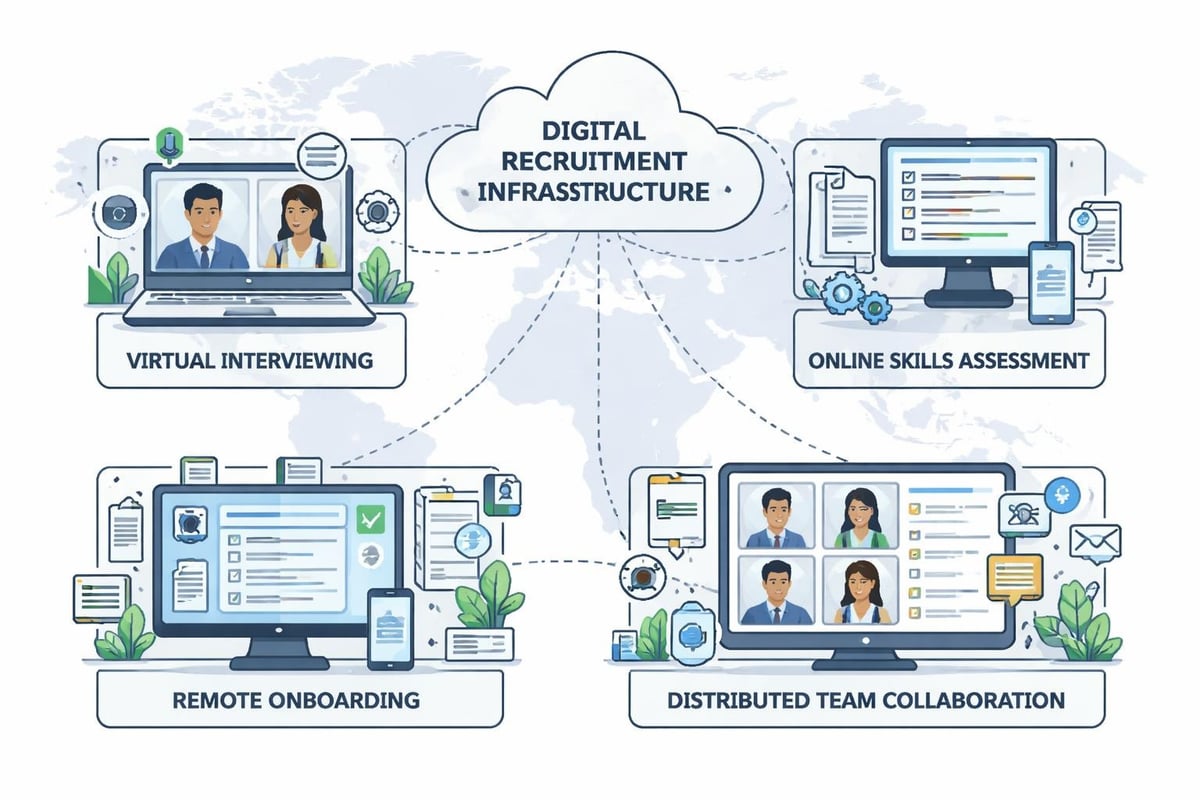
With high-ticket sales increasingly conducted through virtual channels like Zoom and Google Meet, geographic limitations in companies recruitment have dissolved. Organizations can now access talent nationally or globally, significantly expanding their candidate pools.
Remote recruiting strategies have become essential for businesses seeking specialized sales professionals. Video interviewing platforms, virtual assessment centers, and digital onboarding processes enable seamless hiring regardless of location.
Skills-Based Hiring for Sales Positions
The shift toward skills-based companies recruitment has particular relevance for sales roles, where demonstrated ability matters far more than credentials.
Essential Competencies for High-Ticket Sales
When recruiting for high-ticket sales positions, focus on these critical skills:
Consultative selling ability: Can they diagnose client needs and prescribe appropriate solutions?
Complex deal navigation: Do they understand multi-stakeholder decision processes?
Value articulation: Can they justify premium pricing through ROI demonstrations?
Objection handling: How do they address sophisticated buyer concerns?
Relationship building: Can they establish trust with C-level decision makers?
Indeed's recruiting strategies guide emphasizes treating candidates like customers throughout the evaluation process. For sales roles specifically, the recruitment experience itself demonstrates how your organization values relationship-building and professional communication.
Assessment Methods That Predict Performance
Effective companies recruitment for sales positions incorporates multiple assessment techniques:
Assessment Type | What It Measures | Implementation |
|---|---|---|
Role-play scenarios | Real-time selling ability | Live exercises with feedback |
Case studies | Strategic thinking | Written analysis of sales situations |
Mock presentations | Communication skills | Pitch to evaluation panel |
Personality assessments | Behavioral tendencies | Standardized instruments |
Skills testing | Technical competencies | Platform-specific evaluations |
These structured evaluations provide objective data that reduces hiring bias and improves prediction accuracy. Research from Babble for Business on recruiting trends indicates that structured interviews improve hiring outcomes by 26% compared to unstructured conversations.
Building an Efficient Recruitment Pipeline
Sustainable companies recruitment requires continuous pipeline development rather than reactive hiring when positions open.
Proactive Talent Sourcing
Leading organizations maintain ongoing relationships with potential candidates:
Industry event participation to network with sales professionals
Content marketing that positions your company as an employer of choice
Social media engagement showcasing company culture and opportunities
Alumni networks maintaining connections with former team members
Referral programs incentivizing current team members to recommend talent
These proactive approaches ensure you have qualified candidates ready when hiring needs arise. Top Echelon's recruitment best practices highlight that employee referrals produce the highest quality hires with 88% retention after one year.
Speed-to-Hire Optimization
In competitive talent markets, speed determines success. Top sales professionals typically receive multiple offers within days of beginning their job search.
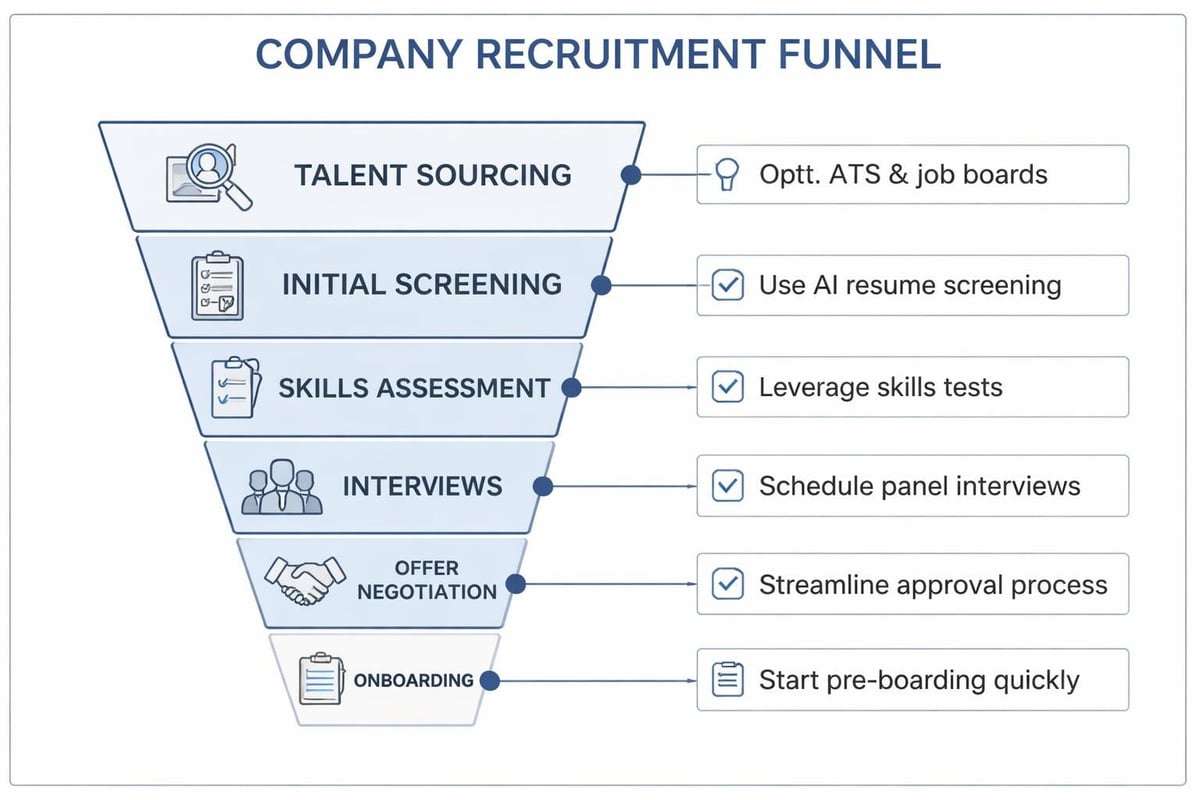
To accelerate companies recruitment:
Pre-qualify requirements before posting positions
Dedicate decision-maker time for rapid interview scheduling
Streamline approval processes to make same-week offers
Prepare onboarding resources to start new hires immediately
Maintain offer flexibility to compete on total value, not just base salary
The fastest-growing companies complete their entire recruitment cycle in 10-14 days from initial contact to offer acceptance. This velocity requires disciplined processes and committed leadership participation.
Specialized Recruitment for High-Ticket Sales Teams
Companies selling premium products and services face unique recruitment challenges that require specialized approaches.
Understanding the High-Ticket Sales Profile
High-ticket sales professionals possess distinct characteristics:
Consultative Mindset: They view themselves as trusted advisors rather than traditional salespeople, focusing on solving complex business problems.
Patience with Long Sales Cycles: They understand that premium sales often require months of relationship building and multiple stakeholder conversations.
Executive Presence: They communicate confidently with C-suite decision makers and maintain composure in high-stakes negotiations.
Business Acumen: They comprehend financial metrics, ROI calculations, and strategic business considerations that justify significant investments.
Vetted candidates with these qualities command premium compensation but deliver exponentially higher value through larger deal sizes and superior close rates.
Industry-Specific Considerations
Different high-ticket industries require specialized knowledge and experience:
Marketing Agencies: Sales professionals need to understand digital marketing strategies, campaign metrics, and agency service models to effectively sell retainer packages.
Coaching and Consulting: Credibility comes from demonstrated expertise in transformation methodologies and the ability to articulate value beyond hourly rates.
Service-Based Businesses: Understanding service delivery models, capacity planning, and client success metrics helps sales professionals set appropriate expectations.
According to Oyster HR's hiring trends research, 71% of companies now prioritize diversity, equity, and inclusion in their recruitment strategies, recognizing that diverse perspectives enhance problem-solving and innovation.
Outsourcing Strategic Components of Companies Recruitment
Many businesses find that partnering with specialized recruitment firms accelerates hiring while improving quality.
When to Consider Recruitment Partners
Several scenarios make specialized recruitment support valuable:
Rapid scaling requirements that exceed internal recruitment capacity
Limited recruitment expertise on your team for specialized sales roles
Geographic expansion into markets where you lack talent networks
Time-sensitive hiring where delays threaten business objectives
Competitive talent markets where you struggle to attract top performers
Sales Match services provide pre-vetted appointment setters and closers specifically for high-ticket businesses, eliminating the lengthy screening processes that typically delay hiring.
Evaluating Recruitment Partners
When selecting a recruitment partner, assess these factors:
Evaluation Criteria | Why It Matters | Questions to Ask |
|---|---|---|
Specialization | Generalists lack deep market knowledge | Do they focus exclusively on sales recruitment? |
Vetting Process | Determines candidate quality | What assessments do they use? |
Talent Pool | Affects speed and quality | How many pre-qualified candidates do they maintain? |
Replacement Policy | Protects your investment | What guarantees do they offer? |
Industry Focus | Ensures relevant experience | Do they understand your business model? |
The Sales Match replacement policy exemplifies the quality assurance that reputable recruitment partners provide, demonstrating commitment to successful placements.
Retention as a Recruitment Strategy
The most effective companies recruitment strategy includes strong retention programs that reduce replacement hiring needs.
Onboarding Excellence
First impressions shape long-term retention. Comprehensive onboarding should include:
Product and service training that builds confidence in what you're selling
Sales methodology instruction aligned with your specific approach
Technology platform tutorials for CRM, communication, and presentation tools
Shadowing opportunities with top performers to observe best practices
Clear performance expectations with defined ramp-up timelines
Research from Corporate Navigators on 2026 recruitment trends indicates that companies with strong onboarding programs improve new hire retention by 82% and productivity by 70%.
Creating Growth Pathways
Top sales professionals seek continuous development opportunities:
Skill development programs that enhance closing techniques and industry knowledge
Leadership tracks for high performers interested in management roles
Mentorship relationships connecting new hires with experienced team members
Performance tiers that recognize achievement levels and unlock new responsibilities
Cross-functional exposure to broaden business understanding beyond sales
These growth mechanisms transform companies recruitment from a constant challenge into a strategic advantage as satisfied team members become your best source of referrals.
Measuring Companies Recruitment Effectiveness
Data-driven recruitment requires tracking key metrics that reveal process efficiency and quality outcomes.
Essential Recruitment Metrics
Monitor these indicators to optimize your companies recruitment performance:
Time-to-Fill: Days from job posting to offer acceptance. Target: 14 days or less for sales roles.
Cost-per-Hire: Total recruitment expenses divided by number of hires. Includes advertising, screening tools, interview time, and partner fees.
Quality-of-Hire: Composite score based on performance ratings, ramp time to productivity, and retention beyond one year.
Offer Acceptance Rate: Percentage of offers accepted. Low rates indicate compensation misalignment or poor candidate experience.
Source Effectiveness: Which channels produce the highest quality candidates. Guides future sourcing investments.
First-Year Retention: Percentage of new hires remaining after 12 months. Industry benchmark for sales roles is 68%.
These metrics inform continuous improvement in your recruitment processes. Building a sales department requires systematic tracking to identify bottlenecks and opportunities for enhancement.
Benchmarking Against Industry Standards
Understanding how your companies recruitment performance compares to industry norms helps set realistic goals:
Average time-to-fill for sales positions ranges from 36-42 days using traditional methods
Cost-per-hire for sales roles averages $4,129 according to SHRM research
Quality sales hires typically reach full productivity within 90-120 days
Top-performer retention exceeds 85% in companies with strong cultures and compensation
When your metrics fall below these benchmarks, it signals the need for process redesign or consideration of specialized recruitment partners who can deliver superior results.
Future-Proofing Your Companies Recruitment Strategy
The recruitment landscape continues evolving, requiring organizations to stay ahead of emerging trends and adapt their strategies accordingly.
Emerging Trends Shaping Recruitment
Several developments will influence companies recruitment through 2026 and beyond:
Skills Verification: Blockchain-based credential verification will streamline background checks and skills validation, reducing hiring cycle time.
Predictive Analytics: Advanced data models will better forecast candidate success based on historical performance patterns and behavioral indicators.
Candidate-Driven Markets: As demographic shifts reduce available talent, candidates will hold increasing negotiating power, requiring enhanced employer value propositions.
Hybrid Work Models: Even for sales roles, flexibility in location and schedule has become a competitive differentiator in attracting top talent.
Continuous Evaluation: The concept of permanent positions is shifting toward ongoing performance assessment with mutual opt-out flexibility.
Organizations that anticipate these trends position themselves as employers of choice for the most talented sales professionals in their markets.
Adapting to Market Changes
Agile companies recruitment strategies incorporate regular review cycles:
Quarterly strategy sessions to assess what's working and what needs adjustment
Competitive intelligence gathering to understand how other employers attract talent
Candidate feedback collection from both successful hires and those who declined offers
Team input solicitation from hiring managers and recruiters on process improvements
Technology evaluation of new tools and platforms that could enhance efficiency
This commitment to continuous improvement ensures your recruitment capabilities evolve with market conditions rather than becoming outdated and ineffective.
Modern companies recruitment requires strategic thinking, efficient processes, and commitment to candidate experience. For businesses selling high-ticket products and services through digital channels, the quality of your sales team directly determines your growth trajectory. By implementing skills-based hiring, optimizing your recruitment pipeline, and maintaining competitive positioning in talent markets, you position your organization to attract the sales professionals who drive substantial revenue. Sales Match specializes in providing pre-vetted appointment setters and closers for high-ticket businesses, eliminating the complexity and delays of traditional hiring while delivering world-class sales talent ready to contribute immediately.