Ideal Hiring: Building Elite Sales Teams in 2026
Discover proven strategies for ideal hiring in sales recruitment. Learn how to attract, vet, and place top-tier closers and setters efficiently.
published
The landscape of sales recruitment has evolved dramatically over the past few years, particularly for businesses selling high-ticket products and services online. Marketing agencies, coaches, consultants, and service-based companies now face intense competition for top sales talent, making the concept of ideal hiring more critical than ever. When your business depends on appointment setters and closers to drive revenue through virtual sales calls, every hiring decision carries significant weight. The difference between a mediocre hire and an exceptional one can fundamentally alter your company's trajectory, affecting everything from conversion rates to customer satisfaction and team morale.
Understanding the Foundation of Ideal Hiring
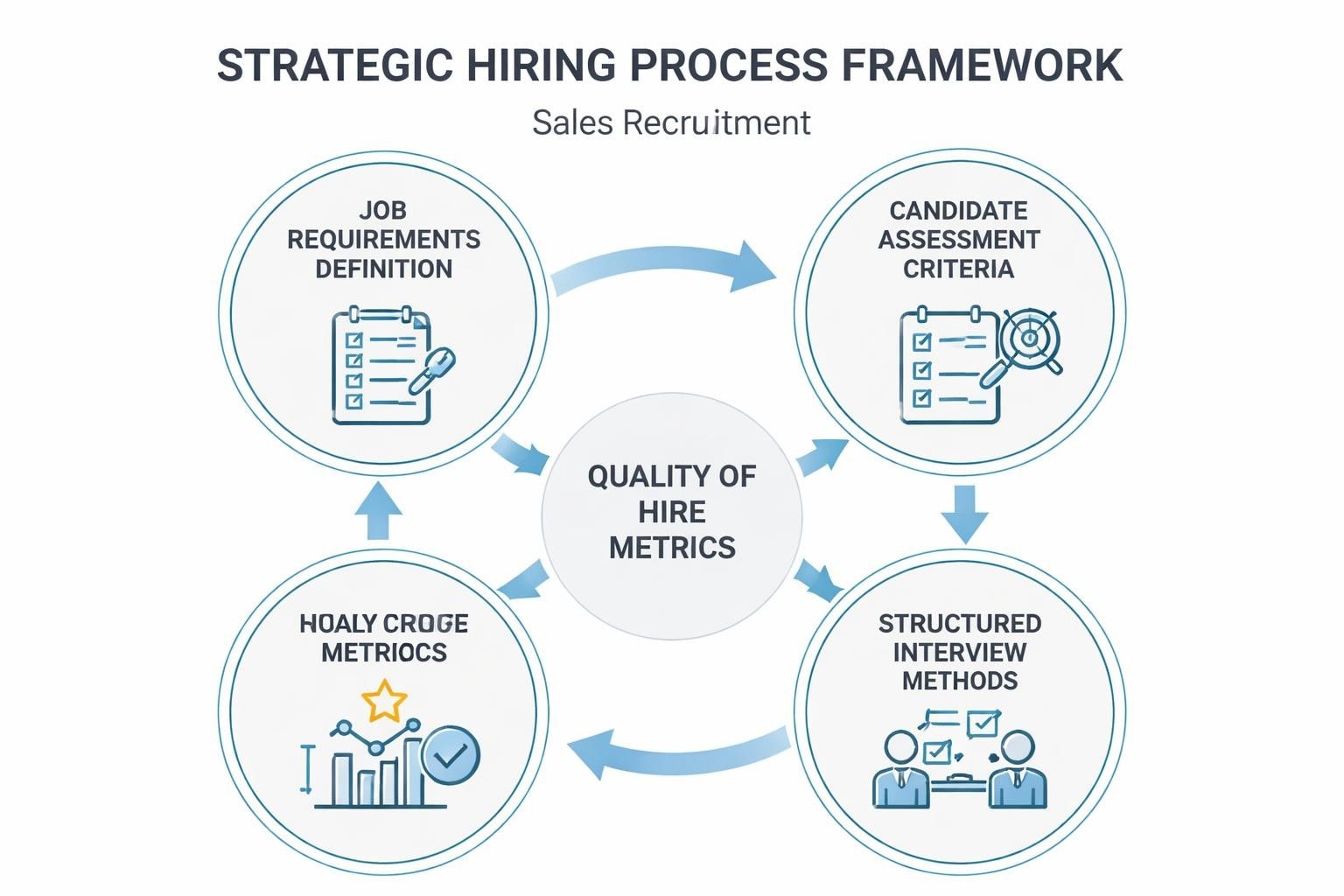
Ideal hiring represents a strategic approach to recruitment that prioritizes quality over speed, cultural alignment over credentials alone, and long-term success over short-term gaps. This methodology requires businesses to develop clear frameworks for identifying, attracting, and selecting candidates who will genuinely excel in their roles.
Defining Your Perfect Candidate Profile
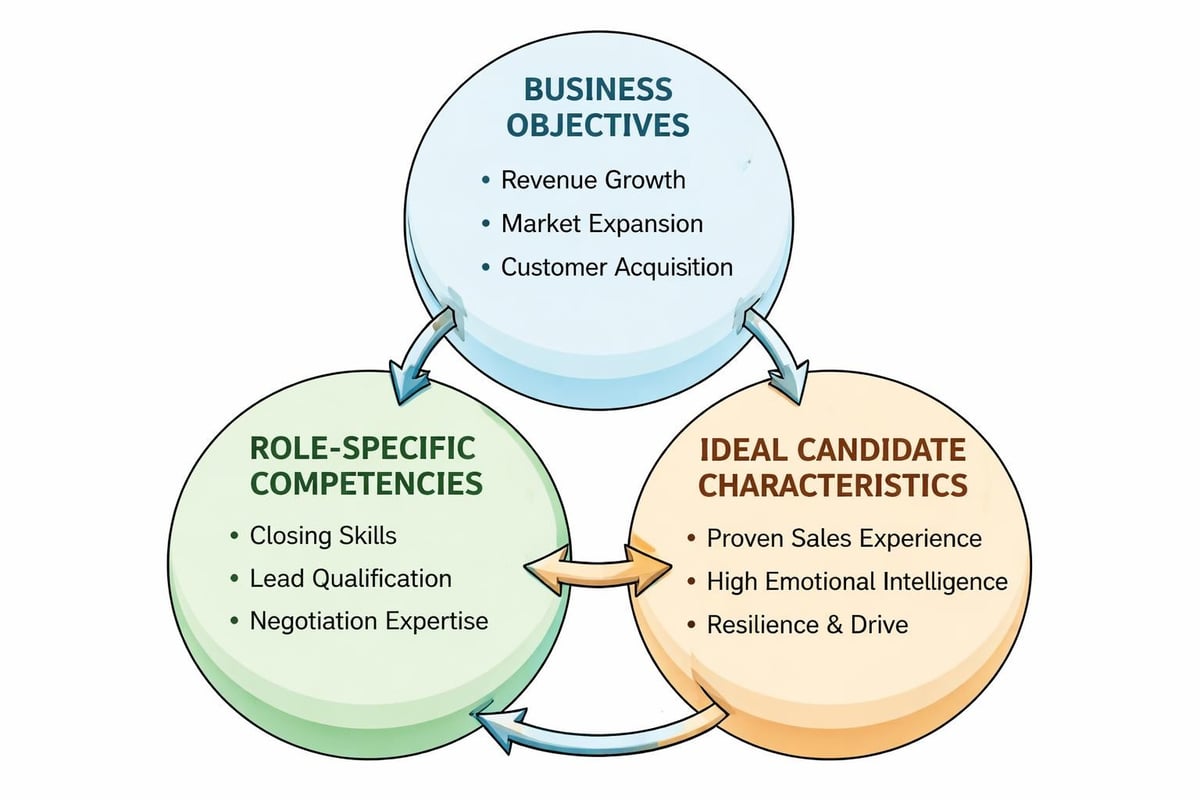
Before you can achieve ideal hiring outcomes, you must establish concrete definitions of what success looks like in your organization. For high-ticket sales roles, this extends far beyond basic qualifications.
Essential characteristics to define include:
Proven track record in similar price point sales environments
Communication style that resonates with your target market
Resilience and adaptability in virtual selling contexts
Technical proficiency with your sales stack and CRM systems
Self-motivation and discipline for remote work environments
According to merit-based hiring principles, establishing clear competency frameworks ensures fairness and consistency throughout your recruitment process. These frameworks should align directly with your business objectives and the specific demands of selling high-value offerings through digital channels.
The Cost of Poor Hiring Decisions
Research from the Society for Human Resource Management indicates that the cost of a bad hire can reach up to five times the annual salary when accounting for lost productivity, training investments, and team disruption. For sales roles specifically, the impact multiplies because poor performers don't just fail to generate revenue-they actively damage pipeline quality and customer relationships.
When you hire appointment setters or closers who lack the necessary skills or cultural fit, several cascading problems emerge. Your existing team must compensate for underperformance, potentially leading to burnout. Customer experience suffers when unqualified salespeople misrepresent your offerings or fail to deliver value. Most critically, you lose valuable time in a competitive market where your rivals continue building stronger teams.
Building a Structured Ideal Hiring Process
The difference between random hiring outcomes and consistently excellent results lies in process discipline. Structured approaches reduce bias, improve candidate experience, and dramatically increase your likelihood of making successful placements.
Creating Compelling Role Descriptions
Your job posting serves as the first filter in your ideal hiring funnel. Many businesses make the mistake of creating generic descriptions that fail to attract top performers while simultaneously attracting misaligned candidates.
High-quality role descriptions for sales positions should include:
Specific performance expectations (call volume, meeting benchmarks, conversion metrics)
Clear compensation structure without making earning claims
Technology and tools candidates will use daily
Growth trajectory available within your organization
The selling environment (product complexity, sales cycle length, customer profile)
According to best practices for maximizing quality of hire, compelling job descriptions that authentically represent your culture and expectations serve as powerful self-selection tools. Top performers gravitate toward opportunities where expectations are transparent and aligned with their capabilities.
Implementing Multi-Stage Assessment
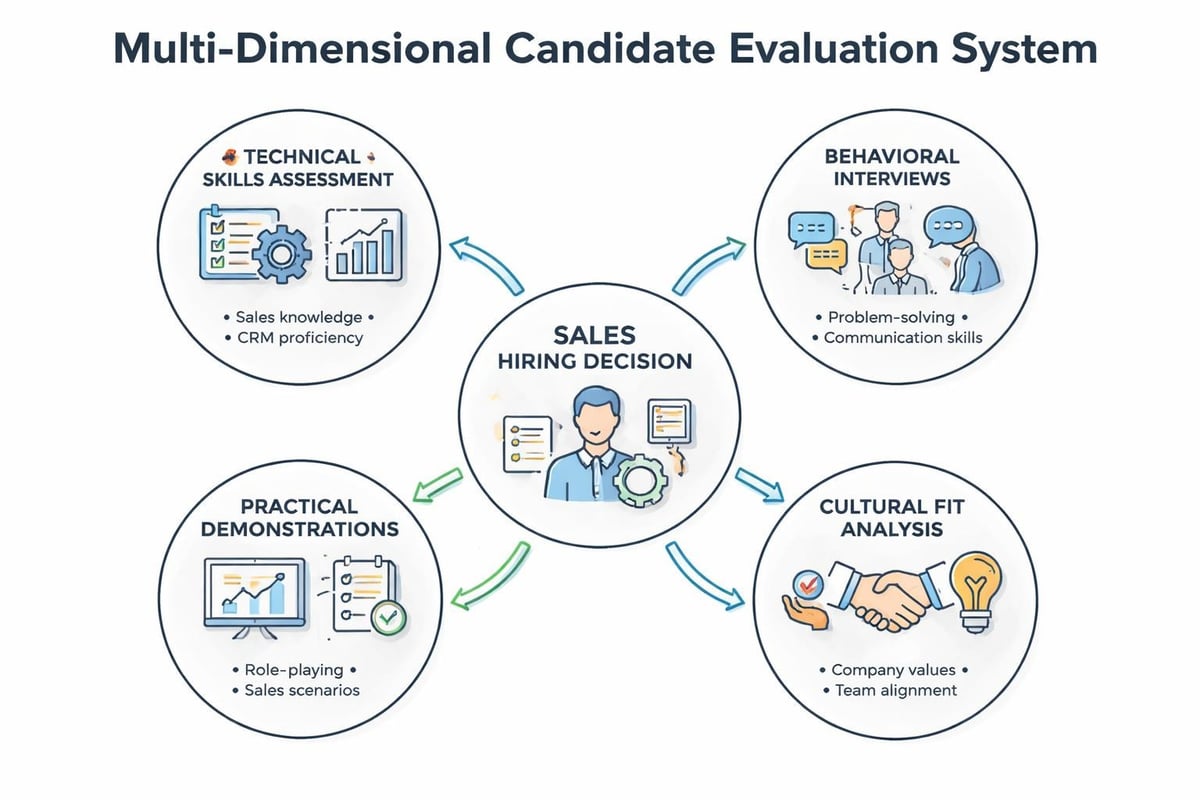
Ideal hiring requires you to evaluate candidates across multiple dimensions before making final decisions. Single-interview processes rarely reveal the true capabilities and fit of sales professionals.
Assessment Stage | Purpose | Key Evaluation Points |
|---|---|---|
Initial Screening | Basic qualification verification | Experience level, availability, compensation alignment |
Skills Assessment | Technical capability testing | Product knowledge absorption, objection handling, closing techniques |
Role-Play Scenarios | Situational performance | Communication style, pressure management, buyer engagement |
Cultural Interview | Team and value alignment | Work preferences, motivation drivers, collaboration approach |
Reference Validation | Past performance verification | Consistency, reliability, results delivery |
This structured approach to recruitment significantly improves prediction accuracy for on-the-job success. Each stage should have predetermined evaluation criteria that all interviewers use consistently, reducing subjective bias and ensuring fair comparison across candidates.
Leveraging Technology While Maintaining Human Judgment
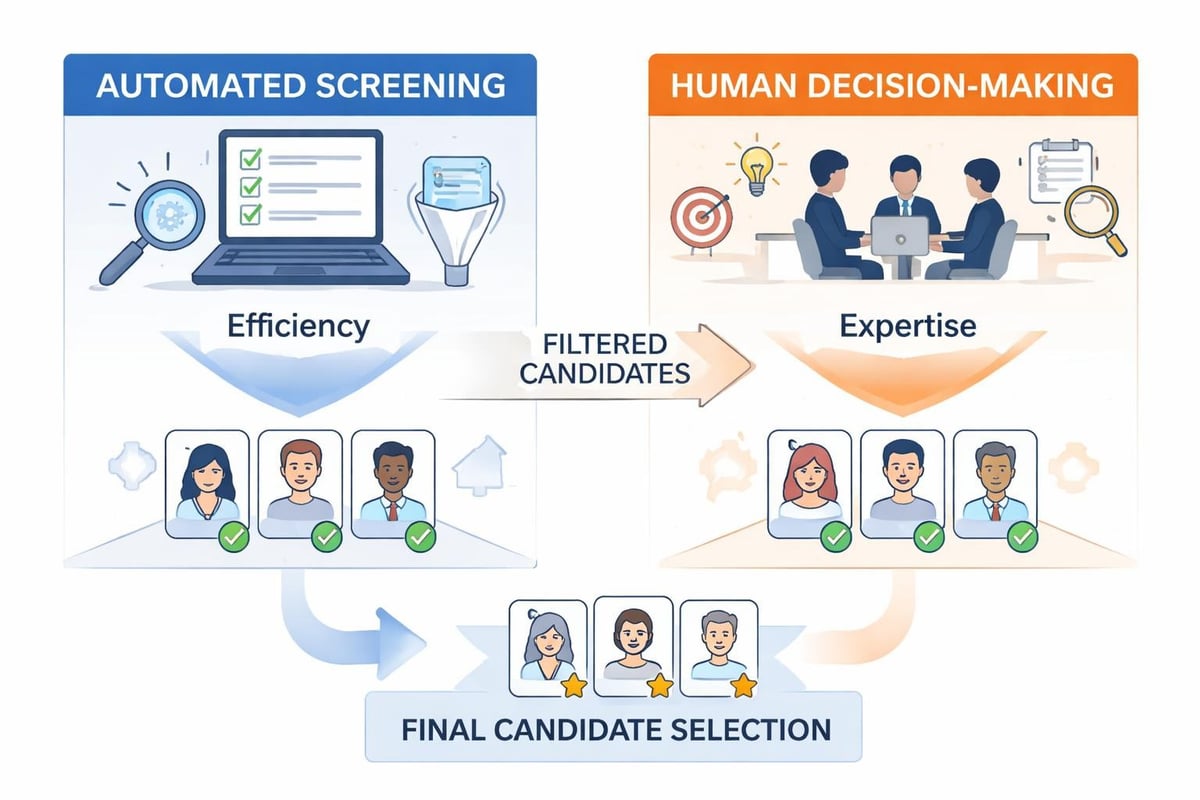
Modern recruitment increasingly incorporates technological tools to streamline processes and improve decision quality. However, ideal hiring balances automation with essential human evaluation, particularly for relationship-driven roles like sales.
The Role of Automated Screening
Technology excels at handling high-volume administrative tasks that consume valuable time. Automated systems can efficiently manage:
Resume parsing and initial qualification checks
Calendar coordination for interview scheduling
Communication sequencing with candidates
Assessment delivery and scoring
Reference request management
A comprehensive examination of algorithmic hiring reveals both the opportunities and risks of technology-dependent recruitment. While automation increases efficiency, businesses must remain vigilant about potential bias encoded in screening algorithms and ensure human oversight for final decisions.
Maintaining the Human Element
For high-ticket sales roles where relationship building and emotional intelligence prove critical, human evaluation remains irreplaceable. Experienced sales leaders can identify subtle communication patterns, assess authenticity, and evaluate nuanced fit factors that technology cannot reliably measure.
When you interview candidates for closer or setter positions, you're essentially experiencing their sales abilities firsthand. Their approach to the interview process-how they research your company, the questions they ask, their follow-up communication-provides valuable insights into how they'll engage with prospects.
Sourcing Strategies for Top Sales Talent
Ideal hiring begins long before you post a job opening. Proactive sourcing strategies ensure you're selecting from the strongest possible candidate pools rather than settling for whoever happens to apply.
Building a Talent Pipeline
According to recruitment best practices research, successful organizations maintain ongoing relationships with potential candidates even when they're not actively hiring. This approach yields several advantages:
Reduced time-to-hire when positions open
Higher quality candidates who've been pre-qualified
Better cultural fit through extended relationship building
Lower recruitment costs by reducing dependency on paid advertising
For businesses selling high-ticket offerings through virtual channels, specialized talent pools exist where experienced appointment setters and closers actively seek opportunities. Understanding where these professionals congregate-specific online communities, industry groups, networking events-enables more efficient sourcing.
The Power of Employee Referrals
Your existing top performers understand the demands of your sales environment better than anyone. When they refer candidates, they're essentially pre-vetting for both skills and cultural alignment.
Benefits of referral-based hiring include:
Higher retention rates compared to other sources
Faster onboarding due to insider advocacy
Cultural consistency that strengthens team cohesion
Reduced recruitment costs per hire
Implementing a structured referral program with clear criteria and appropriate recognition (avoiding problematic incentive structures) can transform your ideal hiring outcomes. Your best salespeople typically know other excellent salespeople, creating a natural talent network.
Evaluating Beyond the Resume
Traditional credentials and work history provide limited predictive value for sales success, particularly in evolving digital selling environments. Ideal hiring requires deeper evaluation of actual capabilities and potential.
Assessing Real Sales Competencies
Rather than relying solely on stated experience, implement practical assessments that reveal genuine abilities. These might include:
Live product presentations using your actual offering
Objection handling scenarios with realistic buyer concerns
Discovery call simulations demonstrating questioning techniques
Email communication samples showing written persuasion skills
CRM navigation tests confirming technical proficiency
These practical evaluations provide far more reliable prediction of job performance than resume claims alone. You observe how candidates think, communicate, and problem-solve in contexts directly relevant to their future responsibilities.
Understanding Motivation and Fit
According to comprehensive research on recruiting top talent, cultural fit and intrinsic motivation significantly impact long-term success and retention. For remote sales roles especially, self-direction and alignment with company values become critical factors.
During your interview process, explore:
What energizes candidates about sales work
How they handle rejection and maintain motivation
Their preferred feedback and management styles
Learning approaches and professional development priorities
Communication preferences and collaboration habits
The vetting process for sales professionals should dig beneath surface qualifications to understand what drives sustained performance. Top closers and setters share certain psychological profiles that correlate with resilience, competitiveness, and relationship-building excellence.
Onboarding as Part of Ideal Hiring
The hiring process doesn't end when candidates accept offers. Ideal hiring encompasses thoughtful onboarding that sets new team members up for sustained success.
Structured Training Programs
Even experienced sales professionals need comprehensive orientation to your specific products, processes, and customer base. Research demonstrates that structured onboarding significantly impacts time-to-productivity and long-term retention.
Your onboarding should systematically cover:
Product expertise: Deep knowledge of features, benefits, use cases, and competitive positioning
Sales methodology: Your specific approach to discovery, demonstration, objection handling, and closing
Systems proficiency: Mastery of your CRM, communication tools, and sales enablement platforms
Market understanding: Buyer personas, decision-making processes, common pain points, and value drivers
Performance expectations: Clear metrics, milestone timelines, and support resources
The most effective onboarding combines formal training with shadowing opportunities, allowing new hires to observe top performers before handling their own pipeline. This apprenticeship approach accelerates learning while building team relationships.
The First 90 Days
Your ideal hiring investment proves itself during the critical first three months. New sales professionals should receive:
Regular check-ins with direct managers
Peer mentorship from experienced team members
Progressive responsibility increases as skills develop
Constructive feedback on specific behaviors and outcomes
Resources to address knowledge gaps quickly
Setting clear 30-60-90 day milestones helps new hires track their progress and demonstrates your commitment to their success. These benchmarks should be realistic while still maintaining performance standards, recognizing that productivity ramps over time.
Measuring Ideal Hiring Success
What gets measured gets managed. To continuously improve your hiring outcomes, establish clear metrics that track both process efficiency and quality results.
Quality of Hire Metrics
According to practices for improving quality of hire, leading organizations track multiple indicators rather than relying on single metrics:
Metric Category | Specific Measurements | Target Benchmarks |
|---|---|---|
Performance | Quota attainment, conversion rates, deal size | 75%+ meeting targets within 6 months |
Retention | 90-day, 1-year, and 2-year retention rates | >85% at 90 days, >70% at 1 year |
Time Efficiency | Days to first call, time to first close | <14 days to first call, <45 days to close |
Cultural Integration | Manager satisfaction, peer collaboration scores | >4.0/5.0 ratings |
Development | Skills progression, promotion readiness | Clear advancement within 12-18 months |
Tracking these metrics across hiring sources helps you identify which channels consistently deliver the strongest candidates. You might discover that referrals dramatically outperform job board applications, or that certain assessment combinations predict success more accurately than others.
Continuous Process Refinement
Ideal hiring represents an evolving practice rather than a fixed destination. Regular analysis of your hiring data should inform ongoing improvements to job descriptions, assessment methods, interview questions, and selection criteria.
Conduct post-hire reviews at 90-day intervals, gathering feedback from:
New hires about their candidate experience and onboarding
Hiring managers about assessment accuracy and predictive value
Team members about cultural fit and collaboration
Customers about sales professional effectiveness
This feedback loop enables you to refine your approach continuously, adapting to market changes and learning from both successes and misalignments. When you identify patterns-certain questions that reveal critical traits, assessment components that don't correlate with performance-you can adjust your process accordingly.
Addressing Common Ideal Hiring Challenges
Even with structured processes, businesses encounter predictable obstacles in their quest for ideal hiring outcomes. Understanding these challenges and preparing strategic responses increases your success rate.
Time Pressure vs. Quality Standards
When revenue targets loom and positions sit vacant, the temptation to compromise hiring standards becomes intense. This represents one of the most dangerous traps in sales recruitment.
Research consistently demonstrates that a slower, more selective hiring process produces better long-term results than rapid hiring followed by costly turnover. The apparent urgency of filling seats quickly pales beside the actual cost of poor performers who damage customer relationships and team morale.
Businesses can address this tension by:
Maintaining ongoing talent pipelines so positions never start from zero
Using temporary solutions like fractional resources during searches
Being realistic about ramp time in revenue projections
Resisting pressure to lower standards despite vacancy duration
When you work with specialized recruitment partners who maintain vetted candidates ready for placement, you can significantly reduce time-to-hire without sacrificing quality standards.
Market Competition for Top Talent
Exceptional sales professionals have abundant options, particularly in the high-ticket space where demand consistently exceeds supply. Winning these candidates requires more than competitive compensation.
Top performers evaluate opportunities based on:
Growth potential and skill development opportunities
Product quality and genuine value delivered to customers
Leadership competence and management philosophy
Team culture and collaboration environment
Process maturity and organizational support systems
Modern hiring best practices emphasize authentic employer branding that showcases your genuine culture rather than manufactured marketing messages. When candidates can clearly envision their daily reality, compensation objections often diminish as they recognize the total opportunity value.
Remote Work Dynamics
Virtual selling environments present unique hiring considerations. The skills required for in-person sales don't automatically translate to video-based consultations with high-ticket prospects.
Ideal hiring for remote sales positions requires evaluating:
Self-discipline and time management without direct supervision
Technology comfort and troubleshooting capabilities
Communication effectiveness through digital channels
Relationship building without in-person interaction
Motivation maintenance in isolated work environments
Your assessment process should specifically test these remote competencies rather than assuming traditional sales experience adequately prepares candidates. Video-based role-plays, asynchronous communication exercises, and questions about home office setups provide valuable insights into remote work readiness.
Creating Competitive Advantages Through Ideal Hiring
When executed consistently, ideal hiring becomes a significant competitive differentiator. Organizations that reliably attract and place exceptional talent compound their advantages over time.
Building Reputation as an Employer of Choice
Your recruitment success creates positive feedback loops. When top performers join your team and thrive, they become advocates who attract similar high-caliber candidates. This reputation effect accelerates over time, making each subsequent hire easier and higher quality.
According to research on building strong employer brands, companies recognized for development opportunities, culture quality, and performance standards naturally attract better applicants. Your current team's satisfaction and advocacy serve as the most credible recruitment marketing available.
Developing Internal Promotion Pathways
Ideal hiring extends beyond external recruitment to include internal development. When you consistently hire strong foundational talent and provide clear growth pathways, you create sustainable talent pipelines for leadership positions.
For sales organizations, this might mean:
Hiring appointment setters with closer potential
Developing closers into team leaders and trainers
Promoting top performers into management roles
Creating specialization tracks for subject matter expertise
This approach improves retention by demonstrating commitment to employee growth while ensuring leadership positions fill with people who deeply understand your culture, products, and customers. The hiring decision to bring someone aboard as an entry-level setter becomes more strategic when viewed as potential future leadership investment.
Strategic Partnerships in Ideal Hiring
Many businesses, particularly those focused on core competencies outside HR and recruitment, benefit from strategic partnerships with specialized talent providers. This approach allows you to maintain ideal hiring standards without building extensive internal recruitment infrastructure.
When you partner with organizations specializing in sales recruitment, you access:
Pre-qualified talent pools of candidates already vetted for basic competencies
Industry expertise about market compensation, availability trends, and sourcing strategies
Process efficiency through established assessment and screening methodologies
Replacement support if initial placements don't achieve expected performance
The key to successful partnership lies in selecting providers who genuinely understand your specific market, selling environment, and cultural requirements. Generic recruitment firms rarely deliver the same results as specialists who focus exclusively on high-ticket sales talent.
Effective collaboration requires clear communication about your ideal candidate profile, transparent feedback on referred candidates, and partnership mindset rather than transactional vendor relationships. When recruitment partners understand your business deeply, they become extensions of your team rather than external services.
Implementing ideal hiring practices transforms sales recruitment from a periodic headache into a systematic competitive advantage. By establishing clear candidate profiles, implementing structured assessment processes, and maintaining quality standards despite time pressure, you consistently build teams capable of driving sustainable growth. Sales Match specializes in delivering pre-vetted, world-class appointment setters and closers who excel in high-ticket virtual selling environments, enabling businesses to access top sales talent without lengthy recruitment cycles. If you're ready to elevate your sales team with professionals who can immediately contribute to your revenue goals, explore how specialized recruitment partnerships can accelerate your ideal hiring outcomes.