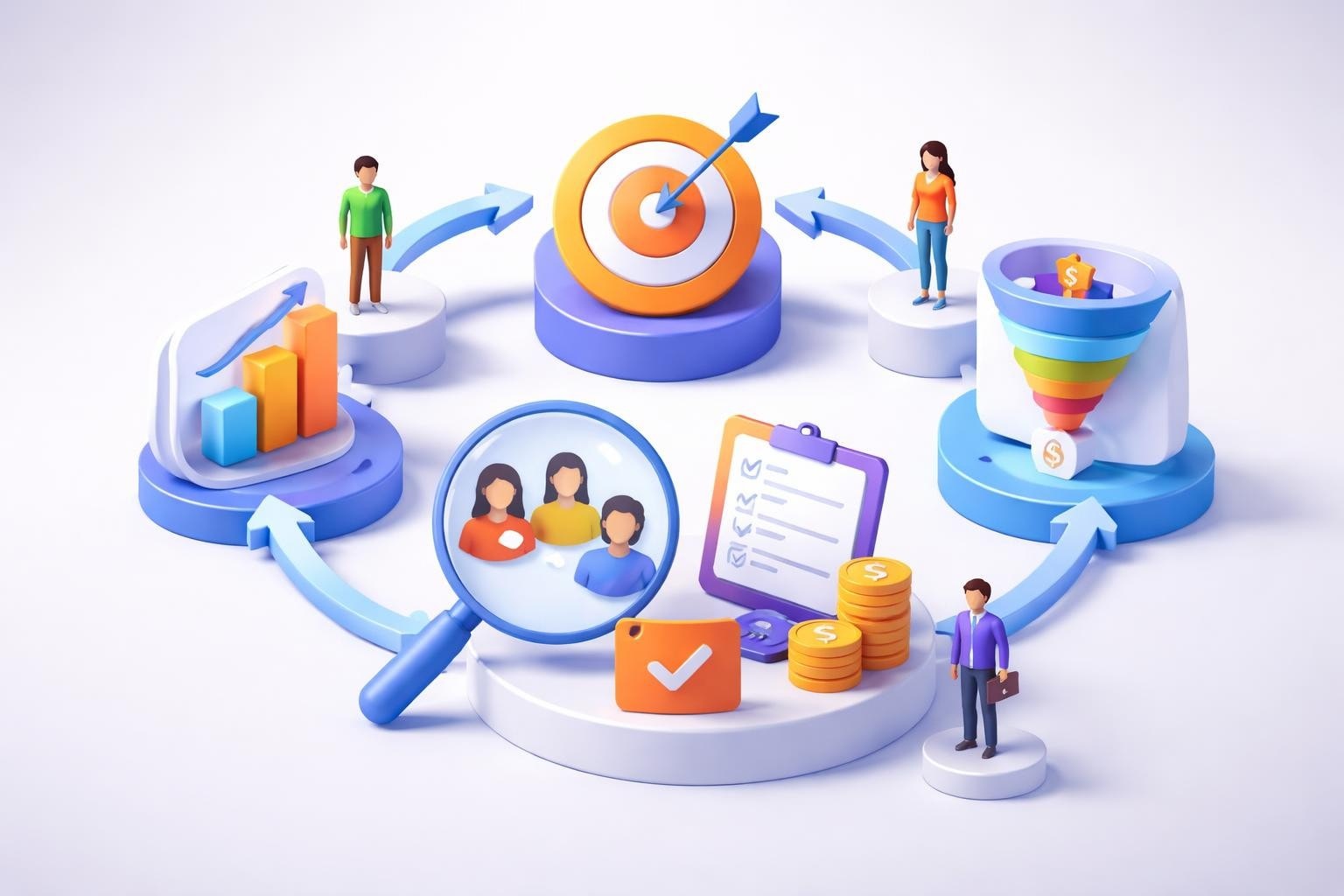
Companies Sales: How to Build High-Performing Teams
Discover proven strategies to improve companies sales performance through better hiring, training, and process optimization for high-ticket businesses.
published
The success of companies sales depends fundamentally on one critical element: the quality of their sales teams. For businesses selling high-ticket products and services, particularly those operating in the digital space through platforms like Zoom or Google Meet, the difference between a top-performing salesperson and an average one can translate to hundreds of thousands of dollars in annual revenue. Marketing agencies, coaches, consultants, and service-based businesses face unique challenges when building teams capable of consistently closing deals above $2,500, making strategic talent acquisition a non-negotiable priority for sustainable growth in 2026.
Understanding the Foundation of Strong Companies Sales Performance
Building exceptional companies sales starts with recognizing that not all sales talent is created equal. High-ticket sales require a distinct skill set that differs significantly from transactional or lower-value selling environments.
Top performers in high-ticket sales demonstrate:
Deep consultative selling abilities rather than product-pushing techniques
Exceptional emotional intelligence to navigate complex buying decisions
Resilience to handle longer sales cycles and higher rejection rates
Strategic thinking to identify and address sophisticated objections
Strong relationship-building skills that create trust with high-value prospects
The impact of hiring the right talent cannot be overstated. According to research on improving sales performance, companies that invest in targeted sales training and set clear measurable targets see significant improvements in conversion rates and revenue growth.
The Cost of Poor Sales Hiring Decisions
When companies sales suffer due to underperforming team members, the financial impact extends far beyond lost deals. Consider the total cost of a bad hire: recruitment expenses, onboarding time, training investment, wasted opportunities, and the revenue gap while searching for a replacement.
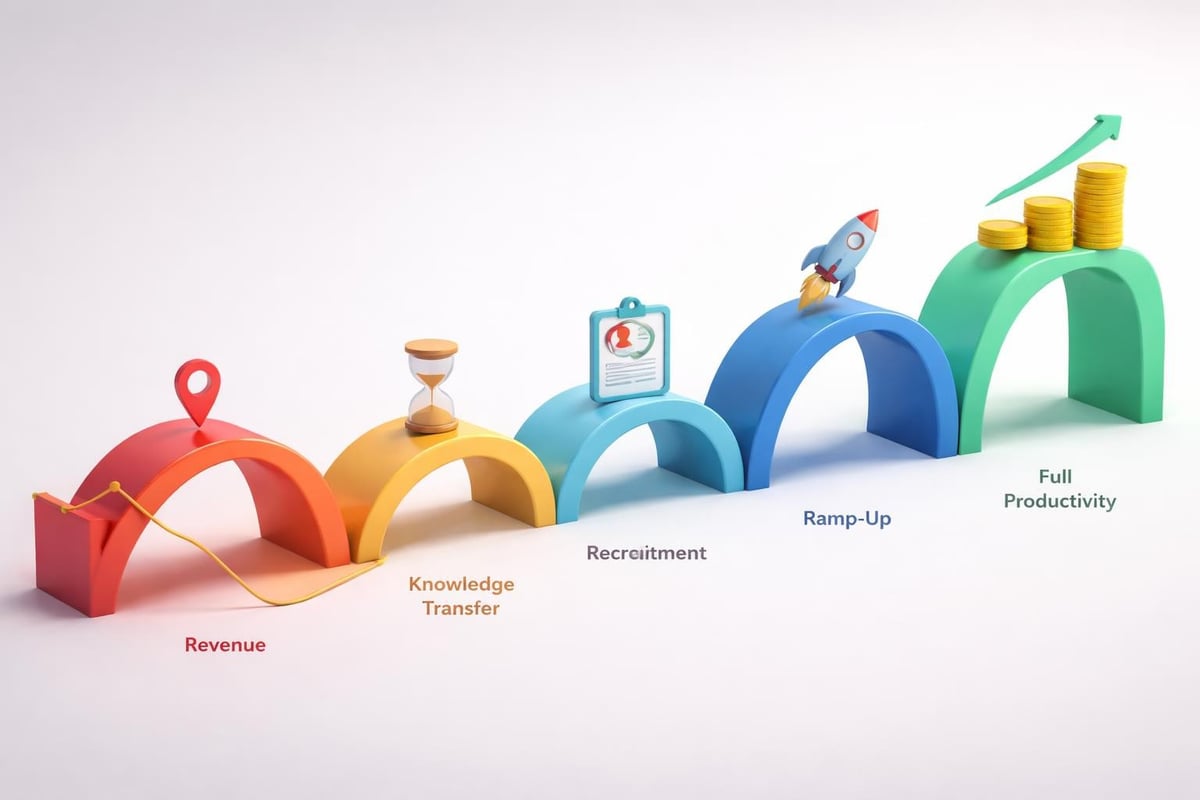
For a high-ticket business where individual salespeople might close $50,000 to $200,000 in monthly revenue, even a single underperformer represents a substantial opportunity cost. The typical hiring process takes 30-45 days, followed by 60-90 days of ramp-up time, meaning businesses can lose an entire quarter of productivity from a single poor hiring decision.

Identifying Top Sales Talent for High-Ticket Offerings
The challenge facing most companies sales leaders isn't just finding candidates-it's identifying those who can truly excel in high-ticket environments. Traditional recruitment methods often fail to distinguish between candidates who interview well and those who close deals consistently.
Essential Competencies for High-Ticket Sales
Successful high-ticket closers possess competencies that transcend basic sales skills. They understand value-based selling, where the conversation focuses on transformation and ROI rather than features and pricing.
Competency | Low-Ticket Sales | High-Ticket Sales |
|---|---|---|
Sales Cycle Understanding | Days to weeks | Weeks to months |
Objection Handling | Price-focused | Value and implementation-focused |
Relationship Building | Transactional | Deep consultative partnerships |
Decision Maker Access | Often individual buyers | C-suite and committee decisions |
Follow-up Persistence | 2-3 touchpoints | 8-12+ touchpoints |
Understanding these distinctions helps businesses avoid the costly mistake of hiring candidates with impressive résumés but mismatched experience. Someone who excelled selling $99 monthly subscriptions will struggle dramatically when tasked with closing $25,000 consulting packages.
The Vetting Challenge
Most companies sales teams lack the bandwidth and expertise to properly vet sales candidates. The interview process reveals communication skills and cultural fit, but rarely predicts actual closing ability.
Comprehensive vetting requires:
Role-play scenarios that simulate real customer interactions
Reference checks focused on quota attainment and ranking among peers
Assessment of objection handling with industry-specific challenges
Evaluation of discovery skills through mock qualification calls
Analysis of their sales process and methodology alignment
Organizations specializing in sales recruitment provide access to pre-vetted talent who have already demonstrated high-ticket closing abilities, eliminating the guesswork from hiring decisions.
Building Systems That Maximize Companies Sales Results
Even exceptional talent requires proper systems and support to reach their full potential. The most successful companies sales operations combine top-tier people with optimized processes and ongoing development.
Structuring Your Sales Organization
The structure of your sales team directly impacts performance. For high-ticket businesses, specialization often outperforms the generalist approach.
Common high-performing structures include:
Appointment setters who focus exclusively on qualifying and scheduling discovery calls
Sales closers who handle presentations and negotiations with qualified prospects
Account managers who nurture relationships and drive upsells post-purchase
Sales development representatives who research and engage cold prospects
This specialization allows each team member to develop deep expertise in their specific function, dramatically improving conversion rates at each stage of the funnel. Businesses can explore different high-ticket sales approaches to determine optimal team structure.
Training and Development Investment
According to insights on how to increase sales, companies that invest in continuous training and skill development see measurable improvements in productivity and conversion rates.

Effective training programs for companies sales teams address both technical skills and mindset development. High-ticket sales involve significant psychological pressure-both for the salesperson managing potential commission amounts and for prospects making substantial financial commitments.
Monthly training should cover:
New objection patterns emerging in current market conditions
Updated competitive intelligence and positioning strategies
Success case studies from top performers on the team
Advanced closing techniques for specific prospect personas
Mindset and resilience building for handling rejection
The investment in ongoing development pays dividends. Research indicates that sales professionals who receive regular training maintain higher close rates and longer tenure, reducing the constant recruitment cycle that drains resources.
Optimizing Companies Sales Through Process Refinement
Beyond talent quality, companies sales performance hinges on process optimization. Even the most skilled salespeople struggle without clear frameworks and efficient systems.
Defining Your Sales Process
Every high-ticket sale follows a journey, but many businesses lack documented processes that ensure consistency. Strategies to boost sales emphasize the importance of collecting customer insights and standardizing successful approaches.
A robust high-ticket sales process typically includes:
Initial contact and qualification using BANT or similar frameworks
Discovery call to uncover pain points, goals, and decision criteria
Presentation or demo customized to prospect-specific challenges
Proposal delivery with clear ROI calculations and implementation timelines
Objection handling phase addressing concerns about pricing, timing, and fit
Closing conversation securing commitment and next steps
Onboarding coordination ensuring smooth handoff to delivery teams
Documentation enables new hires to ramp up faster and creates accountability for following proven methodologies rather than freelancing approaches that yield inconsistent results.
Leveraging Technology Without Losing the Human Touch
Technology should enhance rather than replace the human elements that drive companies sales success. CRM systems, email automation, and communication platforms serve critical functions, but high-ticket sales ultimately close through genuine human connection.
Technology Tool | Primary Function | Best Use Case |
|---|---|---|
CRM Platform | Pipeline tracking and data management | Preventing leads from falling through cracks |
Email Sequences | Automated follow-up and nurturing | Moving prospects toward booking calls |
Video Conferencing | Face-to-face interactions remotely | Building rapport and presenting solutions |
Proposal Software | Professional, trackable proposals | Streamlining agreement and e-signature |
Analytics Dashboard | Performance tracking and forecasting | Identifying bottlenecks and coaching opportunities |
The key is using technology to eliminate administrative burden and provide data-driven insights while preserving the consultative, relationship-focused nature that high-ticket buyers expect.
Addressing the Replacement Challenge in Companies Sales
One of the most disruptive challenges facing companies sales leaders is turnover. Sales professionals change positions frequently, and each departure creates immediate revenue risk and long-term organizational knowledge loss.
The True Cost of Sales Team Turnover
When a top performer leaves, companies face multiple compounding costs. The immediate revenue impact arrives first-deals in progress stall, prospects lose continuity, and territory coverage disappears overnight.
Beyond direct revenue loss, businesses invest significant time in:
Sourcing replacement candidates through job postings and recruiter fees
Conducting interviews and assessments across multiple rounds
Onboarding and training new hires on products, processes, and systems
Ramping up productivity over 60-90 days while paying full compensation
Managing customer relationships disrupted by account transitions
For businesses selling services above $2,500, a single departure can impact quarterly revenue by $100,000 or more when accounting for lost deals and ramp-up time.
Mitigating Turnover Risk
Forward-thinking companies sales strategies include contingency planning for inevitable turnover. Rather than scrambling when departures occur, proactive organizations maintain relationships with pre-qualified candidates ready to step into roles.
Effective turnover mitigation includes:
Maintaining a talent pipeline even when not actively hiring
Documenting sales processes to reduce knowledge loss
Cross-training team members on key accounts and products
Implementing retention strategies that address top performer needs
Partnering with specialized recruiters who guarantee replacements
Organizations that work with firms offering replacement guarantees protect themselves against the revenue disruption that typically accompanies sales team changes, ensuring business continuity regardless of individual departures.
Scaling Companies Sales Teams Strategically
Growth requires adding sales capacity, but scaling too quickly or with wrong-fit talent creates more problems than it solves. Strategic expansion balances speed with quality to avoid diluting team performance.
When to Add Sales Capacity
Data should drive expansion decisions rather than optimistic assumptions. Companies should consider adding salespeople when existing team members consistently hit capacity constraints-specifically when qualified leads exceed the team's ability to follow up effectively.
Key indicators that signal readiness to scale:
Current team members consistently exceeding quota by 20%+
Lead volume growing faster than close rate can keep pace
Qualified opportunities sitting in pipeline longer than optimal
Geographic or vertical expansion creating coverage gaps
Product launches requiring specialized expertise
According to market analysis, retail sales continue growing, indicating expanding opportunities for businesses that can scale sales capacity to capture market share.
Avoiding Common Scaling Mistakes
Many companies sales expansions fail not from lack of opportunity but from execution missteps. The most common error involves hiring quantity over quality-bringing on multiple mediocre performers rather than fewer exceptional ones.
In high-ticket sales, one top performer typically generates 3-5 times the revenue of an average salesperson. Five mediocre hires create management overhead, cultural challenges, and inconsistent customer experiences while generating less total revenue than two excellent ones.
Strategic scaling prioritizes:
Maintaining high hiring standards regardless of growth pressure
Building leadership capacity before adding front-line sellers
Ensuring adequate training resources exist for new team members
Protecting company culture through values-aligned hiring
Implementing mentorship programs pairing new hires with top performers
Businesses can accelerate scaling while maintaining quality by partnering with specialists who provide access to vetted candidates already proven in high-ticket environments.
Compensation Structures That Drive Companies Sales Excellence
How you compensate sales professionals directly influences both recruitment success and ongoing performance. High-ticket sales roles require sophisticated compensation models that align individual motivation with business objectives.
Designing Effective Commission Structures
Unlike low-ticket transactional sales where volume drives compensation, high-ticket models must balance deal size, profit margins, and sales cycle length. The most effective commission structures reward both initial closes and long-term customer value.
Component | Purpose | Typical Range |
|---|---|---|
Base Salary | Provides stability and attracts quality talent | $40,000-$80,000 |
Commission Rate | Rewards closed revenue | 5-15% of deal value |
Accelerators | Incentivizes exceeding quota | 20-25% above quota attainment |
Bonuses | Drives specific behaviors (demo show rate, proposal acceptance) | $500-$5,000 per metric |
Team Incentives | Encourages collaboration | Quarterly profit-sharing |
The specific mix depends on your sales cycle length and deal economics. Longer sales cycles typically require higher base salary ratios, while businesses with shorter cycles can weight more heavily toward variable compensation.
Attracting Top Performers
Compensation alone doesn't attract exceptional talent-top salespeople evaluate the entire opportunity package. They assess lead quality, product market fit, training and support systems, growth potential, and leadership quality.
Resources like ways to increase sales emphasize that attracting top talent requires demonstrating a commitment to their success through comprehensive support systems.
Top performers prioritize roles offering:
High-quality, pre-qualified leads rather than cold outreach requirements
Proven product-market fit with strong close rates
Comprehensive onboarding and ongoing training
Clear advancement paths into leadership or specialized roles
Supportive culture that celebrates wins and learns from losses
Companies that can articulate these elements during recruitment attract significantly stronger candidates than those leading with compensation alone.
Remote Sales Team Considerations
The shift toward remote work has transformed companies sales operations, creating both opportunities and challenges. High-ticket sales conducted via Zoom and Google Meet require different management approaches than traditional field sales.
Building Culture and Accountability Remotely
Remote sales teams need intentional culture-building to maintain motivation and collaboration. Without hallway conversations and shared office energy, leaders must create structured connection points.
Effective remote sales cultures include:
Daily team huddles for wins sharing and challenge discussion
Weekly one-on-one coaching sessions focused on skill development
Monthly team competitions with recognition and rewards
Quarterly in-person gatherings when geographically feasible
Slack channels or communication platforms for real-time collaboration
Accountability becomes even more critical in remote environments. Clear activity metrics (calls made, demos delivered, proposals sent) provide objective performance visibility and enable proactive coaching before results suffer.
Technology Infrastructure for Remote Teams
Companies sales teams working remotely require robust technology stacks that enable seamless prospect interactions and internal collaboration. Video quality, screen sharing reliability, and professional virtual backgrounds impact buyer perception and close rates.
Essential technology components include:
High-quality video conferencing with recording capabilities for training
Cloud-based CRM accessible from any location
Digital signature platforms enabling frictionless contract execution
Secure communication tools for prospect and team interactions
Performance dashboards providing real-time visibility into metrics
Investment in proper tools pays immediate dividends through improved conversion rates and reduced friction in the sales process. For businesses exploring remote sales models, technology infrastructure becomes a competitive advantage rather than an afterthought.
Measuring and Improving Companies Sales Performance
What gets measured gets managed, and companies sales performance improves dramatically when leaders track the right metrics and use data to drive coaching and process refinement.
Beyond Revenue: Leading Indicators
While revenue remains the ultimate measure of sales success, it's a lagging indicator. By the time revenue numbers disappoint, the problems causing them occurred weeks or months earlier.
Leading indicators that predict future results:
Number of qualified discovery calls conducted weekly
Conversion rate from discovery to presentation
Average time from first contact to close
Proposal acceptance rate and average deal size
Pipeline velocity and stage progression rates
Tracking these metrics enables proactive intervention. If discovery-to-presentation conversion drops, leaders can immediately provide coaching on qualification skills rather than waiting for quarterly revenue to suffer.
Using Data for Coaching and Development
The best companies sales leaders use performance data to deliver targeted, individualized coaching rather than generic training. When dashboards reveal that a salesperson excels at discovery but struggles with objection handling, coaching can focus specifically on that gap.
Data-driven coaching follows a systematic approach:
Identify specific performance gaps through metric analysis
Review call recordings to diagnose root causes
Provide targeted training on identified weakness areas
Role-play scenarios to practice new techniques
Monitor metrics to confirm improvement and reinforce learning
This precision approach accelerates development compared to broad-based training that may not address individual needs.
According to strategies for small businesses, setting clear goals and improving customer engagement through better sales techniques drives measurable improvements in results.
The Strategic Advantage of Specialized Sales Recruitment
For high-ticket businesses, building exceptional companies sales teams represents a make-or-break capability. The difference between struggling to hit revenue targets and consistently exceeding them often comes down to talent quality.
Why Generalist Recruiters Fall Short
Traditional recruiters and job boards serve important functions, but they rarely deliver the specialized talent that high-ticket sales require. Generalist approaches source candidates based on résumés and interviews, missing the nuanced competencies that separate closers from order-takers.
The limitations become apparent quickly:
Candidates with impressive backgrounds who can't handle high-ticket objections
Smooth interviewees who lack the resilience for consultative selling
Experienced salespeople from transactional environments who struggle with longer cycles
Cultural mismatches that create team friction and turnover
Working with specialists who focus exclusively on sales recruitment and understand high-ticket environments eliminates these mismatches before they waste time and resources.
The Value of Pre-Vetted Talent
Access to thoroughly vetted sales professionals transforms the hiring equation. Rather than sorting through hundreds of applications and conducting dozens of interviews hoping to find quality, businesses can evaluate a curated selection of candidates already proven in similar roles.
Pre-vetting typically includes assessment of actual sales skills through realistic scenarios, verification of past performance through detailed reference checks, and evaluation of cultural fit based on values alignment. This front-loaded investment eliminates the most common hiring mistakes and dramatically improves new hire success rates.
For businesses ready to build or expand their sales teams, exploring options to hire a sales team through specialized partners provides a strategic advantage over traditional recruitment approaches.
Improving companies sales performance requires the right combination of exceptional talent, optimized processes, effective training, and strategic leadership. For high-ticket businesses operating in competitive markets, the quality of your sales team directly determines your ability to capture market share and achieve growth targets. Sales Match eliminates the risk and hassle of building world-class sales teams by providing pre-vetted, high-ticket sales professionals ready to drive revenue from day one, backed by replacement guarantees that ensure your team never loses momentum.