
In House Recruitment: Building Your Sales Team Strategy
Discover how in house recruitment transforms sales team building for high-ticket businesses. Learn strategies, benefits, and best practices.
published
Building a world-class sales team requires more than posting job listings and hoping qualified candidates apply. For businesses selling high-ticket products and services over the internet, the quality of your sales team directly impacts revenue and growth. In house recruitment offers companies the ability to take control of their talent acquisition process, ensuring every new hire aligns with company culture, sales methodology, and long-term business objectives. This comprehensive approach to hiring has become increasingly critical as businesses recognize that their sales team represents the front line of customer relationships and revenue generation.
Understanding In House Recruitment for Sales Organizations
In house recruitment refers to the practice of managing the entire hiring process internally, using dedicated staff or leadership team members to source, screen, interview, and onboard new talent. Rather than outsourcing recruitment to external agencies, companies build their own systems and processes for identifying and attracting qualified candidates.
For businesses focused on high-ticket sales, this approach provides direct oversight of who joins your team. You control the messaging, candidate experience, and evaluation criteria from start to finish. This becomes particularly valuable when your sales process requires specific methodologies, product knowledge, or communication styles that generic recruiters may not fully understand.
The Strategic Value of Internal Recruitment
The advantages of in-house talent acquisition extend beyond simply filling open positions. When you manage recruitment internally, you develop institutional knowledge about what makes salespeople successful within your specific business model.
Key benefits include:
Complete control over candidate quality and evaluation standards
Deeper understanding of role requirements and success factors
Stronger employer branding and candidate relationship building
Long-term cost savings compared to agency fees
Faster hiring cycles once systems are established
Better cultural alignment between candidates and organization
This strategic control matters significantly for businesses selling products or services over $2,500, where sales cycles may be longer and relationship-building skills prove essential. Your recruitment process becomes an extension of your sales philosophy.

Building Your In House Recruitment Infrastructure
Establishing effective in house recruitment requires intentional infrastructure development. You cannot simply decide to hire internally without supporting systems, processes, and resources in place.
Defining Your Ideal Candidate Profile
Before sourcing candidates, document exactly what success looks like in your sales roles. For high-ticket sales environments, this profile extends beyond basic qualifications.
Profile Element | Specific Criteria | Why It Matters |
|---|---|---|
Experience Level | Previous high-ticket sales experience | Shorter ramp time, proven track record |
Communication Skills | Consultative selling ability | Builds trust with sophisticated buyers |
Technical Proficiency | Comfortable with video conferencing platforms | Essential for remote sales environments |
Self-Motivation | Demonstrated initiative and accountability | Remote sales requires independent workers |
Cultural Alignment | Shares company values and work style | Reduces turnover and improves team cohesion |
This clarity allows you to evaluate candidates objectively rather than making gut-based hiring decisions. When everyone involved in hiring understands the target profile, your vetting process becomes more consistent and effective.
Creating Sourcing Strategies
In house recruitment demands proactive candidate sourcing rather than passive job posting. High-performing salespeople often aren't actively searching job boards, they're currently employed and performing well elsewhere.
Your sourcing strategy should include multiple channels. LinkedIn recruiting allows you to identify professionals with relevant experience and engage them directly. Employee referral programs tap into your existing team's networks, often producing candidates who already understand your industry. Industry events and professional associations provide networking opportunities to connect with sales talent before they enter the job market.
Consider creating a talent pipeline where you maintain relationships with promising candidates even when you don't have immediate openings. This proactive approach means you're ready to hire when positions become available, reducing time-to-fill metrics significantly.
Implementing Effective Screening and Interview Processes
Once you've attracted candidates, your screening process separates qualified prospects from those who don't meet your standards. For sales roles specifically, this process should mirror the skills required for success in your sales environment.
Multi-Stage Evaluation Framework
Effective candidate recruitment uses multiple evaluation stages to assess different competencies. Initial phone screens verify basic qualifications and interest level. Video interviews assess communication skills and cultural fit, particularly important for businesses conducting sales through virtual meetings. Role-play scenarios test actual sales ability, objection handling, and consultative questioning skills.
Recommended interview stages:
Initial screening call (15-20 minutes): Verify experience, compensation expectations, and basic qualifications
Structured video interview (45-60 minutes): Assess communication style, cultural alignment, and sales philosophy
Skills assessment or role-play (30-45 minutes): Evaluate actual sales techniques and problem-solving ability
Final interview with leadership (30-45 minutes): Ensure alignment with company vision and team dynamics
Reference checks: Validate performance claims and identify potential concerns
This comprehensive approach reduces hiring mistakes that prove costly in sales roles. According to research by the Society for Human Resource Management, the average cost of a bad hire equals 30% of the employee's first-year earnings, making thorough evaluation essential.
Designing Sales-Specific Assessment Tools
Generic interview questions rarely predict sales success. Your in house recruitment process should include assessments tailored to high-ticket selling environments.
Consider implementing recorded sales pitches where candidates present your product or service after receiving basic information. This reveals presentation skills, how quickly they absorb product knowledge, and their natural communication style. Objection handling exercises where you present common buyer concerns test their ability to address resistance without becoming defensive or pushy.

Overcoming Common In House Recruitment Challenges
While in house recruitment offers significant advantages, businesses must navigate several challenges to implement it successfully. Understanding these obstacles helps you prepare appropriate solutions.
Resource Allocation and Expertise Gaps
Many businesses struggle with the time investment required for effective recruitment. Sourcing candidates, conducting interviews, and managing the hiring process demands significant hours from leadership or existing team members who have other responsibilities.
The considerations before starting in-house recruitment include whether you have sufficient bandwidth to manage the process effectively. Half-hearted recruitment efforts produce mediocre results, leading to prolonged vacancies or poor hiring decisions.
Some organizations address this by dedicating specific team members to recruitment responsibilities, even if not full-time. Others establish strict time blocks for recruitment activities to ensure consistency. The key is treating recruitment as a strategic priority rather than an occasional task squeezed between other responsibilities.
Maintaining Candidate Pipeline Consistency
In house recruitment often suffers from feast-or-famine candidate flow. When actively hiring, you invest heavily in sourcing. When positions are filled, sourcing stops entirely. This creates inefficiency because you must rebuild momentum each time a position opens.
Successful internal recruitment maintains ongoing sourcing activities regardless of immediate needs. This might mean spending a few hours weekly identifying and connecting with potential candidates, building relationships for future opportunities. When you need to hire a sales team member, you already have warm relationships with qualified prospects.
Avoiding Common Implementation Mistakes
Several predictable mistakes undermine in house recruitment effectiveness. Six mistakes to avoid when building your recruiting function include failing to define clear success metrics, underestimating the time investment required, and neglecting employer brand development.
Another common error involves inconsistent evaluation standards across different interviewers. When multiple team members participate in hiring without aligned criteria, subjective preferences override objective assessment. This leads to hiring decisions based on personality chemistry rather than actual sales capability.
Balancing In House Recruitment With External Support
Pure in house recruitment isn't always the optimal solution for every business or situation. Understanding when to manage hiring internally versus when to seek external support improves overall talent acquisition effectiveness.
When Internal Recruitment Makes Sense
In house recruitment works best when you have consistent hiring needs that justify the infrastructure investment. Businesses planning to build entire sales teams over time benefit from developing internal expertise and systems. Organizations with unique sales methodologies or highly specialized products may find external recruiters struggle to identify truly qualified candidates.
The approach also succeeds when you have team members with recruiting aptitude and sufficient time to dedicate to the process. If your leadership team already possesses strong interviewing and evaluation skills, transitioning to internal recruitment becomes more feasible.
When External Support Adds Value
Certain situations call for external recruitment support regardless of internal capabilities. Urgent hiring needs where time-to-fill directly impacts revenue may require the accelerated candidate flow that specialized recruiters provide. Niche positions requiring very specific experience combinations benefit from recruiters who maintain extensive industry networks.
Businesses experiencing rapid growth often benefit from hybrid approaches where internal recruitment handles certain roles while external partners support others. This balanced strategy allows you to maintain control over cultural fit while accessing broader talent pools when needed.
Approach | Best For | Primary Benefit |
|---|---|---|
Pure In House | Consistent hiring needs, unique methodologies | Complete control and cultural alignment |
External Agency | Urgent needs, niche specializations | Speed and specialized networks |
Hybrid Model | Growing businesses, varied role types | Flexibility and optimized resource allocation |
For businesses focused on high-ticket sales, the decision often depends on current team capacity and growth timeline. If you need to replace an underperformer quickly or build a team within tight timeframes, external support may prove more efficient than developing in house recruitment from scratch.
Measuring In House Recruitment Performance
Effective in house recruitment requires measurement and continuous improvement. Without tracking key metrics, you cannot determine whether your internal hiring process delivers better results than alternatives.
Essential Recruitment Metrics
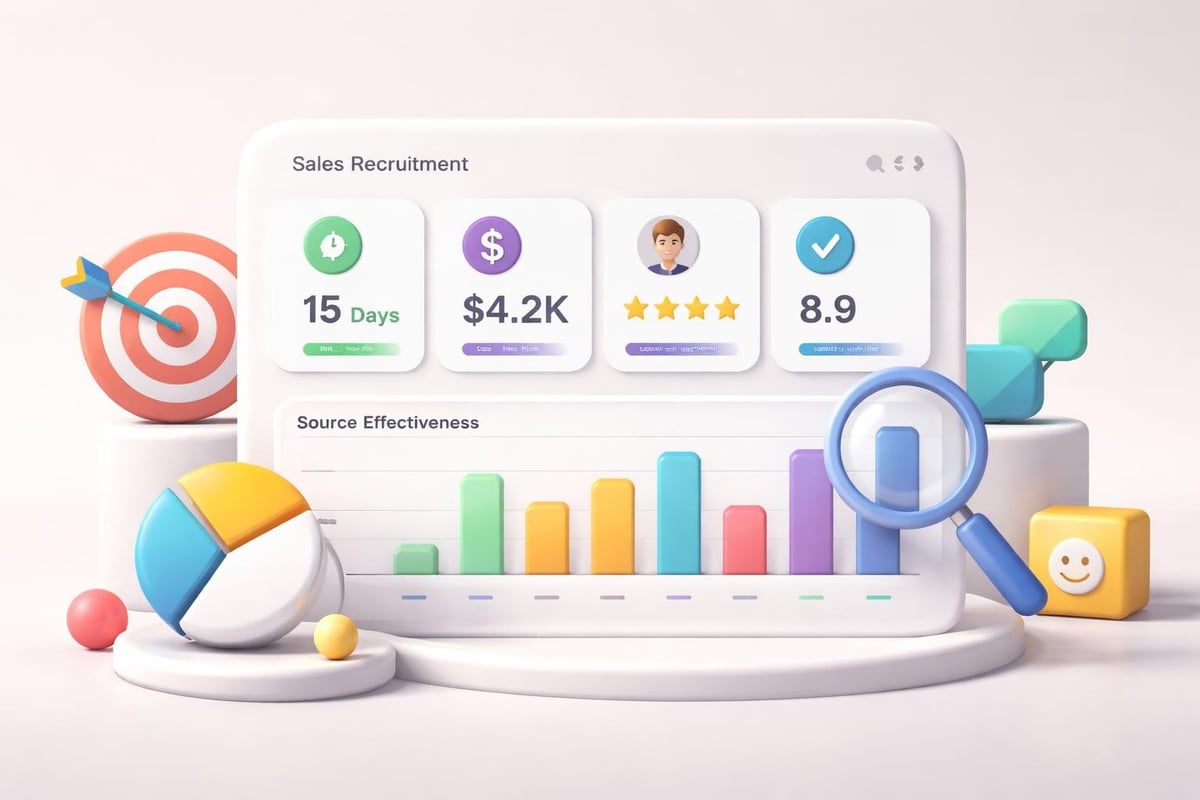
Time-to-fill measures how many days elapse between opening a position and accepting an offer. For sales roles, extended vacancies directly impact revenue, making speed essential. Track this metric across different roles and sourcing channels to identify efficiency opportunities.
Quality-of-hire assesses whether new employees meet performance expectations. For salespeople, this might include ramp time to full productivity, quota attainment in the first year, and retention beyond probationary periods. This metric validates whether your evaluation process actually predicts success.
Cost-per-hire calculates total recruitment expenses divided by number of hires. Include time costs (hours spent by internal staff), advertising expenses, assessment tools, and any external support utilized. Compare this against agency fees to determine true cost effectiveness.
Source effectiveness tracks which candidate sources produce the highest quality hires. This reveals whether LinkedIn recruiting, referrals, job boards, or other channels deliver better results, allowing you to optimize sourcing investment.
Continuous Process Improvement
The best practices for in-house recruiting include regular process evaluation and refinement. Schedule quarterly reviews of your recruitment performance, examining metrics and gathering feedback from new hires about their candidate experience.
Interview training for team members involved in hiring improves evaluation consistency and quality. Consider conducting calibration sessions where interviewers discuss candidate assessments to align on standards and reduce subjective bias.
Technology and Tools for In House Recruitment
Modern in house recruitment leverages technology to improve efficiency and effectiveness. While not required, appropriate tools significantly enhance your capabilities.
Applicant Tracking Systems
Applicant tracking systems (ATS) centralize candidate information, automate communication workflows, and provide reporting capabilities. For businesses managing multiple open positions or building talent pipelines, an ATS prevents candidates from falling through cracks and maintains organized records.
Basic systems handle job posting distribution, resume storage, and interview scheduling. More sophisticated platforms integrate with assessment tools, provide candidate relationship management features, and generate analytics on recruitment performance.
Assessment and Evaluation Tools
Sales-specific assessment platforms evaluate competencies like communication skills, resilience, and achievement orientation. These tools provide objective data points that complement interview impressions, reducing reliance on gut feelings during hiring decisions.
Video interviewing platforms enable asynchronous candidate evaluation, allowing candidates to record responses to standardized questions on their schedule. This proves particularly valuable for remote recruiting where candidates may be in different time zones.
Sourcing and Outreach Technology
LinkedIn Recruiter and similar platforms provide advanced search capabilities to identify passive candidates matching your ideal profile. Email automation tools enable personalized outreach at scale, allowing you to maintain contact with larger candidate pools without proportional time investment.
Employee referral platforms gamify and streamline the referral process, making it easier for team members to submit qualified contacts from their networks. These systems track referral sources and often include rewards management for successful hires.
Building Employer Brand for Candidate Attraction
Successful in house recruitment depends on candidates wanting to work for your organization. Employer branding transforms recruitment from persuading reluctant candidates to selecting among eager applicants.
Defining Your Employment Value Proposition
What makes your sales organization attractive to high-performing salespeople? Your employment value proposition articulates the unique benefits of joining your team beyond compensation alone.
For high-ticket sales environments, this might include sophisticated buyers who provide intellectual stimulation, products that genuinely solve meaningful problems, remote work flexibility, or professional development opportunities. Document these differentiators and ensure they feature prominently in job postings, interviews, and candidate communications.
Content and Social Media Strategy
Regular content showcasing your team culture, sales philosophy, and company mission builds awareness among potential candidates before they apply. LinkedIn posts featuring team members, sales insights, and company milestones create familiarity and trust.
Consider creating content specifically for sales professionals who might consider joining your organization. Sales tips, industry insights, and thought leadership position your company as an attractive employer for ambitious salespeople seeking growth.
Candidate Experience Excellence
Every interaction shapes candidate perception of your organization. From initial outreach through final offer negotiation, the experience should reflect your company values and professionalism.
Timely communication demonstrates respect for candidates' time. Clear expectations about process timeline and next steps reduce anxiety and uncertainty. Thoughtful rejection messages for candidates who don't advance maintain relationships for potential future opportunities.
According to a study by CareerBuilder, 78% of candidates say the overall candidate experience they receive is an indicator of how a company values its people. In competitive talent markets, poor candidate experience costs you quality hires to organizations with better processes.
Retention Considerations in Recruitment Strategy
The best in house recruitment strategy accounts for retention from the beginning. Hiring effectively matters less if new salespeople leave within months, forcing you to restart the process repeatedly.
Cultural Fit Assessment
Beyond skills evaluation, assess whether candidates genuinely align with your organizational culture and values. Salespeople who thrive in aggressive, competitive environments may struggle in collaborative, relationship-focused cultures, regardless of their technical abilities.
During interviews, share authentic insights about your team dynamics, management style, and company challenges. Candidates who withdraw based on this transparency likely wouldn't have succeeded long-term anyway, saving everyone time and frustration.
Realistic Job Previews
Overselling positions during recruitment creates retention problems when reality doesn't match expectations. Provide honest information about challenges, typical deal cycles, and what success requires in your specific sales environment.
For businesses focused on high-ticket products, explain the patience required for longer sales cycles and the consultative approach needed. Candidates expecting quick closes and transactional selling will become frustrated, leading to early departures.
Onboarding Integration
Your recruitment process should seamlessly connect to onboarding experiences. The right fit extends beyond hiring into how you integrate new team members and set them up for success.
Structured onboarding programs covering product knowledge, sales methodology, systems training, and cultural integration improve new hire performance and retention. This investment pays dividends through faster productivity and reduced turnover.
In house recruitment empowers businesses to build sales teams aligned with their unique culture, methodology, and growth objectives. By controlling the entire hiring process, you ensure every new team member meets your specific standards for success in high-ticket sales environments. However, developing effective internal recruitment requires significant infrastructure, time investment, and expertise that not every business possesses, particularly when facing urgent hiring needs or rapid growth timelines. Sales Match provides pre-vetted sales talent specifically for high-ticket businesses selling products or services over $2,500 through virtual channels, eliminating lengthy hiring processes while maintaining the quality standards essential for your success. With comprehensive replacement guarantees, you can build your ideal sales team without the risks typically associated with new hires.