How to Identify Qualified Candidates for Your Sales Team
Learn how to identify qualified candidates for high-ticket sales roles. Discover proven strategies to attract, assess, and hire top performers.
published
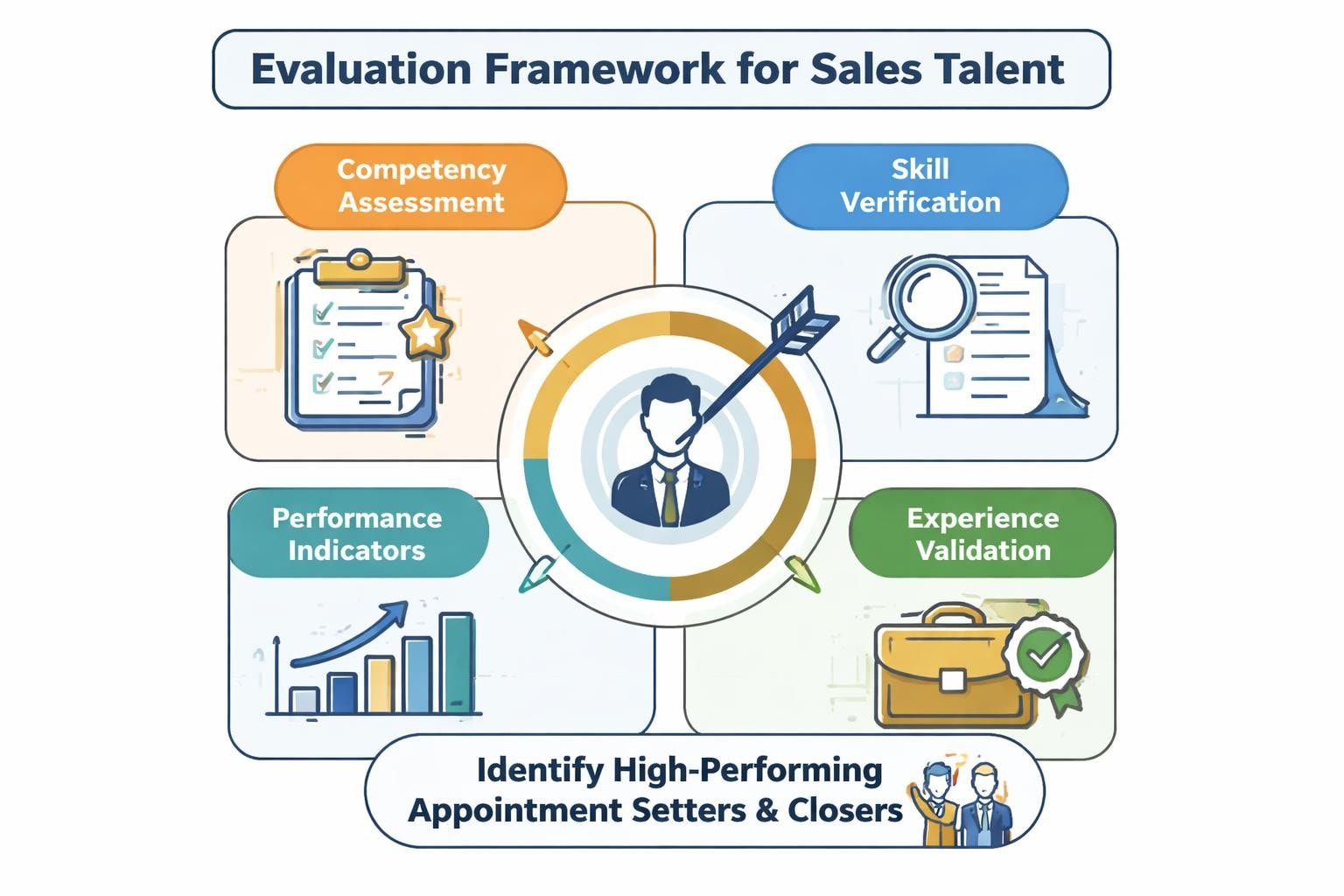
Finding the right people to represent your high-ticket business can make or break your revenue trajectory. For companies selling premium products or services over virtual platforms, the quality of your sales team directly impacts close rates, customer satisfaction, and long-term growth. Yet many businesses struggle to separate truly qualified candidates from those who simply look good on paper. The hiring process requires a systematic approach that evaluates not just experience and credentials, but also proven sales competencies, communication skills, and cultural alignment with your organization's values.
Understanding What Makes Candidates Truly Qualified
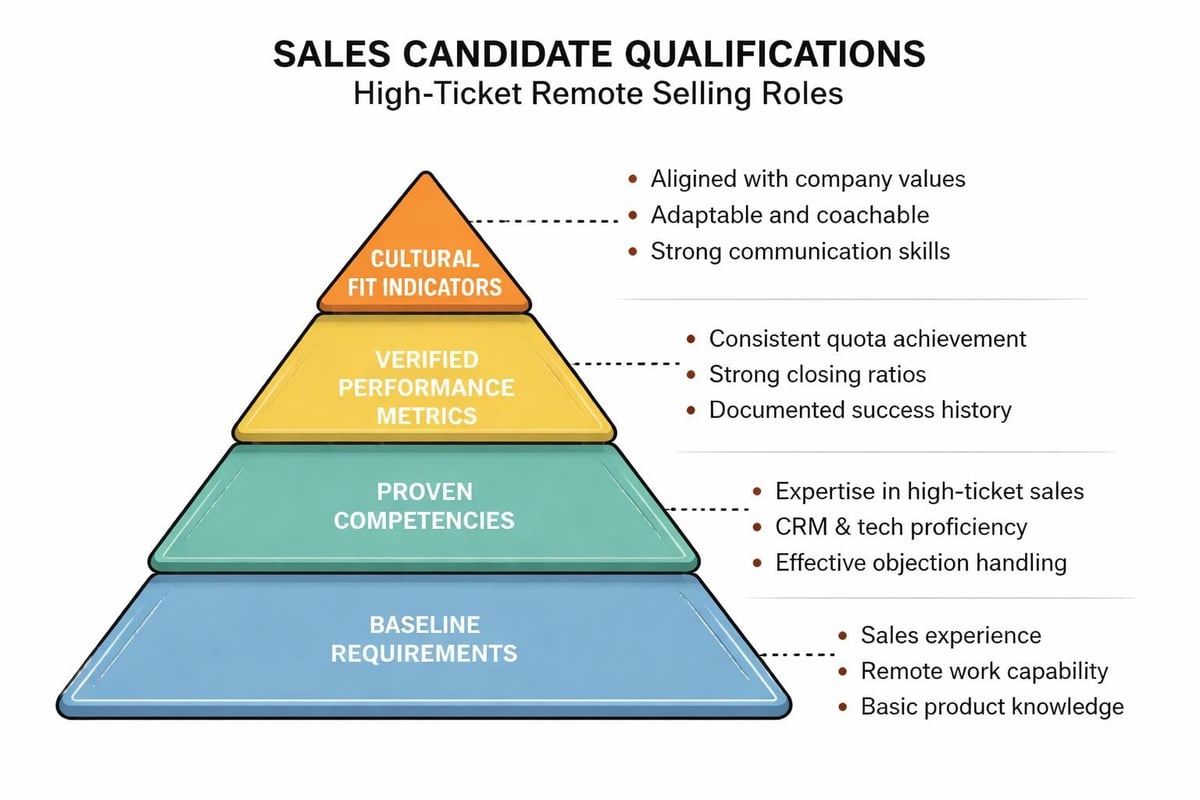
The term "qualified" extends far beyond basic resume requirements. For high-ticket sales positions, qualified candidates demonstrate a specific combination of verifiable skills, proven track records, and psychological attributes that predict success in consultative selling environments.
Core competency areas include:
Documented experience closing deals in the $2,500+ range
Proficiency with virtual selling platforms and CRM systems
Active listening skills that uncover prospect pain points
Objection handling techniques refined through real-world application
Self-motivation and accountability in remote work environments
Many businesses make the mistake of equating years of experience with qualification. A candidate with ten years in transactional sales may be less qualified than someone with two years specifically in high-ticket appointment setting. Context matters significantly more than tenure.
The Gap Between Applications and Actual Qualification
Research indicates that 95% of qualified candidates never apply to job postings, often due to unrealistic requirements or poorly designed application processes. This data point reveals a critical challenge: the best talent isn't necessarily knocking on your door.
Top performers in sales are typically employed and performing well in their current roles. They're not actively scanning job boards or submitting speculative applications. This reality requires a shift in recruitment strategy from passive posting to active identification and outreach.
Building a Comprehensive Qualification Framework
A structured competency-based recruitment approach ensures consistency and reduces subjective bias in evaluating candidates. This methodology focuses on observable behaviors and measurable outcomes rather than impressions or gut feelings.
Essential Qualification Criteria for High-Ticket Sales
Criterion | What to Assess | Verification Method |
|---|---|---|
Sales Experience | High-ticket deal closure | Commission statements, CRM records |
Communication Skills | Clarity, persuasion, rapport-building | Role-play scenarios, recorded calls |
Technical Proficiency | CRM, video platforms, sales tools | Live demonstration, practical test |
Self-Management | Time management, accountability | Reference checks, work samples |
Learning Agility | Adaptability, coachability | Behavioral interview questions |
The most qualified candidates bring more than just technical skills. They demonstrate emotional intelligence, resilience in the face of rejection, and genuine curiosity about solving customer problems. These softer attributes often differentiate adequate performers from exceptional closers.
Creating Job Descriptions That Attract Quality
Your job posting serves as the first filter in identifying qualified candidates. Vague or inflated requirements repel strong applicants while attracting unqualified ones who either misunderstand the role or overestimate their abilities.
Effective job descriptions should:
Specify the exact price point and sales cycle length
Clearly state whether the role focuses on appointment setting, closing, or both
Define expected KPIs and performance benchmarks
Describe the ideal customer profile the salesperson will engage
Outline the commission structure and total compensation range
Transparency builds trust with qualified candidates who want to ensure role alignment before investing time in the application process. Companies that hide compensation details or use generic sales role descriptions tend to waste time interviewing mismatched applicants.
Effective Assessment Methods for Sales Talent
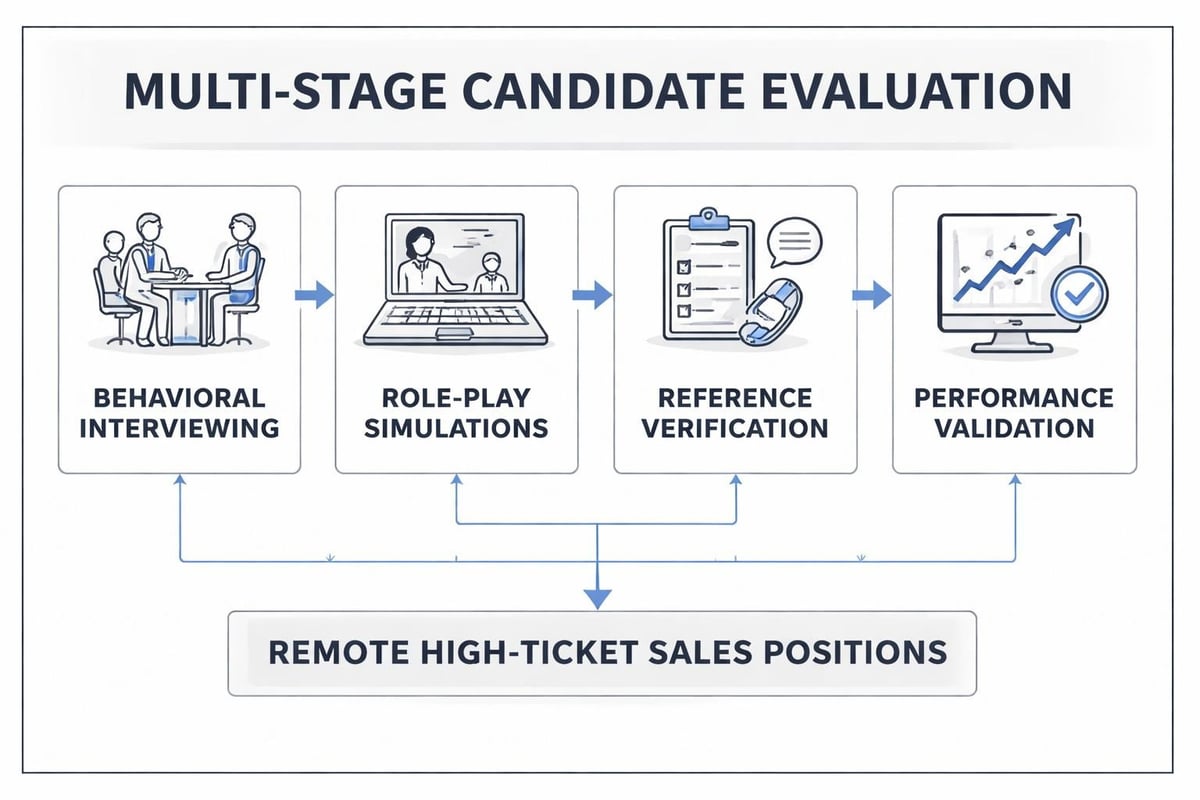
Traditional interviewing techniques often fail to predict sales performance. Qualified candidates know how to interview well, but that skill doesn't necessarily translate to closing high-ticket deals. Multi-stage assessment processes reveal capabilities that single interviews cannot.
Behavioral and Situational Evaluation
Pre-hire assessments provide objective data about candidate strengths, working styles, and potential red flags. These tools should complement rather than replace human judgment in the hiring process.
Behavioral questions focused on past performance offer insight into how candidates have handled real situations. Instead of asking "How would you handle an objection?" ask "Tell me about a time when a prospect gave you a pricing objection. Walk me through exactly what you said and how the conversation evolved."
The specificity of the response reveals actual experience. Qualified candidates provide detailed narratives with specific dialogue, emotional awareness, and lessons learned. Less experienced candidates offer generic frameworks or theoretical approaches.
Role-Play Scenarios and Sales Simulations
Nothing predicts sales success better than watching someone actually sell. Structured role-plays that mirror your real customer conversations separate performers from pretenders.
Design scenarios that include:
Initial discovery calls with skeptical prospects
Objection-heavy situations requiring creative problem-solving
Technical questions about your product or service
Price negotiation conversations
Follow-up situations with hesitant buyers
Qualified candidates adapt their approach based on prospect responses rather than delivering scripted pitches. They ask thoughtful questions, actively listen to answers, and adjust their positioning accordingly. Sales Match uses rigorous assessment processes to ensure candidates demonstrate these capabilities before being presented to clients.
Reference Checking and Background Verification
Many hiring managers treat references as a formality rather than a critical investigation tool. Yet comprehensive reference checks often reveal disqualifying information that never surfaces during interviews.
Strategic Reference Conversations
Request references from direct managers rather than colleagues or indirect supervisors. The person who evaluated the candidate's quota attainment and managed their daily performance provides the most valuable perspective.
Key questions to ask references:
What was the candidate's quota, and what percentage did they consistently achieve?
How did they rank among peers in similar roles?
What was their average deal size and typical sales cycle length?
How did they respond to coaching and feedback?
Would you rehire this person if you had an appropriate opening?
The final question often elicits the most honest response. Hesitation or qualified answers suggest reservations that warrant deeper exploration.
According to quality of hire research, thorough reference checks rank among the top strategies for improving hiring outcomes. Yet many companies skip this step or conduct superficial conversations that add minimal value.
Verifying Performance Claims
Qualified candidates should be willing and able to substantiate their claimed achievements. Request documentation such as:
Commission statements showing deal values and closure rates
Performance reviews or quota attainment records
President's Club awards or other recognition
CRM screenshots demonstrating pipeline management
Video recordings of actual sales calls (with client information redacted)
Reluctance to provide verification raises legitimate concerns about truthfulness. Top performers typically maintain records of their achievements and welcome opportunities to demonstrate their capabilities.
The Role of Cultural Fit in Qualification
Skills and experience matter tremendously, but cultural misalignment sabotages even the most talented salespeople. A candidate qualified on paper may fail spectacularly if their values, communication style, or work preferences clash with your organization's culture.
Defining Your Sales Culture
Before evaluating cultural fit, clearly articulate what your culture actually is. Many companies describe their desired culture rather than their actual operating environment, leading to mismatched expectations.
Culture Dimension | Questions to Define Your Reality |
|---|---|
Autonomy vs. Structure | Do salespeople create their own schedules or follow prescribed routines? |
Collaboration vs. Independence | How often do team members interact? Is success individual or collective? |
Innovation vs. Process | Do you encourage experimentation or adherence to proven methodologies? |
Competitive vs. Supportive | Do salespeople celebrate peers' wins or primarily focus on personal achievement? |
Qualified candidates ask probing questions about culture because they understand environment impacts performance. Someone who thrived in a highly structured, team-oriented setting may struggle in an autonomous, individual-contributor role, regardless of their skills.
Assessing Values Alignment
Beyond work style preferences, values alignment affects long-term retention and satisfaction. A comprehensive vetting process examines whether candidates' core values align with how your business operates and serves customers.
Explore alignment through questions like:
How do you balance aggressive sales tactics with authentic customer service?
Describe a time when you chose to disqualify a prospect rather than force a sale.
What does ethical selling mean to you in practical terms?
How do you maintain motivation during extended periods without closures?
The specificity and authenticity of responses reveal genuine values versus practiced interview answers. Qualified candidates with strong values alignment articulate principles that mirror your company's approach to customer relationships.
Streamlining the Candidate Experience
The way you treat candidates during the hiring process signals how you'll treat them as employees. Candidate experience best practices emphasize clear communication, respect for applicants' time, and transparent processes.
Lengthy, disorganized hiring processes cause qualified candidates to accept competing offers or withdraw from consideration. Top sales talent typically receives multiple opportunities simultaneously. The company that moves decisively while maintaining thoroughness wins the best people.
Balancing Speed and Diligence
Create a timeline that respects both urgency and thoroughness:
Week 1: Application review and initial phone screens
Week 2: In-depth interviews and role-play assessments
Week 3: Reference checks and final decision
Week 4: Offer presentation and negotiation
This compressed timeline demonstrates seriousness while allowing sufficient evaluation. Stretching hiring decisions across months signals indecisiveness or low organizational priority, both of which repel qualified candidates.
Communication throughout the process matters tremendously. Inform candidates of next steps, expected timelines, and decision criteria. When delays occur, proactive updates maintain engagement and respect.
Common Mistakes in Identifying Qualified Candidates
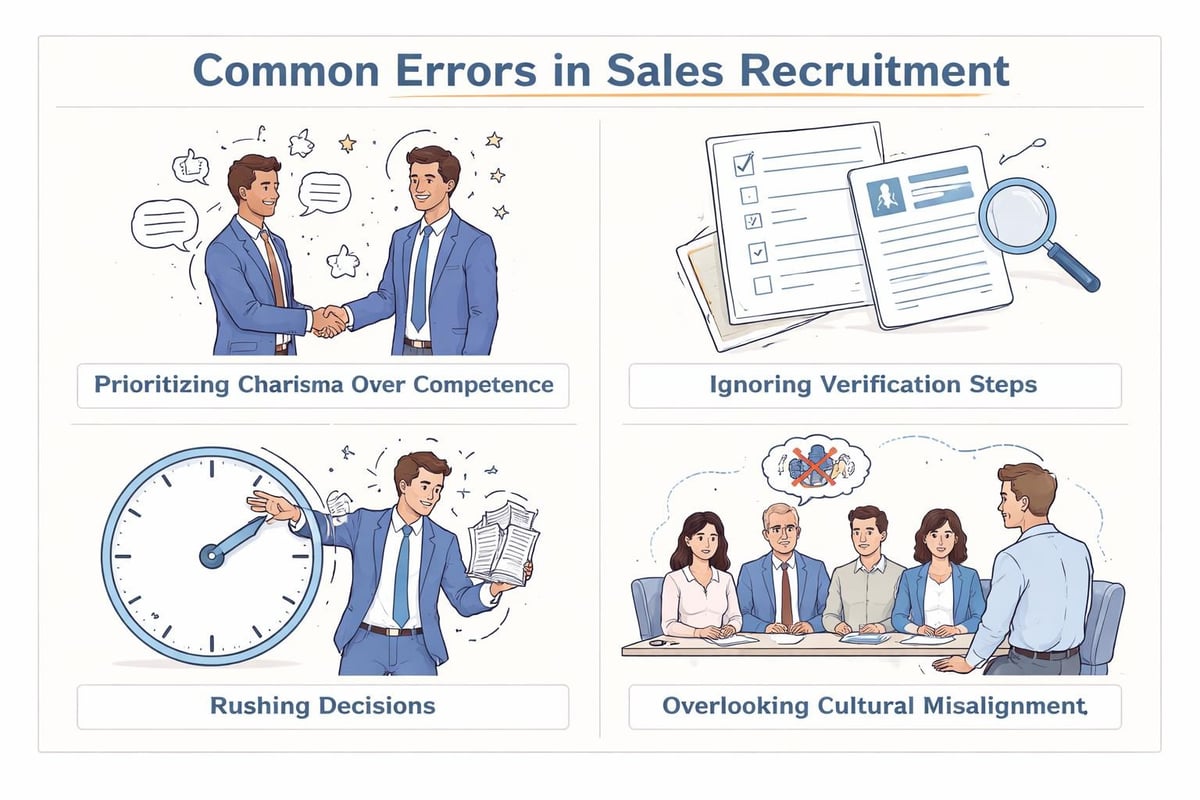
Even experienced hiring managers fall into predictable traps that result in poor hiring decisions or missed opportunities with exceptional talent.
Overvaluing Charisma and Presentation
Sales requires strong communication skills, but charisma alone doesn't close deals. Many hiring managers conflate interview performance with sales performance, selecting candidates who excel at being interviewed rather than those who excel at selling.
The most qualified candidates may present as understated or analytical rather than gregarious. They ask thoughtful questions, take notes, and demonstrate genuine interest in understanding your business model before promoting themselves. This consultative approach mirrors how they engage prospects.
Ignoring Red Flags Due to Urgency
When sales roles remain vacant, revenue suffers. This pressure tempts managers to rationalize concerns or overlook warning signs with otherwise promising candidates. According to startup hiring research, rushing hiring decisions to fill urgent needs typically backfires through expensive turnover and performance issues.
Common red flags that shouldn't be ignored:
Gaps in employment history without reasonable explanation
Frequent job changes with tenures under 12 months
Defensiveness when questioned about past performance
Unwillingness to provide references or documentation
Inconsistencies between resume claims and interview responses
The cost of a bad hire far exceeds the cost of extended vacancy. Maintaining standards protects your team culture, customer relationships, and revenue trajectory.
Leveraging Specialized Recruitment Expertise
Building internal recruitment capabilities requires significant time, expertise, and infrastructure investment. Many high-ticket businesses find greater efficiency partnering with specialists who focus exclusively on sales talent acquisition.
Specialized recruiters maintain extensive networks of vetted candidates who have already undergone preliminary screening, skills assessment, and reference verification. This pre-qualification dramatically reduces time-to-hire while improving the quality of candidates presented.
The Topgrading methodology represents one systematic approach to identifying A-players through comprehensive interviewing and validation processes. While the full 12-step system may be excessive for some organizations, the underlying principles of thorough evaluation and verification apply universally.
When to Build Versus Buy Recruitment Capability
Companies hiring multiple sales roles quarterly benefit from developing robust internal recruitment functions. Those making occasional strategic hires often achieve better outcomes through specialized partnerships.
Consider factors like:
Hiring frequency and volume projections
Internal HR team bandwidth and expertise
Speed requirements for filling critical roles
Access to passive candidate networks
Budget allocation for recruitment versus other priorities
Organizations selling high-ticket products or services through virtual channels face unique recruitment challenges. The intersection of remote work capabilities, consultative selling skills, and high-ticket experience creates a narrow candidate pool. Specialists who focus exclusively on this niche maintain deeper networks and more refined assessment capabilities than generalist recruiters.
Maintaining Quality Standards Under Growth Pressure
As businesses scale, the temptation to lower qualification standards to maintain hiring velocity can be overwhelming. Yet compromising on candidate quality to hit numerical hiring targets invariably damages sales performance and team culture.
Creating Scalable Quality Controls
Document your qualification criteria in detailed scorecards that multiple interviewers can apply consistently. This systematization ensures that the hiring manager's gut feeling doesn't override objective assessment data.
Qualification scorecards should include:
Weighted criteria based on role importance
Specific behavioral indicators for each competency
Standardized rating scales with clear definitions
Pass/fail thresholds for critical requirements
Comparative benchmarking against top performers
Regular calibration sessions where hiring team members review candidate evaluations together improve consistency and reduce individual bias. Discussing why one interviewer rated a candidate highly while another identified concerns surfaces hidden assumptions and alignment opportunities.
The True Cost of Underqualified Hires
Every sales role filled with an underqualified candidate carries multiple costs beyond salary and benefits:
Lost revenue from unconverted opportunities
Damaged customer relationships from poor experiences
Decreased team morale when peers compensate for weak performers
Management time diverted to performance improvement plans
Replacement costs when termination becomes necessary
Research from the Society for Human Resource Management estimates total replacement costs at 6-9 months of salary for skilled positions. For sales roles, revenue impact magnifies these costs substantially. A closer generating $500,000 annually in closed business who gets replaced by an underqualified hire producing $200,000 creates a $300,000 revenue gap before considering replacement expenses.
Building Pipelines of Qualified Future Candidates
Strategic talent acquisition extends beyond immediate openings. The most qualified candidates often aren't available precisely when you're hiring, making relationship building and pipeline development critical for sustained recruitment success.
Maintain ongoing conversations with high-performers even when you lack immediate openings. These relationships ensure access to talent when needs arise and provide market intelligence about compensation trends, competitor activities, and emerging skill requirements.
Create a structured approach to pipeline development:
Identify target companies and roles where your ideal candidates currently work
Engage potential future candidates through valuable content and networking
Document interactions and maintain relationship continuity
Periodically assess interest levels and career satisfaction
Move quickly when pipeline candidates signal openness to opportunities
This proactive approach prevents the desperate scrambling that leads to compromised hiring standards. When you need to fill a critical role, you're selecting from pre-qualified candidates rather than hoping the right person applies.
Identifying qualified candidates for high-ticket sales roles requires systematic evaluation processes, clear qualification criteria, and disciplined adherence to standards even under growth pressure. The investment in thorough assessment, comprehensive verification, and cultural alignment evaluation pays substantial returns through improved performance, reduced turnover, and stronger customer relationships. Sales Match provides businesses selling premium products and services over virtual platforms with access to pre-vetted appointment setters and closers who have already demonstrated the competencies, experience, and values alignment that predict success in high-ticket environments.