How to Make Your Next Top Hire in Sales
Discover proven strategies to make your next top hire in sales. Learn how to identify, attract, and onboard elite closers and setters in 2026.
published
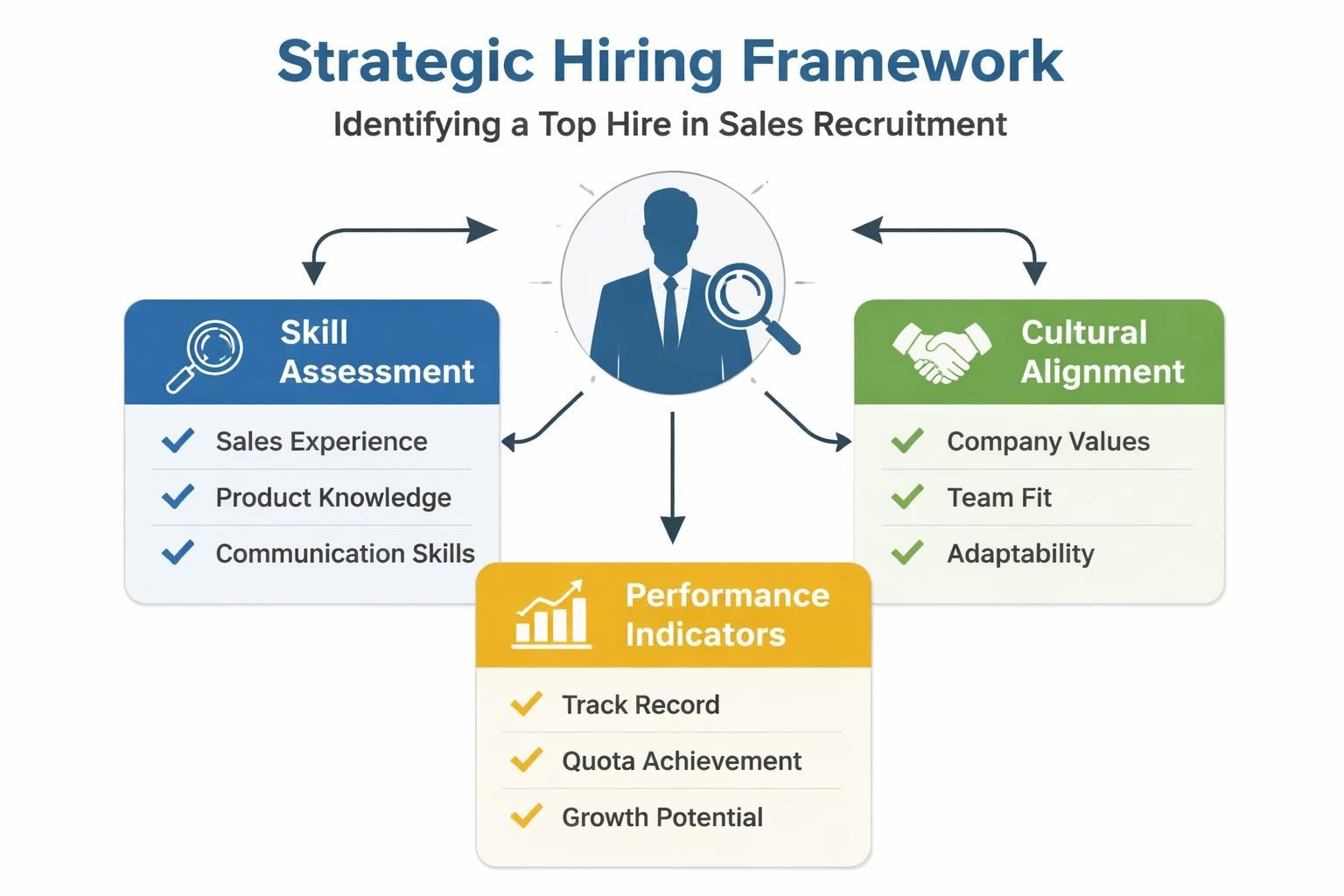
Finding and securing a top hire in sales can transform your business trajectory. For high-ticket companies selling products or services over $2,500 through digital channels, the difference between an average performer and an exceptional closer directly impacts revenue and growth potential. The challenge lies in identifying candidates who combine proven selling skills with the adaptability to thrive in remote, high-value sales environments. This guide explores the strategic approaches that enable businesses to consistently make winning hiring decisions.
Understanding What Defines a Top Hire in Sales
A top hire in the sales industry demonstrates specific characteristics that separate them from adequate performers. These professionals possess deep product knowledge, exceptional communication skills, and the resilience to handle rejection while maintaining performance consistency. In the high-ticket space, where deals require multiple touchpoints and sophisticated relationship building, these qualities become even more critical.
The Sales Skills That Matter Most
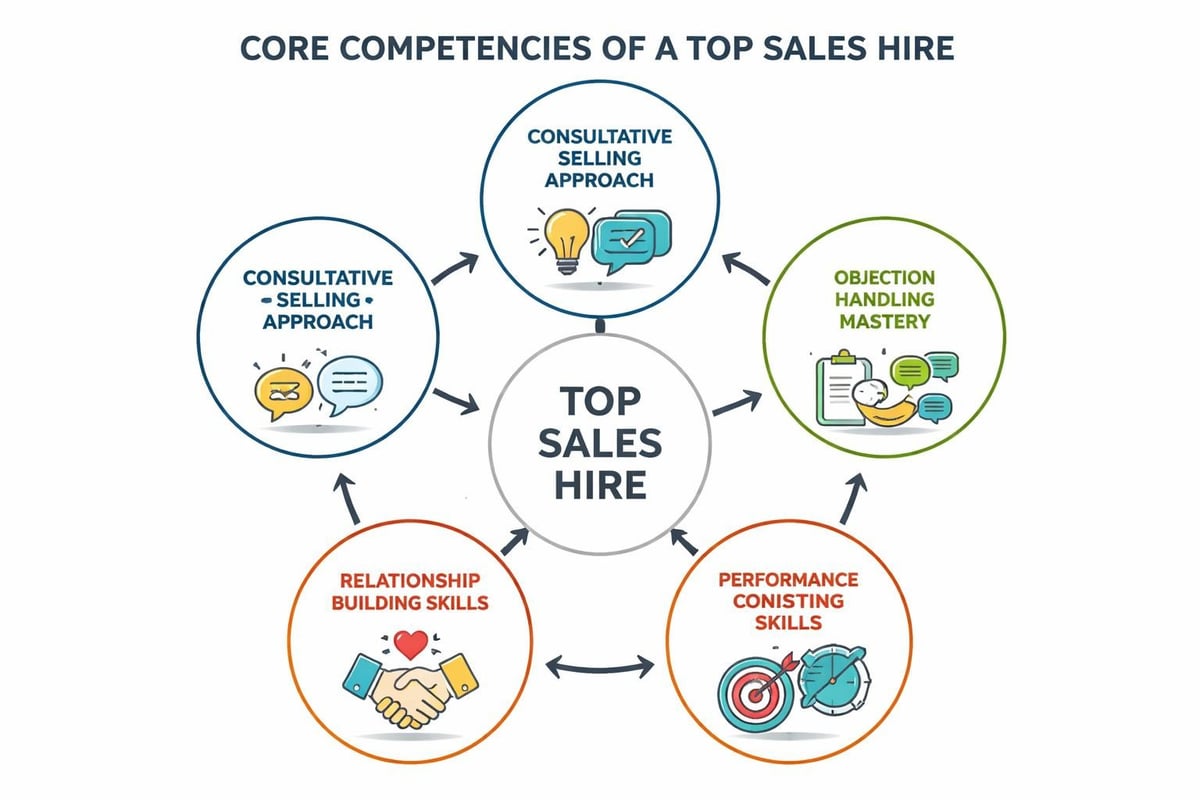
When evaluating candidates for your sales team, focus on measurable competencies rather than superficial qualities. According to research from isolved HCM on attracting top talent, collaboration and goal management skills are essential for long-term success. For high-ticket sales roles, these competencies translate into specific behaviors.
Critical skills to assess include:
Consultative selling expertise: The ability to diagnose client needs before prescribing solutions
Objection handling proficiency: Converting resistance into opportunities through strategic responses
Closing capabilities: Moving prospects from interest to commitment with appropriate urgency
Technical fluency: Comfort with CRM systems, video conferencing platforms, and digital communication tools
Self-management: Consistent performance without direct supervision in remote settings
The best appointment setters excel at qualifying leads and scheduling high-value conversations. Meanwhile, top closers demonstrate pattern recognition that allows them to adapt their approach based on prospect behavior and buying signals.
Quantifying Sales Excellence
Numbers tell stories that resumes cannot. When evaluating a potential top hire, examine their track record through multiple metrics. Conversion rates provide insight into efficiency, while deal velocity indicates how quickly they move prospects through the pipeline. Average deal size reveals whether they can handle high-ticket negotiations, and quota attainment shows consistency.
Metric | What It Reveals | Top Performer Benchmark |
|---|---|---|
Conversion Rate | Efficiency from lead to close | 15-25% for high-ticket sales |
Average Deal Size | Comfort with premium pricing | Consistently above company average |
Sales Cycle Length | Pipeline velocity | 20-30% faster than team average |
Quota Attainment | Reliability and consistency | 120%+ of assigned targets |
These benchmarks vary by industry and product complexity, but they provide a framework for objective evaluation. A candidate who consistently achieves 120% of quota demonstrates the discipline and skill set that defines a top hire.
Building a Recruitment Process That Attracts Elite Talent
Your hiring process itself serves as a filtering mechanism. According to AIHR's research on recruiting top talent, structured interviews and cultural fit assessments significantly improve hiring outcomes. For businesses selling high-ticket offers through virtual channels, the recruitment experience should mirror the professionalism prospects encounter during the sales process.
Crafting Job Descriptions That Appeal to High Performers
Generic job postings attract generic candidates. To find your next top hire, create descriptions that speak directly to ambitious sales professionals. Deel outlines strategies for recruiting top talent that emphasize differentiated messaging and clear value propositions.
Your job description should communicate three essential elements: the opportunity for professional growth, the earning structure (base salary plus commission without making income claims), and the resources provided to succeed. High performers want to know you're invested in their success through training, technology, and leadership support.
Effective job descriptions include:
Specific responsibilities with measurable outcomes
Clear expectations for daily activities and performance metrics
Details about your sales process and methodology
Technology stack and tools provided
Team structure and reporting relationships
Growth pathways within the organization
When describing commission structures, focus on the framework rather than potential earnings. This approach maintains FTC compliance while still attracting motivated candidates who understand performance-based compensation.
Screening for Sales DNA
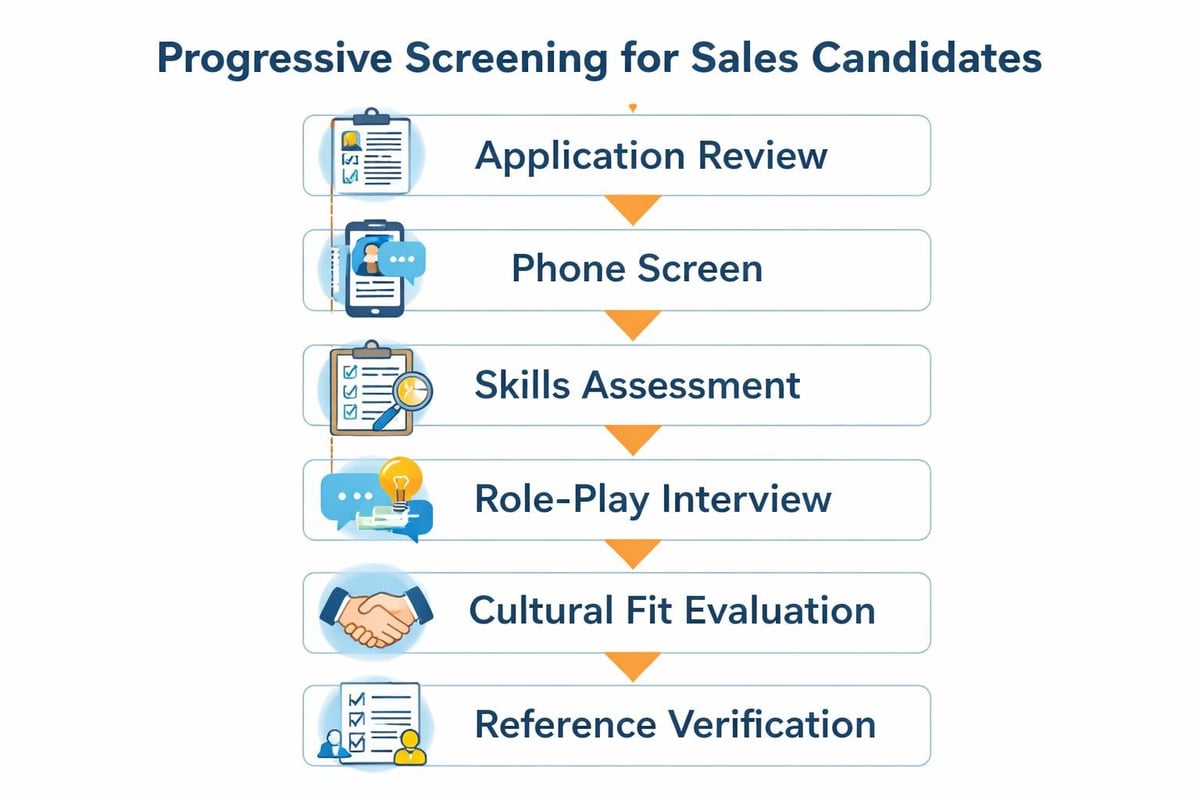
The initial screening phase determines whether candidates possess the fundamental attributes required for sales success. Phone screens should assess communication clarity, enthusiasm, and basic qualification criteria. Video interviews reveal comfort with remote selling tools and non-verbal communication skills.
Sales-specific assessments provide objective data about capabilities. Role-play scenarios expose how candidates handle objections, build rapport, and navigate challenging conversations. Consider implementing a thorough vetting process that includes multiple evaluation stages rather than relying on a single interview.
Interview Strategies That Reveal True Capability
The interview process separates candidates who can talk about sales from those who can actually sell. Michael Page's guidance on retaining top talent emphasizes the importance of alignment between hiring criteria and organizational goals. Your interview questions should probe beyond rehearsed answers to reveal authentic capabilities.
Behavioral Questions That Uncover Past Performance
Past behavior predicts future performance more accurately than hypothetical scenarios. Structure your questions to extract specific examples from candidates' sales histories. Ask about their largest deal, most challenging objection, and a time they lost a sale they should have won.
High-impact behavioral questions:
"Walk me through your exact process for moving a prospect from initial contact to signed agreement."
"Describe a situation where you had to sell to a skeptical buyer. What specific strategies did you employ?"
"Tell me about a month where you struggled to hit quota. How did you diagnose the problem and adjust?"
"What's your approach when a prospect says your pricing is too high?"
Listen for specificity in their responses. A top hire provides detailed narratives with clear cause-and-effect relationships. Vague answers or excessive generalizations suggest limited real-world experience or an inability to self-reflect.
Live Sales Simulations
The most predictive interview component is watching candidates sell. Create a realistic scenario that mirrors your actual sales process. Provide them with a product brief, buyer persona, and specific objections to overcome. Metaview's research on recruiting top talent highlights the value of performance-based interviews in identifying truly capable candidates.
For appointment setters, simulate an outbound call where they must qualify a lead and schedule a meeting. For closers, create a scenario where they must handle pricing objections and ask for the sale. Record these sessions for later review and comparison across candidates.
Evaluate their performance across multiple dimensions: tonality, pacing, question quality, listening skills, objection handling, and closing confidence. The best candidates treat simulations with the same professionalism they would apply to real opportunities.
Onboarding Your Top Hire for Maximum Impact
Securing a top hire represents only half the battle. Effective onboarding determines whether their potential translates into actual performance. Research shows that structured onboarding programs significantly reduce time-to-productivity and increase long-term retention. For high-ticket sales roles, this process requires particular attention to product knowledge and sales methodology.
The First 30 Days
The initial month establishes foundational knowledge and builds confidence. Your new top hire should master product positioning, understand ideal customer profiles, and become fluent in your sales framework. This period focuses on learning rather than production quotas.
Week 1-2 priorities:
Product training with emphasis on value propositions and differentiation
CRM system mastery and pipeline management protocols
Sales methodology training specific to your approach
Shadow existing top performers during actual sales conversations
Review recorded calls to understand messaging and objection handling patterns
Week 3-4 priorities:
Conduct practice calls with managers providing real-time feedback
Begin taking real appointments with supervision
Learn the specific nuances of your target market and buyer personas
Establish daily routines and activity benchmarks
Set 90-day performance goals aligned with team standards
This structured approach ensures your top hire develops competence before facing the pressure of quota achievement. Building the right sales team requires investing in thorough preparation rather than rushing people into production.
Ongoing Development and Coaching
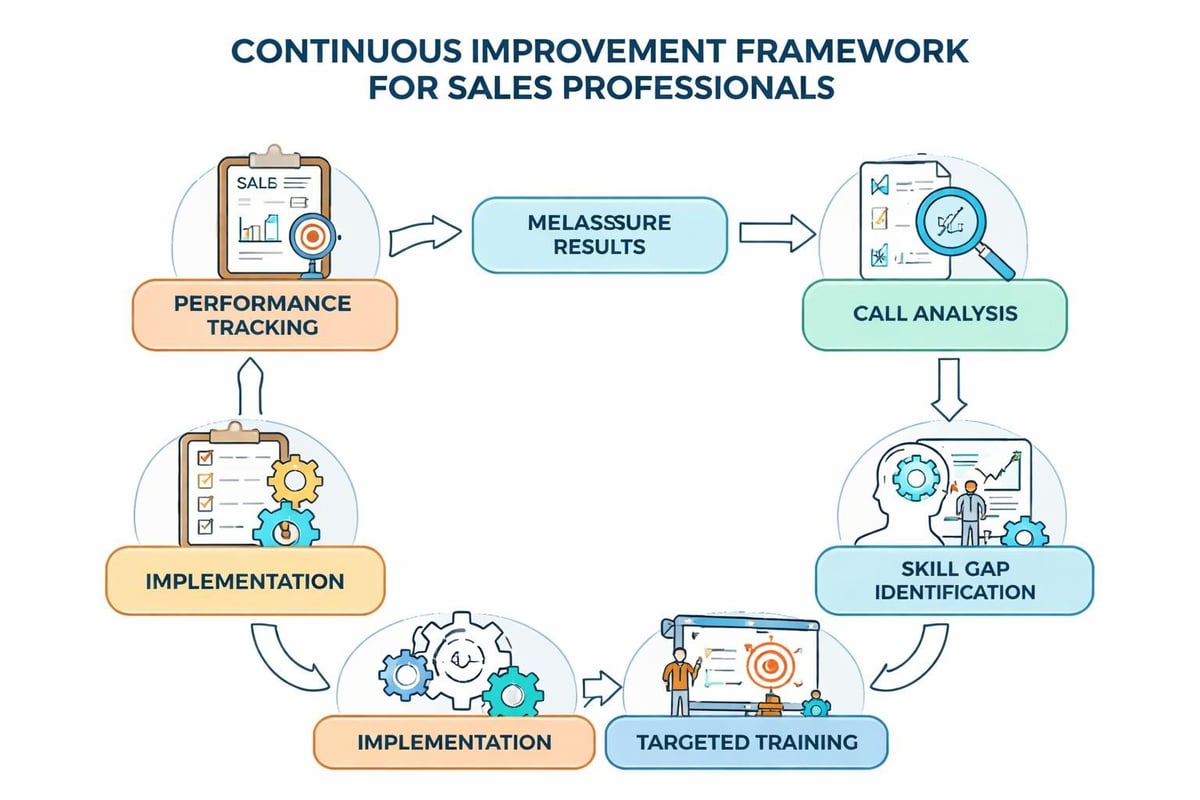
The best sales professionals continuously refine their skills. Implement weekly one-on-one sessions focused on call review, objection handling refinement, and strategy discussion. Create a feedback loop where your top hire can share insights from prospect conversations that inform your entire team's approach.
Development Area | Frequency | Method | Outcome Measure |
|---|---|---|---|
Call Review | Weekly | Listen to 3-5 recordings | Identify improvement opportunities |
Product Knowledge | Monthly | Deep-dive training sessions | Ability to handle technical questions |
Objection Handling | Bi-weekly | Role-play new scenarios | Increased conversion rates |
Market Insights | Monthly | Analysis of win/loss patterns | Refined targeting and messaging |
This investment in development separates organizations that retain top talent from those experiencing constant turnover. When sales professionals see a clear path for skill enhancement, they're more likely to remain engaged and productive.
Common Mistakes That Cost You Top Talent
Even experienced hiring managers make errors that result in losing exceptional candidates or selecting poor fits. Understanding these pitfalls helps you avoid them during your next recruitment cycle.
Moving Too Slowly Through the Process
Top performers rarely stay on the market long. When you identify a strong candidate, delayed decision-making often means they accept offers elsewhere. SMACNA's best practices for hiring top talent emphasize the importance of efficient screening processes without sacrificing thoroughness.
Create a timeline that respects candidates' time while maintaining rigor. Ideally, move from application to offer within 10-14 days. This requires coordination across your team, pre-scheduled interview slots, and decision-makers who can respond quickly.
Overemphasizing Experience in Your Specific Industry
While industry knowledge provides advantages, it shouldn't be your primary criterion. Exceptional sales skills transfer across sectors more easily than many hiring managers recognize. A top hire from SaaS can excel selling consulting services if they understand high-ticket sales dynamics.
Focus on core competencies: qualifying ability, relationship building, objection handling, and closing skills. Industry knowledge can be taught during onboarding, but sales fundamentals are far harder to develop.
Ignoring Cultural Alignment
Skills get candidates hired, but cultural misalignment gets them fired. Your top hire must embrace your company's values, communication style, and operational approach. According to Lever's recruiting best practices, humanizing the recruitment process and ensuring cultural fit reduces friction and improves retention.
During interviews, explore how candidates prefer to work, communicate, and solve problems. Discuss your company's approach to these same areas. Misalignment doesn't indicate a bad candidate, just a poor fit for your specific environment.
Cultural assessment questions:
"How do you prefer to receive feedback from managers?"
"Describe your ideal work environment and daily routine."
"What type of sales leadership brings out your best performance?"
"How do you handle conflicts with team members?"
Honest answers to these questions reveal whether your organization can provide what the candidate needs to thrive. A top hire in the wrong culture becomes an average performer quickly.
Leveraging Specialized Recruitment Resources
Building an internal recruitment process requires significant time and expertise. Many high-ticket businesses choose to partner with specialists who focus exclusively on sales talent acquisition. This approach provides access to pre-screened candidates and reduces the burden on internal teams.
When evaluating recruitment partners, prioritize those who understand the unique demands of high-ticket remote sales. Sales professionals in this space require different attributes than traditional inside sales representatives. Look for partners who assess consultative selling skills, objection handling sophistication, and comfort with complex sales cycles.
The right recruitment partner maintains a pipeline of vetted candidates who have already demonstrated capability in similar roles. This dramatically reduces time-to-hire while increasing the probability of successful placement. Rather than sorting through hundreds of applications, you review a curated selection of candidates who meet your specific criteria.
Questions to Ask Potential Recruitment Partners
Before committing to a recruitment relationship, verify that the partner's approach aligns with your needs. Ask about their candidate sourcing methods, vetting procedures, and replacement policies if a placement doesn't work out.
Due diligence questions include:
What specific sales roles do you specialize in placing?
How do you assess candidates beyond resume review?
What is your typical time-from-engagement-to-placement?
What percentage of your placements remain with clients after 90 days?
How do you ensure candidates understand remote sales environments?
Transparency in these answers indicates a partner who values long-term relationships over quick placements. The goal is finding a collaborator who shares your commitment to identifying genuine top talent.
Retention Strategies That Keep Your Top Hire Engaged
Acquiring a top hire represents a significant investment. Retention ensures you capture the full return on that investment. Sales professionals, particularly high performers, have numerous opportunities available. Creating an environment where they choose to stay requires intentional effort.
Performance-Based Growth Opportunities
Top performers are motivated by achievement and advancement. Create clear pathways for progression within your sales organization. This might include team lead roles, specialized closer positions for the most complex deals, or opportunities to mentor newer team members.
Document the specific criteria for advancement: quota achievement over sustained periods, demonstration of leadership qualities, and mastery of advanced sales techniques. When your top hire sees a defined path forward, they're more likely to invest in long-term success with your organization.
Recognition and Development Investment
Financial compensation matters, but recognition and professional development often drive retention for top performers. Implement systems that acknowledge exceptional performance publicly. Invest in ongoing training that helps them refine advanced skills.
Consider providing access to sales conferences, advanced certification programs, or coaching from industry experts. These investments signal that you're committed to their growth beyond simply extracting their productivity. When sales professionals feel valued and supported, they become ambassadors for your organization who help attract additional top talent.
Making your next top hire in sales requires a systematic approach that combines rigorous evaluation with efficient processes and strong retention strategies. By focusing on measurable competencies, creating structured interviews, and investing in comprehensive onboarding, you position your organization to consistently attract and retain elite sales talent. If you're looking to bypass lengthy recruitment cycles and access pre-screened appointment setters and closers who specialize in high-ticket remote sales, Sales Match provides on-demand access to world-class sales professionals ready to drive results for your business.