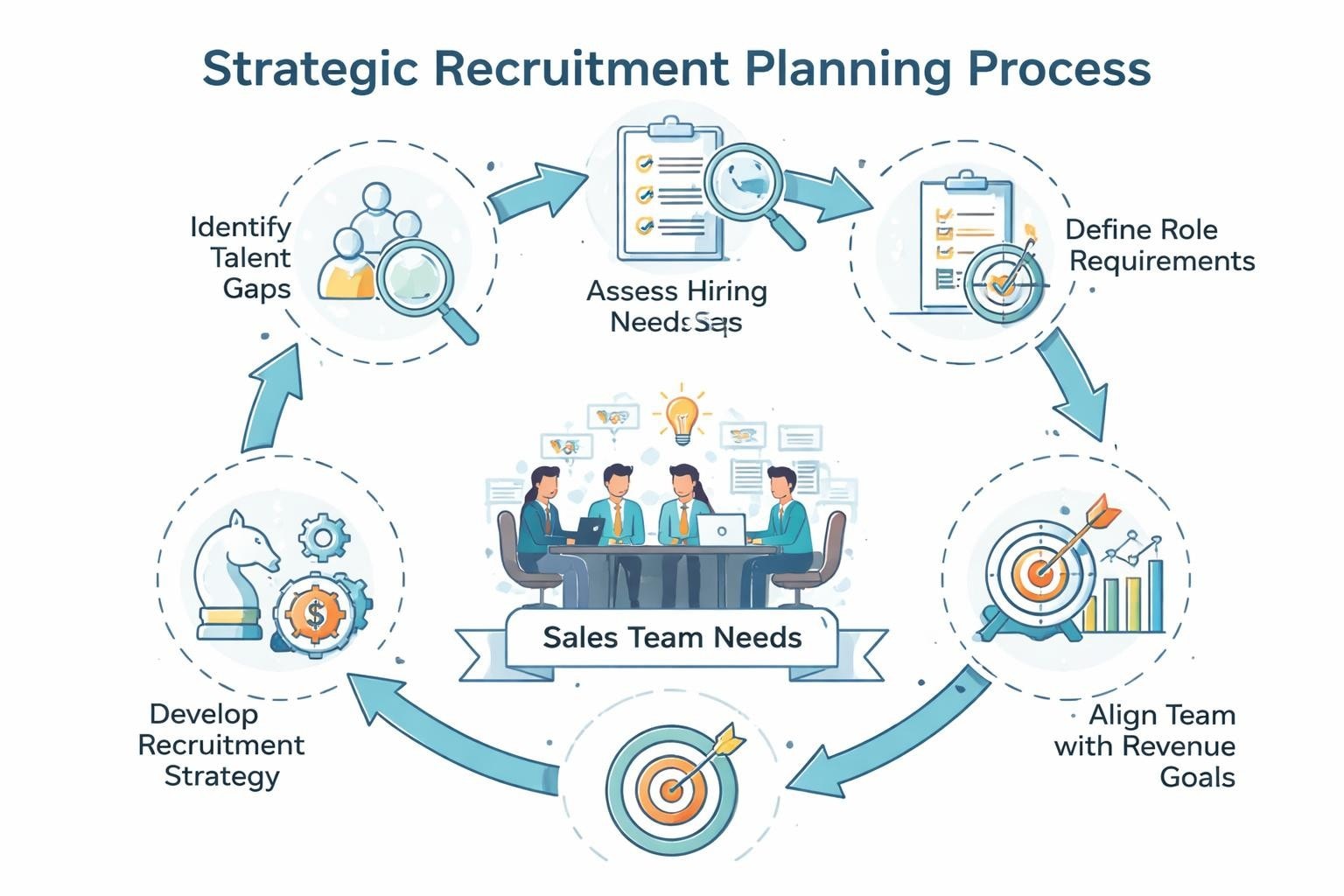
Understanding Your Recruitment Need in 2026
Learn how to identify, analyze, and address your recruitment need effectively. Strategic insights for high-ticket businesses scaling sales teams.
published
Every high-ticket business reaches a critical inflection point where growth demands more than just product excellence. The recruitment need becomes the defining factor between stagnation and scaling. For marketing agencies, consultants, and service-based businesses selling premium offerings over digital channels, identifying and addressing this need strategically separates industry leaders from those struggling to close deals consistently. Understanding when, why, and how to build your sales infrastructure determines whether your business can sustain momentum or loses opportunities to competitors.
Identifying Your True Recruitment Need
The first step in addressing any recruitment need involves honest assessment of your current sales capacity versus market demand. Many businesses mistake temporary performance dips for structural talent gaps, leading to rushed hiring decisions that compound existing problems.
Key indicators that signal a genuine recruitment need include:
Consistent pipeline growth without proportional close rates
Existing sales team members working beyond sustainable capacity
Missed revenue targets despite strong lead quality
Customer complaints about slow response times or lack of follow-up
Opportunities expiring due to insufficient appointment-setting capacity
According to strategic workforce planning research, organizations that identify workforce gaps proactively rather than reactively achieve 23% better alignment between staffing and organizational goals. This data-driven approach prevents both over-hiring and under-resourcing.
Quantifying Your Sales Capacity Gap
Numbers reveal truth that intuition often obscures. Calculate your current sales team's maximum capacity by analyzing appointment volumes, conversion rates, and deal cycles. If your marketing generates 100 qualified leads monthly but your closers can only handle 60 meaningful conversations, you've identified a concrete recruitment need.
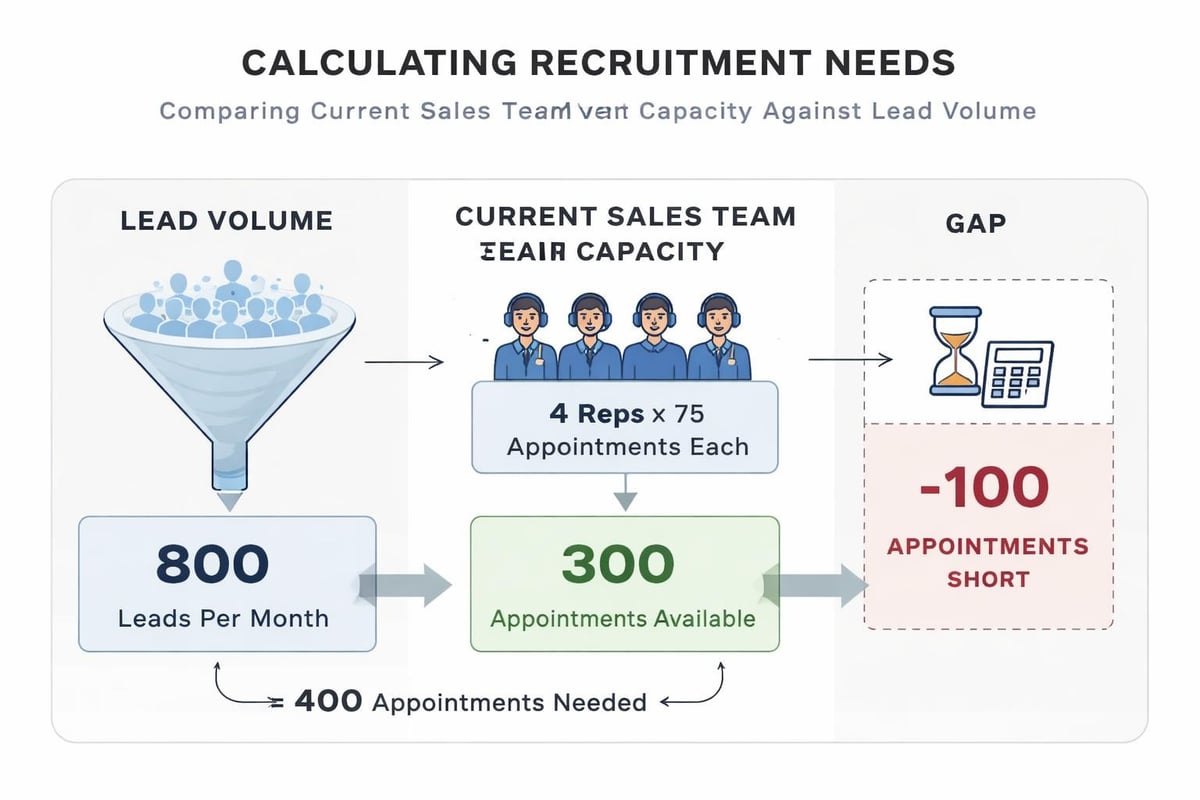
Consider the full sales cycle when assessing your recruitment need. High-ticket offerings typically require multiple touchpoints before conversion. An appointment setter who books 30 qualified calls weekly creates downstream demand for closers who can nurture those prospects through decision-making. This interconnected workflow means your recruitment need extends beyond simply adding bodies to seats.
Aligning Recruitment Strategy with Business Model
Your recruitment need reflects your unique business model, not generic industry standards. A coaching business selling $5,000 programs operates differently from an agency offering $25,000 retainers. The sales talent required for each scenario varies significantly.
Business Type | Primary Recruitment Need | Key Skill Requirements |
|---|---|---|
Marketing Agency | Closers with B2B experience | Consultative selling, ROI articulation |
High-Ticket Coach | Appointment setters + closers | Empathy, qualification skills |
Service Business | Hybrid sales talent | Technical knowledge, relationship building |
SaaS with high ACV | Enterprise closers | Long-cycle management, stakeholder navigation |
The workforce management strategies that leading organizations employ emphasize personalized approaches rather than one-size-fits-all solutions. Your recruitment need should address specific gaps in your sales methodology, not simply replicate competitor team structures.
Specialized Roles vs. Generalists
Many high-ticket businesses struggle with whether their recruitment need calls for specialized appointment setters and dedicated closers or versatile full-cycle sales professionals. This decision impacts not just hiring but compensation structures, training programs, and performance metrics.
Specialized roles create efficiency through focused expertise. Appointment setters who exclusively qualify prospects and book demos develop pattern recognition that generalists never achieve. Similarly, closers who concentrate solely on converting booked appointments refine objection handling and negotiation skills to exceptional levels.
The services offered by specialized recruitment firms demonstrate how targeted talent placement addresses specific recruitment needs more effectively than broad hiring approaches. When you know exactly what role fills your capacity gap, you can match candidates to precise requirements rather than hoping versatile hires will figure out what's needed.
Data-Driven Recruitment Planning
Effective recruitment need analysis requires metrics beyond gut feeling. Modern sales organizations leverage analytics to forecast hiring requirements before performance suffers.
Critical metrics for assessing recruitment need:
Lead-to-appointment conversion rate - measures setter effectiveness
Appointment-to-close ratio - reveals closer performance
Revenue per sales rep - indicates individual capacity
Sales cycle length - determines how many active deals each rep manages
Attrition rate - forecasts replacement hiring needs
Research on recruitment analytics best practices shows organizations using data to guide hiring decisions reduce time-to-hire by 32% and improve quality-of-hire metrics significantly. Rather than reacting to crises, data allows proactive recruitment need planning.
Forecasting Future Requirements
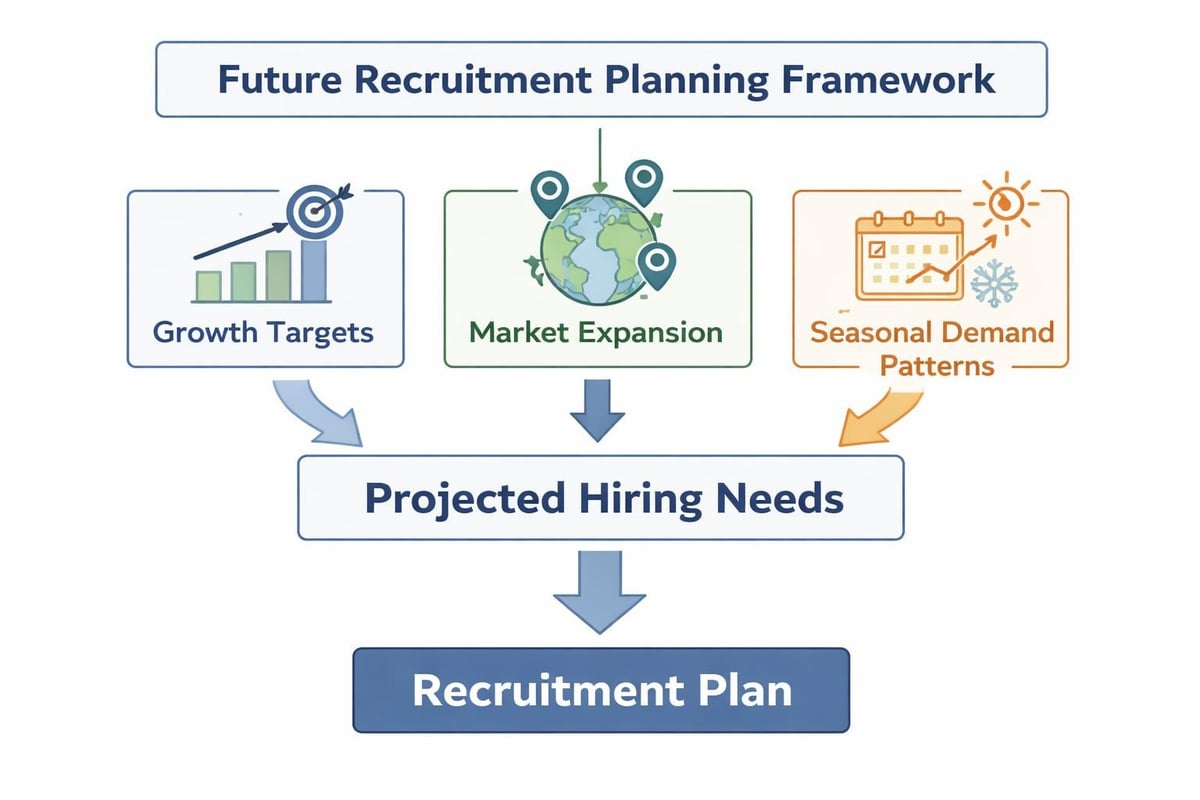
Your recruitment need extends beyond today's gaps. Strategic workforce planning anticipates how market conditions, product evolution, and growth targets will shift talent requirements over the next 12-24 months.
If you're launching a new high-ticket offering in Q3 2026, your recruitment need includes ramping sales capacity before launch, not scrambling to hire when leads start flowing. Similarly, if you're expanding into new markets or verticals, different sales expertise becomes necessary.
The evolving landscape of workforce planning emphasizes anticipating how automation and technology changes will reshape sales roles. While technology handles routine tasks, your recruitment need should focus on talent capable of high-value relationship building and complex problem-solving that technology cannot replicate.
Addressing Immediate vs. Strategic Needs
Every recruitment need falls somewhere on the spectrum between urgent crisis management and thoughtful capability building. Understanding this distinction prevents costly mistakes.
Immediate recruitment needs arise from:
Unexpected sales team departures
Sudden market opportunity requiring rapid scaling
Product launch deadlines with insufficient coverage
Performance issues requiring replacement hires
Strategic recruitment needs focus on:
Building bench strength for planned expansion
Adding specialized expertise for new offerings
Improving team diversity and perspective
Developing leadership pipeline for future growth
Many businesses damage their sales operations by treating all recruitment needs as emergencies. Rushed hiring to fill immediate gaps often results in poor culture fit, skill mismatches, and expensive turnover cycles that create new recruitment needs within months.
The recruitment strategy best practices that successful organizations follow emphasize balancing urgency with quality standards. Even when addressing immediate needs, maintaining candidate evaluation rigor prevents short-term solutions that become long-term problems.
Building Sustainable Talent Pipelines
The most sophisticated approach to recruitment need management treats hiring as continuous process rather than periodic event. Organizations with established talent pipelines respond to opportunities faster and more effectively than those starting from zero each time a position opens.
Continuous Candidate Engagement
Rather than waiting until your recruitment need becomes critical, maintain ongoing relationships with potential sales talent. This proactive approach means when capacity gaps emerge, you're selecting from known quantities rather than strangers.
Consider how vetted candidates shorten time-to-productivity compared to completely unknown hires. When you've already assessed someone's skills, communication style, and cultural alignment, onboarding becomes exponentially smoother.
Approach | Time to First Sale | Training Investment | Success Rate |
|---|---|---|---|
Pipeline Hiring | 2-3 weeks | Moderate | 75-85% |
Reactive Hiring | 6-8 weeks | High | 45-60% |
Emergency Hiring | 8-12 weeks | Very High | 30-45% |
These timelines reflect how preparedness impacts recruitment need fulfillment. The difference between having pre-qualified talent ready and starting your search when crisis hits can mean months of lost revenue.
Evaluating Build vs. Buy Decisions
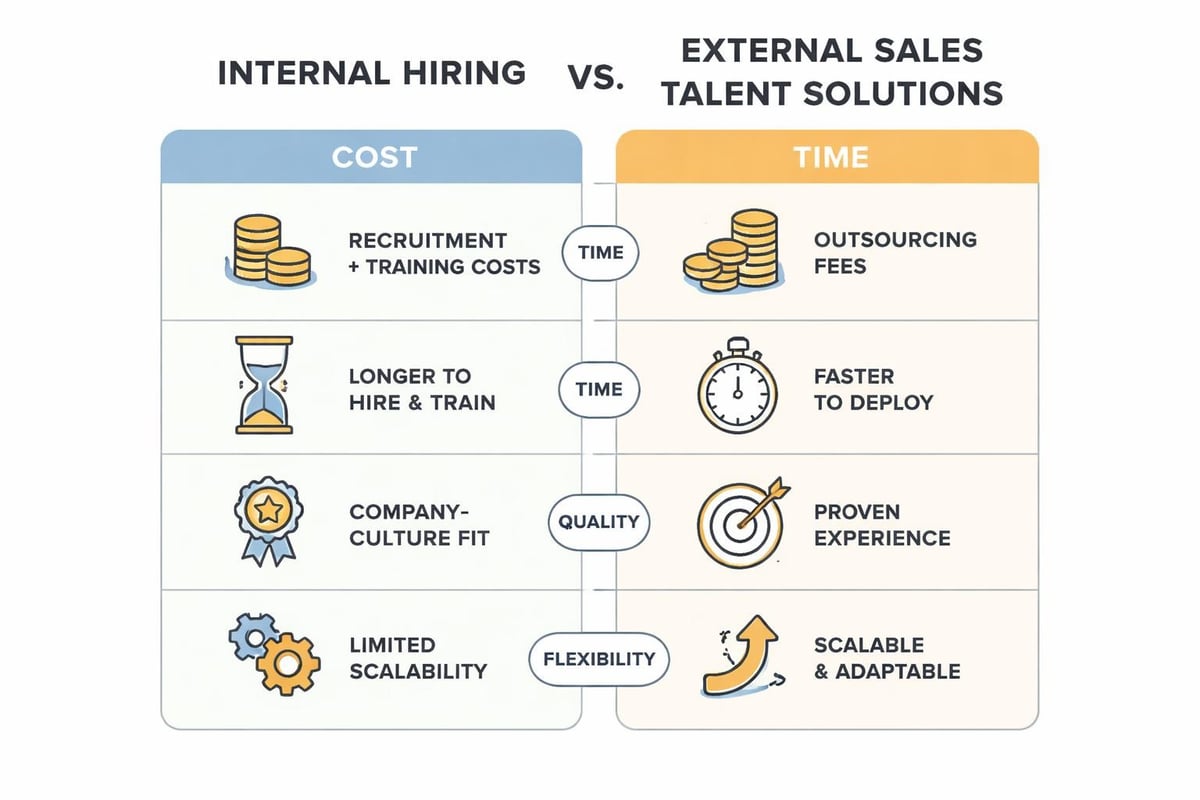
Not every recruitment need requires permanent headcount. The decision between building internal sales capacity and leveraging external resources depends on multiple factors specific to your business situation.
Consider internal hiring when:
You have consistent, predictable sales volume
Your offering requires deep product knowledge
Company culture and values significantly impact sales success
Long-term relationship building drives customer lifetime value
You're prepared to invest in ongoing training and development
Consider external solutions when:
Your recruitment need is project-based or seasonal
Time-to-market is critical for new offerings
You lack internal recruiting infrastructure
Testing new markets before full commitment
Your hiring track record shows high turnover
The guide to conducting recruitment needs analysis emphasizes ruling out in-house solutions before committing to external hiring. Sometimes redistributing work, automating processes, or adjusting sales methodology addresses capacity issues without adding headcount.
The Role of Specialized Recruitment Partners
When your recruitment need requires speed without sacrificing quality, specialized recruitment partners offer distinct advantages. Rather than navigating the full hiring lifecycle internally, you access pre-vetted talent matched to your specific requirements.
Organizations focused on high ticket sales face unique recruitment challenges. The skill set required to close $5,000+ deals differs fundamentally from transactional sales. Finding talent with proven track records in this space requires either extensive internal recruiting expertise or partnership with specialists who understand these nuances.
Quality Standards in Recruitment
The temptation to compromise standards when facing urgent recruitment needs destroys more sales organizations than any external competitor. Desperation hiring creates cascading problems that ultimately worsen your capacity challenges.
Non-negotiable quality criteria should include:
Proven track record in similar sales environments
Communication skills appropriate for your buyer sophistication
Coachability and willingness to follow your sales process
Cultural alignment with your company values
Work ethic matching your performance expectations
Research from SHRM on strategic workforce planning demonstrates that organizations prioritizing quality over speed in recruitment achieve 40% lower turnover rates and 28% higher performance ratings. Your recruitment need should never justify lowering standards that protect your sales effectiveness.
Assessment Beyond Resumes
Traditional recruitment focuses heavily on credentials and past titles. However, your actual recruitment need centers on competencies and behaviors that drive results in your specific context.
Skills assessments, role-play scenarios, and structured interviews reveal capabilities that resumes obscure. Someone with impressive title progression at enterprise organizations may struggle in the nimble, high-autonomy environment typical of growing high-ticket businesses. Conversely, talented closers from smaller operations might lack the credibility signals that resumes emphasize but possess exactly the hunger and adaptability your recruitment need requires.
The vetting process that separates exceptional sales talent from merely adequate performers goes far deeper than checking references. Behavioral assessments, sales simulation exercises, and cultural fit evaluations identify candidates who will thrive rather than simply survive in your environment.
Integration and Onboarding Impact
Your recruitment need doesn't end when someone accepts an offer. The integration process determines whether new sales talent becomes productive quickly or struggles for months while revenue opportunities slip away.
Effective onboarding for sales roles requires:
Product knowledge training tailored to their role requirements
Sales process documentation that eliminates guesswork
Shadowing opportunities with top performers
Graduated responsibility allowing skill development
Regular feedback loops identifying challenges early
Companies that invest in structured onboarding see new sales hires reach productivity 50% faster than those using ad-hoc approaches. When your recruitment need stems from capacity constraints, accelerating time-to-contribution directly impacts how quickly hiring solves your problem.
Team Dynamics and Cultural Integration
Adding new talent changes existing team dynamics. Your recruitment need might be purely capacity-based, but new hires still impact morale, competition, and collaboration patterns among current team members.
Transparent communication about why you're hiring, what success looks like, and how new roles complement existing ones prevents resentment and territorial behavior. When current team members understand that addressing the recruitment need helps everyone by reducing overload and creating advancement opportunities, they become allies in onboarding rather than obstacles.
Financial Planning for Recruitment
Every recruitment need carries financial implications beyond salary. Comprehensive cost analysis prevents budget surprises that derail hiring plans.
Total recruitment costs include:
Compensation packages (base plus commission structure)
Benefits and payroll taxes
Recruiting expenses (job boards, agencies, assessment tools)
Onboarding and training investment
Technology and tools provisioning
Reduced productivity during ramp period
According to strategic workforce planning frameworks, organizations that budget for total cost of recruitment rather than just salary avoid the common pitfall of under-resourcing new hires. Your recruitment need might justify the position, but incomplete financial planning creates new problems.
ROI Expectations and Timelines
Sales recruitment differs from other hiring because return on investment can be measured relatively precisely. However, realistic timeline expectations prevent premature conclusions about hire success or failure.
Most high-ticket sales roles require 60-90 days before consistent productivity emerges. Expecting immediate results from new hires addressing your recruitment need sets up disappointment and premature turnover. Conversely, tolerating poor performance beyond reasonable ramp periods wastes resources and perpetuates capacity gaps.
Scaling Recruitment as You Grow
Your recruitment need today differs from what it will be at 2x, 5x, or 10x your current revenue. Scalable approaches prevent the common pattern where hiring processes that worked initially become bottlenecks limiting growth.
Organizations experiencing rapid expansion often find their recruitment need outpaces their ability to source, evaluate, and onboard talent using early-stage methods. What worked when hiring one person quarterly breaks down when you need three people monthly.
Building scalable recruitment infrastructure involves:
Documented evaluation criteria and processes
Multiple sourcing channels beyond personal networks
Assessment tools that maintain consistency across candidates
Onboarding systems that don't require founder involvement
Performance metrics that identify successful hire patterns
The research on optimizing operational efficiency and workforce fairness demonstrates how systematic approaches to recruitment planning create better outcomes than ad-hoc methods, particularly as organizations scale.
Common Recruitment Mistakes to Avoid
Understanding your recruitment need represents half the battle. Execution determines whether you actually solve capacity challenges or create new complications.
Frequent errors that undermine recruitment success:
Hiring for current need without considering six-month trajectory
Prioritizing availability over capability
Inadequate role clarity leading to mismatched expectations
Insufficient compensation relative to performance requirements
Lack of defined success metrics for new roles
Poor cultural assessment resulting in team friction
Unrealistic timeline expectations for productivity
Each of these mistakes stems from treating recruitment as transactional rather than strategic. Your recruitment need deserves the same analytical rigor you apply to product development, marketing strategy, or financial planning.
Learning from Hiring Outcomes
Every recruitment cycle provides data about what works in your specific context. Tracking which sourcing channels produce the best candidates, which assessment methods predict success, and which onboarding approaches accelerate productivity turns hiring from guesswork into science.
Organizations that systematically analyze their recruitment outcomes develop increasingly effective processes. They learn that candidates from certain backgrounds outperform others in their environment, that specific interview questions correlate with tenure, or that particular training sequences reduce ramp time. This institutional knowledge transforms how effectively they address future recruitment needs.
Addressing your recruitment need strategically rather than reactively determines whether sales talent becomes your competitive advantage or persistent bottleneck. The difference between businesses that scale efficiently and those that struggle often comes down to how thoughtfully they build their sales teams. When you're ready to fill your capacity gaps with pre-vetted appointment setters and closers who understand high-ticket sales, Sales Match specializes in connecting businesses like yours with world-class sales talent designed for your specific requirements.