Remote Closer: Building High-Ticket Sales Teams in 2026
Discover what a remote closer does, essential skills needed, and how to build a high-performing virtual sales team for your high-ticket business.
published
The digital transformation of sales has fundamentally changed how businesses close high-value deals. A remote closer represents the modern evolution of traditional sales roles, specializing in finalizing transactions entirely through virtual channels. These professionals conduct sales conversations, overcome objections, and secure commitments from prospects without ever meeting them face-to-face. For businesses selling premium services and products over $2,500 through platforms like Zoom or Google Meet, understanding the remote closer role has become essential for scaling operations efficiently.
Understanding the Remote Closer Role
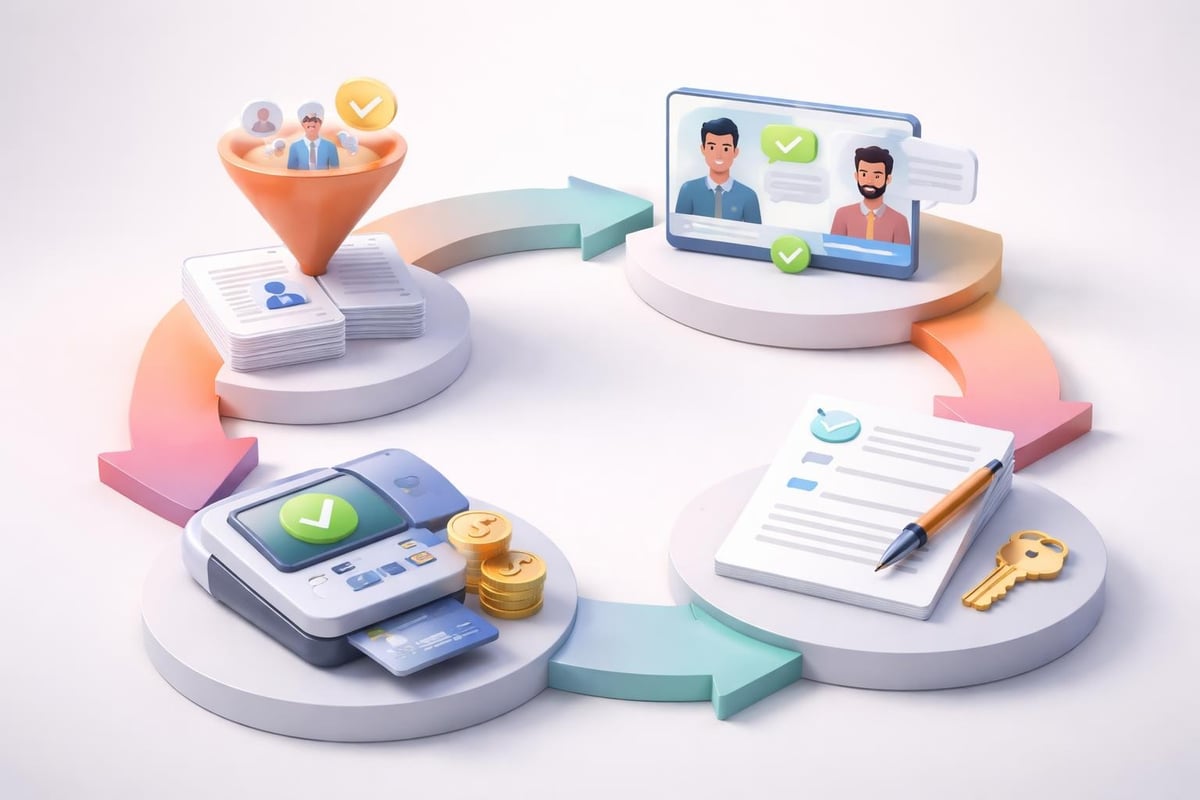
A remote closer functions as a specialized sales professional who completes the final stages of the sales process from any location with internet connectivity. Unlike traditional closers who rely on in-person interactions, these professionals leverage video conferencing, phone systems, and digital collaboration tools to guide prospects through purchasing decisions.
The distinction between a remote closer and other sales roles matters significantly. While appointment setters qualify leads and schedule consultations, closers focus exclusively on converting qualified prospects into paying clients. This specialization in remote closing allows businesses to create efficient sales funnels where each team member operates within their area of expertise.
Key Responsibilities and Daily Activities
Remote closers handle multiple critical functions throughout their workday:
Conducting sales presentations via video conferencing platforms
Addressing prospect concerns and objections in real-time
Demonstrating product value and return on investment
Negotiating terms and pricing structures
Processing contracts and payment information
Following up with prospects who need additional time
Maintaining detailed records in CRM systems
The intensity of these responsibilities requires exceptional time management and organizational skills. A successful remote closer typically manages 3 to 8 sales calls daily, depending on the complexity and price point of the offering.
Essential Skills for Remote Closing Success
Technical proficiency forms the foundation of effective remote closing. Professionals in this role must navigate multiple software platforms simultaneously while maintaining focus on the prospect. Video conferencing tools, CRM systems, screen sharing applications, and digital signature platforms all require fluency for seamless presentations.
Communication skills take on heightened importance in virtual environments. Without physical presence, remote closers rely entirely on vocal tone, word choice, and visible body language to build rapport. According to research from the Harvard Business Review, 55% of communication effectiveness in virtual settings depends on visual cues, making camera presence critical for success.
The Four Pillars of Remote Closing Expertise
Skill Category | Key Components | Business Impact |
|---|---|---|
Active Listening | Identifying pain points, recognizing buying signals, addressing unstated concerns | Higher conversion rates through precise responses |
Persuasion | Value articulation, objection handling, urgency creation | Shortened sales cycles and increased deal sizes |
Technical Mastery | Platform navigation, screen sharing, troubleshooting | Professional presentations without technical delays |
Emotional Intelligence | Reading virtual cues, adapting communication style, building trust | Stronger prospect relationships and referrals |
Developing essential remote closing skills requires consistent practice and feedback. The most effective closers record their calls, analyze their performance, and continuously refine their approach based on conversion data.
Building Resilience and Managing Rejection
Remote closers face rejection regularly as an inherent part of their role. The isolation of working remotely can amplify the emotional impact of hearing "no" repeatedly throughout the day. Successful professionals develop mental frameworks that separate personal worth from sales outcomes.
Resilience strategies include:
Tracking metrics beyond just closed deals
Celebrating small wins throughout the sales process
Maintaining physical separation between workspace and personal areas
Engaging with peer communities for support and perspective
Setting realistic daily activity goals rather than outcome-based targets
The best remote closers view each declined offer as valuable data rather than personal failure. This mindset shift enables continuous improvement without emotional burnout.
Compensation Structures and Performance Metrics
Remote closer compensation typically combines base salary with performance-based components. The specific structure varies significantly based on industry, product complexity, and average deal size. Salary expectations for remote closers depend on experience level, industry vertical, and geographic location.
Most high-ticket businesses structure compensation in one of three ways:
Base Plus Commission: A guaranteed monthly or annual salary supplemented by percentage-based commissions on closed deals. This structure provides income stability while rewarding performance.
Commission Only: Compensation tied entirely to closed revenue, typically with higher percentage rates to offset the lack of guaranteed income. This model attracts experienced closers confident in their abilities.
Tiered Systems: Increasing commission percentages as closers exceed monthly or quarterly quotas. This approach incentivizes sustained high performance and reduces complacency.
Performance Tracking and Accountability
Beyond compensation, businesses must establish clear performance metrics for remote closers. Standard key performance indicators include:
Conversion rate from qualified lead to closed sale
Average deal size and total monthly revenue
Number of sales calls completed
Follow-up response time
Customer satisfaction scores
Contract compliance and accuracy
These metrics provide objective evaluation criteria and help identify areas for coaching and improvement. Regular performance reviews using this data enable remote closers to understand their trajectory and identify growth opportunities.

Building and Managing Remote Closing Teams
Hiring remote closers presents unique challenges compared to traditional recruitment. The virtual nature of the role means businesses cannot rely on in-person interviews to assess presence and communication skills. The process of hiring a remote closer requires structured evaluation methods that test actual selling ability rather than just interviewing well.
Effective hiring processes include multiple stages:
Application Review: Screening for relevant experience and track record
Recorded Presentation: Candidates submit video presentations demonstrating their style
Live Role-Play: Simulated sales conversations addressing common objections
Cultural Assessment: Evaluating alignment with company values and communication preferences
Reference Verification: Confirming past performance claims with previous employers
Sales Match provides pre-vetted sales talent specifically for businesses selling high-ticket offerings over the internet. This approach eliminates the time-consuming screening process while ensuring candidates possess the specialized skills necessary for virtual closing.
Onboarding and Training Frameworks
Once hired, remote closers require structured onboarding to perform effectively. The lack of physical proximity means companies must create deliberate training programs rather than relying on organic knowledge transfer.
Comprehensive onboarding includes:
Product Deep Dives: Understanding features, benefits, and competitive advantages
Sales Methodology Training: Learning the company's specific closing framework
System Familiarization: Gaining proficiency with all required platforms and tools
Shadowing Sessions: Observing experienced closers on live calls
Reverse Shadowing: Having managers listen to early calls and provide feedback
The onboarding period typically spans 30 to 45 days for experienced remote closers and 60 to 90 days for those new to the role. Rushing this process to achieve immediate results often backfires through poor prospect experiences and low conversion rates.
Technology Stack and Tools
Remote closers depend on integrated technology systems to perform their roles efficiently. The right tool stack eliminates friction during sales conversations and enables seamless handoffs between team members.
Core Platform Requirements
Tool Category | Purpose | Essential Features |
|---|---|---|
Video Conferencing | Face-to-face sales presentations | HD video, screen sharing, recording capability, reliability |
CRM System | Lead management and tracking | Pipeline visibility, note-taking, task automation, reporting |
Scheduling Software | Appointment coordination | Calendar integration, timezone handling, reminder automation |
Contract Management | Agreement execution | E-signature capability, template storage, audit trails |
Communication | Team coordination | Instant messaging, file sharing, integration with other tools |
The specific platforms matter less than ensuring they integrate properly and create a unified workflow. Remote closers should never struggle with technology during a sales call, as technical difficulties immediately damage credibility and trust.
Optimizing the Virtual Sales Environment
Beyond software, remote closers need proper physical setup to project professionalism. This includes high-quality webcams, professional lighting, noise-cancelling microphones, and neutral backgrounds. According to a 2025 study by Gartner, 67% of B2B buyers report that seller presentation quality influences their purchasing decisions, making environmental factors surprisingly impactful.
Internet connectivity deserves particular attention. A minimum upload speed of 10 Mbps and download speed of 25 Mbps ensures smooth video calls without freezing or audio dropouts. Many professional remote closers maintain backup internet connections to prevent lost deals due to technical failures.

Techniques for Effective Remote Closing
Mastering specific techniques for successfully closing sales remotely separates average performers from top producers. Virtual environments require adapted approaches compared to traditional in-person selling.
Building Rapport Without Physical Presence
Establishing connection through a screen demands intentional effort. Successful remote closers employ several strategies:
Pre-Call Research: Reviewing prospect LinkedIn profiles and company information to identify common ground
Early Small Talk: Spending the first few minutes building comfort before discussing business
Mirroring Communication Style: Matching the prospect's energy level and pace
Active Camera Presence: Maintaining eye contact by looking at the camera rather than the screen
Strategic Vulnerability: Sharing appropriate personal stories to create reciprocal openness
These rapport-building techniques create psychological safety that makes prospects more comfortable sharing concerns and objections honestly.
Handling Objections in Virtual Settings
Price objections, timing concerns, and competitor comparisons arise in every high-ticket sale. Remote closers must address these without the advantage of reading subtle body language shifts that occur in person.
Effective objection handling follows a consistent framework:
Acknowledge: Validate the concern without becoming defensive
Clarify: Ask questions to understand the root issue beneath the stated objection
Isolate: Confirm this is the only remaining barrier to moving forward
Respond: Address the concern directly with relevant information or perspective
Confirm: Verify the response satisfactorily resolved the objection
The isolation step proves particularly powerful. By confirming no other concerns exist, remote closers prevent endless objection loops where new concerns emerge after addressing each previous one.
Managing Remote Closing Teams at Scale
As businesses grow their remote closing operations, management complexity increases exponentially. What works for a team of three closers breaks down completely with fifteen. Scaling requires systems, processes, and leadership structures that maintain quality while increasing volume.
Creating Standard Operating Procedures
Documentation becomes critical at scale. Every aspect of the remote closing process should exist in written, accessible form:
Call scripts and talk tracks for different prospect scenarios
Objection response libraries addressing common concerns
Pricing authority and discount approval processes
Contract variation guidelines for custom agreements
Escalation procedures for technical or billing issues
These standard operating procedures enable consistent prospect experiences regardless of which closer handles the call. They also dramatically reduce onboarding time for new team members.
Quality Assurance and Coaching Programs
Remote work makes passive observation impossible. Managers cannot simply walk by desks and listen to calls organically. Deliberate quality assurance programs fill this gap through structured call review processes.
Effective coaching programs include:
Weekly Call Reviews: Managers analyze recorded calls using standardized evaluation rubrics
Peer Learning Sessions: Teams discuss particularly challenging calls and share successful approaches
Monthly Skill Workshops: Focused training on specific aspects like objection handling or urgency creation
Individual Development Plans: Personalized improvement roadmaps based on performance data
Sales Match offers a replacement guarantee that addresses team turnover concerns, allowing businesses to focus on coaching and development without worrying about recruitment disruptions.
The Future of Remote Closing
The remote closer role continues evolving as buyer preferences shift and technology advances. Understanding emerging trends helps businesses prepare their teams for continued success.
Virtual reality platforms are beginning to enter B2B sales environments, creating more immersive presentation experiences. While still nascent in 2026, VR sales demonstrations allow remote closers to showcase products and services in three-dimensional environments that more closely approximate in-person experiences.
Asynchronous closing represents another emerging trend. Rather than requiring real-time conversations, some businesses now enable prospects to consume presentations, submit questions, and complete purchases entirely on their own schedules. This approach works particularly well for straightforward offerings where extensive customization is unnecessary.
Adapting to Buyer Expectations
Modern buyers expect increasingly personalized experiences even in remote settings. Generic presentations that could apply to any prospect no longer generate strong conversion rates. The most effective remote closers extensively customize their approaches based on detailed prospect research.
This personalization extends beyond simply mentioning the prospect's company name. It involves understanding their specific challenges, competitive landscape, and strategic priorities. Remote closers who demonstrate this level of preparation immediately differentiate themselves from competitors using templated approaches.
Businesses looking to build high-performing sales teams must prioritize candidates who embrace research-driven personalization rather than relying solely on charisma and persuasion skills.
Legal and Compliance Considerations
Operating remote sales teams across state or national boundaries introduces complex legal requirements. Businesses must ensure their remote closers understand and comply with relevant regulations.
Consumer protection laws vary significantly by jurisdiction. What constitutes acceptable sales practices in one state may violate regulations in another. Remote closers should receive regular compliance training covering:
Truth in advertising requirements
Cooling-off period regulations
Refund and cancellation policies
Data privacy and protection standards
Contract disclosure obligations
Documentation practices take on heightened importance in remote environments. Recording calls (with proper disclosure and consent) protects both businesses and closers by creating objective records of what was promised during sales conversations.
Protecting Sensitive Information
Remote closers handle confidential prospect information including financial data, strategic plans, and personal details. Security protocols must address the distributed nature of remote teams where sensitive data flows across multiple home networks and personal devices.
Minimum security requirements include:
Encrypted video conferencing platforms
VPN usage for accessing company systems
Multi-factor authentication on all accounts
Regular security awareness training
Clear data handling and retention policies
Businesses selling high-ticket services face particular scrutiny, as the financial stakes make them attractive targets for fraud and data breaches. Investing in robust security infrastructure protects both company and client interests.
Building a successful remote closing operation requires understanding the unique demands of virtual sales environments and implementing systems that enable consistent performance. The right combination of skilled closers, proven methodologies, and supporting technology creates sustainable competitive advantages in high-ticket markets. If your business needs experienced sales professionals who specialize in closing premium offerings over video calls, Sales Match provides pre-vetted talent with proven track records, backed by replacement guarantees that eliminate hiring risk.