
High Ticket Appointment Setter: Complete Hiring Guide
Discover how a high ticket appointment setter drives premium sales. Learn key responsibilities, hiring strategies, and how to build a team.
published
The success of any high-ticket business depends on a consistent flow of qualified appointments. While closers receive much of the spotlight, the professionals who fill their calendars with qualified prospects play an equally critical role. A high ticket appointment setter serves as the essential bridge between marketing efforts and closed deals, turning interested leads into scheduled conversations with decision-makers. For businesses selling premium products and services over $2,500, this position represents the foundation of a scalable sales operation that can predictably generate revenue month after month.
Understanding the High Ticket Appointment Setter Role
A high ticket appointment setter focuses exclusively on qualifying leads and booking appointments for closers who handle premium offers. Unlike traditional appointment setters who might book anyone willing to take a call, these specialists must identify prospects who have both the financial capacity and genuine need for high-value solutions.
The distinction matters significantly in the high-ticket sales environment. When businesses sell coaching programs, consulting services, or software packages worth thousands of dollars, every appointment must count. The cost of wasting a closer's time with unqualified prospects creates inefficiencies that directly impact profitability.
Core Responsibilities and Daily Activities
The daily workflow of a high ticket appointment setter involves several critical tasks that require specific skills and consistent execution. These professionals spend their time engaging with inbound leads, conducting outreach to potential prospects, and qualifying interest levels through strategic conversations.
Primary responsibilities include:
Responding to inbound leads within minutes to maximize connection rates
Conducting discovery calls to understand prospect needs and budget capacity
Asking qualifying questions that reveal decision-making authority
Scheduling appointments directly into closer calendars
Following up with prospects who express interest but haven't committed
Maintaining detailed notes in CRM systems for closer preparation
Reporting on key metrics including connection rates and appointment show rates

These responsibilities require a unique blend of communication skills, emotional intelligence, and systematic discipline. According to research from high-ticket setter specialists, effective appointment setters must balance friendly rapport-building with firm qualification criteria to protect closer calendars.
Essential Skills for High-Ticket Appointment Setting
The skill set required for this position differs substantially from entry-level sales roles. High ticket appointment setters must navigate conversations with sophisticated buyers who have high expectations and limited patience for poorly prepared salespeople.
Communication and Rapport Building
Master communicators understand how to establish credibility quickly through phone calls, video chats, and written messages. They adapt their communication style to match prospect preferences while maintaining professionalism that reflects the premium nature of the offer.
The ability to ask insightful questions separates exceptional appointment setters from mediocre ones. Rather than rushing through a script, top performers engage prospects in meaningful dialogue that uncovers real pain points and motivations.
Qualification Framework Mastery
Every high-ticket business requires specific qualification criteria based on their ideal customer profile. Appointment setters must internalize these frameworks and apply them consistently without exception.
Qualification Area | Key Questions | Red Flags |
|---|---|---|
Budget | Current spending in category, investment capacity | "I need to check my budget first" |
Authority | Decision-making process, other stakeholders | "I'll need to ask my partner/boss" |
Need | Specific pain points, urgency level | Vague problems, no clear timeline |
Fit | Business model alignment, current situation | Outside ideal customer profile |
This framework ensures that only genuinely qualified prospects reach the closer's calendar. Businesses selling premium offers cannot afford to waste time with prospects who lack buying power or decision authority.
Building an Effective Hiring Process
Recruiting a skilled high ticket appointment setter requires a structured approach that tests relevant capabilities before making hiring decisions. Many businesses struggle with appointment setter turnover because they fail to identify the right traits during the selection process.
Defining Your Ideal Candidate Profile
Start by documenting the specific characteristics that predict success in your unique sales environment. Consider factors like previous experience in high-ticket settings, familiarity with your industry, and demonstrated ability to handle rejection without losing motivation.
Critical evaluation criteria:
Previous experience booking appointments for offers over $2,500
Proven track record of meeting or exceeding appointment quotas
Comfort level with video-based communication platforms
Ability to follow scripts while maintaining authentic conversations
Self-management skills for remote work environments
Coachability and willingness to receive feedback
The vetting process should include role-play scenarios that simulate real conversations with prospects. Ask candidates to handle objections, qualify a fictional lead, or navigate a difficult conversation where someone doesn't meet your criteria.
Interview Strategies That Reveal True Capability
Standard interview questions rarely predict appointment setter success. Instead, focus on behavioral assessments and practical demonstrations that reveal how candidates actually perform under realistic conditions.
Design your interview process to include recorded role-play exercises where candidates must qualify a prospect and attempt to book an appointment. Review these recordings with your team to assess communication clarity, question quality, and ability to control the conversation flow.
Training and Onboarding Best Practices
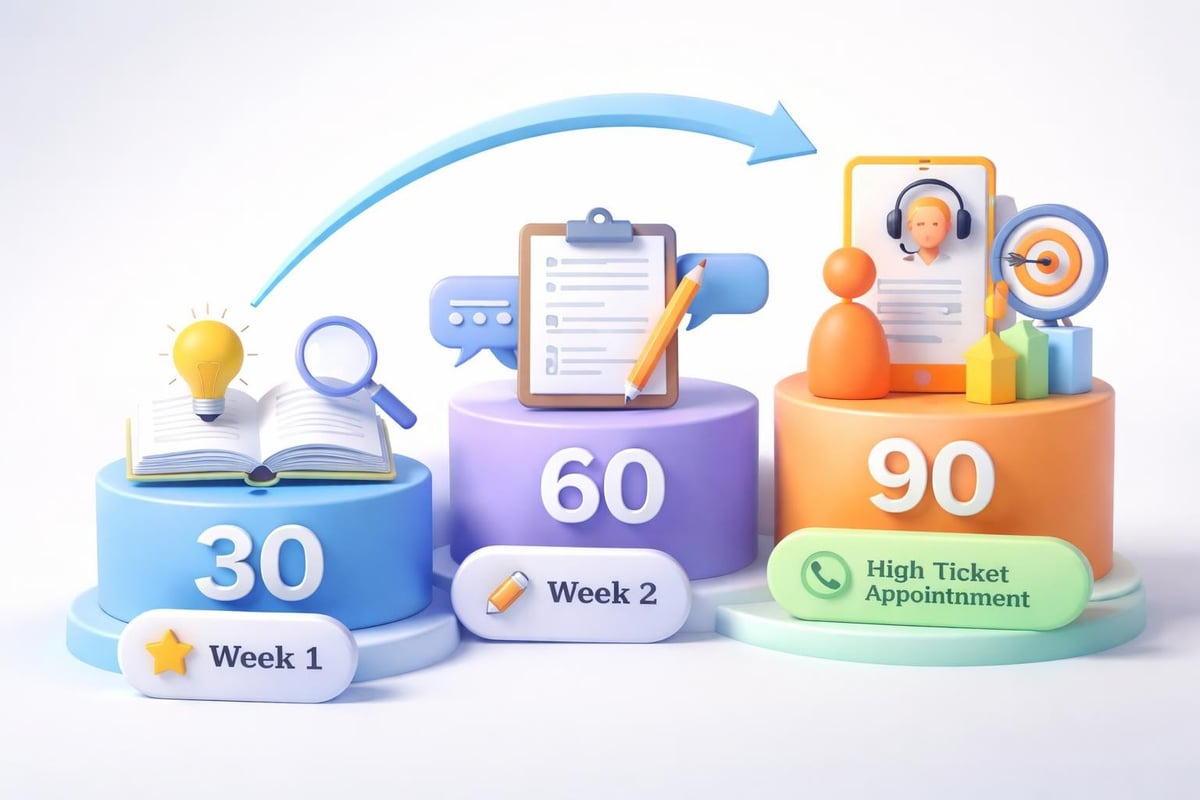
Even experienced appointment setters need comprehensive training on your specific offer, target market, and qualification criteria. The onboarding period determines whether new hires develop into productive team members or struggle indefinitely with poor performance.
Product and Market Knowledge Development
High ticket appointment setters must speak confidently about your solution and understand the market context surrounding your offer. They need sufficient knowledge to answer basic questions and position the closer conversation as the next logical step.
Develop training materials that cover:
Detailed overview of your product or service features and benefits
Ideal customer profiles with specific demographic and psychographic traits
Common pain points your solution addresses
Competitive landscape and differentiation factors
Pricing structure and investment levels
Success stories that illustrate transformation (without making claims)
This foundation allows appointment setters to engage prospects with genuine understanding rather than robotic script reading that damages credibility.
Script Development and Refinement
Effective scripts provide structure without sounding mechanical. The best appointment setting scripts include conversation frameworks rather than word-for-word monologues that eliminate natural dialogue flow.
Create scripts that include:
Opening statements that quickly establish credibility
Discovery questions organized in logical progression
Objection handling templates for common concerns
Transition statements that move toward appointment booking
Closing language that confirms commitment
Allow appointment setters to personalize scripts once they demonstrate mastery of core frameworks. This balance between structure and flexibility enables authentic conversations that prospects respond to positively.
Performance Metrics and Management Systems
Measuring appointment setter performance requires tracking specific metrics that correlate with actual business results. Vanity metrics like total calls made or emails sent provide limited insight into true effectiveness.
Key Performance Indicators That Matter
Focus measurement efforts on outcomes that directly impact closer calendar utilization and deal flow. These metrics reveal whether your appointment setting function operates efficiently or requires intervention.
Metric | Target Range | Why It Matters |
|---|---|---|
Appointment Show Rate | 65-80% | Indicates qualification quality |
Appointments Booked per Week | 15-25 | Measures productivity level |
Lead Response Time | Under 5 minutes | Affects connection rates |
Call-to-Appointment Ratio | 8-12:1 | Shows conversion efficiency |
Qualified vs. Unqualified Ratio | 1:3 | Reveals targeting accuracy |
These benchmarks vary based on industry, offer complexity, and lead source quality. Establish your baseline metrics during the first 90 days and adjust targets as your appointment setter gains experience.
Coaching and Development Programs
Consistent coaching transforms average performers into exceptional appointment setters who consistently exceed quotas. Schedule weekly one-on-one sessions focused on call review, skill development, and obstacle resolution.
Effective coaching sessions include:
Review of 3-5 recorded calls from the previous week
Identification of specific improvement opportunities
Role-play practice for challenging scenarios
Discussion of metrics and performance trends
Goal setting for the upcoming week
The relationship between appointment setters and closers significantly impacts overall sales team performance. Regular feedback loops where closers share insights about appointment quality help setters refine their qualification processes continuously.
Compensation Structure Considerations
Determining appropriate compensation for a high ticket appointment setter requires balancing base salary with performance incentives. The structure must attract talented professionals while aligning their motivation with business objectives.
Most successful compensation models include a base salary component that provides financial stability combined with performance bonuses tied to specific outcomes. This hybrid approach ensures appointment setters can focus on quality rather than rushing through conversations to maximize volume.
Base Salary and Bonus Components
Base salary ranges typically fall between $40,000 and $60,000 annually for experienced appointment setters in the United States, according to industry surveys. This foundation supports the focus and preparation required for high-quality prospect conversations.
Performance bonuses might include:
Per-appointment payments ranging from $50 to $200 based on show rates
Monthly bonuses for exceeding appointment quotas
Quality bonuses when appointments convert to closed deals
Team performance incentives when overall sales targets are met
The specific commission structure should reflect your average deal value and sales cycle length. Higher ticket offers justify larger appointment bonuses since each qualified appointment represents substantial potential revenue.
Remote vs. In-House Appointment Setters
The rise of remote work has transformed how businesses approach appointment setter hiring and management. Companies now face decisions about whether to build in-house teams or leverage remote appointment setter arrangements that offer different advantages.
Advantages of Remote Appointment Setting Teams
Remote arrangements expand the talent pool beyond geographic limitations and often reduce overhead costs associated with office space and equipment. Many high-performing appointment setters prefer remote work environments that eliminate commute time and provide greater schedule flexibility.
Businesses benefit from accessing talent across different time zones, enabling extended calling hours that reach prospects when they're most available. The remote high ticket sales environment has matured significantly, with robust technology platforms supporting effective virtual collaboration.
Management Considerations for Virtual Teams
Successfully managing remote appointment setters requires different approaches than traditional in-office supervision. Leaders must establish clear communication protocols, implement reliable tracking systems, and create accountability structures that function without physical presence.
Daily check-ins via video call, shared performance dashboards, and recorded call libraries help maintain team cohesion and performance standards. The discipline required for remote appointment setting makes candidate selection even more critical, as self-motivated professionals thrive while those needing constant oversight struggle.
Integration with Sales Team Structure
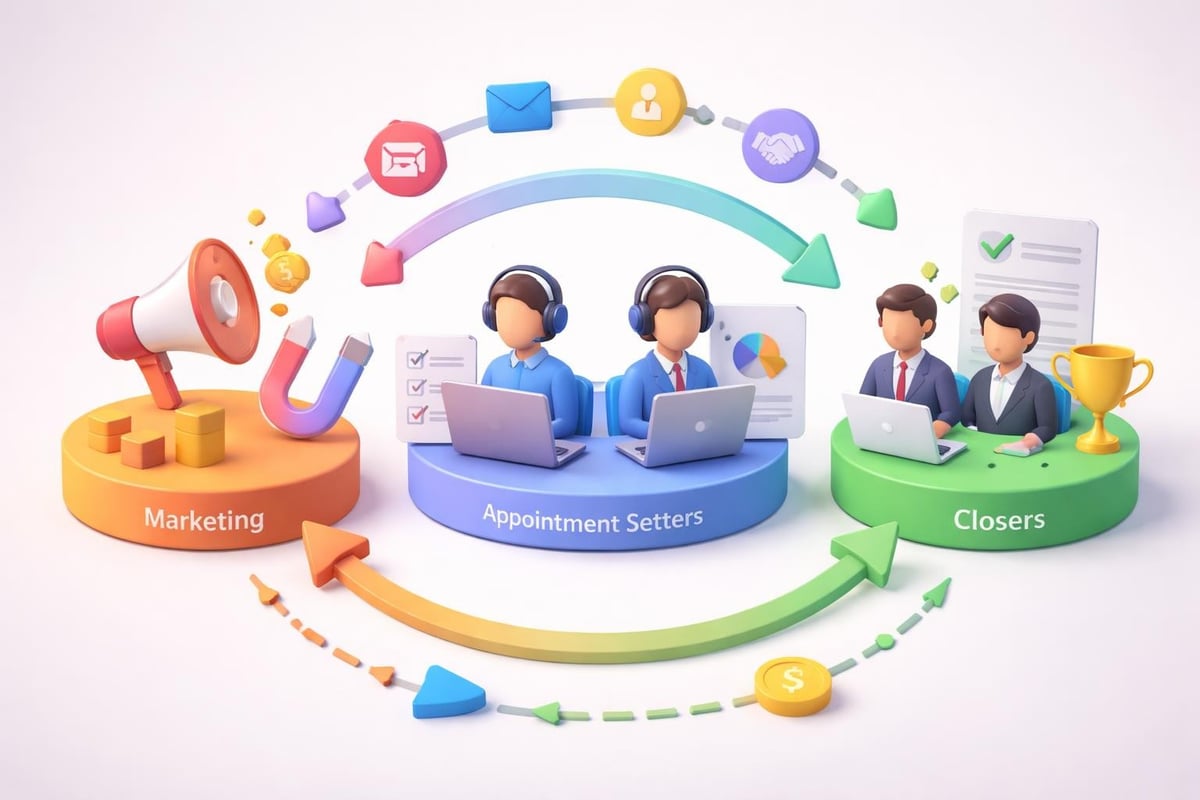
A high ticket appointment setter functions as part of a larger sales ecosystem that includes closers, account managers, and potentially other specialized roles. The effectiveness of this integration determines whether leads flow smoothly through your sales process or get lost in handoff gaps.
Appointment Setter to Closer Handoff Protocols
Establishing standardized handoff procedures ensures closers receive comprehensive information about each scheduled appointment. This preparation enables closers to personalize their approach and address prospect concerns with precision.
Essential handoff elements include:
Complete qualification notes covering budget, authority, need, and timeline
Specific pain points mentioned during initial conversations
Objections raised and how they were addressed
Prospect expectations about the closer call
Any unique circumstances requiring special attention
Technology platforms should facilitate seamless information transfer through shared CRM systems where appointment setters document all relevant details. Closers reviewing this information before calls demonstrate professionalism that reinforces the premium positioning of your offer.
Common Challenges and Solutions
Every business encounters specific obstacles when building and managing their appointment setting function. Anticipating these challenges and implementing proactive solutions prevents performance degradation and team turnover.
Lead Quality Fluctuations
Marketing campaigns produce variable lead quality based on messaging, targeting, and channel performance. When lead quality drops, appointment setters face frustration connecting with genuinely qualified prospects, which impacts their motivation and results.
Address this challenge through regular communication between marketing and sales teams. Appointment setters should provide detailed feedback about lead quality trends, enabling marketers to refine targeting and messaging. According to premium sales strategies, alignment between marketing and appointment setting creates multiplicative improvements in conversion rates.
Show Rate Deterioration
Initially strong show rates can decline over time if appointment setters become less rigorous about qualification or confirmation procedures. This deterioration wastes closer time and reduces overall sales efficiency.
Combat declining show rates by implementing mandatory confirmation sequences. Appointment setters should send confirmation messages immediately after booking, followed by reminder communications 24 hours and 2 hours before scheduled calls. These touchpoints reinforce commitment and provide opportunities to reschedule rather than no-show.
Technology Stack for Appointment Setting Success
Modern appointment setters rely on technology platforms that streamline workflows and maximize productivity. The right tools enable them to manage more conversations simultaneously while maintaining quality standards.
Essential Software Categories
Building an effective technology stack requires investments in several core categories that support different aspects of the appointment setting function:
CRM platforms for contact management and activity tracking
Calling software with recording capabilities and automated dialing
Email automation tools for follow-up sequences
Calendar scheduling systems that prevent double-booking
Communication platforms for team collaboration
Analytics dashboards for performance monitoring
Integration between these systems eliminates manual data entry and ensures information flows seamlessly across your sales operations. Sales professionals report that technology efficiency directly correlates with appointment setting productivity and job satisfaction.
Automation vs. Personalization Balance
While automation increases efficiency, excessive automation damages the authentic connection high-ticket prospects expect. The optimal approach leverages technology for administrative tasks while preserving human touch in actual conversations.
Automate appointment confirmations, follow-up emails, and data entry. Keep qualification calls, objection handling, and relationship building fully human-driven. This balance maximizes productivity without sacrificing the premium experience your offer positioning requires.
Scaling Your Appointment Setting Operation
As your business grows, appointment setting must scale proportionally to maintain consistent deal flow. Strategic scaling decisions determine whether growth accelerates or stalls due to capacity constraints.
When to Add Additional Appointment Setters
Monitor closer calendar utilization as the primary indicator for appointment setting capacity needs. When closers consistently have full calendars and qualified prospects wait multiple days for available slots, your appointment setting team has reached capacity.
Scaling indicators include:
Closer calendar utilization exceeding 85% consistently
Lead response times extending beyond 15 minutes
Appointment setter overtime becoming regular rather than occasional
Rising prospect complaints about delayed follow-up
Show rates declining due to longer booking windows
Plan expansion before reaching absolute capacity limits. Recruiting, hiring, and training new appointment setters requires 60-90 days before they reach full productivity, making proactive scaling essential.
Building Specialized Appointment Setting Teams
Larger operations benefit from specialization where different appointment setters focus on specific lead sources, offer types, or prospect segments. This specialization enables deeper expertise and higher conversion rates within defined categories.
Consider segmentation based on:
Inbound vs. outbound lead sources
Different product lines or service tiers
Geographic territories or time zones
Industry verticals with unique qualification needs
Specialized teams develop refined approaches that resonate more effectively with their assigned prospect segments. The hiring placement process for specialized roles requires identifying candidates with relevant background knowledge or demonstrated learning capacity.
Working with Recruitment Partners
Many high-ticket businesses partner with specialized recruiters who understand the unique requirements of appointment setter roles. These partnerships accelerate hiring timelines and improve candidate quality through access to pre-vetted talent pools.
Recruitment specialists maintain networks of experienced appointment setters actively seeking new opportunities. Rather than posting job advertisements and reviewing hundreds of unqualified applications, businesses receive curated candidate presentations focused on genuine matches.
When evaluating services from recruitment partners, assess their understanding of high-ticket sales environments and their vetting methodology. The most effective partnerships involve recruiters who comprehend your specific qualification criteria and can identify candidates who meet these standards.
Quality recruitment partners also provide replacement guarantees that protect businesses from hiring mistakes. Understanding the replacement policy before engaging ensures alignment on performance expectations and remediation processes if initial placements don't meet standards.
Future Trends in High-Ticket Appointment Setting
The appointment setting landscape continues evolving as technology advances and buyer expectations shift. Staying ahead of these trends positions businesses for continued success in increasingly competitive markets.
Video-First Communication Approaches
Text-based and voice-only communication increasingly gives way to video interactions that enable richer connection and trust-building. Appointment setters who excel at video-based conversations demonstrate product knowledge through screen sharing and create more memorable interactions.
Prospects evaluating strategies for closing high-ticket sales expect professional video presentations that reflect premium positioning. Appointment setters must develop comfort and competence with video platforms as this communication mode becomes standard rather than optional.
Data-Driven Qualification Enhancement
Advanced analytics enable increasingly precise qualification through behavioral signals and engagement patterns. Appointment setters access richer information about prospect readiness before initial conversations, allowing more targeted and efficient outreach.
Integration with marketing automation platforms reveals which content prospects consumed, which emails they opened, and how they engaged with your website. This intelligence transforms qualification conversations from generic discovery to personalized discussions addressing specific interests prospects already demonstrated.
Building a high-performing appointment setting operation requires strategic planning, rigorous hiring practices, and ongoing performance management. The professionals who fill closer calendars with qualified prospects determine whether high-ticket sales teams reach their full potential or struggle with inconsistent deal flow. For businesses ready to eliminate the challenges of recruiting and managing elite appointment setters, Sales Match provides access to pre-vetted sales talent with proven track records in premium offer environments, backed by comprehensive replacement guarantees that ensure your team always performs at peak capacity.