
Appointment Setter Salary Guide for 2026 | Sales Match
Discover appointment setter salary ranges, factors affecting compensation, and how to attract top talent in 2026. Complete guide for sales teams.
published
Understanding compensation expectations for appointment setters is critical for businesses building effective sales teams. Whether you're a high-ticket coaching business, marketing agency, or service provider selling over the internet, knowing what to pay appointment setters directly impacts your ability to attract and retain top talent. This comprehensive guide breaks down the appointment setter salary landscape in 2026, examining regional variations, experience-based differences, and compensation structures that drive performance in remote sales environments.
Current Appointment Setter Salary Benchmarks
The appointment setter salary landscape has evolved significantly as remote work becomes the standard for sales organizations. According to comprehensive salary data from Talent.com, the average appointment setter earns between $35,000 and $52,000 annually in base compensation. These figures represent a baseline, with actual earnings varying substantially based on geographic location, industry specialization, and compensation structure.
Entry-level appointment setters typically start at $30,000 to $35,000 annually, while experienced professionals commanding premium rates can reach $60,000 or more in base salary alone. For businesses operating in high-ticket sales environments where products or services exceed $2,500, these figures often represent just the foundation of total compensation packages.
Geographic Salary Variations
Location remains a significant factor in appointment setter compensation, even as remote work expands opportunities nationwide. Here's how salaries compare across major markets:
Region | Average Base Salary | Hourly Rate Range |
|---|---|---|
Northeast (NY, MA, NJ) | $42,000 - $55,000 | $20 - $26 |
West Coast (CA, WA, OR) | $40,000 - $53,000 | $19 - $25 |
Southeast (FL, GA, NC) | $35,000 - $45,000 | $17 - $22 |
Midwest (IL, OH, MI) | $33,000 - $43,000 | $16 - $21 |
Southwest (TX, AZ) | $34,000 - $46,000 | $16 - $22 |
These regional differences reflect local cost of living and market demand. However, remote appointment setter positions increasingly offer standardized compensation regardless of candidate location, particularly for companies selling high-ticket offerings through digital channels.

Components of Total Compensation
Smart businesses recognize that appointment setter salary extends beyond base pay. The most effective compensation packages combine multiple elements that align individual performance with company revenue goals.
Base Salary Structures
Base salary provides financial stability and attracts qualified candidates. For remote appointment setter positions, competitive base rates typically range from $15 to $25 per hour depending on experience and industry. Businesses selling complex, high-ticket services often pay toward the higher end to secure professionals who understand consultative selling approaches.
Commission and Bonus Components
Performance-based compensation separates average performers from top producers. Common commission structures include:
Per-appointment bonuses ranging from $10 to $50 per qualified meeting set
Monthly bonuses for hitting appointment targets (typically 20-40 qualified appointments)
Revenue-based commissions when set appointments convert to closed deals
Team performance bonuses that encourage collaboration
Appointment setters working for high-ticket businesses can earn an additional $10,000 to $30,000 annually through performance incentives. Those setting appointments that directly contribute to six-figure deals often negotiate higher commission percentages tied to closed revenue.
Benefits and Perks
Beyond direct compensation, comprehensive benefits packages differentiate competitive employers:
Health insurance (medical, dental, vision)
Retirement plan contributions (401k matching)
Paid time off and flexible scheduling
Professional development and training programs
Technology stipends for home office equipment
Performance advancement opportunities
VelvetJobs salary research indicates that appointment setters receiving comprehensive benefits report higher job satisfaction and longer tenure, reducing costly turnover for sales organizations.
Experience and Skill-Based Salary Differences
Not all appointment setters command the same compensation. Experience level, specialized skills, and proven track records create distinct salary tiers within the profession.
Entry-Level Appointment Setters
Professionals new to appointment setting typically earn $30,000 to $38,000 annually. These individuals bring enthusiasm and coachability but require training on:
CRM systems and sales technology platforms
Objection handling and conversation frameworks
Industry-specific knowledge and terminology
Time management and daily activity metrics
Businesses investing in strong onboarding programs often successfully develop entry-level talent into high performers within six to twelve months.
Mid-Level Professionals
Appointment setters with 2-4 years of experience command $40,000 to $50,000 in base salary. These professionals demonstrate:
Consistent achievement of monthly appointment quotas
Advanced objection handling and qualification skills
Self-management and minimal supervision requirements
Familiarity with specific industries or sales methodologies
Mid-level setters often transition into specialized roles focusing on enterprise accounts or complex high-ticket offerings.
Senior Appointment Setters
Top-tier professionals with 5+ years of experience earn $52,000 to $65,000 or more. Senior appointment setters bring:
Proven track records setting appointments that convert at high rates
Deep industry expertise in specific niches
Mentorship capabilities for junior team members
Strategic insights on messaging and market positioning
For businesses building effective sales teams, senior appointment setters provide immediate ROI through their refined skills and industry knowledge.

Industry-Specific Compensation Trends
Appointment setter salary varies significantly across industries, with high-ticket sectors typically offering premium compensation to attract specialized talent.
Technology and SaaS Companies
Software and technology businesses offering products above $2,500 annually pay appointment setters $42,000 to $58,000 in base salary. These roles require understanding technical concepts and navigating complex buying committees. Commission structures often tie directly to annual contract values, creating substantial upside for effective performers.
Marketing Agencies and Consultancies
Agencies selling retainer-based services pay appointment setters $38,000 to $52,000 with aggressive commission structures. Setters in this space must articulate value propositions around ROI and business transformation, requiring strong business acumen beyond basic appointment setting skills.
Coaching and Education Services
High-ticket coaching programs and educational services compensate appointment setters $35,000 to $48,000 in base pay. These positions emphasize relationship building and qualifying prospects who are genuinely ready to invest in personal or professional development.
Financial Services and Insurance
Appointment setters in financial services earn $40,000 to $55,000 given regulatory requirements and the complexity of qualifying prospects for investment products and insurance solutions.
Industry | Base Salary Range | Typical Commission Structure |
|---|---|---|
Technology/SaaS | $42,000 - $58,000 | 3-8% of ACV or $25-75/appointment |
Marketing Agencies | $38,000 - $52,000 | $20-60/appointment + monthly bonuses |
Coaching/Education | $35,000 - $48,000 | $15-50/appointment + conversion bonuses |
Financial Services | $40,000 - $55,000 | 5-10% of premium or $30-80/appointment |
Factors That Influence Appointment Setter Salary
Multiple variables beyond experience and industry impact what businesses pay appointment setters. Understanding these factors helps organizations design competitive compensation packages.
Remote vs. In-Office Arrangements
Remote appointment setters often command slightly lower base salaries than in-office counterparts in high-cost markets, but the total compensation gap narrows when factoring in commute savings and flexibility value. Businesses hiring remote talent access broader candidate pools and often secure better performers at competitive rates.
Full-Time vs. Part-Time Positions
Part-time appointment setters typically earn hourly rates 10-20% higher than full-time equivalents on an hourly basis, but miss out on benefits and bonuses tied to full-time employment. This arrangement works well for businesses testing new markets or scaling capacity during peak periods.
Contract vs. Employee Status
Independent contractors may receive higher hourly or per-appointment rates (25-40% premium) but assume responsibility for taxes, benefits, and equipment costs. Employee arrangements provide stability and benefits while offering lower immediate cash compensation.
Performance History and Metrics
Appointment setters demonstrating consistent results command premium compensation. Key metrics that justify higher salaries include:
Show rate percentages exceeding 70% for set appointments
Qualification accuracy above 80% (appointments meeting ideal customer criteria)
Conversion rates from appointment to closed deal tracking above company averages
Consistency maintaining or exceeding monthly quotas over 6+ months
Businesses leveraging professional sales recruiting services gain access to pre-vetted talent with proven performance histories, reducing the risk of compensation mismatches.
Designing Competitive Compensation Packages
Creating appointment setter salary structures that attract top talent while maintaining profitability requires strategic thinking about total compensation philosophy.
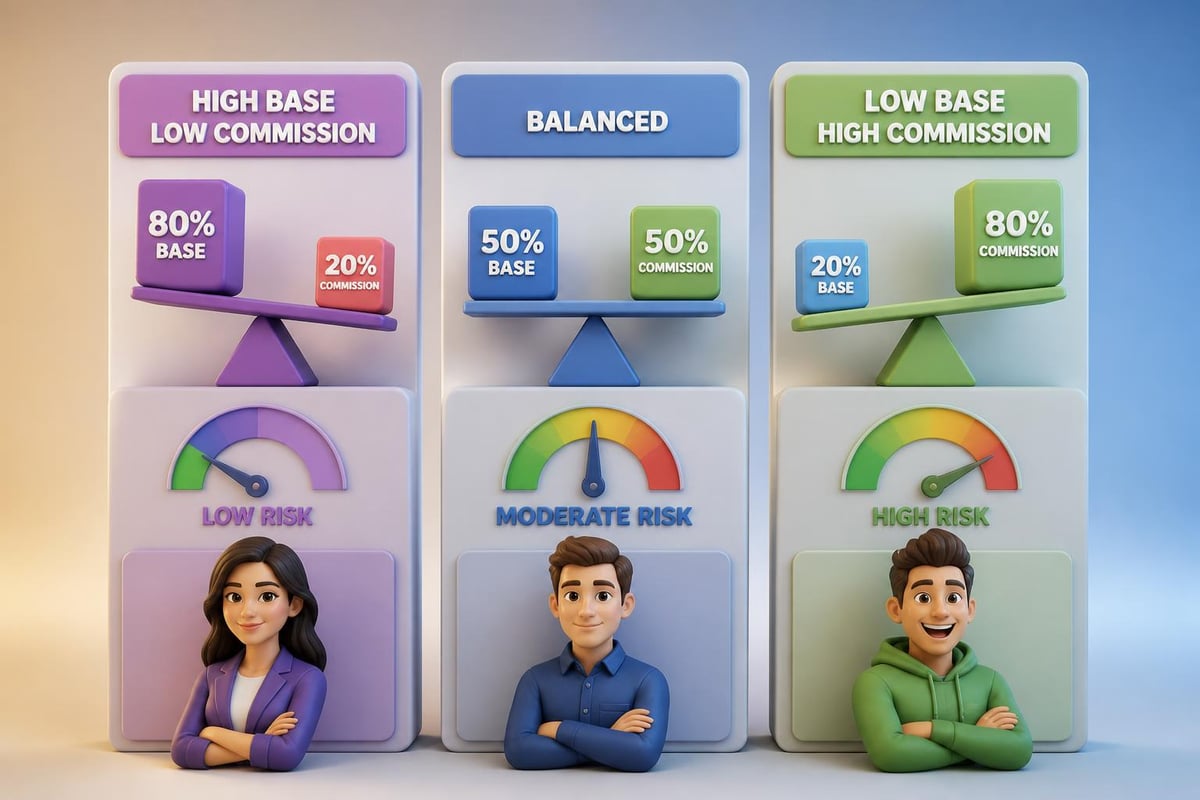
Balancing Base and Variable Pay
The optimal split between base salary and performance compensation depends on your sales model and risk tolerance:
Conservative (70/30): Higher base salary (70%) with moderate commission (30%) attracts risk-averse professionals and provides stability during ramp-up periods
Balanced (60/40): Equal emphasis on base and performance pay attracts motivated professionals comfortable with accountability
Aggressive (50/50 or 40/60): Lower base with significant commission upside appeals to high performers confident in their abilities
High-ticket businesses selling complex services often start with conservative splits during training periods, then transition to balanced or aggressive structures as setters demonstrate competency.
Setting Performance Metrics and Quotas
Effective compensation packages tie pay to clear, achievable metrics. Well-designed quota systems include:
Daily activity minimums (calls made, emails sent, conversations held)
Weekly appointment targets (qualified meetings scheduled)
Monthly quality metrics (show rates, qualification accuracy)
Quarterly conversion tracking (appointments to closed deals)
Quotas should challenge performers while remaining achievable for competent professionals. Industry benchmarks suggest experienced appointment setters can schedule 20-40 qualified appointments monthly depending on market difficulty and average sales cycle length.
Creating Clear Advancement Pathways
Top appointment setters seek career growth beyond their current role. Compensation structures that outline advancement opportunities retain high performers longer:
Clear criteria for promotion from junior to mid-level roles
Paths into senior appointment setting or sales development positions
Transition opportunities into closing roles or account management
Leadership tracks into team lead or management positions
According to the Indeed job description for appointment setters, organizations offering defined career progression retain talent 40-60% longer than those treating the role as a dead-end position.
Market Trends Affecting Appointment Setter Salaries
The appointment setter salary landscape continues evolving as technology, work arrangements, and buyer expectations shift. Understanding these trends helps businesses stay competitive in talent acquisition.
Increasing Demand for Specialized Skills
As buyers become more sophisticated, businesses increasingly value appointment setters with industry-specific expertise. Generalist setters face wage pressure while specialists command premiums. Setters familiar with specific verticals like SaaS, professional services, or coaching programs earn 15-25% more than generalists.
Technology Proficiency Requirements
Modern appointment setters must navigate CRM platforms, automation tools, video conferencing systems, and analytics dashboards. Professionals demonstrating advanced technical skills command higher compensation. Proficiency in platforms like HubSpot, Salesforce, Apollo, or Outreach often justifies $3,000 to $5,000 annual salary premiums.
Remote Work Normalization
Remote work has standardized compensation across geographic boundaries. Businesses in lower-cost markets now compete with companies nationwide, pushing salaries upward in previously lower-paying regions. Conversely, companies access talent in affordable markets without maintaining expensive office infrastructure.
Quality Over Quantity Emphasis
Forward-thinking businesses increasingly prioritize appointment quality over raw volume. This shift rewards setters who thoroughly qualify prospects and generate high-conversion appointments. Commission structures now frequently include quality multipliers, paying significantly more for appointments that convert to closed deals.
Common Compensation Mistakes to Avoid
Poorly designed appointment setter salary structures create recruitment challenges, high turnover, and underperformance. Avoid these common pitfalls:
Undervaluing the Role
Treating appointment setting as entry-level work justifying minimum compensation attracts underqualified candidates. For high-ticket businesses where each appointment represents substantial revenue potential, investing in quality talent through competitive salaries generates significant ROI.
Overly Complex Commission Structures
Compensation plans requiring spreadsheets to calculate confuse team members and reduce motivation. Simple, transparent structures where setters easily understand their earnings drive better performance than elaborate tiered systems.
Inconsistent Quota Adjustments
Failing to adjust quotas as market conditions, lead quality, or sales processes change creates frustration. Regular quarterly reviews ensure targets remain challenging but achievable.
Neglecting Non-Financial Motivation
While competitive appointment setter salary matters, recognition, growth opportunities, and positive culture significantly impact retention. Businesses focusing exclusively on compensation without addressing work environment often lose top performers to companies offering slightly lower pay but better overall experiences.
Building Your Appointment Setting Team
Understanding appointment setter salary structures represents just one component of building effective sales teams. Successful organizations combine competitive compensation with strategic recruiting, thorough vetting, and ongoing development.
Businesses selling high-ticket products and services through digital channels require appointment setters who understand consultative approaches, handle sophisticated objections, and represent the brand professionally. Finding, vetting, and retaining these professionals demands significant time and expertise many companies lack internally.
Professional recruiting partners specializing in sales talent provide access to pre-vetted candidates with proven track records, reducing hiring risks and accelerating team building. Services offering unlimited replacement guarantees eliminate concerns about turnover and bad hires, allowing business owners to focus on revenue growth rather than constant recruiting cycles.
Understanding appointment setter salary dynamics empowers you to build compensation packages that attract top talent while maintaining profitability. Balancing competitive base pay with performance incentives, offering clear advancement pathways, and creating positive work environments positions your business to secure the professionals who drive consistent appointment flow and revenue growth. If you're ready to build a world-class sales team without the hassle of lengthy hiring processes and ongoing turnover concerns, Sales Match provides pre-vetted appointment setters and closers specifically for high-ticket businesses selling over the internet, complete with replacement guarantees that ensure you always have top performers driving your revenue forward.
