
High Ticket Closer: What One Does, What They Earn, and How to Hire
Discover what makes a high ticket closer essential for premium sales success. Learn key skills, training strategies, and how to build elite teams.
published
TL;DR
A high ticket closer converts pre-qualified leads into buyers for offers priced $2,500 and up, almost always over Zoom or Google Meet. Average total pay for the role is $112,960 a year, with a typical range of $89,329 to $145,613 (Glassdoor, 2026). You’re usually ready to hire one once you’re doing $30K+ per month with a proven offer and steady lead flow.
A high ticket closer is the person who takes the sales call after your marketing and your setter have done their jobs. If you sell coaching, consulting, agency retainers, or any service priced at $2,500 or more, this is the hire that turns booked calls into revenue. It’s also the hire founders get wrong most often, because the usual hiring signals, resumes and confident interviews, tell you almost nothing about whether someone can close.
This guide covers the whole decision: what the role involves, the skills that actually predict performance, what closers earn and how to structure their pay, the interview questions and audition process that expose real ability, the red flags that should end a conversation, and what the first 90 days should look like once you’ve hired. For the bigger picture of how the whole model works, start with our guide to high ticket sales.
What a high ticket closer actually does
A closer runs fewer conversations than a typical sales rep, and goes much deeper in each one. Where a transactional rep might churn through dozens of quick calls a day, a high ticket closer might take four to eight scheduled calls, each with a prospect who has already been qualified and already knows roughly what you sell.
The job on each call:
Run a structured discovery to surface the prospect’s real problem, not the one they typed into a form
Connect your offer to that problem in concrete terms the prospect can repeat back
Handle objections about price, timing, and fit without pressure tactics
Ask for the sale, take payment or signed agreement on the call where possible
Log everything in the CRM and run disciplined follow-up on deals that need a second conversation
Almost all of this now happens on video. That’s not a pandemic leftover. McKinsey’s October 2020 B2B Pulse research found that more than three quarters of B2B buyers and sellers prefer digital self-serve and remote human engagement over face-to-face interactions, and 70 percent of B2B decision makers said they were open to fully self-serve or remote purchases above $50,000. Buyers got comfortable committing serious money over a video call. Your closer needs to be great in that exact environment.
The parts of the job that happen off the call matter almost as much. Good closers spend real time between calls reviewing the setter’s notes, preparing for each conversation, and working their follow-up list, because a meaningful share of high ticket revenue comes from the second or third conversation, not the first. A closer who wings every call and forgets every follow-up will look busy and underdeliver for months.
One thing a closer does not do: generate their own pipeline. That’s the setter’s job, which is why the two roles work as a pair. More on that below.

High ticket closer responsibilities
The skills that separate elite closers
Forget the stereotype of the fast-talking pitch artist. The closers who consistently convert $5,000 and $25,000 offers sound more like sharp consultants than salespeople. Soft skills carry most of the weight here: listening, empathy, and the discipline to shut up after asking a hard question.
Skill category | What it looks like in practice | Why it matters for your revenue |
Communication | Active listening, precise questions, plain-language explanations | Surfaces the real objection instead of the polite one |
Emotional intelligence | Reading vocal cues, staying calm under pushback, genuine empathy | Builds the trust a four-figure or five-figure decision requires |
Offer expertise | Deep product knowledge, use cases, honest fit assessment | Justifies premium pricing without overpromising |
Process discipline | CRM hygiene, follow-up systems, pipeline management | Keeps conversion steady instead of streaky |
Two of these are hard to teach. You can train someone on your offer in two weeks. You cannot quickly train emotional regulation or the instinct to ask one more question before pitching. That’s why hiring on demonstrated ability beats hiring on enthusiasm, and why any serious vetting process makes candidates sell live, not just talk about selling.
There’s a fifth trait worth screening for that rarely makes the lists: comfort with silence. High ticket calls turn on a handful of moments where the closer asks a hard question, the prospect goes quiet, and the amateur fills the gap with reassurance while the professional waits. You can see this trait in a ten-minute roleplay. You will never see it on a resume.
What high ticket closers get paid
The market number: average total pay for a high ticket sales closer in the US is $112,960 per year, with the middle of the market running from $89,329 at the 25th percentile to $145,613 at the 75th, per Glassdoor’s 2026 data. Call it about $113,000.
How that money is structured varies more than the total does. Common models:
Commission-only. The closer earns a percentage of cash collected. Zero fixed cost for you, and it attracts confident closers, but only works when your lead flow is steady.
Base plus commission. A modest base smooths the closer’s income and buys you more loyalty through slow weeks.
Draw against commission. A guaranteed floor that’s recouped from future commissions. A middle path for new hires during ramp.
Sales Match’s standing recommendation to clients is to build a plan where a good closer can earn $100K+ in total comp. That sits below the market average above, so it’s a floor, not a stretch. Underpay the role and the best people simply take one of the other offers in their inbox.
For the full breakdown of ranges, structures, and how pay scales with offer size, see our high ticket sales salary guide.
Designing the comp plan so it actually works
Picking one of the three structures is the easy part. The details are what decide whether the plan attracts strong closers and keeps them selling the way you want. A few principles that hold regardless of structure:
Pay on cash collected, not contracts signed. If your offer has payment plans, commission on collected cash keeps the closer invested in selling to people who will actually pay, and it protects you from celebrating revenue that never arrives. Decide upfront how refunds and failed payments claw back, and write it down before the first deal, not after the first dispute.
Match the structure to your lead flow, not your preference. Commission-only sounds appealing because it carries no fixed cost, but it only attracts good closers when your calendar is reliably full. A strong closer looking at thin, inconsistent lead flow will either decline the offer or quit in week six. If your flow is still stabilizing, a draw or modest base is cheaper than replacing a closer twice.
Keep it simple enough to compute mentally. A closer should know, mid-call, roughly what a deal is worth to them. Plans with four accelerators, three kickers, and a spreadsheet stop influencing behavior because nobody can feel them in the moment.
Don’t cap the upside. A capped commission plan tells your best closer exactly when to stop working each month. The whole point of commission-heavy comp is that your cost scales with revenue, so a big commission month is a good problem.
Put definitions in writing. What counts as a closed deal, when commission is earned versus paid, what happens to deals in the pipeline if either side walks away. High ticket comp disputes are almost never about greed. They’re about two reasonable people who never agreed on definitions.
How to hire a high ticket closer
Here’s the uncomfortable part. Resumes are close to useless for this role. Anyone can write “consistently exceeded targets.” The only evidence that matters is watching someone sell, live, under a bit of pressure.
Hiring badly is also more expensive than it looks. SHRM’s 2025 benchmarking data puts the average cost per hire at $5,475 for non-executive roles, and found that screening and interviewing each eat 8 to 9 days of the hiring process on average. That’s before you count the weeks of booked calls a bad closer burns while you figure out they can’t close. Worth noting too: the same SHRM research found only 20 percent of organizations track quality of hire at all, which is how bad closer hires keep happening; nobody measures the last one before making the next one.
If you run the search yourself, the process that works:
Write a scorecard first. The offer price, the lead source, the call volume, the metrics the closer will own, and what a pass looks like at 90 days. Every later step scores against this document.
Screen for relevant track record. Similar deal sizes, a remote calendar-based sales motion, and specifics that hold up. A closer who sold $15,000 consulting over Zoom is a fit for your $10,000 program. A car sales veteran, however talented, is a retraining project.
Interview for evidence, not confidence. The questions in the next section are designed for this. Confidence is table stakes in this candidate pool; it tells you nothing.
Make every finalist do a live roleplay against your actual offer. No exceptions, and no substitutions. A great conversation about selling is not selling.
Check references with pointed questions. Ask the previous manager about consistency, not personality: did their numbers hold up over six months, and what happened in their worst month?
Or skip the eight weeks of that. Sales Match vets every closer through an 8-step process before you ever see them. In plain terms: candidates are screened for real high ticket experience, assessed on communication and coachability, and then put through a live call assessment where they have to actually sell. Only the ones who pass get shortlisted. First candidates typically land in 7 to 10 days, there’s $0 upfront because you pay only when you hire, and every placement is backed by a replacement guarantee. The vetting exists so you’re choosing between people who can already do the job, not auditioning strangers.
Interview questions that expose real closers
Every closer candidate has polished answers to “tell me about yourself” and “what’s your closing philosophy.” These six questions are harder to perform:
“Walk me through the last deal you lost, and why you lost it.” Good answers name a specific deal, a specific reason, and something the closer changed afterward. Weak answers blame lead quality, the economy, or the offer. Everyone loses deals; you’re testing whether they learn from theirs or outsource the blame.
“What was your offer price, lead source, and monthly call volume in your last role?” Real closers answer instantly because they lived these numbers. Then, twenty minutes later, ask what their typical month of cash collected looked like and check whether the two answers can both be true. Fabricated track records fall apart on cross-checks, not on direct questions.
“A prospect says the offer is exactly what they need but they want to think it over. What do you say next?” You’re listening for curiosity, not scripts. Good closers ask what specifically needs thinking about, because “think it over” is a placeholder for an unspoken objection. Bad closers either apply canned urgency or roll over and book a vague follow-up.
“Sell me your last offer. Right now.” The single most revealing question, because of what strong candidates do first: they ask you questions. A closer who launches into a pitch without discovery just showed you exactly what they’ll do to your prospects.
“What does the last hour of your workday look like?” You want to hear follow-ups, CRM notes, and tomorrow’s call prep, unprompted. Pipeline discipline is invisible on calls and decisive over quarters.
“Tell me about a month you missed target. What did you change the next month?” Specific diagnosis is the pass: “my show rate collapsed, so I started confirming calls personally” or “I was pitching too early, so I rebuilt my discovery questions.” The fail is “I just worked harder.”
Across all six, the pattern you’re screening for is the same: specifics, ownership, and questions back at you. A candidate who interviews you about your lead flow, show rates, and delivery quality is thinking like a commission-paid professional evaluating whether your pipeline can feed them. That’s exactly the mindset you want on your sales calls.
The roleplay audition: how to run it well
The live roleplay is the highest-signal hour in your entire hiring process, and most founders improvise it. Structure it like this instead:
Before the call. Send finalists a one-page offer brief: what you sell, the price, who it’s for, and the two or three objections you hear most. Real sales calls aren’t ambushes; the prospect booked for a reason and the closer has context. Mirror that.
During the call. You play a realistic prospect, built from an actual person you’ve sold to. Be difficult in ordinary ways: vague about budget at first, mildly skeptical, carrying one real objection you don’t volunteer until asked good questions. Give the scenario 20 to 30 minutes. Resist the urge to rescue a struggling candidate; how they handle discomfort is data.
Score against a rubric, not a feeling. Four things, scored on paper while it’s fresh: discovery depth (did they find the objection you hid), listening ratio (who talked more), objection handling (clarity or pressure), and the ask (did they actually ask for the sale, cleanly). Use the same scenario for every finalist so comparisons mean something.
Debrief immediately. Ask: “How do you think that went? What would you redo?” Closers who can accurately self-diagnose improve every month you employ them. Closers who thought a rough call went great will argue with your coaching forever.
When you’re torn between two finalists, run a paid trial. One to two weeks, a defined slice of real booked calls, normal commission on anything they close, plus a flat fee for the trial period so you’re not asking for free work. Judge the trial on process as much as outcomes: discovery quality on recordings, CRM notes, follow-up speed. At high ticket volumes a two-week sample of wins and losses is small enough to mislead, but sloppy process in week one is a fact. Agree the trial terms in writing, including what happens to their pipeline if you part ways.
Red flags that should end a closer conversation
Some signals are worth treating as disqualifying, however charming the candidate:
Numbers that drift. The track record was “about $2M closed” in the application, “$1.2M” in the interview, and “mostly team revenue” by the reference check. Real numbers are boringly stable.
Certificates instead of a record. Completing a famous closing course is fine. Presenting the course itself as the qualification, with no verifiable selling behind it, is not. You’re hiring evidence, not vocabulary.
Refusing the roleplay. “I don’t audition” translates to “I can’t do this under observation.” Working closers expect to demonstrate; it’s the fastest way for them to prove they’re worth top-of-market pay.
A trail of blamed employers. One bad company story is plausible. Three stories where every miss was bad leads, bad offers, or bad management predicts a fourth, starring you.
Pressure as the only gear. Ask how they close a prospect who loves the offer but genuinely shouldn’t buy yet. If the honest answer is “everyone can be closed,” your refund rate and reputation will pay for it. High ticket businesses live on delivery outcomes and referrals; a closer who sells bad-fit clients is a liability with good numbers.
No questions about your pipeline. A commission-paid professional who doesn’t ask about lead volume, show rates, or offer conversion before accepting either has options you’re not seeing, or isn’t planning to stay.
The first 90 days: a ramp plan that protects the hire
Most closer failures in the first quarter are ramp failures, not hiring failures. The fix is a plan you write before day one.
Weeks 1 and 2: immersion, not calls. The closer studies the offer and, more importantly, the delivery side of it, because you can’t sell an outcome you don’t understand. They listen to recorded calls, your best wins and your instructive losses. They learn the objection list and drill responses in daily roleplay. By the end of week two they should be able to run your full call structure against you, cold.
Weeks 3 and 4: live calls, total review. The closer takes real booked calls, and every single recording gets reviewed, either by you or your best existing seller. Daily debriefs, one improvement theme at a time. If lead flow allows, weight these weeks toward your more forgiving lead source while mechanics settle.
Month 2: full calendar, weekly coaching. The training wheels come off the schedule but not the feedback loop. Weekly call review continues, now focused on patterns rather than mechanics: where in the call do deals stall, which objection keeps recurring, how disciplined is the follow-up pipeline.
Month 3: judge against the scorecard. By now you have a real sample of calls and outcomes. Score it against the 90-day definition of success you wrote before hiring. Trend matters more than any single week: a closer whose numbers improve every month is ramping; one who plateaued in week five while blaming lead quality is telling you something.
Two errors to avoid in equal measure. Don’t judge a high ticket closer on ten days of data; deal cycles and small call volumes make short samples noisy. And don’t extend a struggling ramp forever out of sunk-cost hope. Process problems visible in recordings, skipped follow-ups, shallow discovery, arguing with coaching, are reliable early, even when the win-loss record is too thin to read.
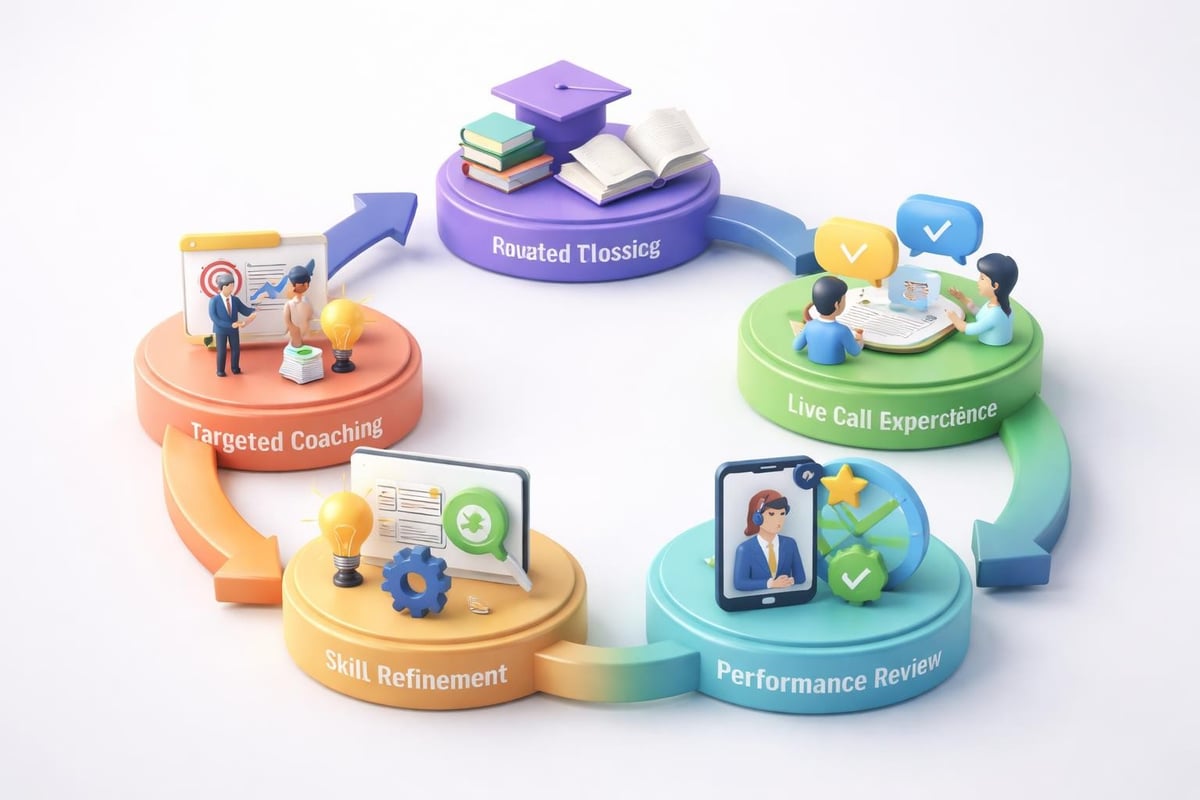
Strategies for Closing Premium Deals
Closing premium deals with confidence requires methodical approaches that differentiate high-value sales from transactional selling. The strategies employed by successful closers focus on building genuine relationships and demonstrating undeniable value rather than relying on high-pressure tactics.
The Consultative Approach
The most effective high ticket closers position themselves as strategic partners rather than vendors. This consultative approach begins with comprehensive discovery, where the closer invests time understanding the prospect's current situation, desired future state, and obstacles preventing progress. This foundation enables personalized presentations that speak directly to the prospect's specific circumstances.
Trust-building represents a critical component throughout the process. Sales techniques for high-ticket items emphasize relationship development over quick closes. Successful closers demonstrate expertise through thoughtful insights, industry knowledge, and genuine interest in the prospect's success, creating an environment where the prospect feels comfortable making substantial commitments.
Value Demonstration Methods
Articulating value for premium offerings requires moving beyond feature lists to quantifiable business outcomes. Skilled closers develop custom value propositions that calculate specific financial returns, time savings, or strategic advantages the prospect will gain. This might include ROI calculators, case study comparisons, or implementation timelines that make abstract benefits concrete.
The presentation format also matters significantly in remote sales environments. Successful closers use visual aids, screen sharing, and interactive demonstrations that maintain engagement throughout lengthy presentations. They structure information logically, building from problem identification through solution explanation to implementation planning.
Building and Managing High-Performance Teams
For business owners seeking to scale their sales operations, assembling a team of skilled high ticket closers presents unique challenges. The specialized nature of this role requires careful selection, comprehensive onboarding, and ongoing performance management.
Recruitment Considerations
Identifying candidates with the right combination of skills, experience, and cultural fit demands rigorous evaluation processes. Pre-vetted sales talent can significantly reduce hiring risks, but understanding what to assess remains crucial for business owners.
Key evaluation criteria include:
Track Record: Demonstrated success in similar sales environments with comparable deal sizes
Communication Style: Ability to build rapport quickly while maintaining professionalism
Resilience: Capacity to handle rejection and maintain motivation through challenging sales cycles
Learning Orientation: Commitment to continuous improvement and skill development
Technical Comfort: Proficiency with remote selling tools and platforms
The vetting process should include multiple touchpoints that reveal how candidates perform under various conditions. Role-playing scenarios, presentation assessments, and behavioral interviews provide insights that resumes alone cannot capture.
Team Structure and Support Systems
Successful high ticket sales teams operate within well-defined structures that clarify roles, responsibilities, and performance expectations. Clear commission structures, territory assignments, and lead distribution protocols prevent confusion and internal competition that can undermine team performance.
Team Element | Best Practice | Common Pitfall |
|---|---|---|
Lead Assignment | Rotating qualified opportunities based on performance metrics | Favoring certain closers without objective criteria |
Commission Structure | Transparent, competitive rates aligned with industry standards | Overly complex calculations that confuse team members |
Performance Tracking | Real-time dashboards with clear conversion metrics | Focusing solely on revenue without measuring activity levels |
Professional Development | Regular training sessions and skill-building workshops | Assuming experienced closers need no ongoing development |
Supporting infrastructure also proves essential. High-performing teams need robust CRM systems, quality lead sources, effective appointment setting, and responsive customer service that handles post-sale implementation. When any of these elements falters, even skilled closers struggle to maintain consistent results.
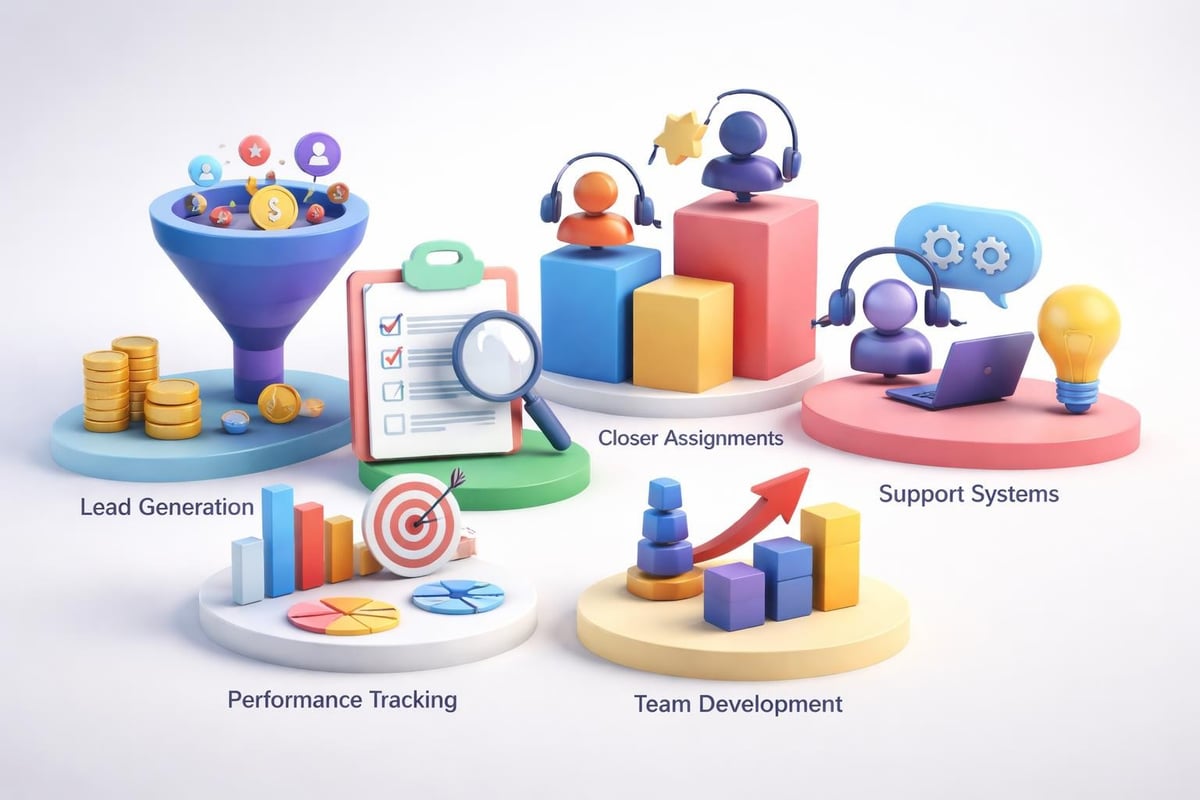
Remote Selling Dynamics and Best Practices
The shift toward remote high ticket closing has fundamentally changed how premium sales conversations unfold. While technology enables global reach and operational efficiency, it also introduces unique challenges that require specific adaptations.
Creating Connection in Virtual Environments
Building the trust necessary for high-value commitments proves more challenging when physical presence is absent. Successful remote closers compensate through heightened engagement techniques, including strategic use of video, intentional vocal variety, and interactive elements that maintain prospect attention.
The environment matters significantly. Professional backgrounds, quality audio equipment, and reliable internet connections demonstrate competence and respect for the prospect's time. Technical difficulties during critical conversations can irreparably damage credibility, making preparation and backup systems essential.
Adapting Traditional Techniques for Digital Platforms
Many classic closing techniques require modification for virtual settings. The traditional "assumptive close" where a salesperson begins filling out paperwork must translate to screen-shared digital documents. The "puppy dog close" that offers trial periods needs clear digital onboarding processes. Understanding how to execute proven strategies within technological constraints separates effective remote closers from those who struggle to adapt.
Follow-up processes also differ in remote environments. Email sequences, video messages, and scheduled check-ins replace casual office visits or coffee meetings. Maintaining momentum between conversations requires deliberate touchpoints that keep prospects engaged without creating perceived pressure.
Compensation Models and Performance Metrics
Understanding how compensation structures work helps both business owners designing incentive programs and sales professionals evaluating opportunities. High ticket closer compensation typically includes base salaries, commission percentages, and performance bonuses that together create competitive total packages.
Common Compensation Structures
Most high ticket sales roles utilize one of several standard compensation models:
Base Plus Commission: Fixed salary covering living expenses with additional commission on closed deals
Tiered Commission: Increasing percentages as closers exceed specific revenue thresholds
Draw Against Commission: Guaranteed payments that are recouped from future commissions
Profit-Sharing Models: Participation in company profitability based on individual contribution
The appropriate structure depends on factors including deal size, sales cycle length, company stage, and competitive market conditions. Well-designed compensation plans align closer incentives with business objectives while providing stability and growth opportunity.
Key Performance Indicators
Measuring high ticket closer effectiveness requires tracking metrics beyond simple revenue numbers. Comprehensive performance evaluation includes:
Conversion Rate: Percentage of qualified opportunities that result in closed deals
Average Deal Size: Mean value of closed transactions
Sales Cycle Length: Average time from first contact to signed agreement
Activity Metrics: Number of presentations, follow-up calls, and prospect interactions
Pipeline Value: Total potential revenue in various stages of the sales process
Top performers typically demonstrate consistent excellence across multiple metrics rather than exceptional performance in just one area. This balanced approach ensures sustainable results rather than sporadic wins followed by extended dry periods.
Common Challenges and Solutions
Even experienced high ticket closers encounter obstacles that can derail deals or damage conversion rates. Recognizing these challenges and implementing proven solutions maintains performance consistency.
Handling Sophisticated Objections
Premium offerings naturally generate complex objections that simple responses cannot overcome. Price concerns, implementation worries, competitive comparisons, and timing issues all require nuanced handling that acknowledges legitimate concerns while reframing perspective.
Effective objection handling begins with complete understanding. Many closers make the mistake of responding before fully comprehending the underlying concern. Patient questioning that explores the root cause of hesitation often reveals that stated objections mask deeper worries that, once addressed, eliminate multiple surface-level concerns simultaneously.
Managing Extended Sales Cycles
High-value purchases rarely happen in single conversations. How to become a high ticket closer involves developing patience and systematic follow-up processes that nurture prospects through decision-making journeys that may span weeks or months.
Maintaining momentum without creating pressure requires careful balance. Strategic touchpoints that provide additional value, such as relevant industry insights, case studies addressing specific concerns, or introductions to existing clients, keep conversations progressing while demonstrating ongoing commitment to the prospect's success.
Industry-Specific Considerations
Different sectors require unique approaches to high ticket closing. Marketing agencies, coaching programs, consulting services, and software platforms each present distinct sales dynamics that influence strategy and technique.
Service-Based Business Sales
For coaching and consulting offers, the closer often sells transformation rather than tangible products. This requires ability to articulate abstract outcomes in concrete terms, painting vivid pictures of future states that prospects find compelling. Success stories, before-and-after comparisons, and detailed implementation roadmaps help prospects visualize the journey from current challenges to desired results.
The personal brand of the service provider also plays a significant role. Closers must effectively communicate the expertise, methodology, and unique approach that differentiate their offering from competitors. This demands deep understanding of the service delivery model and ability to translate technical expertise into client benefits.
Technology and Software Solutions
When closing deals for software platforms or technical solutions, demonstrating functionality through live demonstrations proves essential. However, the guide to high ticket closer responsibilities emphasizes that technical features alone rarely close deals. Successful closers connect capabilities to business outcomes, showing how specific features solve particular problems or enable strategic objectives.
Integration concerns, learning curves, and migration challenges represent common objections in technology sales. Addressing these proactively through clear implementation plans, training commitments, and support guarantees reduces friction in the decision-making process.
The Future of High Ticket Closing
The profession continues evolving as buyer behaviors shift, technology advances, and market conditions change. Staying ahead requires awareness of emerging trends and willingness to adapt proven techniques to new contexts.
Buyer sophistication continues increasing as information becomes more accessible. Modern prospects often complete substantial research before engaging with sales professionals, entering conversations with predetermined questions and comparison frameworks. This shifts the closer's role toward validating research, providing insider perspectives, and offering customized applications that generic information cannot deliver.
Personalization expectations also continue rising. Generic presentations and one-size-fits-all approaches increasingly fail to resonate with prospects who expect customized solutions addressing their specific circumstances. This trend favors closers who invest time in deep discovery and custom presentation development over those relying on standardized pitches.
Evolving Skill Requirements
Tomorrow's elite high ticket closers will need skills beyond today's requirements. Data literacy, understanding of multiple communication platforms, and ability to synthesize information from diverse sources will become increasingly important. The integration of various technologies into sales processes demands continuous learning and adaptation.
However, fundamental human skills remain irreplaceable. Empathy, authentic relationship building, and genuine interest in client success will continue distinguishing top performers from average ones regardless of technological changes. The most successful closers will blend technological proficiency with timeless interpersonal excellence.
Mastering the high ticket closer role requires dedication to continuous improvement, strategic thinking, and genuine commitment to client success. For businesses seeking to build or upgrade their sales capabilities, partnering with specialists who understand the nuances of premium sales recruitment can accelerate team development significantly. Sales Match provides pre-vetted, world-class sales professionals specifically trained for high-value sales environments, eliminating lengthy hiring processes while ensuring quality talent that drives consistent results. Whether you need to build an entire team or replace an underperformer, working with experts who specialize in this unique role ensures your sales organization operates at peak performance.
FAQs
How much should I pay a high ticket closer?
Sales Match recommends a minimum total comp of $100K+/year to attract A-players. Structure it as commission-only, base plus commission, or salary. The aim is pay that pulls top closers without hurting your margins.
How do I hire a vetted high ticket closer, and what if they don't work out?
Resumes don't prove someone can close. Sales Match vets every closer through an 8-step process with a live call assessment, then sends a shortlist. First candidates land in 7–10 days, $0 upfront, backed by the longest replacement guarantee in the industry.
Is my business ready to bring on a high ticket closer?
You're ready if you're doing $30K+/month with a proven offer and steady lead flow. A great closer scales a system that already works. They can't fix an offer that isn't converting yet.