
Team Hire: Building High-Performing Sales Teams in 2026
Discover effective team hire strategies for sales organizations. Learn how to build, scale, and maintain high-performing sales teams efficiently.
published
Building a high-performing sales organization requires more than just filling open positions. It demands a strategic approach to team hire that aligns talent acquisition with business objectives, revenue goals, and company culture. For high-ticket businesses that sell products or services over $2,500 through digital channels, the quality of your sales team directly impacts your bottom line. Whether you're scaling from a solo operation to a full sales department or replacing underperformers who are costing you deals, understanding modern team hire methodologies is essential for sustainable growth in 2026.
Understanding the Strategic Value of Team Hire
Team hire represents a fundamental shift from traditional recruitment thinking. Rather than viewing each position in isolation, successful organizations recognize that sales professionals must function as cohesive units. This perspective changes everything about how you approach talent acquisition.
The financial impact of effective team hire cannot be overstated. According to research from the Society for Human Resource Management, the average cost of a bad hire ranges from $15,000 to over $240,000 depending on the position and industry. For sales roles in high-ticket environments, where each closer might generate hundreds of thousands in annual revenue, the stakes are even higher.
Why Traditional Hiring Fails Sales Organizations
Most businesses approach hiring reactively, posting job descriptions only when someone quits or performance issues force a termination. This creates several critical problems:
Revenue gaps while positions remain unfilled
Rushed decisions that prioritize speed over quality
Cultural misalignment from inadequate vetting processes
Training inefficiencies without proper onboarding systems
Team disruption when replacements don't integrate smoothly
The traditional model also fails to account for the specialized nature of high-ticket sales. Selling a $3,000 coaching program or $10,000 consulting package requires different skills than transactional sales. Your team hire strategy must reflect these unique demands.

Building Your Team Hire Framework
A robust framework transforms hiring from a painful necessity into a competitive advantage. The most successful sales organizations use systematic approaches that can be replicated and refined over time.
Defining Role Requirements and Success Metrics
Before you begin sourcing candidates, clarity is paramount. Generic job descriptions attract generic candidates. Instead, document exactly what success looks like in measurable terms.
Success Metric | Definition | Measurement Frequency |
|---|---|---|
Conversion Rate | Percentage of qualified leads closed | Weekly |
Average Deal Size | Mean revenue per closed opportunity | Monthly |
Sales Cycle Length | Days from first contact to close | Monthly |
Customer Acquisition Cost | Total cost divided by new customers | Quarterly |
Ramp Time | Days until new hire reaches quota | Per hire |
Your team hire process should specifically test for the competencies that drive these metrics. A sales professional who excels at relationship-building might struggle in a transactional environment, while a high-pressure closer may alienate prospects in consultative sales.
When developing a recruiting strategy, align every element with your specific sales model. High-ticket businesses selling through Zoom calls need professionals comfortable with virtual communication, objection handling, and building trust without face-to-face interaction.
Creating Structured Assessment Processes
Inconsistent evaluation leads to inconsistent results. Your team hire methodology should include standardized assessments that every candidate completes. This ensures fair comparisons and reduces bias.
Effective assessment components include:
Role-specific scenarios that mirror actual sales situations
Behavioral interviews focusing on past performance
Skills testing for CRM proficiency and communication
Cultural alignment interviews with multiple team members
Reference verification from previous managers and colleagues
The vetting process you implement determines the quality of your team hire outcomes. Superficial interviews that focus on personality over performance predictability will consistently deliver disappointing results.
Scaling Your Sales Team Effectively
Growth creates unique team hire challenges. The approaches that work when hiring your first salesperson become inadequate when building entire departments.
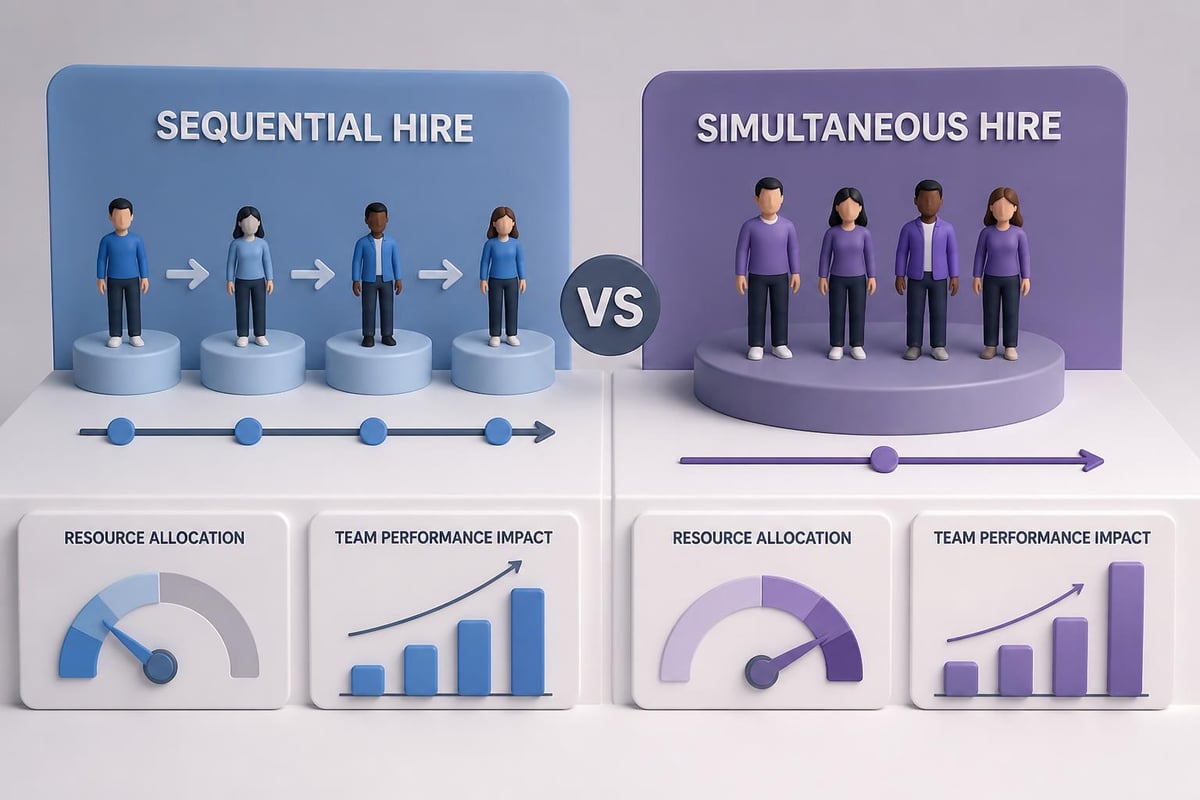
Sequential vs. Simultaneous Hiring
When ready to hire multiple positions, you face a strategic choice. Sequential hiring allows each new team member to fully onboard before adding the next person. Simultaneous hiring fills positions faster but strains training resources.
Sequential hiring advantages:
Personalized onboarding attention
Better cultural integration
Easier performance monitoring
Lower training resource requirements
Simultaneous hiring advantages:
Faster team scaling
Cohort bonding and peer learning
Compressed time to full team capacity
More efficient use of training materials
For most high-ticket businesses, a hybrid approach works best. Hire sales professionals in small cohorts of two to three, allowing adequate training while maintaining growth momentum.
Building Bench Strength
The most sophisticated team hire strategies include proactive talent pipeline development. Rather than scrambling when someone leaves, maintain relationships with qualified candidates who could step in quickly.
Recruiting pipeline best practices emphasize continuous engagement even when you're not actively hiring. This might include:
Quarterly check-ins with silver medalist candidates
Industry networking at sales conferences and events
Content marketing that attracts passive candidates
Referral programs that incentivize employee recommendations
Relationships with specialized recruitment partners
The investment in pipeline development pays dividends when you need to make a team hire decision quickly without compromising quality.
Managing Team Composition and Dynamics
Your team hire decisions should consider not just individual capabilities but how new members will interact with existing personnel. Sales teams are ecosystems where each person's strengths and weaknesses affect collective performance.
Balancing Experience Levels
All-veteran teams bring expertise but often command higher compensation and may resist new methodologies. All-junior teams offer enthusiasm and affordability but lack the wisdom that comes from closing hundreds of deals.
Team Composition | Advantages | Disadvantages | Best For |
|---|---|---|---|
Veteran-heavy (70%+ experienced) | Immediate productivity, proven track records | Higher costs, potential complacency | Aggressive growth phases |
Balanced (50/50) | Knowledge transfer, cost efficiency | Moderate ramp time | Stable, sustainable growth |
Junior-heavy (70%+ new to sales) | Lower costs, high coachability | Longer training, inconsistent results | Limited budgets, strong management |
Your team hire strategy should intentionally design this composition rather than letting it emerge by accident. Consider how each new hire shifts the balance and whether that serves your current business priorities.
Specialization vs. Generalization
In high-ticket sales, some organizations benefit from specialized roles while others need versatile generalists. Appointment setters who qualify leads hand them to closers who focus exclusively on deal completion. Alternatively, account executives might manage the entire sales cycle from prospecting through closing.
When considering whether to hire a sales team with specialized or generalized roles, evaluate your deal complexity and volume. Businesses with 100+ monthly opportunities often benefit from specialization. Those with 20-30 higher-value deals may prefer full-cycle sellers.
Implementing Team Interview Processes
Individual interviews provide limited insight into how candidates will perform in team environments. Team interview best practices incorporate multiple perspectives and reveal collaboration capabilities.
Structuring Multi-Stakeholder Evaluations
Effective team hire processes include input from various organizational levels. Each stakeholder evaluates different aspects of candidate fit.
Recommended interview sequence:
Initial screening by recruiting or HR (culture and basic qualifications)
Hiring manager interview (role-specific competencies and expectations)
Peer interview with current sales team members (collaboration and team dynamics)
Executive interview for senior positions (strategic alignment and leadership)
Final conversation addressing compensation, logistics, and questions
This sequence builds a comprehensive picture while respecting everyone's time. Each conversation should have documented evaluation criteria to maintain objectivity.
Conducting Effective Panel Interviews
Panel interviews where multiple team members simultaneously evaluate candidates can be efficient but require careful facilitation. Without structure, they become intimidating interrogations that repel top talent.
Best practices for panel interviews include:
Limit panel size to three or four people maximum
Assign specific evaluation areas to each panelist
Use round-robin questioning to avoid pile-on dynamics
Allow candidate questions to assess engagement and curiosity
Debrief immediately after the candidate leaves to capture fresh impressions
When done well, panel interviews accelerate your team hire timeline while gathering diverse perspectives.

Onboarding and Integration Strategies
The team hire process doesn't end with signed offer letters. How you integrate new sales professionals determines whether they become productive team members or regrettable mistakes.
Structured Onboarding Programs
Research from Brandon Hall Group shows that organizations with strong onboarding processes improve new hire retention by 82% and productivity by over 70%. Yet many sales organizations still use ad-hoc "figure it out as you go" approaches.
Comprehensive onboarding should include:
Product and service mastery covering features, benefits, and use cases
Sales methodology training on your specific approach and frameworks
Technology proficiency for CRM, communication tools, and analytics platforms
Shadowing and observation of successful team members
Gradual responsibility increase with checkpoints and feedback
The typical ramp time for high-ticket sales professionals ranges from 60 to 120 days depending on product complexity. Your team hire planning should account for this investment period before expecting full productivity.
Cultural Integration and Team Bonding
Skills can be taught, but cultural misalignment creates persistent friction. Intentional integration activities help new hires understand unwritten rules and build relationships.
Consider implementing:
Buddy systems pairing new hires with established performers
Weekly one-on-ones during the first 90 days for feedback and adjustment
Team activities that build relationships outside formal work contexts
Transparent communication about performance expectations and support resources
When exploring team recruitment best practices, remember that the goal extends beyond filling positions to building cohesive units that collaborate effectively.
Addressing Performance and Replacement Challenges
Even with excellent team hire processes, some placements won't work out. Performance issues, cultural mismatches, or life changes lead to turnover that requires thoughtful handling.
Identifying When Replacement Becomes Necessary
Waiting too long to address underperformance costs revenue and damages team morale. But acting too quickly might eliminate someone who just needs additional coaching. The key is having clear performance thresholds and improvement timelines.
Warning signs that replacement may be necessary:
Consistent failure to meet minimum quotas over three consecutive months
Negative impact on team culture or customer relationships
Resistance to feedback and coaching despite multiple conversations
Misalignment with company values or ethical standards
Personal circumstances that prevent role fulfillment
When you identify these patterns, document thoroughly and follow progressive discipline procedures. This protects both the organization and maintains legal compliance.
Managing Turnover Without Disruption
Sales team turnover creates immediate revenue risk. Open territories lose momentum, and remaining team members often absorb additional workload that leads to burnout.
Organizations with the replacement policy infrastructure can minimize these disruptions. This might include:
Maintained candidate pipelines allowing quick backfill
Cross-training so multiple people understand each territory
Territory redistribution plans that activate when positions open
Interim coverage through internal reassignment or external contractors
Documented processes enabling faster new hire ramp-up
The cost of turnover in sales positions can reach 150-200% of annual salary when you factor in lost revenue, recruiting expenses, and training investment. Protecting against this through strategic team hire planning delivers significant ROI.
Leveraging Specialized Recruitment Partnerships
Many high-ticket businesses lack the internal expertise, time, or resources to execute sophisticated team hire strategies consistently. This is where specialized recruitment partnerships add value.
Benefits of Working with Sales-Specific Recruiters
Generic staffing agencies rarely understand the nuances of high-ticket sales. Specialized firms bring industry knowledge, pre-vetted talent pools, and proven assessment methodologies.
When evaluating recruitment partners, consider their ability to:
Source candidates with proven high-ticket sales experience
Assess competencies specific to your sales methodology
Reduce time-to-hire through maintained talent pipelines
Provide guarantees or replacement provisions for failed placements
Offer market intelligence about compensation and availability
The sales recruiting landscape has evolved significantly, with top firms now offering on-demand access to pre-qualified professionals rather than traditional contingency searches.
Understanding Service Models and Guarantees
Recruitment partnerships come in several formats, each with different risk profiles and cost structures:
Model | How It Works | Cost Structure | Risk Level |
|---|---|---|---|
Contingency | Fee only if hire is made | 15-25% of first-year salary | Medium |
Retained | Upfront fee regardless of outcome | 25-35% of first-year salary | Low |
On-Demand Talent | Access to pre-vetted candidate pool | Monthly subscription or per-hire fee | Low |
RPO (Recruitment Process Outsourcing) | Complete hiring function outsourcing | Variable based on volume | Very Low |
For high-ticket businesses, models that include replacement guarantees significantly reduce team hire risk. Rather than absorbing the full cost of a failed placement, you maintain access to qualified alternatives.
Optimizing Your Team Hire Timeline
Speed matters in competitive talent markets, but rushing leads to poor decisions. The challenge is finding the optimal balance between thoroughness and efficiency.
Typical Team Hire Timeline Benchmarks
According to research by the Society for Human Resource Management, the average time-to-hire across industries in 2026 is 42 days. For sales positions, this often extends to 50-60 days due to specialized requirements and multiple interview rounds.
Standard timeline breakdown:
Job posting and initial sourcing: 7-10 days
Application review and screening: 5-7 days
First-round interviews: 7-10 days
Second-round and final interviews: 7-10 days
Reference checks and offer preparation: 3-5 days
Offer acceptance and notice period: 14-21 days
Organizations with streamlined team hire processes can compress this to 30-35 days without sacrificing quality. The key is preparation, having templates, assessment tools, and evaluation criteria ready before positions open.
Reducing Time-to-Productivity
Beyond time-to-hire, time-to-productivity measures when new sales professionals actually contribute to revenue. Hiring process best practices emphasize that this metric ultimately matters more than how quickly you fill the seat.
Strategies to accelerate productivity include:
Pre-boarding activities that begin before the official start date
Intensive first-week immersion covering essential knowledge
Early wins assignments building confidence through achievable goals
Mentorship programs providing experienced guidance
Clear 30-60-90 day expectations with measurable milestones
By focusing on the complete cycle from team hire decision through full productivity, you optimize the total value delivered rather than just filling positions quickly.
Future-Proofing Your Team Hire Strategy
The sales landscape continues evolving with new technologies, buyer behaviors, and competitive dynamics. Your team hire approach must adapt to remain effective.
Emerging Competencies for Sales Professionals
The skills that made someone successful in 2020 may not translate to 2026 and beyond. When evaluating candidates, consider emerging competencies alongside traditional strengths.
Critical emerging skills include:
Digital fluency across multiple platforms and tools
Data interpretation to make insight-driven decisions
Adaptive communication for diverse buyer preferences
Consultative problem-solving rather than product pushing
Continuous learning orientation in rapidly changing markets
Your team hire criteria should weight these capabilities appropriately based on your specific sales environment and future direction.
Building Scalable Team Hire Infrastructure
As your organization grows, team hire volume increases. What works when hiring three people annually breaks down when hiring fifteen. Building scalable infrastructure prevents chaos.
Key infrastructure elements include:
Documented processes with clear ownership and steps
Technology platforms for applicant tracking and assessment
Interview training ensuring consistent evaluator quality
Brand development making your company attractive to top talent
Metrics and reporting tracking efficiency and quality indicators
When reviewing recruitment strategies for scaling organizations, the common thread is systematization. Remove dependency on individual heroics and create processes that work regardless of who executes them.
Building and maintaining a high-performing sales team requires strategic thinking, systematic processes, and ongoing commitment to quality over convenience. The team hire decisions you make today directly impact revenue generation for months or years to come. Rather than treating recruitment as an occasional necessity, successful high-ticket businesses view it as a core competency that deserves dedicated attention and resources. If you're looking to build an elite sales team without the lengthy processes and uncertainty of traditional hiring, Sales Match provides pre-vetted, high-performing sales professionals specifically for businesses selling premium products and services online, complete with replacement guarantees that eliminate the risk of costly hiring mistakes.
