
Your Hire: Making the Right Sales Recruitment Decision
Learn how to make your hire count in sales recruitment. Discover proven strategies for finding, vetting, and onboarding top sales talent in 2026.
published
The success of your high-ticket business depends heavily on the quality of your hire. When bringing new sales professionals onto your team, every decision carries significant weight, especially in markets where deals exceed $2,500 and require sophisticated selling skills. The difference between a high-performing salesperson and an underperformer can translate to hundreds of thousands of dollars in lost revenue, making the hiring process one of the most critical business functions you'll manage. According to research from the Society for Human Resource Management, the average cost of a bad hire can reach up to five times the annual salary, emphasizing why your hire needs careful consideration from the very first interaction.
Understanding the True Cost of Your Hire
The financial implications of bringing someone onto your sales team extend far beyond their base salary and commission structure. Your hire represents an investment that includes onboarding time, training resources, lost opportunities during ramp-up periods, and the potential damage to client relationships if the fit isn't right.
Direct costs associated with your hire include:
Recruitment advertising and agency fees
Time spent by leadership in interviews and evaluation
Background checks and verification processes
Training materials and programs
Software licenses and tools
Base salary during non-productive periods
Indirect costs that impact your business:
Opportunities lost while the position remains unfilled
Team morale affected by carrying extra workload
Client relationships strained by inconsistent coverage
Revenue gaps during training periods
Cultural disruption from poor fits
When you consider these factors, the importance of making your hire count becomes crystal clear. A study from ERE Media found that top-performing salespeople generate 67% more revenue than average performers, highlighting the exponential value of selecting the right candidate from the start.

The High-Ticket Sales Difference
For businesses selling products or services over $2,500, your hire must possess specific competencies that differ from transactional sales roles. These professionals need to build trust quickly over virtual platforms, navigate complex buying committees, handle sophisticated objections, and maintain relationship integrity throughout extended sales cycles.
Marketing agencies, consultants, and service-based businesses operating primarily through Zoom or Google Meet require salespeople who excel in virtual environments. Your hire must demonstrate comfort with technology, ability to read virtual cues, and skills in creating rapport without face-to-face interaction.
Building a Rigorous Vetting Process
The foundation of making your hire successful starts with implementing a comprehensive vetting system. Traditional hiring approaches that rely solely on resume reviews and standard interviews leave too much to chance when dealing with high-ticket sales positions.
Modern talent acquisition strategies emphasize multi-stage evaluation processes that test candidates across various dimensions. Your hire should pass through multiple filters designed to assess both hard skills and cultural alignment.
Essential Evaluation Stages
Stage | Focus Area | Key Assessments |
|---|---|---|
Initial Screening | Experience verification | Resume analysis, reference checks, track record validation |
Skills Assessment | Technical competency | Role-play scenarios, objection handling, closing techniques |
Cultural Fit | Values alignment | Behavioral interviews, team interaction, work style evaluation |
Performance Testing | Real-world capability | Live presentations, mock sales calls, case study analysis |
Implementing a structured approach ensures your hire meets objective standards rather than relying on subjective impressions. The vetting process should include verification of past performance, assessment of current capabilities, and prediction of future success within your specific business context.
Red Flags to Watch During Candidate Evaluation
Not every candidate who looks good on paper will succeed in your environment. Your hire decision should factor in warning signs that often predict future challenges:
Inconsistent employment history with frequent job changes
Inability to provide specific examples of past successes
Poor preparation for interviews or sales demonstrations
Misalignment between stated values and observable behaviors
Resistance to feedback during assessment processes
Unrealistic compensation expectations relative to experience
According to data from Indeed's research, 46% of new hires fail within the first 18 months, with poor cultural fit accounting for 89% of those failures. This underscores why your hire must align with your organizational values, not just possess sales skills.
Defining Success Criteria Before You Search
One of the most common mistakes in sales recruitment is starting the search process without clearly defined success criteria. Your hire will only meet expectations if you've articulated what those expectations are before reviewing the first candidate.

Creating a Detailed Ideal Candidate Profile
Experience requirements:
Minimum years in high-ticket sales environments
Specific industries or product categories
Deal sizes and sales cycle lengths
Virtual selling experience and platform proficiency
Team structure experience (solo contributor vs. collaborative)
Performance indicators:
Historical close rates and quota attainment
Average deal size and sales velocity
Pipeline management capabilities
Customer retention and expansion rates
Award recognition or rankings within previous organizations
Your hire should match at least 80% of your ideal profile criteria. Compromising on critical requirements to fill positions quickly typically leads to costly replacements within months. When businesses need to hire a sales team, maintaining standards across all positions ensures consistent performance.
Compensation Structure Alignment
The commission structure you offer must attract top performers while remaining sustainable for your business model. Your hire will evaluate your compensation package against market alternatives, so understanding competitive benchmarks is essential.
Compensation Element | Industry Standard Range | High-Ticket Sales Consideration |
|---|---|---|
Base Salary | $40,000 - $80,000 | Higher base for complex sales cycles |
Commission Rate | 5% - 15% | Structure must reward performance |
Bonus Structure | Quarterly or annual | Tied to specific KPIs beyond revenue |
Benefits Package | Health, retirement, PTO | Competitive with enterprise offerings |
Transparency about compensation during early conversations helps ensure your hire understands the full value proposition and prevents misalignment later in the process.
Streamlining the Interview Process
A well-designed interview process respects candidates' time while thoroughly evaluating fit. Your hire will form impressions of your organization based on how efficiently and professionally you conduct assessments.
Optimizing Interview Stages
The traditional approach of conducting five to seven interviews with different stakeholders creates unnecessary delays and candidate frustration. Instead, structure your process into three comprehensive stages:
Stage One: Initial qualification call (30 minutes)
Verify basic requirements and experience
Assess communication skills and professionalism
Explain role expectations and compensation range
Gauge candidate interest and timeline
Stage Two: Skills assessment and team interaction (90 minutes)
Conduct role-play scenarios with real objections
Present case studies requiring strategic thinking
Facilitate conversation with potential team members
Evaluate cultural alignment through behavioral questions
Stage Three: Final evaluation and offer discussion (60 minutes)
Review assessment results with candidate
Address any remaining questions or concerns
Discuss start dates and onboarding process
Extend offer to qualified candidates
This streamlined approach reduces time-to-hire while maintaining thoroughness. Research from Recruiting Brief indicates that top sales candidates are off the market within 10 days, making speed essential without sacrificing quality in your hire decision.
Onboarding Your Hire for Success
The moment your hire accepts the offer, the real work begins. Effective onboarding determines whether your new salesperson reaches full productivity in 30 days or struggles for six months.
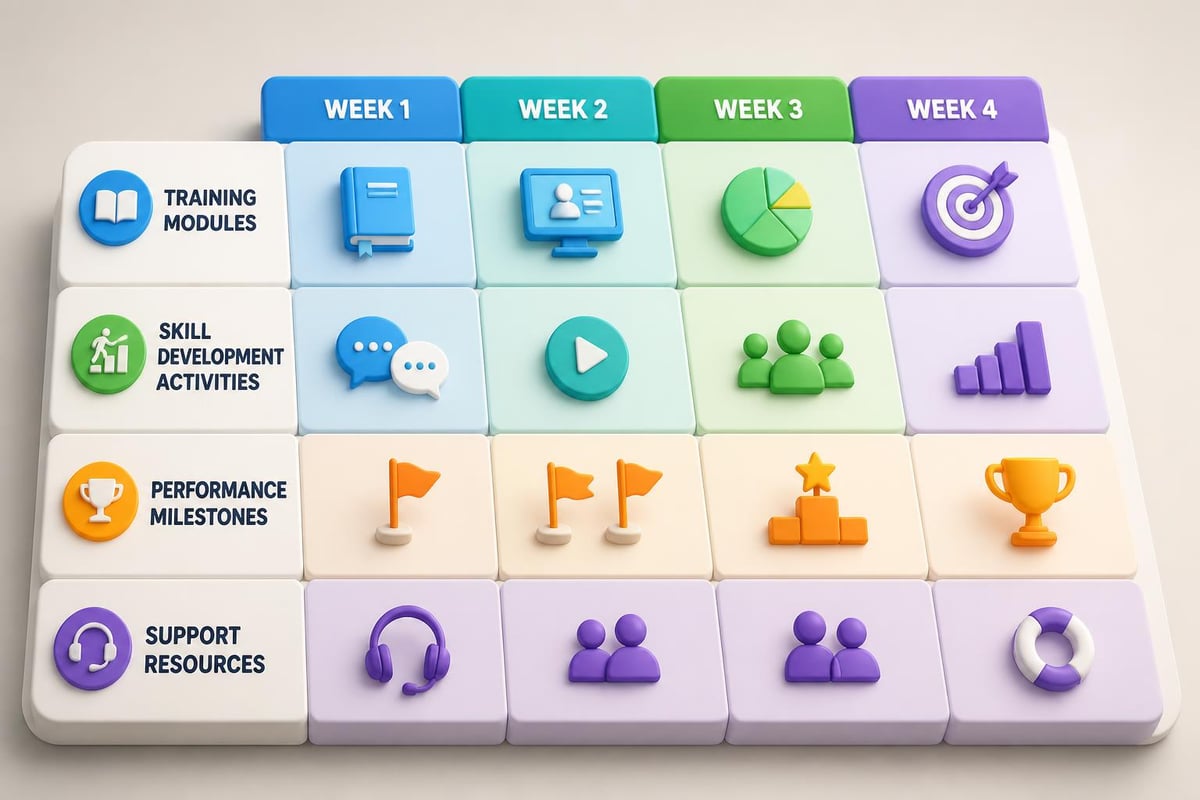
Structured First 30 Days
Week One: Company culture, product knowledge, sales methodology training
Week Two: Shadowing top performers, CRM training, pipeline development
Week Three: Supervised calls with prospects, objection handling practice
Week Four: Independent selling with coaching support, first deals closed
Providing clear milestones helps your hire understand expectations and track progress. The services you offer should be thoroughly understood by all sales team members to ensure consistent messaging.
Setting Performance Expectations
Your hire deserves clarity about how success will be measured. Establish specific KPIs that align with your business objectives:
Number of qualified conversations per week
Conversion rates at each pipeline stage
Average deal size and sales cycle length
Customer satisfaction and retention metrics
Pipeline value maintenance requirements
Regular check-ins during the first 90 days allow you to course-correct quickly if performance issues emerge. According to employee engagement research, organizations with structured onboarding programs improve new hire retention by 82% and productivity by over 70%.
Managing Underperformance and Replacement
Even with rigorous hiring processes, some situations don't work out as planned. Your hire may struggle due to factors beyond anyone's control: personal circumstances, market shifts, or simply a mismatch that wasn't apparent during interviews.
Addressing underperformance promptly protects your business while treating the individual with respect. Create a performance improvement plan that:
Identifies specific gaps between expected and actual results
Establishes concrete improvement milestones with timelines
Provides additional training or resources to support success
Documents progress through regular review meetings
Sets clear consequences if improvement doesn't occur
The Value of Replacement Guarantees
Forward-thinking businesses protect themselves against hiring risks through replacement policies that ensure continuity when positions need to be refilled. Rather than starting from scratch and absorbing the full cost of a failed hire, replacement guarantees provide qualified candidates quickly.
This approach minimizes revenue disruption and maintains team morale. When your original hire doesn't work out, having immediate access to pre-vetted alternatives keeps your sales engine running without extended gaps.
Leveraging Specialized Recruitment Expertise
While some businesses manage sales hiring internally, others recognize the value of partnering with specialists who focus exclusively on sales talent. The decision to handle recruitment in-house versus working with experts depends on several factors:
Consider external recruitment support when:
Your internal HR team lacks sales-specific expertise
Time-to-hire directly impacts revenue goals
You need to scale quickly without compromising quality
Access to passive candidates would strengthen your options
Previous hiring efforts have yielded inconsistent results
Specialized recruiters maintain networks of vetted candidates who have been assessed against proven criteria. This access dramatically reduces the time between identifying a need and having qualified candidates ready for final interviews.
Questions to Ask Recruitment Partners
Question | Why It Matters |
|---|---|
What is your vetting methodology? | Ensures alignment with your quality standards |
How do you source passive candidates? | Reveals depth of their talent network |
What is your average time-to-placement? | Indicates efficiency and candidate availability |
How do you handle underperformance? | Shows commitment to long-term success |
What industries do you specialize in? | Confirms relevant experience with your market |
The right partnership transforms your hire from a stressful, uncertain process into a strategic advantage that fuels growth.
Building Long-Term Sales Team Success
Your hire is just the beginning of building a world-class sales organization. Sustained success requires ongoing investment in development, clear career progression paths, and a culture that values performance.
Creating Growth Opportunities
Top sales professionals seek more than just commission checks. They want opportunities to advance, develop new skills, and take on increasing responsibility. Your organization should offer:
Advanced training programs in negotiation, account management, and leadership
Clear promotion pathways from individual contributor to team lead to management
Cross-functional project opportunities to broaden business understanding
Mentorship programs pairing new hires with veteran performers
Recognition systems celebrating achievements beyond just quota attainment
When your hire sees a future with your organization, retention improves dramatically. The cost of replacing top performers far exceeds the investment in their continued development.
Measuring Hiring Success Over Time
Track metrics that reveal the effectiveness of your hiring process:
Time-to-productivity for new hires
First-year retention rates
Performance distribution across your sales team
Cost-per-hire compared to revenue generated
Quality-of-hire scores based on manager assessments
These data points help refine your approach continuously. What works when hiring for high-ticket sales may differ from other sales environments, so ongoing optimization based on results ensures improvement.
Future-Proofing Your Sales Hiring Strategy
The sales profession continues to evolve, driven by technology, changing buyer behaviors, and new communication platforms. Your hire in 2026 must possess different capabilities than what was required even three years ago.
Emerging Skills for Modern Sales Professionals
Today's high-ticket salespeople need proficiency in:
Video communication and virtual presence management
Social selling through LinkedIn and professional networks
Data interpretation to identify patterns and opportunities
Consultative selling methodologies focused on value creation
Technical understanding of complex solutions and integrations
As you evaluate candidates, assess their adaptability and learning agility. The specific tools may change, but your hire's ability to master new technologies and approaches remains constant.
Building Hiring Resilience
Market conditions fluctuate, economic cycles shift, and competitive pressures intensify. Your hiring strategy should include contingency planning for various scenarios:
During growth periods: Maintain a pipeline of qualified candidates ready to join as you scale, ensuring expansion doesn't compromise quality through rushed hiring decisions.
During market contractions: Focus on retaining top performers while still evaluating exceptional candidates who become available due to external factors beyond their control.
During transformation phases: Seek candidates who bring expertise in new methodologies or markets you're entering, accelerating your evolution rather than trying to train existing teams in unfamiliar domains.
According to insights from Recruiter.com resources, organizations with proactive talent pipelines reduce time-to-hire by 50% and improve quality-of-hire scores by 35% compared to reactive hiring approaches.
Making Your Hire Decision With Confidence
The culmination of your hiring process arrives when you must choose between final candidates or decide to extend your search. This decision requires balancing multiple factors: candidate qualifications, cultural fit, compensation expectations, and availability timing.
Trust the process you've built. If your vetting was rigorous, your criteria were clear, and your assessment was thorough, the right choice typically becomes apparent. Resist the temptation to settle due to urgency or compromise on non-negotiable requirements.
When your hire joins your team, they should represent the best available match for your specific needs at this moment. Not a perfect candidate (who rarely exists), but the optimal selection given current market conditions and your organizational reality.
The confidence you feel making this decision directly correlates with the preparation invested beforehand. Rushed processes yield uncertain outcomes, while methodical approaches produce clarity even when choosing between strong candidates.
Building a high-performing sales team starts with making every hire count, from initial candidate sourcing through onboarding and beyond. The strategies outlined here provide a framework for consistent success in recruiting sales talent for high-ticket businesses. When you're ready to eliminate hiring uncertainty and access pre-vetted sales professionals who can drive revenue from day one, Sales Match offers specialized recruitment services designed specifically for businesses selling premium products and services over the internet, with replacement guarantees that ensure your sales team always performs at the highest level.
