Candidate Profile: Complete Guide for Sales Recruitment
Learn how to create an effective candidate profile for sales hiring. Discover strategies to identify top talent and streamline recruitment.
published
Finding exceptional sales talent in today's competitive market requires more than posting job descriptions and hoping for the best. Businesses selling high-ticket products and services over the internet need a systematic approach to identify candidates who can deliver results from day one. A well-crafted candidate profile serves as your roadmap to hiring success, transforming vague job requirements into concrete criteria that separate average performers from top-tier closers. This strategic document defines precisely who you're looking for, why they'll succeed in your organization, and how to recognize them when they apply.
Understanding What a Candidate Profile Actually Is
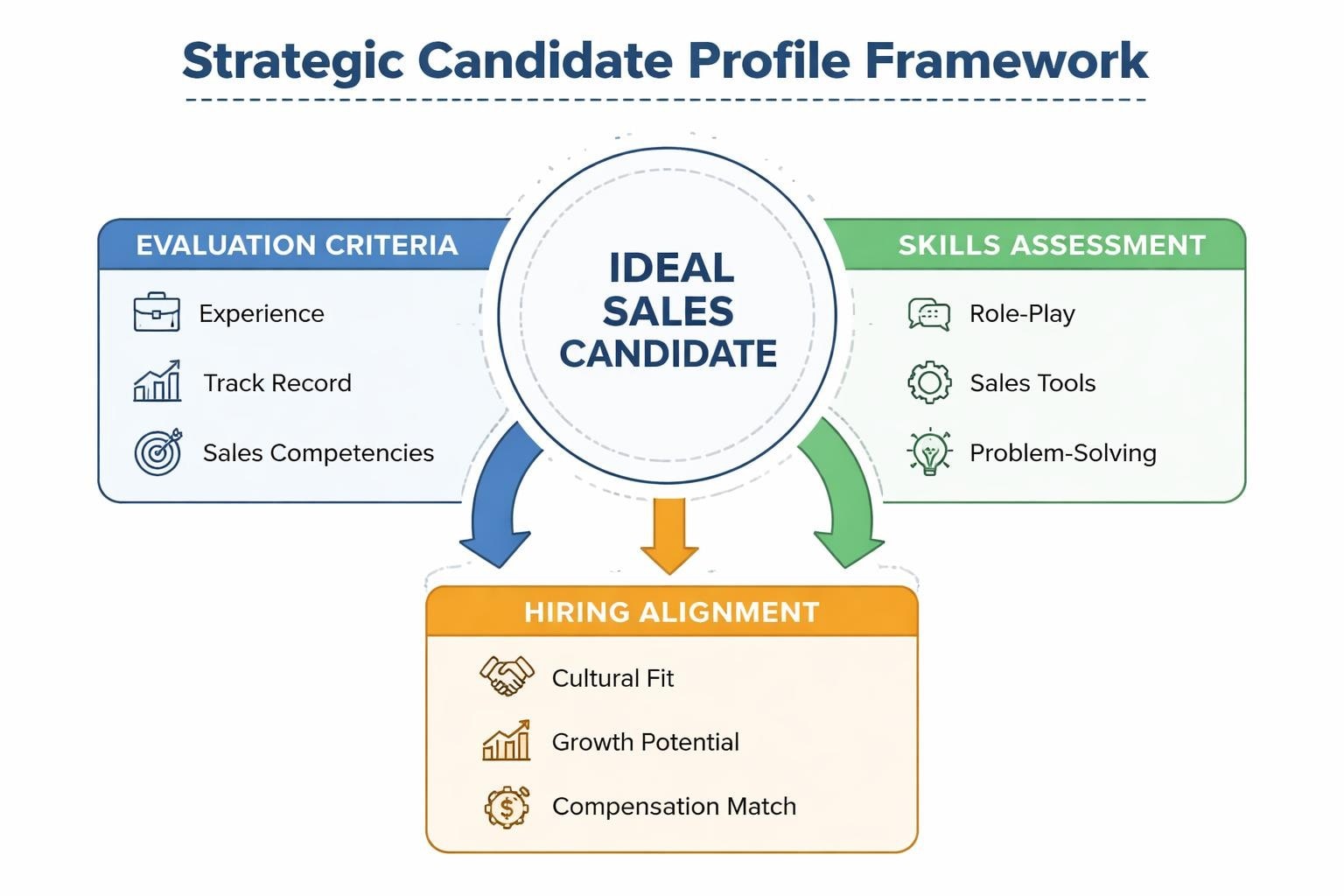
A candidate profile is a comprehensive document that outlines the ideal characteristics, competencies, and qualifications for a specific role within your organization. Think of it as a detailed blueprint that goes far beyond basic job requirements to capture the essence of what makes someone successful in a particular position.
Unlike traditional job descriptions that simply list responsibilities and minimum qualifications, a candidate profile paints a complete picture of your ideal hire. It encompasses hard skills, soft skills, personality traits, values alignment, and even potential red flags to avoid during the screening process.
For businesses selling high-ticket offers through virtual sales channels, this distinction matters tremendously. Your sales team doesn't just need someone who can follow a script. You need closers who can build rapport through a screen, handle sophisticated objections, and maintain composure during lengthy sales cycles.
The Core Components of an Effective Candidate Profile
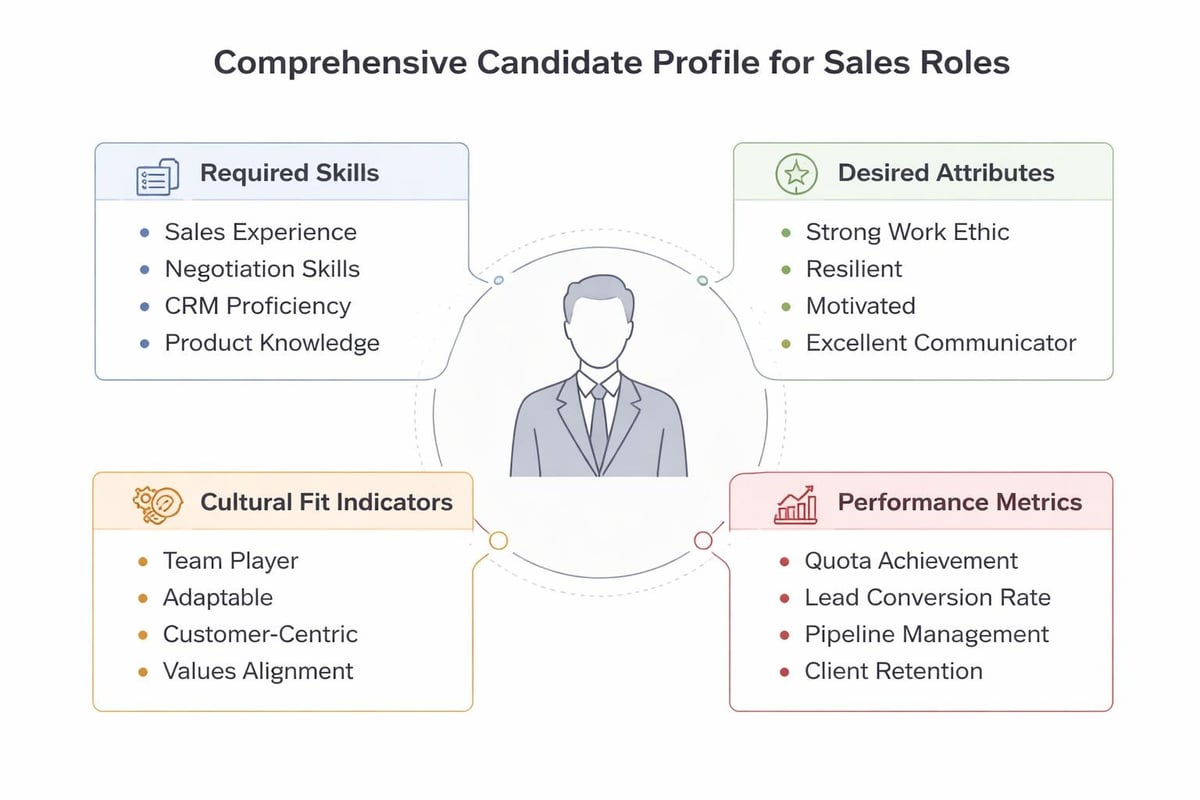
Every strong candidate profile includes several essential elements that work together to create a clear hiring framework. According to research on candidate profile development, successful profiles distinguish between must-have qualifications and nice-to-have attributes.
Must-have qualifications typically include:
Specific years of experience in relevant sales environments
Proven track record in high-ticket or consultative sales
Technical proficiency with CRM systems and sales tools
Communication skills suited to virtual selling environments
Ability to work independently with minimal supervision
Nice-to-have attributes might encompass:
Industry-specific knowledge or certifications
Experience with particular sales methodologies
Familiarity with your target market or buyer personas
Additional language capabilities
Prior remote work experience
The profile should also address cultural fit factors, which often determine long-term success more than technical skills alone. Does your organization value aggressive hunters or patient relationship builders? Do you prioritize individual achievement or team collaboration?
Why Sales Organizations Need Detailed Candidate Profiles
Building a candidate profile might seem like extra work upfront, but the investment pays dividends throughout your entire hiring process. Businesses that skip this step often find themselves trapped in endless interview cycles, unable to articulate why candidates feel like poor fits.
When you're ready to hire new sales talent, clarity becomes your competitive advantage. A detailed profile ensures everyone involved in the hiring process evaluates candidates against the same criteria, eliminating subjective biases and gut-feel decisions.
Streamlining Your Recruitment Timeline
According to data from the Society for Human Resource Management, the average time to fill a position reached 44 days in 2024, with specialized roles like sales positions often taking longer. A comprehensive candidate profile accelerates this timeline by focusing your efforts exclusively on qualified prospects.
Your vetting process becomes more efficient when you can quickly screen out mismatches. Instead of interviewing dozens of candidates who lack essential qualifications, you invest time only in those who meet your predefined criteria.
Hiring Stage | Without Profile | With Detailed Profile |
|---|---|---|
Application Review | 2-3 hours per batch | 45-60 minutes per batch |
Initial Screening | 30 candidates | 10-12 candidates |
In-depth Interviews | 15 candidates | 4-6 candidates |
Final Decision Time | 2-3 weeks | 3-5 days |
Improving Quality of Hire Metrics
Quality of hire remains one of the most critical yet challenging metrics to track. When you build a thorough candidate profile, you establish clear benchmarks for measuring success after the hire.
Did the candidate meet the performance expectations outlined in the profile? Are they demonstrating the soft skills you identified as crucial? This feedback loop allows you to refine your profile over time, continuously improving your hiring outcomes.
Building Your First Sales Candidate Profile
Creating an effective candidate profile requires input from multiple stakeholders and a structured approach. Resources on crafting candidate profiles emphasize starting with a clear understanding of what success looks like in the role.
Begin by analyzing your top performers. What characteristics do your best sales people share? What separates your A-players from average performers? These insights form the foundation of your profile.
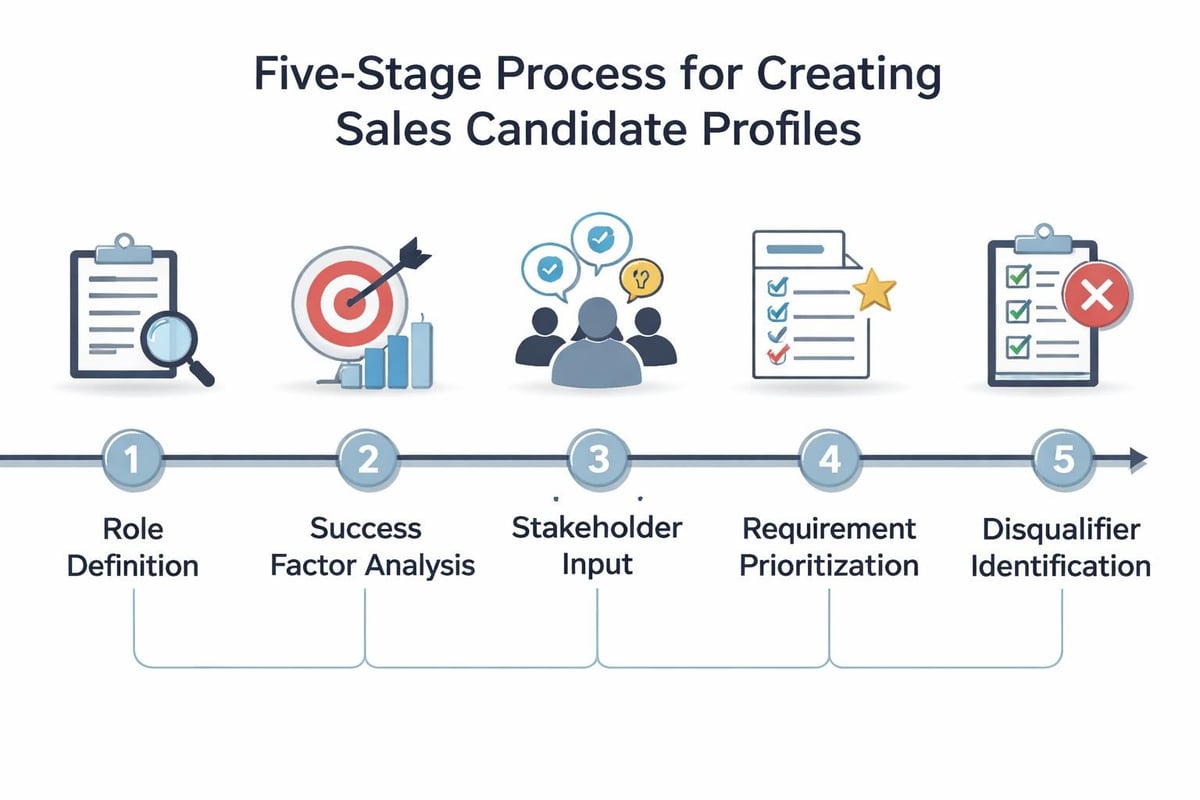
Step-by-Step Profile Development Process
1. Define the Role's Primary Objectives
Start with the end in mind. What specific outcomes must this salesperson achieve? For high-ticket sales roles, objectives might include closing a certain number of deals, maintaining specific conversion rates, or managing a defined sales pipeline value.
2. Identify Critical Success Factors
Work backward from those objectives to determine what capabilities enable success. If your average sales cycle spans 30-45 days across multiple touchpoints, you need someone with exceptional follow-up discipline and relationship management skills.
3. Gather Input from Key Stakeholders
Your sales manager, top performers, and customer success team all hold valuable perspectives. Schedule individual conversations to understand what each stakeholder values most in a sales team member.
4. Distinguish Between Entry Requirements and Growth Potential
Some qualifications are non-negotiable on day one, while others can be developed through training and experience. A candidate profile should clearly separate these categories to avoid eliminating promising talent prematurely.
5. Document Red Flags and Disqualifiers
Just as important as knowing what you want is understanding what you absolutely don't want. Previous job-hopping patterns, inability to work independently, or lack of coachability might be automatic disqualifiers worth noting.
Customizing Profiles for Different Sales Roles
Not all sales positions require identical profiles. An appointment setter role demands different competencies than a closer position, even within the same organization selling the same product.
For appointment setter positions, your profile might emphasize resilience, enthusiasm, and qualification skills. These team members need to handle high volumes of conversations, quickly build rapport, and effectively screen prospects.
Closer roles require profiles highlighting consultative selling abilities, objection handling mastery, and deal structuring experience. These individuals need the gravitas and expertise to justify premium pricing and navigate complex decision-making processes.
Advanced Strategies for Candidate Profile Optimization
Once you've created a basic candidate profile, several advanced techniques can enhance its effectiveness and keep it aligned with your evolving needs.
Incorporating Data-Driven Insights
Modern recruitment benefits enormously from analytics. Track which profile criteria most strongly correlate with on-the-job success. Perhaps you'll discover that candidates with specific background experiences outperform others, or that certain personality traits predict longevity better than traditional experience metrics.
This approach, highlighted in articles about refining candidate profiles, transforms your profile from a static document into a dynamic tool that improves with each hiring cycle.
Key metrics to track include:
Time to productivity for new hires
90-day performance against quota
First-year retention rates
Manager satisfaction scores
Cultural fit assessment accuracy
Balancing Specificity with Flexibility
While detailed profiles improve hiring accuracy, overly rigid criteria can eliminate excellent candidates who don't fit every requirement. According to research from Harvard Business Review, women apply for jobs only when they meet 100% of qualifications, while men apply when they meet about 60%.
Your candidate profile should identify truly essential requirements while remaining open to equivalent experience or transferable skills. Someone without direct experience in your industry might bring valuable perspectives from adjacent markets.
Regular Profile Review and Updates
Market conditions, company strategy, and role requirements evolve constantly. Schedule quarterly reviews of your candidate profiles to ensure they reflect current needs rather than historical preferences.
Consider these questions during reviews:
Have our top performers' characteristics changed?
Are we competing for different candidate pools than six months ago?
Have technology requirements or tools shifted?
Does our sales process now emphasize different skills?
Implementing Candidate Profiles Across Your Hiring Process
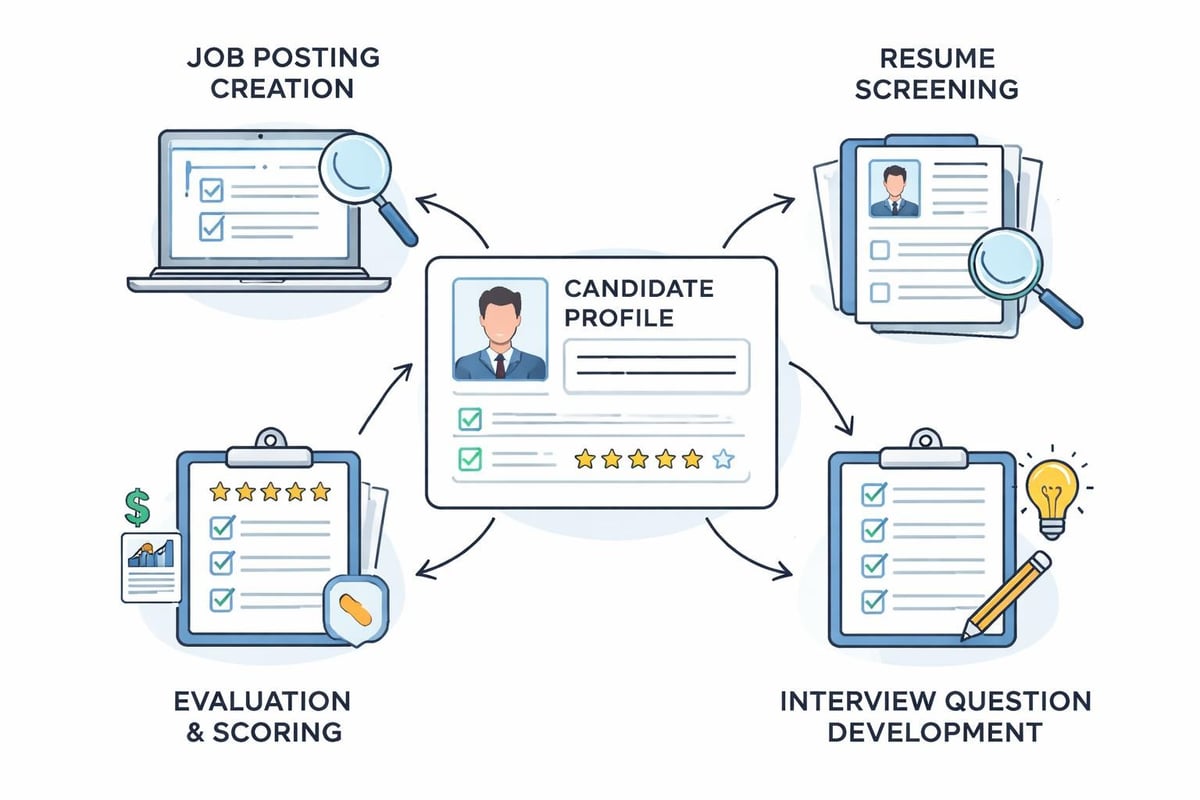
Creating a candidate profile delivers value only when properly integrated into your recruitment workflow. Every stakeholder touching the hiring process should understand and utilize the profile consistently.
Training Hiring Teams on Profile Usage
Your hiring managers, recruiters, and interview panel members need clear guidance on how to apply the candidate profile during evaluations. Host training sessions that walk through the profile section by section, explaining the rationale behind each criterion.
Best practices for candidate experience emphasize consistency and transparency throughout the hiring journey. When your team uniformly applies profile criteria, candidates receive fair, objective evaluations regardless of who conducts their interview.
Aligning Job Postings with Your Profile
Your job advertisements should mirror the language and priorities established in your candidate profile. This alignment attracts candidates who match your criteria while deterring those who don't.
If your profile emphasizes self-motivation and independent work capabilities for a remote sales position, your job posting should highlight the autonomous nature of the role and the traits needed to thrive in that environment.
Profile Element | Job Posting Translation |
|---|---|
Must have 3+ years high-ticket sales | "Experienced sales professional with proven track record in premium offerings" |
Self-motivated individual contributor | "Thrives in independent, self-directed work environment" |
Consultative selling approach | "Solution-focused selling style with emphasis on client needs assessment" |
CRM proficiency required | "Advanced experience with modern sales technology platforms" |
Creating Profile-Based Interview Guides
Structure your interview questions to assess the specific competencies outlined in your candidate profile. Behavioral questions that ask candidates to describe past experiences provide better predictive value than hypothetical scenarios.
For a profile emphasizing objection handling skills, ask: "Tell me about a time when a prospect raised a significant price objection late in your sales process. How did you respond, and what was the outcome?"
Common Candidate Profile Mistakes to Avoid
Even experienced hiring managers make predictable errors when developing candidate profiles. Awareness of these pitfalls helps you create more effective, actionable profiles from the start.
Creating Unrealistic Composite Profiles
One frequent mistake involves combining the best traits of multiple top performers into a single profile that describes a superhuman candidate who doesn't exist. Your profile should represent an achievable standard, not a fantasy wish list.
If you're looking to hire a sales team, remember that exceptional talent comes in different packages. Your top relationship builder might lack the aggressive closing instincts of your best hunter, and that's perfectly acceptable if both succeed in their roles.
Ignoring Cultural and Values Alignment
Skills can be taught, but cultural fit proves far more difficult to instill after hiring. According to a study by the Harvard Business Review, 80% of employee turnover stems from poor hiring decisions, with cultural misalignment being a primary factor.
Your candidate profile should explicitly address your organization's values, work style preferences, and team dynamics. Does your sales culture value collaboration or individual achievement? Do you prefer aggressive prospectors or patient relationship builders?
Overlooking Growth Trajectory and Potential
While current capabilities matter, the best hires often demonstrate strong learning agility and growth potential. Your profile should balance immediate readiness with long-term development prospects.
Indicators of growth potential include:
History of progressively increasing responsibilities
Self-directed skill development initiatives
Adaptability across different sales environments
Coachability and openness to feedback
Strategic thinking beyond tactical execution
Failing to Update Profiles as Roles Evolve
A candidate profile created two years ago likely doesn't reflect your current needs, especially in fast-moving industries. Sales technology, methodologies, and market dynamics shift continuously.
Organizations working with vetted candidates through specialized recruitment partners benefit from profiles that reflect contemporary market realities rather than outdated assumptions about what sales roles require.
Leveraging Technology to Enhance Candidate Profiles
Modern recruitment technology offers powerful tools for creating, maintaining, and applying candidate profiles more effectively than manual processes alone.
Assessment Tools and Predictive Analytics
Personality assessments, cognitive ability tests, and skills evaluations can validate whether candidates possess the traits outlined in your profile. These objective measures complement traditional interviews, reducing reliance on subjective impressions.
Many organizations incorporate assessments measuring traits like resilience, learning agility, and emotional intelligence, particularly valuable predictors of success in high-ticket sales roles.
Application Tracking System Integration
Modern applicant tracking systems allow you to encode profile criteria directly into your screening workflows. Configure automatic filters based on must-have qualifications, ensuring only candidates who meet minimum requirements advance to human review.
This automation proves especially valuable for high-volume hiring scenarios where hundreds of applications arrive for each open position.
Collaborative Profile Management Platforms
Cloud-based collaboration tools enable multiple stakeholders to contribute to profile development and refinement. Version control ensures everyone works from the most current profile iteration, eliminating confusion from outdated documents.
Some platforms even facilitate ongoing performance tracking, automatically correlating profile criteria with post-hire success metrics to continuously optimize your requirements.
Measuring Candidate Profile Effectiveness
Creating a candidate profile represents only the beginning. Measuring its impact on hiring outcomes enables continuous improvement and validates the time invested in profile development.
Key Performance Indicators to Track
Several metrics indicate whether your candidate profile effectively guides hiring decisions toward successful outcomes.
Time-to-fill reduction measures how quickly you move from job opening to accepted offer. Effective profiles should decrease this timeline by focusing your efforts on qualified candidates.
Quality of hire scores assess new employee performance against expectations during their first 90 days and first year. Higher scores indicate your profile accurately identifies success predictors.
Offer acceptance rates reveal whether your profile aligns with available talent pools. Consistently low acceptance rates might signal unrealistic requirements.
First-year retention tracks what percentage of new hires remain with your organization after 12 months. Poor retention often indicates profile misalignment with actual role demands or cultural fit factors.
Metric | Baseline (No Profile) | With Optimized Profile | Improvement |
|---|---|---|---|
Time to Fill | 52 days | 31 days | 40% reduction |
Quality of Hire Score | 6.8/10 | 8.4/10 | 24% increase |
Offer Acceptance Rate | 64% | 82% | 28% increase |
First-Year Retention | 71% | 89% | 25% increase |
Gathering Stakeholder Feedback
Regular input from hiring managers, team members, and new hires themselves provides qualitative insights into profile effectiveness. Schedule 30-day and 90-day check-ins to assess how well the profile predicted actual role requirements and success factors.
Questions to explore include:
Did the profile accurately represent the day-to-day reality of the role?
Were any critical skills or traits missing from the profile?
Did we overemphasize certain requirements that proved less important than expected?
What surprised you most about candidates who matched the profile?
Industry-Specific Considerations for Sales Profiles
Different sales environments demand unique profile elements beyond universal sales competencies. High-ticket virtual sales introduces specific requirements not present in traditional field sales or low-touch transactional environments.
Virtual Selling Competencies
Selling premium products and services through video calls requires distinct skills. Your candidate profile for these roles should emphasize digital communication proficiency, home office professionalism, and the ability to build trust without in-person interaction.
According to research from McKinsey, 70-80% of B2B decision-makers now prefer remote interactions with sales representatives, making virtual selling capabilities essential rather than optional.
Long Sales Cycle Management
High-ticket offerings typically involve extended decision-making processes with multiple touchpoints. Your profile should identify candidates who demonstrate patience, systematic follow-up discipline, and the ability to maintain momentum across weeks or months.
Look for evidence of complex deal management in previous roles, particularly situations requiring coordination with multiple stakeholders and navigation of sophisticated procurement processes.
Consultative Approach Over Transactional Mindset
Consultative selling skills separate high-ticket closers from order-takers. Your candidate profile should emphasize discovery questioning abilities, needs analysis expertise, and solution customization experience.
Candidates should demonstrate a genuine curiosity about client challenges and a track record of crafting tailored solutions rather than pushing standardized offerings.
A well-constructed candidate profile transforms your hiring process from reactive and inconsistent to strategic and predictable. By clearly defining success criteria, involving key stakeholders, and continuously refining your requirements based on real-world outcomes, you position your organization to attract and identify top sales talent efficiently. When you're ready to build your high-ticket sales team with pre-vetted professionals who match your exact requirements, Sales Match provides access to world-class sales talent without the lengthy hiring process, backed by an unlimited replacement guarantee that ensures you always have the right people closing deals for your business.