Medical Sales Recruiters: Expert Hiring Guide 2026
Discover how medical sales recruiters find top talent, what to look for in a recruiter, and strategies to build high-performing sales teams in 2026.
published
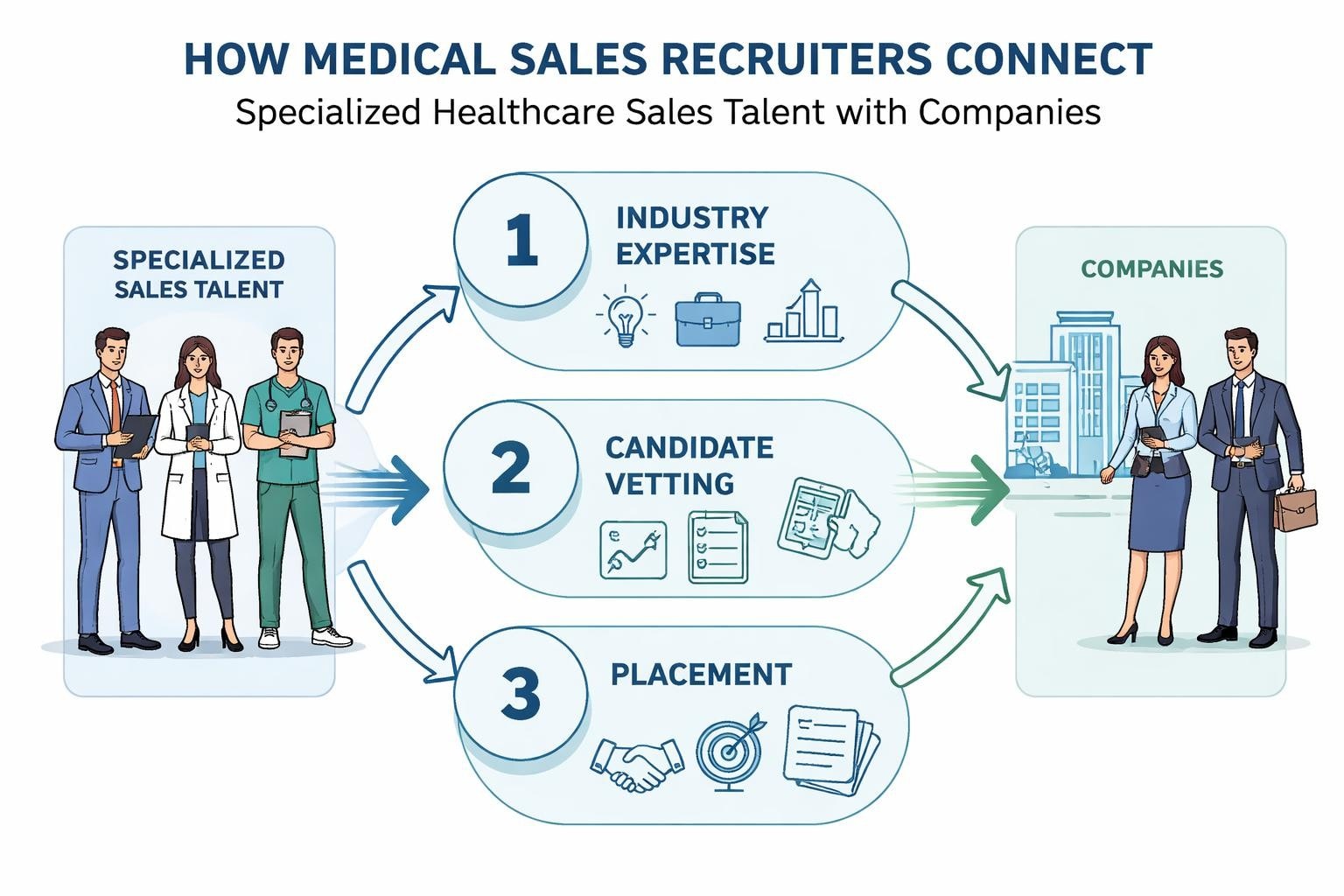
The healthcare industry continues to evolve rapidly, and with it comes an increasing demand for skilled sales professionals who can navigate complex product lines, regulatory requirements, and sophisticated buyer relationships. Medical sales recruiters play a critical role in connecting companies with the talent needed to drive growth in this specialized sector. While many businesses focus on traditional recruitment methods, working with specialized recruiters who understand the nuances of medical device sales, pharmaceutical representation, and healthcare technology can dramatically accelerate the hiring process and improve placement quality. Understanding how these recruiters operate, what sets exceptional ones apart, and how to leverage their expertise can transform your sales team building strategy.
The Unique Value Medical Sales Recruiters Bring to Healthcare Companies
Medical sales recruiters specialize in a field that requires both sales acumen and technical healthcare knowledge. Unlike general sales recruitment, this niche demands understanding of FDA regulations, clinical environments, and the extended sales cycles typical in healthcare purchasing decisions.
These specialized recruiters maintain extensive networks of candidates who have proven track records in medical sales environments. They understand the difference between selling capital equipment to hospital administrators versus pharmaceutical products to physicians, and they know which skill sets translate across these varied contexts.
Key advantages of working with specialized medical sales recruiters include:
Access to passive candidates who aren't actively job searching but remain open to exceptional opportunities
Deep knowledge of compensation structures and commission structure norms specific to medical sales
Understanding of industry certifications and training requirements that validate candidate qualifications
Ability to assess technical competency alongside sales skills
The recruitment landscape in life sciences continues to shift, with emerging trends reshaping how companies attract specialized talent. According to research from Korn Ferry, 67% of healthcare companies report difficulty finding qualified sales talent, making specialized recruitment expertise increasingly valuable.
Industry Knowledge That Separates Specialists from Generalists
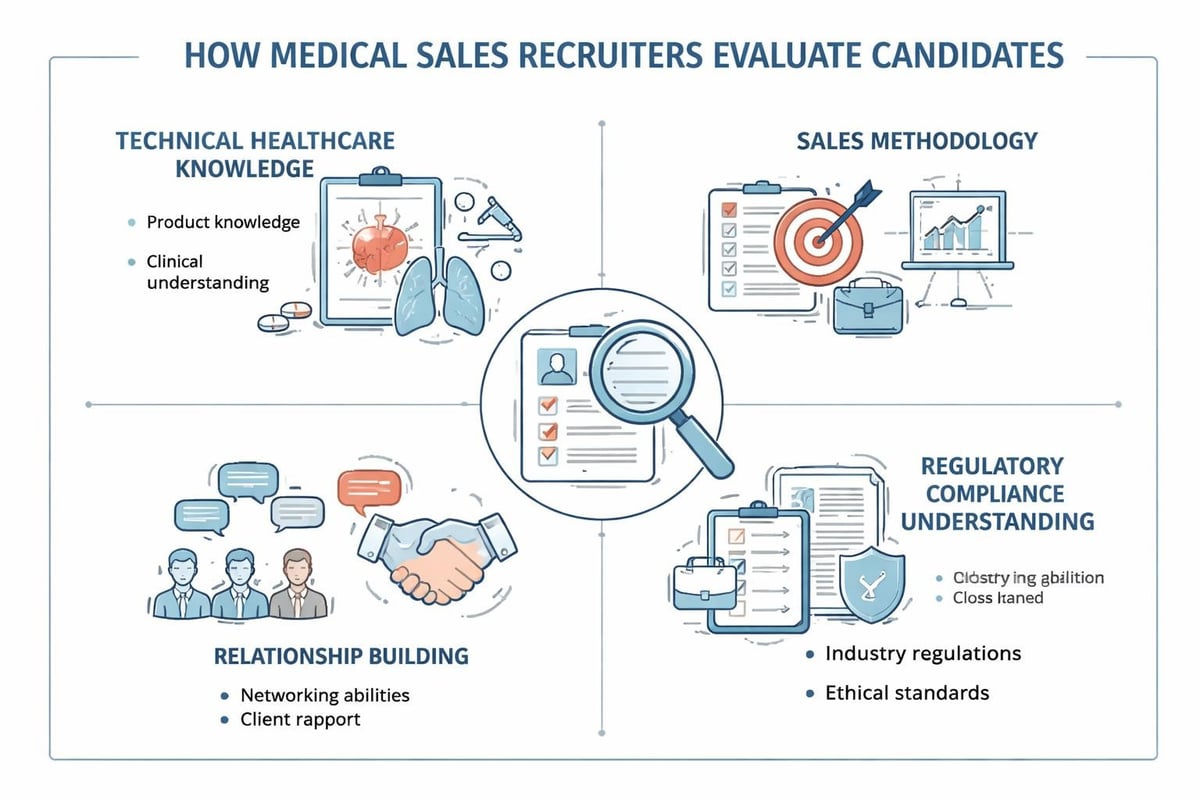
The medical sales field encompasses diverse product categories, each with distinct requirements. Recruiters who specialize in this space understand these nuances in ways that generalist recruiters cannot match.
A recruiter focused on medical device sales knows that candidates need comfort with operating room environments and the ability to provide technical support during procedures. Pharmaceutical recruiters understand the importance of scientific literacy and the ability to engage in clinical discussions with healthcare providers.
This specialized knowledge allows recruiters to ask probing questions that reveal whether candidates possess the specific expertise your organization needs. They can distinguish between candidates who simply have healthcare exposure and those who have genuinely excelled in medical sales roles.
What to Look for When Selecting Medical Sales Recruiters
Not all recruiters who claim medical sales expertise deliver equal value. Identifying the right partner requires evaluating several critical factors that indicate genuine specialization and proven capability.
Demonstrated Track Record in Your Specific Medical Sales Segment
Medical sales spans numerous subcategories, from diagnostic equipment to biotechnology products. The most effective recruiters demonstrate deep experience in your particular segment rather than superficial familiarity across all healthcare sales.
When evaluating potential recruiting partners, request specific examples of placements they've made in your product category. Ask about the types of companies they've served and the seniority levels of positions they've successfully filled.
Evaluation Criteria | What to Ask | Red Flags to Avoid |
|---|---|---|
Segment Expertise | "How many placements have you made in [specific product category] in the past year?" | Vague answers or inability to discuss specific placements |
Network Depth | "What percentage of your candidate pool has experience with our product type?" | Claims of universal expertise across all medical sales |
Market Knowledge | "What are current compensation trends for this role in our region?" | Outdated or generic salary information |
Client References | "Can you provide references from companies in our sector?" | Reluctance to share client testimonials |
Understanding how to spot the right medical sales recruiter involves assessing both their processes and their proven results. Look for recruiters who invest time understanding your company culture, sales methodology, and specific product requirements before presenting candidates.
Assessment Methodologies That Predict Sales Success
The best medical sales recruiters employ rigorous evaluation processes that go beyond resume screening. They understand that past performance in medical sales requires validation through structured assessments and thorough reference checking.
Top-tier recruiters utilize behavioral interviewing techniques that reveal how candidates have handled real medical sales challenges. They probe for specific examples of navigating complex healthcare buying committees, managing lengthy sales cycles, and maintaining relationships with demanding healthcare professionals.
Comprehensive vetting process components include:
Verification of claimed sales achievements and quota attainment
Assessment of product knowledge and technical comprehension
Evaluation of relationship-building capabilities specific to healthcare environments
Analysis of territory management and strategic account planning skills
Reference checks with former managers and clients
These thorough evaluation processes ensure that candidates presented to your organization have been rigorously screened against both general sales competencies and medical-specific requirements.
How Medical Sales Recruiters Source and Attract Top Talent
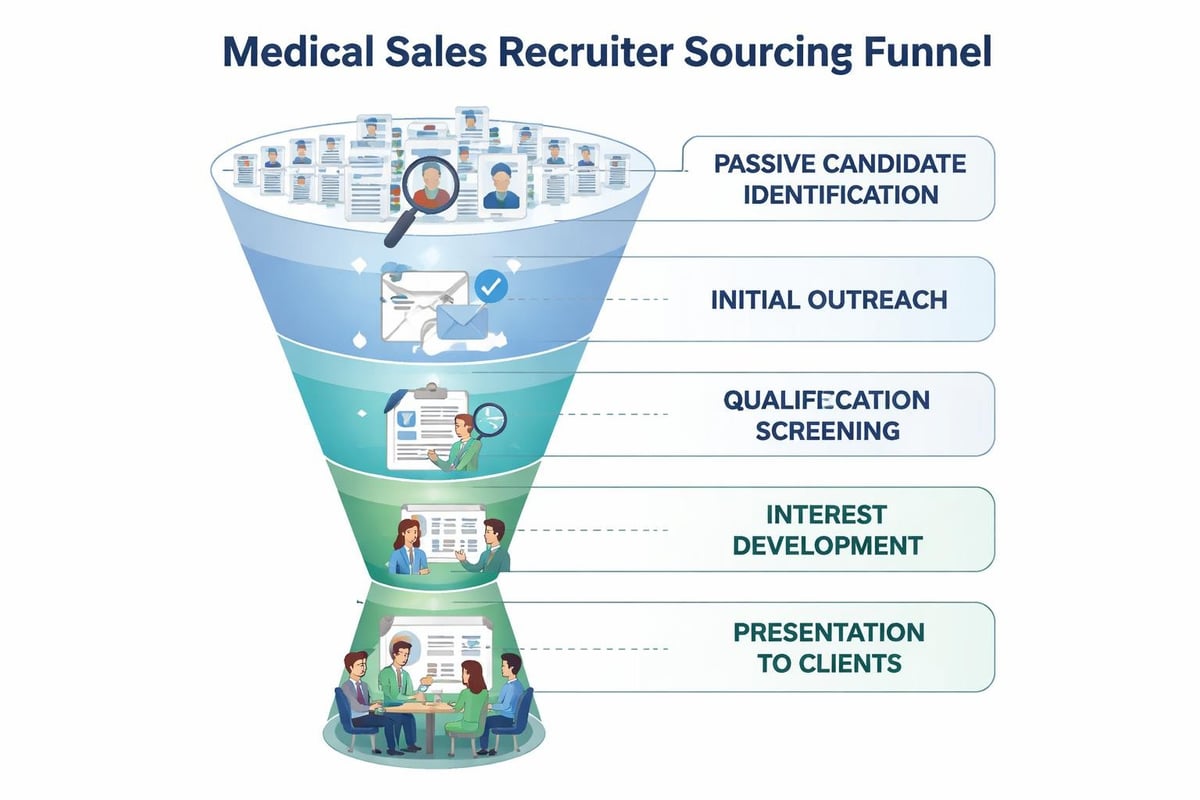
The most effective medical sales recruiters don't simply post job advertisements and wait for applications. They employ proactive sourcing strategies that identify and engage high-performing sales professionals who may not be actively seeking new opportunities.
Building and Maintaining Specialized Talent Networks
Successful recruiters cultivate ongoing relationships with medical sales professionals throughout their careers. They stay connected with candidates even when not actively placing them, creating trust and rapport that facilitates future placements.
These networks become increasingly valuable over time as recruiters develop reputations for quality placements and ethical practices. Sales professionals in the medical field often maintain relationships with recruiters who have previously helped them find rewarding positions.
Recruiters build these networks through multiple channels:
Active participation in medical sales conferences and industry events
Regular engagement with online communities where healthcare sales professionals congregate
Systematic outreach to top performers at leading medical companies
Cultivation of referral networks among placed candidates
Companies looking to make attracting medical sales talent easier can benefit from partnering with recruiters who have already invested years building these specialized networks.
Competitive Intelligence and Market Mapping
Professional medical sales recruiters maintain current knowledge of the competitive landscape in their specialization. They know which companies have the strongest sales teams, which organizations are expanding or contracting, and where top talent is concentrated geographically.
This market intelligence allows recruiters to target sourcing efforts strategically rather than casting wide nets that yield low-quality candidates. They can identify professionals who have experience with comparable products, similar sales cycles, and relevant buyer relationships.
Market mapping also enables recruiters to advise clients on realistic expectations regarding candidate availability and compensation requirements. When certain skill combinations are rare in the market, experienced recruiters can suggest alternative qualification profiles that might meet client needs.
The Medical Sales Recruitment Process: What to Expect
Understanding the typical recruitment timeline and process helps companies set appropriate expectations and collaborate effectively with medical sales recruiters.
Initial Consultation and Position Specification
The recruitment engagement begins with detailed discussions about the role requirements, company culture, and ideal candidate profile. Effective recruiters invest significant time in this discovery phase rather than rushing to present candidates.
During this stage, recruiters should ask probing questions about:
The specific products or services the salesperson will represent
The target customer profile and typical buying process
Territory parameters and travel expectations
Sales methodology and support resources provided
Performance metrics and quota structures
Team dynamics and reporting relationships
This thorough understanding enables recruiters to screen candidates against criteria that truly predict success in your specific environment rather than generic medical sales competency.
Candidate Presentation and Interview Coordination
After sourcing and screening candidates, professional recruiters present a curated selection of qualified individuals rather than overwhelming clients with numerous marginally qualified options. Each presentation should include detailed information about the candidate's background, relevant achievements, and specific reasons why they match the position requirements.
Quality recruiters provide more than just resumes. They offer insights into each candidate's motivations, career trajectory, and potential cultural fit based on their assessment conversations.
Stage | Typical Timeline | Key Activities |
|---|---|---|
Position Intake | Week 1 | Detailed role specification and search strategy development |
Active Sourcing | Weeks 1-3 | Candidate identification and initial screening |
Client Presentation | Weeks 2-4 | Submission of qualified candidates with detailed assessments |
Interview Process | Weeks 3-6 | Coordination of client interviews and gathering feedback |
Offer and Closing | Weeks 5-8 | Negotiation support and candidate acceptance |
The best recruiters actively manage the process, keeping both clients and candidates informed while maintaining momentum toward a successful placement.
Compensation Structures and Financial Arrangements
Understanding how medical sales recruiters charge for their services helps companies budget appropriately and evaluate the value proposition different firms offer.
Contingency vs. Retained Search Models
Most medical sales recruiters work on a contingency basis, meaning they receive payment only when a candidate they present is successfully hired. Contingency fees typically range from 20-30% of the placed candidate's first-year compensation, including base salary and expected commissions.
Retained search arrangements involve upfront payments and are more common for senior medical sales leadership positions. In retained engagements, clients pay a portion of the fee at the search outset, with the remainder due at specified milestones.
Advantages of contingency arrangements:
No upfront financial risk for the hiring company
Recruiter incentive aligned with successful placement
Suitable for most individual contributor and frontline manager roles
When retained search makes sense:
Executive-level positions requiring extensive market research
Highly confidential searches where discretion is paramount
Situations requiring the recruiter's exclusive focus and commitment
Many top sales recruiting firms offer flexible arrangements based on the specific search requirements and client preferences.
Guarantee Periods and Replacement Policies
Reputable medical sales recruiters stand behind their placements with guarantee periods that protect clients if a placement doesn't work out. Standard guarantees range from 30 to 90 days, during which the recruiter will replace a candidate who leaves or is terminated at no additional fee.
Understanding the replacement policy terms before engaging a recruiter helps ensure you're protected if initial placements don't succeed. Look for clear documentation of what triggers the guarantee and the timeframe for providing replacement candidates.
Preparing Your Organization to Work Effectively with Medical Sales Recruiters
The most successful recruiting partnerships occur when companies prepare their organizations to evaluate candidates effectively and move decisively when exceptional talent is identified.
Defining Clear Success Criteria
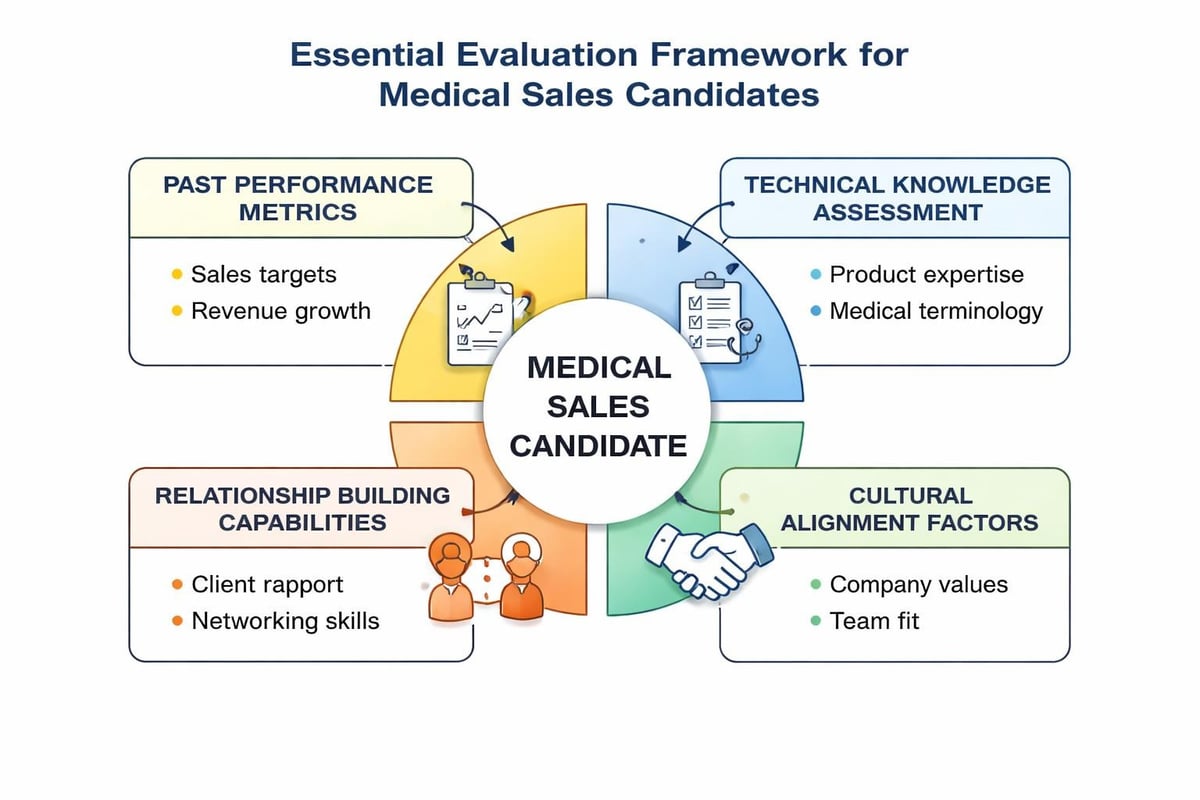
Before engaging medical sales recruiters, invest time clearly articulating what success looks like in the role you're filling. Move beyond generic descriptions to specific, measurable criteria that can guide both recruiter screening and your internal evaluation.
Effective success criteria include:
Quantifiable sales achievements: Specific quota attainment percentages, revenue generation, or market share gains
Technical competency markers: Required certifications, product knowledge depth, or clinical understanding
Relationship requirements: Types of customers successfully cultivated, buying committee navigation experience
Territory management skills: Geographic coverage capabilities, strategic account planning experience
The more specific your requirements, the more effectively recruiters can screen candidates and the more efficiently your interview process will proceed.
Streamlining Your Interview and Decision Process
Top medical sales talent often entertains multiple opportunities simultaneously. Companies that can evaluate candidates efficiently and make timely decisions secure the best talent before competitors.
Create a structured interview process that thoroughly assesses candidates without unnecessary delays. Limit interview rounds to what's genuinely necessary for informed decision-making, and ensure all stakeholders can participate in a compressed timeframe.
According to research from LinkedIn's Global Talent Trends report, 57% of candidates lose interest in positions when the hiring process drags on too long. In competitive medical sales recruitment, speed matters.
Best practices for efficient hiring:
Schedule all interview rounds within a two-week window when possible
Provide clear timelines to candidates about when they can expect decisions
Gather interviewer feedback immediately after each conversation
Empower hiring managers to make offers without excessive approval layers
Prepare compensation packages in advance so offers can be extended quickly
When working with recruiters who present vetted candidates, trust their screening process and focus your interviews on final validation rather than exhaustive re-evaluation of basics.
Specialized Medical Sales Recruitment Niches
The medical sales field encompasses numerous specialized segments, each with unique recruitment considerations and candidate requirements.
Medical Device Sales Recruitment
Medical device sales representatives need technical aptitude to understand complex equipment and the ability to provide clinical support. Many device sales roles require presence in operating rooms or clinical settings during product use.
Recruiters specializing in device sales understand the importance of candidates who combine technical competency with relationship skills. They know that device representatives often support products during critical procedures, requiring grace under pressure and clinical credibility.
The device sales segment also involves varied compensation structures depending on whether products are capital equipment or disposables, and specialized recruiters understand these distinctions.
Pharmaceutical and Biotechnology Sales Recruitment
Pharmaceutical sales representatives require different skills than device salespeople, with greater emphasis on scientific knowledge and the ability to engage in clinical discussions with prescribing physicians.
Pharmaceutical sales recruiters assess candidates' ability to understand complex drug mechanisms, clinical trial data, and competitive therapeutic landscapes. They evaluate whether candidates can navigate insurance formularies and reimbursement challenges that impact product adoption.
The pharmaceutical segment has evolved significantly with restrictions on physician access and shifts toward value-based care models. Effective recruiters understand these industry dynamics and identify candidates who have adapted successfully.
Diagnostic and Laboratory Sales Specialization
Diagnostic sales involves selling testing equipment, reagents, and laboratory services to hospitals, reference labs, and physician offices. This niche requires understanding of laboratory workflows, quality control requirements, and regulatory compliance.
Recruiters in this space seek candidates who can navigate complex technical sales while understanding the operational and financial pressures facing laboratory decision-makers. Success often requires both clinical knowledge and business acumen.
Alternative Approaches: Building High-Ticket Sales Teams
While medical sales represents one specialized recruitment niche, companies selling high-value products and services through consultative approaches face similar talent challenges regardless of industry.
Organizations that sell high-ticket offerings over virtual channels need sales professionals who excel in relationship building without in-person interaction. These roles require different competencies than traditional field-based medical sales but share the need for consultative selling skills and the ability to navigate complex decision processes.
Building hire a sales team capable of closing substantial deals requires identifying candidates with proven track records in similar selling environments. Whether your product is medical equipment, professional services, or SaaS solutions, the fundamental requirement remains the same: sales professionals who can articulate complex value propositions and guide buyers through considered purchase decisions.
Companies focused on high-ticket sales benefit from recruitment approaches that emphasize demonstrated closing ability, consultative methodology, and comfort with extended sales cycles. For organizations selling through virtual channels, experience with remote high-ticket sales becomes particularly valuable.
Evaluating Medical Sales Recruiter Performance
Measuring recruiter effectiveness helps you determine whether your partnership is delivering value and where adjustments might improve results.
Key Performance Indicators for Recruitment Partnerships
Track multiple metrics beyond just successful placements to gain comprehensive insight into recruiter performance:
Metric | What It Reveals | Target Benchmark |
|---|---|---|
Time to Presentation | Recruiter responsiveness and network depth | 7-10 days from search kickoff |
Candidate Quality Ratio | Percentage of presented candidates who advance to interviews | 60-75% interview rate |
Offer Acceptance Rate | Recruiter's ability to set appropriate expectations | 75%+ acceptance |
90-Day Retention | Quality of candidate screening and fit assessment | 90%+ retention |
Interview-to-Hire Ratio | Efficiency of the combined screening process | 3:1 or better |
Regular review of these metrics with your recruiting partner enables continuous improvement and ensures alignment on expectations.
Feedback Loops and Process Refinement
The best recruiting partnerships involve ongoing communication and willingness to adjust approaches based on results. After each interview cycle, provide detailed feedback about candidates to help recruiters refine their screening criteria.
Discuss what worked well and what could improve. If candidates consistently lack specific competencies, work with the recruiter to emphasize those areas in future screening. If interview-to-offer ratios are low, examine whether job specifications need clarification or whether the candidate pool requires expansion.
This collaborative approach transforms recruitment from a transactional service into a strategic partnership that continuously improves in effectiveness.
Preparing Candidates for Medical Sales Success
While this article focuses primarily on the employer perspective, understanding how medical sales recruiters prepare candidates can provide insight into the value they deliver and help you evaluate their thoroughness.
Professional recruiters don't simply submit resumes and hope for the best. They actively prepare candidates for interviews by providing detailed information about the company, the role, and the interview process.
Comprehensive candidate preparation from quality recruiters includes:
Briefing on company history, culture, and market position
Detailed overview of the product portfolio and competitive landscape
Guidance on interview format and likely question areas
Coaching on how to present relevant experience effectively
Preparation for common medical sales interview scenarios
Resources like these tips to ace your medical sales interview reflect the type of preparation that sets candidates up for success. When recruiters invest in candidate preparation, both parties benefit through more productive interviews and better hiring decisions.
The Future of Medical Sales Recruitment
The medical sales recruitment landscape continues evolving in response to industry trends, technological advances, and shifting candidate expectations.
Digital Transformation in Healthcare Sales
The COVID-19 pandemic accelerated digital adoption in healthcare, changing how medical sales professionals interact with customers. Many physician offices and hospital systems that previously required in-person meetings now conduct substantial business virtually.
This shift has implications for the skills medical sales recruiters should prioritize. Comfort with video communication platforms, ability to demonstrate products remotely, and proficiency with digital engagement tools have become increasingly important alongside traditional relationship-building capabilities.
Recruiters who understand these evolving requirements help companies identify candidates who can succeed in hybrid selling environments that blend virtual and in-person engagement.
Emphasis on Diversity and Specialized Expertise
Healthcare organizations increasingly recognize that diverse sales teams better serve diverse patient populations. Medical sales recruiters who actively cultivate diverse talent pools and employ equitable screening practices deliver strategic value beyond simply filling positions.
Additionally, the trend toward specialized medical treatments and precision medicine creates demand for sales professionals with highly specific technical knowledge. Recruiters who can identify candidates with niche scientific backgrounds or experience in emerging therapeutic areas provide competitive advantages.
Making the Decision: When to Engage Medical Sales Recruiters
Companies face decisions about when to handle recruitment internally versus engaging specialized recruiters. Several factors should influence this choice.
Situations where medical sales recruiters add clear value:
You need to fill positions quickly to capture market opportunities
Internal HR teams lack specialized medical sales networks
The role requires rare skill combinations or niche expertise
You're entering new geographic markets where you lack candidate access
Confidentiality concerns make public job postings problematic
When internal recruitment might suffice:
You have strong internal referral networks in medical sales
The role is entry-level and you can invest in training
Timeline pressures are minimal
You're filling multiple similar positions and can build dedicated internal capacity
Many organizations use a hybrid approach, handling some recruitment internally while engaging specialists for challenging searches or when speed is critical.
For companies outside traditional healthcare but requiring similar consultative sales expertise, specialized recruitment services focused on high-ticket sales can provide comparable value in identifying proven closers and appointment setters.
Medical sales recruiters deliver specialized expertise that can dramatically accelerate your ability to build high-performing teams in this complex field. By understanding how to evaluate recruiter capabilities, structure effective partnerships, and leverage their industry networks, you position your organization to secure top talent before competitors. Whether you're building a medical device sales force or need consultative sellers for any high-ticket offering, working with recruitment specialists who understand your specific selling environment creates competitive advantages that justify their investment. Sales Match offers pre-vetted appointment setters and closers for businesses selling premium products and services, eliminating lengthy hiring processes while ensuring you access proven talent ready to drive results in your high-ticket sales environment.