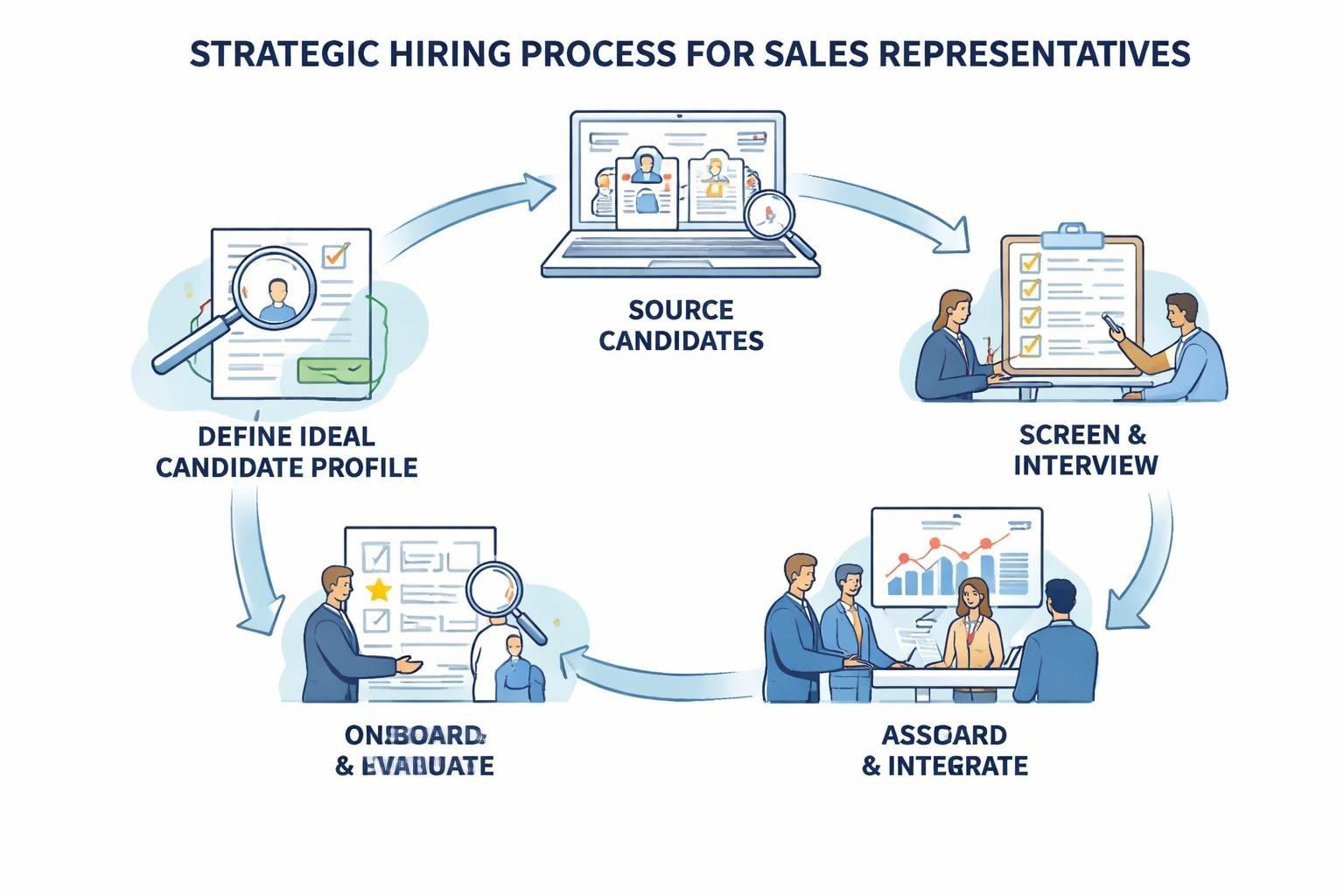
Hire Sales Reps: The Complete Guide for 2026
Learn how to hire sales reps who drive revenue. Discover proven strategies, common pitfalls, and what to look for in high-performing candidates.
published
Building a high-performing sales team represents one of the most critical investments any business can make. For companies selling high-ticket products and services over the internet, the decision to hire sales reps can determine whether you scale rapidly or struggle to maintain momentum. The challenge isn't simply filling positions quickly. Rather, success depends on attracting candidates who understand consultative selling, can handle complex sales cycles, and consistently close deals that drive meaningful revenue. This guide explores the essential strategies, common mistakes, and proven frameworks that help businesses recruit top-tier sales talent.
Understanding the True Cost of a Bad Hire
When you hire sales reps, the stakes extend far beyond salary and commission. A poor hiring decision impacts multiple areas of your business simultaneously. According to the U.S. Department of Labor, a bad hire can cost up to 30% of that employee's first-year earnings. For sales positions, the damage multiplies because underperformers don't just drain resources; they actively lose deals that strong performers would have closed.
The financial burden includes recruitment expenses, onboarding time, training investment, and lost opportunity costs. Beyond direct costs, weak sales representatives damage team morale and potentially harm your brand reputation with prospects who receive substandard service. Many businesses underestimate how quickly these costs accumulate.
The Hidden Impacts on Revenue
Every day an underperforming sales representative occupies a position represents another day without the revenue a qualified candidate would generate. For businesses selling services above $2,500, a single missed deal can represent weeks of operating expenses. The compounding effect over months becomes substantial.
Consider these additional consequences:
Pipeline stagnation when reps fail to move prospects through your sales process effectively
Customer acquisition cost inflation as marketing generates leads that aren't converted efficiently
Competitive disadvantage when prospects choose competitors after poor sales experiences
Management distraction as leadership invests time coaching someone who may never succeed
Understanding the challenges sales representatives face helps businesses set realistic expectations and provide appropriate support structures from day one.
Defining Your Ideal Sales Representative Profile
Before you hire sales reps, establish crystal-clear criteria for what success looks like in your specific context. Generic job descriptions attract generic candidates. High-ticket sales environments demand representatives with distinct skill sets that differ dramatically from transactional sales roles.
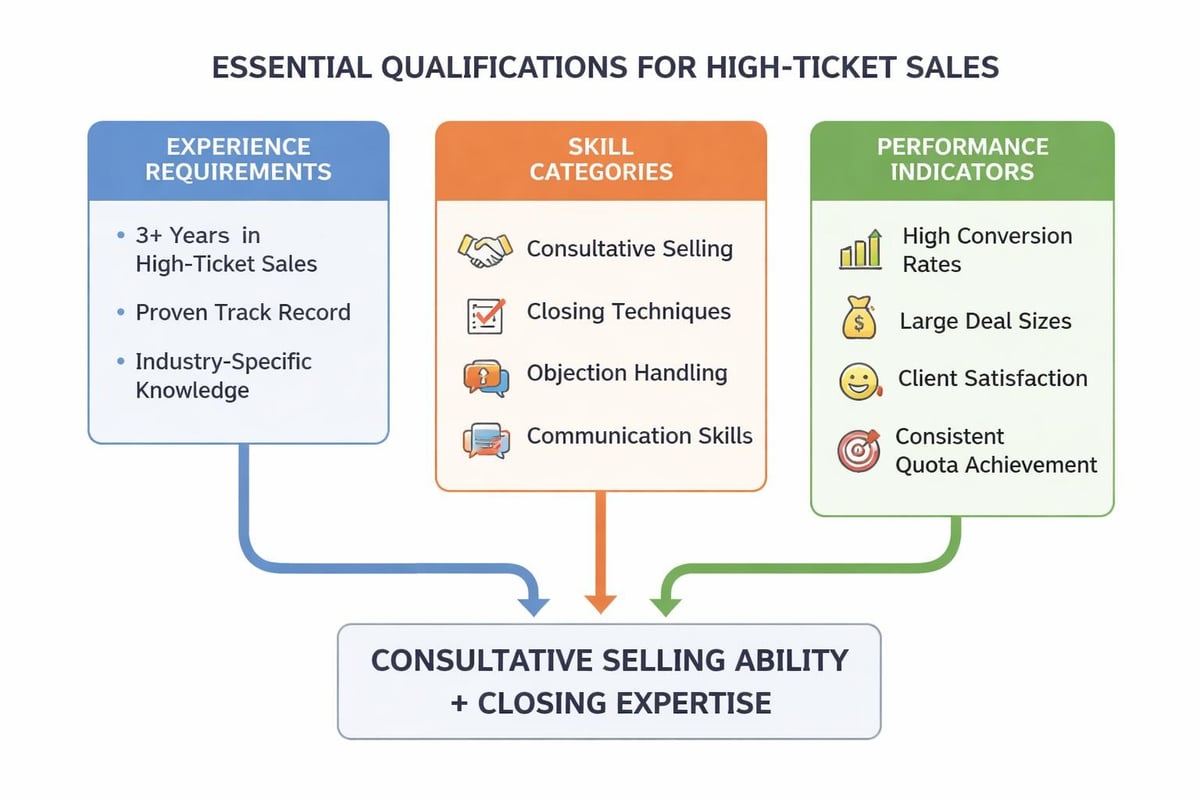
Start by analyzing your top performers if you have existing team members. What characteristics do they share? How do they approach discovery calls? What questions do they ask prospects? Document these patterns to create a benchmark against which you evaluate candidates.
Qualification Category | Must-Have Attributes | Nice-to-Have Attributes |
|---|---|---|
Experience | 2+ years high-ticket sales | Industry-specific knowledge |
Skills | Consultative selling, objection handling | CRM proficiency, contract negotiation |
Traits | Self-motivated, resilient, coachable | Entrepreneurial mindset, technical aptitude |
Track Record | Documented quota achievement | Awards or recognition |
Your vetting process should assess both hard skills like sales methodology knowledge and soft skills like emotional intelligence and communication ability.
Aligning Compensation with Performance
Compensation structure significantly influences which candidates you attract. Commission-only positions appeal to highly confident, experienced closers but may repel promising talent who need income stability. Base-plus-commission models provide security while maintaining performance incentives.
For high-ticket sales, your commission structure should reflect deal complexity and sales cycle length. Representatives closing $10,000 deals require different incentive alignment than those selling $100,000 contracts. Consider accelerators that reward overperformance and team bonuses that encourage collaboration rather than unhealthy competition.
Sourcing Candidates Who Match Your Standards
Where you look for sales talent determines the quality of your candidate pool. Traditional job boards attract volume but rarely deliver the experienced, high-performing representatives that high-ticket businesses need. According to a 2024 LinkedIn report, 70% of the global workforce consists of passive talent who aren't actively job searching.
The most effective sourcing strategies combine multiple channels:
Industry-specific networks and communities where top sales professionals gather
Referral programs that incentivize current team members to recommend qualified contacts
Professional recruitment partnerships with firms specializing in sales professionals
Direct outreach to representatives working at companies with similar sales models
Content marketing that positions your company as an employer of choice for ambitious salespeople
When evaluating sourcing partners, prioritize those offering pre-vetted candidates who have already demonstrated capability in roles similar to yours. This approach dramatically reduces the time investment required during your screening phase.
Red Flags During Initial Screening
As you review applications and conduct preliminary conversations, certain warning signs should trigger additional scrutiny or immediate disqualification. Common red flags when hiring sales representatives include inconsistent employment history with frequent job changes, vague descriptions of past achievements, and inability to articulate specific sales methodologies they've used successfully.
Pay attention to how candidates communicate during the application process itself. Sales representatives who struggle to sell themselves effectively during interviews rarely excel at selling your products or services. Look for professionals who demonstrate genuine curiosity about your business, ask thoughtful questions about your sales process, and articulate how their experience aligns with your needs.
Conducting Effective Interviews and Assessments
The interview process when you hire sales reps should mirror the skills they'll use daily. Standard interview questions rarely reveal whether someone can actually close high-ticket deals. Instead, structure your evaluation around realistic scenarios and performance-based assessments.
Multi-Stage Interview Framework
A comprehensive interview process typically includes three to four stages:
Initial screening call (20-30 minutes): Verify basic qualifications, discuss compensation expectations, and assess communication skills. This conversation should disqualify obviously poor fits quickly.
Skills assessment (45-60 minutes): Present a realistic sales scenario relevant to your business. Ask candidates to conduct a mock discovery call or handle common objections. Record these sessions when possible to review with your team.
Deep-dive interview (60-90 minutes): Explore their sales philosophy, past experiences in detail, and cultural fit. Include multiple team members in this conversation to gather diverse perspectives.
Reference checks and final evaluation (varies): Speak with former managers and colleagues who can verify the candidate's track record and work style.
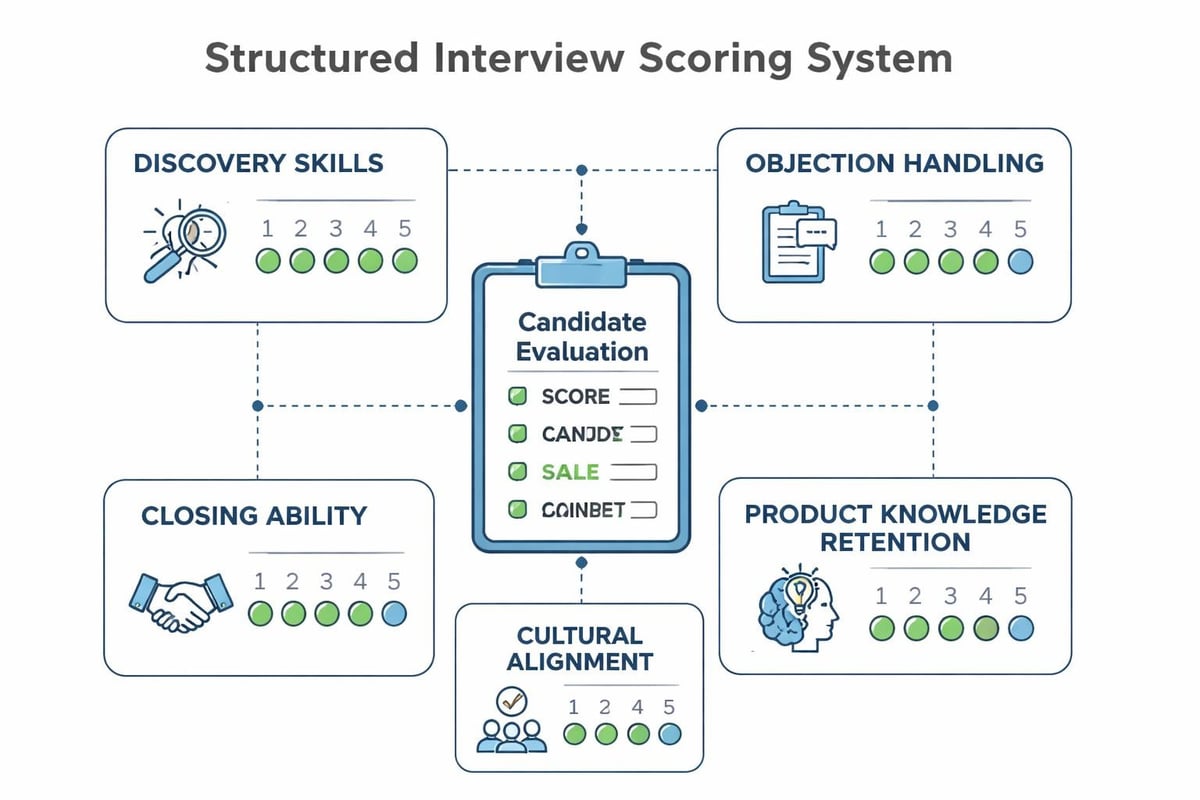
During skills assessments, observe how candidates structure their questions, build rapport, identify pain points, and guide conversations toward next steps. These behaviors predict on-the-job performance far better than rehearsed answers to standard interview questions.
Avoiding Common Hiring Mistakes
Research on major hiring mistakes when recruiting salespeople reveals patterns that plague even experienced business owners. The pressure to fill open positions quickly often leads to compromised standards and costly errors.
Rushing the process represents perhaps the most frequent mistake. When revenue depends on sales activity, the temptation to hire the first acceptable candidate feels overwhelming. However, speed-to-hire should never supersede quality standards. A vacant position for an additional month costs less than twelve months with an underperformer.
Neglecting cultural fit in favor of impressive resumes creates long-term friction. A sales representative with outstanding credentials who clashes with your company values or work style will struggle regardless of their technical abilities. Finding the right fit requires equal attention to personality, work ethic, and value alignment as to sales skills.
Failing to define clear success metrics before hiring leaves both you and new representatives without objective performance benchmarks. Establish specific, measurable expectations for activity levels, conversion rates, and revenue targets during the first 30, 60, and 90 days.
Additional mistakes to avoid:
Hiring in your own image rather than complementing team gaps
Overemphasizing charisma while undervaluing discipline and process adherence
Neglecting to verify claims about past performance through thorough reference checks
Setting unrealistic expectations that guarantee early frustration and turnover
Onboarding and Training for Long-Term Success
The hire-to-productivity timeline varies significantly based on your onboarding effectiveness. Sales representatives require comprehensive training on your products, ideal customer profiles, sales methodology, competitive landscape, and internal systems. Inadequate onboarding extends ramp time and increases early turnover risk.
Onboarding Phase | Duration | Key Activities |
|---|---|---|
Orientation | Week 1 | Company culture, team introductions, systems access, product overview |
Product Deep-Dive | Weeks 2-3 | Detailed product training, customer case studies, competitive positioning |
Sales Process Training | Weeks 3-4 | Methodology instruction, call shadowing, script review, objection handling practice |
Supervised Practice | Weeks 5-8 | Monitored prospect calls, manager feedback sessions, ongoing coaching |
Independent Activity | Week 9+ | Full quota responsibility with continued support and performance reviews |
Effective onboarding includes shadowing top performers, recording and reviewing practice calls, and gradual responsibility increases. New sales professionals benefit from structured feedback loops where managers identify specific improvement areas rather than generic encouragement.
Setting Clear Performance Expectations
Ambiguity about expectations ranks among the top reasons sales representatives fail or leave positions within their first year. When you hire sales reps, provide explicit guidance about activity requirements, qualification criteria, conversion benchmarks, and revenue targets.
Document your sales department standards in writing, including minimum daily activities (calls made, emails sent, meetings scheduled), qualification standards that determine which prospects enter your pipeline, and the specific stages of your sales process with advancement criteria for each.
Regular performance reviews during the first 90 days help identify issues early when they're most correctable. These conversations should reference objective metrics rather than subjective impressions, creating accountability for both the representative and management.
Leveraging Specialized Recruitment Support
For many businesses, particularly those selling high-ticket services through remote sales teams, the decision to partner with specialized recruitment firms transforms hiring outcomes. These partnerships work especially well when you need to hire a sales team quickly without sacrificing quality standards.
Specialized recruiters maintain networks of pre-screened candidates, understand the nuances of different sales roles, and can significantly accelerate your hiring timeline. Rather than spending weeks sorting through unqualified applicants, you receive candidates who have already demonstrated relevant capabilities.
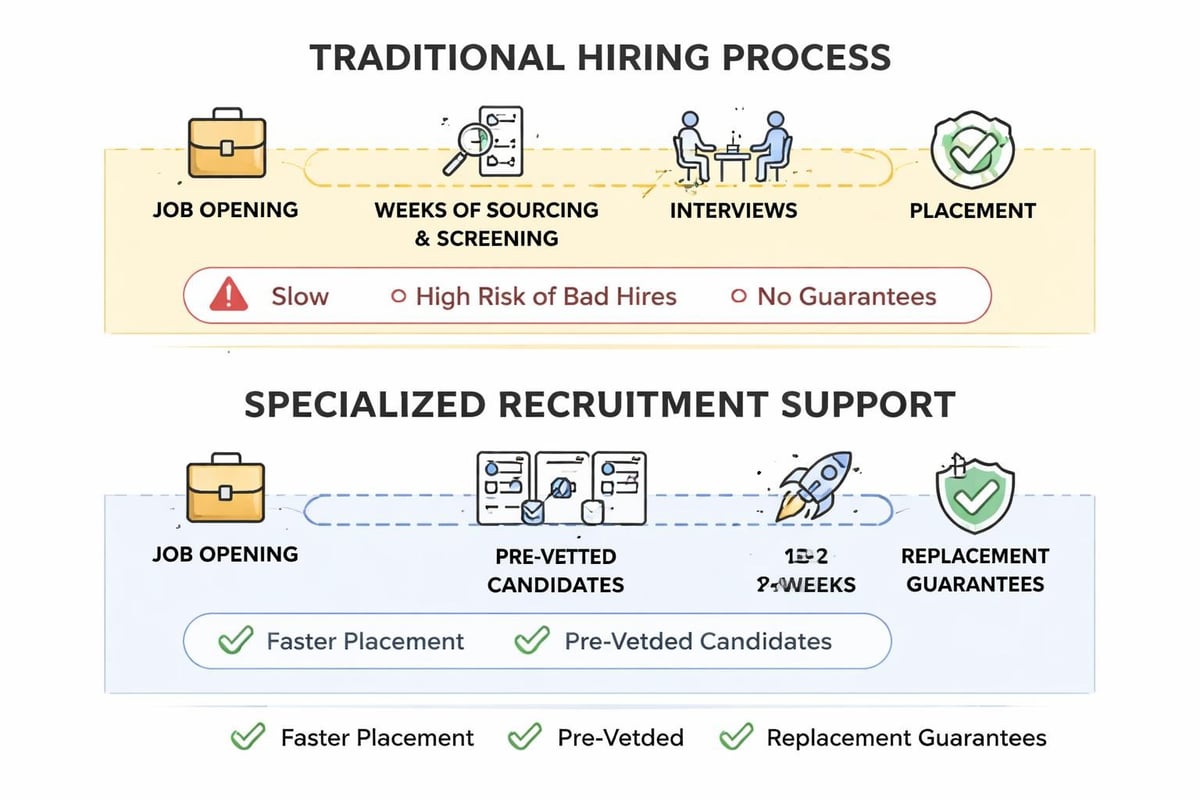
When evaluating recruitment partners, prioritize those offering:
Industry specialization in your market or sales model
Rigorous vetting processes that assess actual sales capabilities
Replacement guarantees protecting you from early turnover
Understanding of high-ticket sales environments and requirements
Track records with businesses similar to yours
The replacement policy offered by your recruitment partner reveals their confidence in their vetting process and commitment to your success. Unlimited replacement guarantees demonstrate genuine partnership rather than transactional placement services.
Measuring Hiring Success and Iterating
Your approach to hiring sales representatives should evolve based on data rather than assumptions. Track metrics that reveal which sourcing channels, interview techniques, and candidate characteristics predict success in your specific environment.
Essential metrics to monitor include:
Time-to-productivity: How long before new hires reach quota?
First-year retention rate: What percentage of new hires remain after twelve months?
Hire quality score: How do new representatives compare to your top performers?
Source effectiveness: Which channels produce your best long-term performers?
Interview-to-hire ratio: How many candidates do you interview per successful hire?
Analyze patterns among your most successful hires. Do they share previous employers, educational backgrounds, or career trajectories? Do certain interview questions or assessment scores correlate with later performance? These insights should inform ongoing refinements to your hiring criteria and process.
According to research from strategies for hiring high-performing sales representatives, companies that systematically track and optimize their sales hiring processes reduce time-to-productivity by 35% and improve first-year retention by 40% compared to those using ad-hoc approaches.
Retention Strategies That Start Before Day One
The decision to hire sales reps represents only the beginning of your investment in team building. Retention deserves equal attention to recruitment because turnover costs compound quickly and disrupt pipeline continuity. Your retention strategy should begin during the interview process itself by setting realistic expectations and creating transparent communication about challenges and opportunities.
Career development pathways give ambitious sales representatives reasons to stay beyond immediate compensation. Map clear advancement opportunities from entry-level closing roles to senior positions, team leadership, or specialized tracks like enterprise sales or key account management. Representatives who see long-term growth potential invest differently than those viewing your company as a stepping stone.
Ongoing training and skill development demonstrates commitment to representative success. The sales landscape evolves continuously, with new technologies, methodologies, and buyer behaviors emerging regularly. Businesses that invest in continuous learning create competitive advantages while showing representatives they're valued beyond immediate revenue production.
Recognition and culture building matter especially in remote sales environments. When you hire sales reps who work from home offices, intentional culture creation prevents isolation and maintains engagement. Regular team calls, performance celebrations, and peer recognition programs build connections that reduce turnover.
Addressing Underperformance Quickly
Despite thorough hiring processes, some representatives won't succeed in your environment. Addressing underperformance quickly and decisively protects team morale and business results. Establish performance improvement plans with specific, measurable goals and defined timelines. If improvement doesn't materialize, make hiring decisions promptly rather than hoping situations resolve themselves.
Having access to replacement talent through partnerships with firms specializing in vetted candidates reduces the anxiety around making necessary team changes. When you know you can quickly source qualified replacements, you're more likely to maintain standards rather than tolerate mediocrity.
Building vs. Buying Sales Talent
Every business faces the build-versus-buy decision when expanding sales capabilities. Should you hire less experienced representatives and develop them internally, or invest in proven performers who command higher compensation but deliver immediately?
The answer depends on your timeline, budget, resources, and risk tolerance. Building talent costs less initially but requires significant training investment and patience during extended ramp periods. According to the Sales Management Association, the average sales representative takes 3.2 months to reach full productivity, though this varies dramatically by industry and deal complexity.
Buying experienced talent accelerates revenue generation but demands higher compensation packages and may create cultural integration challenges if representatives come from significantly different sales environments. For high-ticket businesses, proven performers in high-ticket sales roles often justify their premium through faster deal closure and larger average contract values.
A balanced approach combines both strategies: hire a core of experienced performers who can produce immediately while mentoring less experienced but high-potential representatives who develop into your next generation of top producers.
Remote Sales Team Considerations
The shift toward remote work has transformed sales team building, especially for businesses selling high-ticket services through video calls and digital channels. When you hire sales reps for remote positions, assessment criteria must account for self-management capabilities, home office professionalism, and technology fluency that in-office positions might not require as strongly.
Communication skills become even more critical in remote environments where casual hallway conversations don't occur. Representatives must proactively seek support, clearly articulate challenges, and maintain visibility without constant supervision. During interviews, assess how candidates have previously succeeded in remote or autonomous work environments.
Technology requirements extend beyond basic video conferencing. Remote sales representatives need reliable internet connections, professional video setups, quiet work environments, and comfort with CRM systems, sales engagement platforms, and collaboration tools. Verify these capabilities during your hiring process rather than discovering gaps after onboarding.
Accountability systems for remote sales teams should emphasize outcomes over activity. While monitoring email volume and call counts provides useful data, focus primarily on meetings scheduled, opportunities created, and deals closed. Trust-based management with clear expectations outperforms micromanagement in remote contexts.
Finding and retaining exceptional sales talent requires systematic processes, clear criteria, and often specialized support. When you're ready to hire sales reps who can immediately contribute to your high-ticket business, working with experts who understand your unique needs saves time and improves outcomes. Sales Match specializes in connecting businesses with pre-vetted sales professionals who excel in consultative, high-value sales environments, offering the support and guarantees that transform hiring from a risk into a strategic advantage.