We Are Recruitment: Building Elite Sales Teams in 2026
Discover how modern recruitment transforms sales team building. Learn strategies for hiring top sales talent with confidence and efficiency.
published
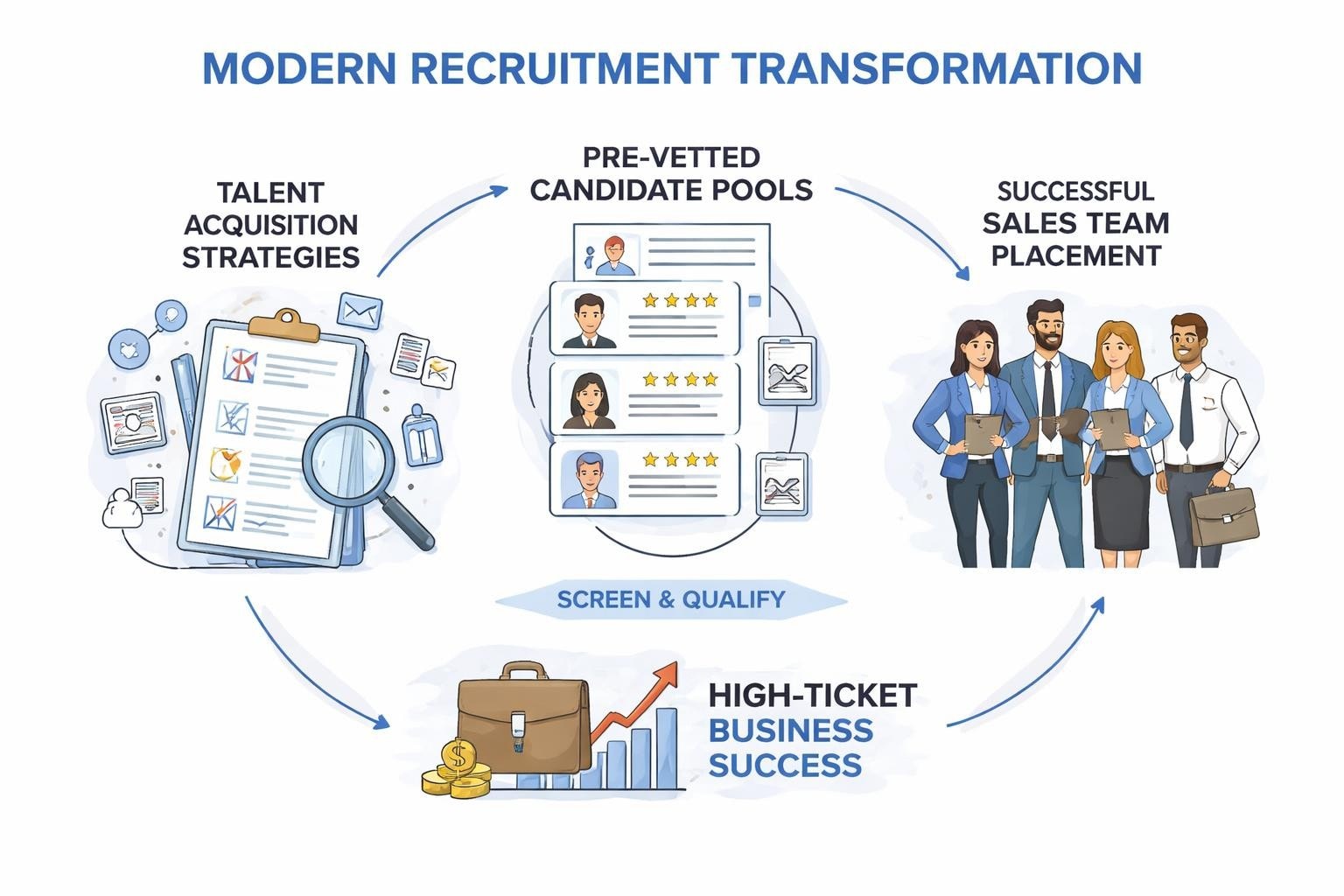
The recruitment landscape has fundamentally shifted in recent years, and businesses selling high-ticket products and services over the internet face unique challenges when building sales teams. When we are recruitment professionals, we understand that finding exceptional sales talent requires more than posting job ads and hoping for the best. Companies selling products or services exceeding $2,500 need salespeople who can navigate complex sales cycles, build trust remotely, and consistently close deals. The traditional hiring process often falls short, leaving business owners frustrated with underperforming hires and costly turnover.
The Evolution of Recruitment in the Digital Era
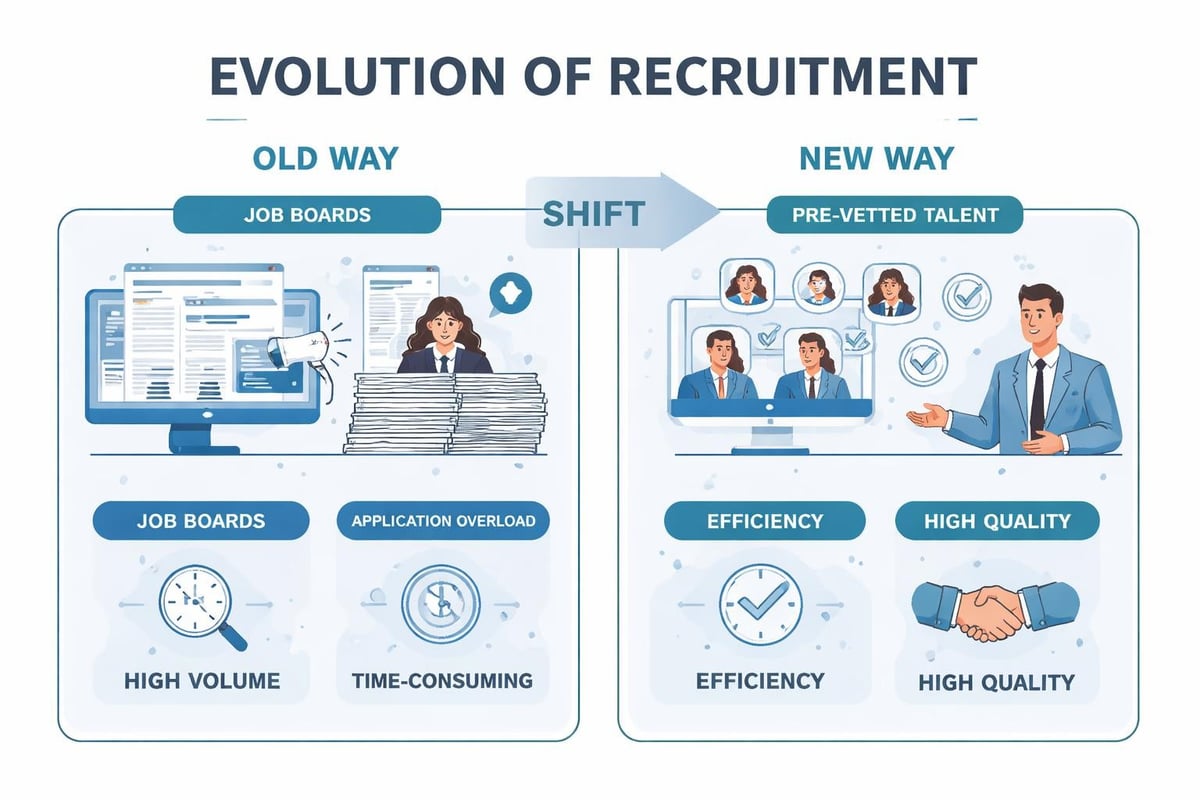
The recruitment industry has experienced dramatic transformation over the past decade. According to recent staffing industry trends, technology-driven recruitment solutions have become mainstream, fundamentally changing how businesses source and evaluate talent. When we are recruitment specialists in today's market, we recognize that companies can no longer afford lengthy hiring processes that drain resources without delivering quality results.
Traditional recruitment methods typically involve weeks or months of posting positions, reviewing resumes, conducting multiple interview rounds, and hoping the selected candidate performs well. This approach creates significant opportunity costs for businesses that need immediate sales capacity.
Why High-Ticket Sales Require Specialized Recruitment
Sales roles are not one-size-fits-all positions. A salesperson who excels at selling low-ticket consumer products may struggle entirely when selling premium services to sophisticated business buyers. High-ticket sales demand specific competencies:
Consultative selling expertise to understand complex client needs
Remote communication mastery for virtual sales environments
Objection handling skills for premium price points
Long-term relationship building capabilities
Industry-specific knowledge relevant to your niche
When we are recruitment partners focused on high-ticket sales roles, we recognize these distinctions matter significantly. Marketing agencies, coaches, consultants, and service-based businesses selling over Zoom or Google Meet need salespeople who can create value in virtual environments.
The True Cost of Traditional Hiring Approaches
Many business owners underestimate the comprehensive costs associated with traditional recruitment. These expenses extend far beyond posting job advertisements.
Direct Financial Expenses
Cost Category | Traditional Approach | Impact on Business |
|---|---|---|
Job board fees | $300-$1,000 per posting | Recurring monthly expenses |
Recruiter time | 20-40 hours per hire | Diverted from revenue activities |
Interview coordination | 10-15 hours per candidate | Administrative burden |
Onboarding and training | $5,000-$15,000 per hire | Upfront investment at risk |
Failed hire replacement | Full cycle restart | Compounded costs and delays |
These direct costs represent only the visible portion of hiring expenses. The hidden costs often prove more damaging to business growth and momentum.
Opportunity Costs and Revenue Impact
Every day a sales position remains unfilled represents lost revenue opportunities. When businesses lack adequate sales capacity, they cannot capitalize on marketing investments, inbound leads go unworked, and competitors capture market share. When we are recruitment professionals, we calculate that a single unfilled sales position in a high-ticket business can cost $10,000 to $50,000 monthly in unrealized revenue, depending on average deal size and close rates.
The vetting process becomes critical when considering these stakes. A poor hire not only fails to generate revenue but actively consumes resources while potentially damaging client relationships and brand reputation.
Skills-Based Hiring Transforms Recruitment Outcomes
Research from Cornell University demonstrates a significant shift toward skill-based hiring practices, particularly in evolving industries. This approach prioritizes demonstrated competencies over traditional credentials like degrees or years of experience.
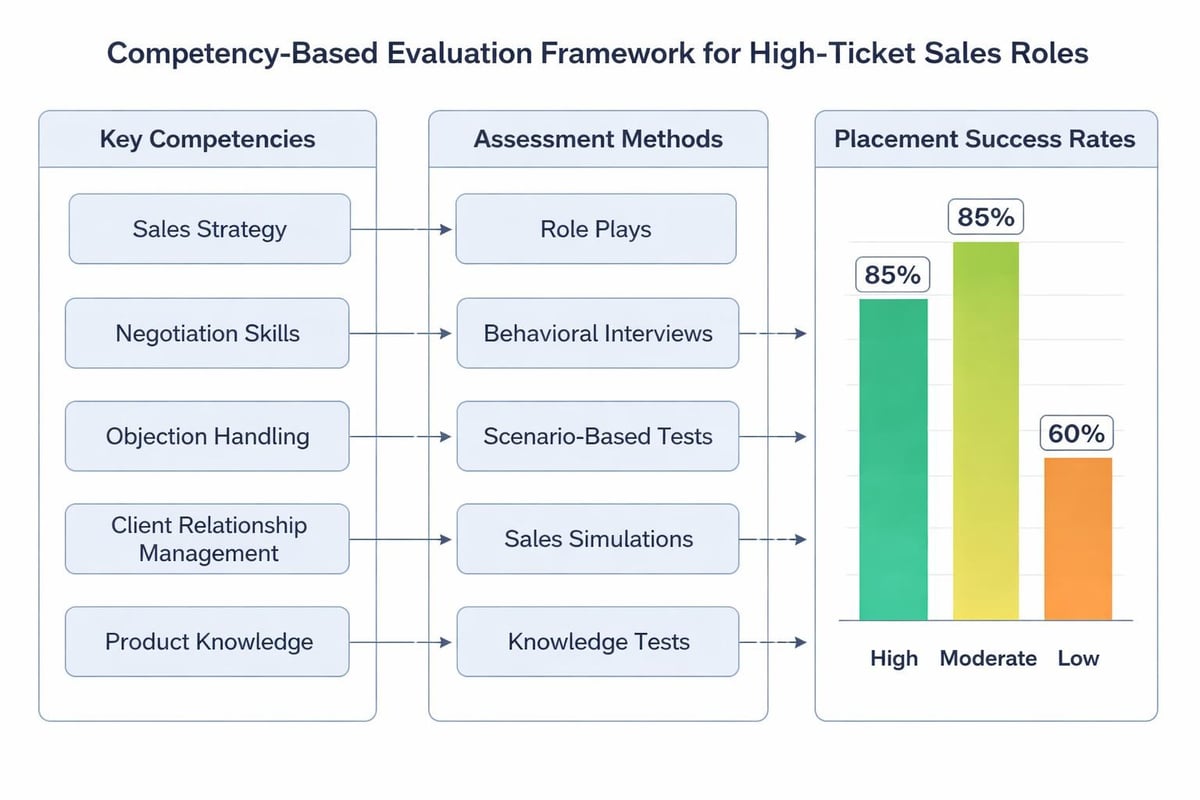
When we are recruitment experts implementing skills-based evaluation, we focus on measurable abilities rather than resume polish. This methodology proves particularly effective for sales roles where performance directly correlates with specific competencies.
Key Competencies for High-Ticket Remote Sales
Successful high-ticket salespeople demonstrate mastery across multiple dimensions:
Discovery and needs analysis to uncover true client pain points
Value articulation connecting solutions to business outcomes
Stakeholder management navigating complex decision-making processes
Presentation delivery maintaining engagement in virtual environments
Negotiation skills preserving margins while closing deals
Pipeline management maintaining consistent deal flow
These competencies can be assessed through structured evaluation processes that reveal actual capabilities rather than interview performance alone. Organizations like We Are Recruiting emphasize transparency in connecting qualified candidates with appropriate opportunities.
Pre-Vetted Talent Solutions Eliminate Hiring Uncertainty
The concept of pre-vetted talent represents a fundamental shift in how businesses approach team building. Rather than starting the recruitment process from scratch for each position, companies can access candidates who have already undergone comprehensive evaluation.
How Pre-Vetting Works
Pre-vetting involves systematic assessment of candidates before they ever enter a client's hiring pipeline. This process typically includes:
Background verification and reference checking
Skills assessment through role-specific evaluations
Cultural fit screening for remote work environments
Communication ability testing for virtual sales
Track record analysis of previous performance
When we are recruitment specialists implementing thorough pre-vetting, we eliminate the most time-consuming aspects of traditional hiring. Business owners receive candidates who have already demonstrated relevant capabilities, dramatically reducing evaluation time and improving placement success rates.
The emphasis on vetted candidates addresses a critical pain point: the uncertainty inherent in traditional hiring. Most interview processes poorly predict actual job performance, leading to frequent mismatches between employer expectations and employee capabilities.
Building Complete Sales Teams Versus Individual Placements
Business growth often requires more than filling a single sales position. Companies scaling their operations need systematic approaches to building entire sales departments with complementary skills and clear role definitions.
Sales Team Structure for High-Ticket Businesses
Role | Primary Responsibility | Ideal Profile | Team Integration |
|---|---|---|---|
Sales Development Rep | Lead qualification and appointment setting | High activity, process-driven | Feeds closers qualified opportunities |
Account Executive | Discovery and deal closing | Consultative, relationship-focused | Converts SDR appointments to revenue |
Sales Manager | Team coordination and coaching | Leadership, analytical | Optimizes team performance |
Customer Success | Retention and expansion | Service-oriented, strategic | Drives lifetime value growth |
When businesses need to hire a sales team rather than individual contributors, coordinated recruitment becomes essential. Each role must complement others while maintaining distinct responsibilities that prevent overlap and confusion.
The transition from solo sales efforts to structured teams represents a critical inflection point for growing businesses. Traditional recruitment struggles to fill multiple coordinated positions simultaneously while maintaining quality standards.
Replacement Guarantees Mitigate Hiring Risk
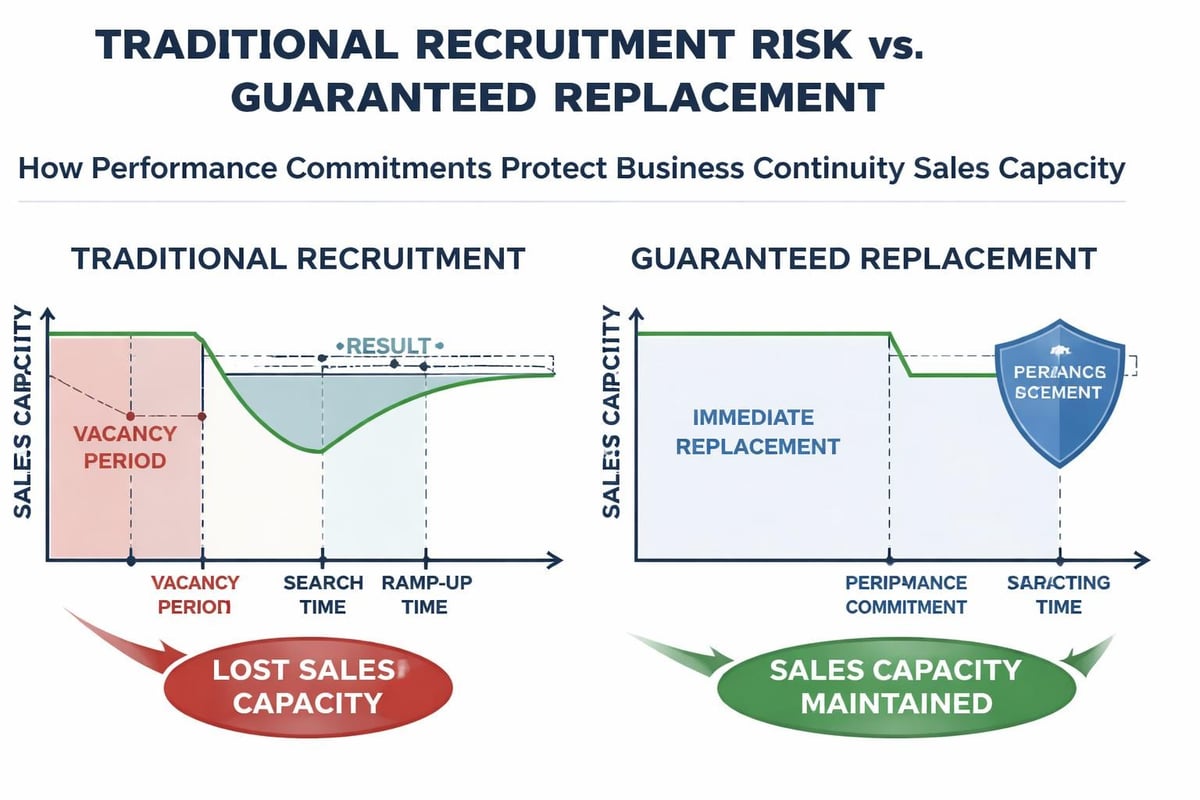
One of the most significant innovations in modern recruitment involves performance guarantees that protect businesses from failed placements. When we are recruitment partners offering replacement commitments, we fundamentally alter the risk profile of hiring decisions.
Understanding Replacement Guarantee Structures
Traditional recruitment operates on a placement fee model where agencies receive compensation upon candidate hire, regardless of long-term performance. This creates misaligned incentives where recruiters prioritize speed over quality.
Performance-based models with replacement guarantees shift this dynamic entirely:
Recruiters maintain accountability for placement success
Businesses receive protection against early turnover
Candidates face higher quality screening standards
Long-term fit receives equal priority to initial placement
Some replacement policy structures offer unlimited replacements within specified timeframes, ensuring business owners never face prolonged sales capacity gaps due to employee departures.
This approach proves particularly valuable in sales roles where performance variability runs high. Not every talented salesperson succeeds in every environment, and cultural mismatches can undermine even skilled professionals.
Remote Sales Recruitment Requires Specialized Evaluation
The shift toward remote work has permanently changed sales recruitment requirements. Companies selling high-ticket products and services over internet platforms need salespeople who thrive in virtual environments without in-person interaction.
Unique Competencies for Remote Sales Success
Remote sales professionals require capabilities beyond traditional face-to-face selling:
Self-motivation and discipline to maintain productivity without supervision
Technology proficiency across video conferencing and CRM platforms
Written communication skills for email and chat-based prospect nurturing
Time zone flexibility for prospects across geographic regions
Home office professionalism maintaining appropriate presentation standards
When we are recruitment specialists focusing on remote high-ticket sales positions, we assess these specific competencies that traditional interviews often overlook. A candidate's ability to build rapport through a screen differs fundamentally from in-person relationship building.
The top sales recruiting firms recognize that remote work success requires both mindset and skill set alignment with virtual selling environments.
Specialized Roles Within High-Ticket Sales Teams
As businesses scale, sales functions typically specialize into distinct roles with specific responsibilities. Understanding these specializations helps business owners build more effective team structures.
Appointment Setters and Sales Development
The appointment setting function focuses exclusively on qualifying prospects and scheduling discovery calls for closers. This specialization allows businesses to separate prospecting activities from closing responsibilities, enabling each role to develop deep expertise.
When evaluating remote appointment setter candidates, different criteria apply compared to closer evaluation. Setters need high activity tolerance, excellent initial rapport building, and process adherence rather than complex negotiation skills.
High-Ticket Closers and Account Executives
Closers handle the consultative selling process from discovery through contract signing. These professionals must navigate complex objections, articulate nuanced value propositions, and maintain prospect engagement through extended sales cycles.
The high-ticket sales closer role demands different personality traits and competencies compared to appointment setting. Closers typically demonstrate greater strategic thinking, objection handling sophistication, and relationship development capabilities.
The Recruitment Timeline Challenge
Traditional hiring processes extend across weeks or months, creating significant challenges for businesses needing immediate sales capacity. The typical timeline includes:
Job description creation (3-5 days)
Advertisement posting and promotion (1-2 weeks)
Application review (1-2 weeks)
Initial screening calls (1 week)
First-round interviews (1-2 weeks)
Second-round interviews (1-2 weeks)
Reference checking (3-5 days)
Offer negotiation (3-7 days)
Notice period waiting (2-4 weeks)
This timeline totals 8-14 weeks minimum, during which revenue opportunities remain unrealized and competitive pressures intensify. When we are recruitment providers offering pre-vetted talent, this timeline compresses dramatically to days rather than months.
Businesses selling high-ticket products cannot afford quarter-long gaps in sales capacity. Market opportunities appear and disappear rapidly, and delayed hiring means missed revenue that never returns.
Industry-Specific Recruitment Considerations
Different industries selling high-ticket products over the internet face unique recruitment challenges based on their specific markets and buyer profiles.
Marketing Agencies and Consulting Firms
Agencies selling monthly retainer services need salespeople who can articulate ongoing value and manage client relationships beyond initial sale completion. These roles blend sales and account management competencies.
Coaching and Education Programs
High-ticket coaching programs require salespeople who believe genuinely in transformational outcomes and can communicate authentically about personal development. Skeptical or purely transactional salespeople damage brand perception in this market.
Software and Technology Services
B2B software sales demand technical fluency and ability to navigate complex organizational buying processes involving multiple stakeholders. Enterprise sales cycles require patience and strategic account planning.
Professional Services
Legal, financial, and consulting services sales involve credibility establishment and trust building with sophisticated buyers who conduct extensive due diligence. Salespeople need professional gravitas and industry knowledge.
When we are recruitment specialists, we recognize these industry distinctions fundamentally affect candidate evaluation criteria and placement success factors. A salesperson who excels selling marketing services may struggle entirely selling enterprise software.
Leveraging Technology in Modern Recruitment
Technology has transformed recruitment efficiency and effectiveness across multiple dimensions. Platforms enabling candidate recruitment at scale allow recruiters to evaluate larger talent pools while maintaining quality standards.
Assessment Technologies
Modern recruitment leverages various assessment tools to evaluate candidate capabilities:
Skills testing platforms measuring technical competencies
Personality assessments predicting cultural fit and work style
Video interview analysis evaluating communication effectiveness
Simulation exercises testing real-world problem-solving abilities
Reference verification systems streamlining background checks
These technologies enable more objective evaluation compared to traditional interview-only approaches. Sites like Are We Hiring demonstrate how technology connects job seekers with opportunities more efficiently than manual matching processes.
Communication and Coordination Tools
Recruitment coordination requires managing multiple candidates, schedules, and stakeholders simultaneously. Technology platforms streamline:
Interview scheduling across time zones
Candidate communication and updates
Feedback collection from multiple interviewers
Offer documentation and negotiation
Onboarding process initiation
When we are recruitment teams operating at scale, these coordination tools prevent administrative bottlenecks that delay placements and frustrate candidates.
The Importance of Cultural Fit Assessment
Technical skills and sales competencies represent necessary but insufficient criteria for successful placements. Cultural alignment between candidate values and organizational culture determines long-term retention and performance.
Evaluating Cultural Fit
Cultural assessment examines multiple dimensions beyond skills:
Work style preferences (independent versus collaborative)
Communication preferences (direct versus diplomatic)
Decision-making approaches (analytical versus intuitive)
Feedback receptiveness (coaching versus autonomy)
Value alignment (mission-driven versus compensation-focused)
When businesses find the right fit on both competency and culture dimensions, retention rates improve dramatically and performance exceeds expectations. Misalignment on either dimension predicts eventual separation regardless of strengths in other areas.
Making the Final Hiring Decision
Even with pre-vetted candidates and thorough assessment processes, business owners face critical decisions when extending offers. The hiring decision involves weighing multiple factors simultaneously.
Decision Framework for Sales Hiring
Factor | Weight | Evaluation Method | Red Flags |
|---|---|---|---|
Sales competencies | 40% | Skills assessment, role play | Inability to articulate value or handle objections |
Cultural alignment | 30% | Behavioral interviews, values assessment | Misalignment with company mission or work style |
Communication ability | 15% | Video interviews, writing samples | Poor listening, unclear expression |
Track record | 10% | Reference checks, performance history | Frequent job changes, blame-oriented narratives |
Growth potential | 5% | Learning agility assessment | Fixed mindset, resistance to feedback |
This framework helps systematize decisions that often rely too heavily on subjective impressions formed during brief interviews. When we are recruitment professionals, we encourage structured evaluation approaches that reduce bias and improve placement quality.
Salary Structure and Compensation Planning
Competitive compensation packages attract top talent while maintaining business profitability. Sales compensation typically combines base salary, commission, and potentially equity or bonuses.
Compensation Structure Considerations
The optimal commission structure balances business margins, market competitiveness, and sales role requirements:
Base salary provides income stability and attracts quality candidates
Commission rates motivate performance and align incentives
Accelerators reward exceeding quota with higher commission rates
Bonuses incentivize specific behaviors or milestones
Benefits including health insurance, retirement, and professional development
High-ticket sales roles typically command higher base salaries than transactional sales positions due to longer sales cycles and smaller deal volumes. Commission structures should reflect average deal size, sales cycle length, and required sales activities.
Onboarding and Integration Best Practices
Successful placement extends beyond candidate acceptance. Effective onboarding determines whether new hires reach productivity quickly or struggle indefinitely. When we are recruitment partners invested in placement success, we recognize onboarding quality directly impacts retention and performance.
Critical Onboarding Elements
Product and service training enabling confident customer conversations
Sales process documentation clarifying methodology and expectations
CRM and technology training ensuring tool proficiency
Initial shadowing and observation learning from experienced team members
Gradual responsibility increase building confidence through early wins
The first 90 days prove critical for new sales hires. Businesses should provide structured support during this period rather than expecting immediate independent performance. Investment in thorough onboarding pays dividends through faster ramp times and higher long-term retention.
Measuring Recruitment Success
Effective recruitment requires measuring outcomes beyond simply filling positions. When businesses track comprehensive metrics, they optimize hiring processes and improve future placements.
Key Recruitment Metrics
Time to fill measuring efficiency from requisition to acceptance
Quality of hire tracking new employee performance relative to expectations
Retention rates measuring percentage of hires remaining after 6, 12, and 24 months
Hiring manager satisfaction gathering feedback on candidate quality and process experience
Cost per hire calculating total recruitment expenses per successful placement
These metrics enable data-driven recruitment improvements. When we are recruitment specialists, we continuously refine processes based on outcome data rather than relying on intuition or established practices that may no longer serve current market conditions.
Strategic Workforce Planning for Growth
Growing businesses need strategic approaches to workforce planning that anticipate future needs rather than reactively filling positions as vacancies emerge. This forward-thinking approach prevents capacity constraints from limiting growth opportunities.
Forecasting Sales Capacity Needs
Business owners should project sales capacity requirements based on:
Revenue growth targets and conversion rate assumptions
Expected market expansion into new segments or geographies
Anticipated attrition based on historical patterns
Seasonal demand fluctuations affecting required capacity
Product launches or service expansions requiring sales support
When businesses become ready to hire proactively rather than reactively, they maintain consistent sales capacity that supports rather than constrains growth. Strategic workforce planning enables smoother scaling and prevents emergency hiring situations that compromise quality standards.
Building exceptional sales teams for high-ticket businesses requires specialized expertise, systematic processes, and access to pre-vetted talent pools. The traditional recruitment approach creates unnecessary delays, costs, and risks that growing businesses cannot afford. When you need world-class sales professionals who can immediately contribute to revenue growth, Sales Match provides pre-vetted sales talent specifically for businesses selling premium products and services over the internet, complete with replacement guarantees that eliminate hiring uncertainty and ensure your team never lacks the capacity to capture market opportunities.