Inside Sales Team: Building High-Performance Remote Sellers
Learn how to build, manage, and scale a high-performing inside sales team for your high-ticket business. Expert strategies for remote sales success.
published
Building a high-performing inside sales team has become essential for businesses selling high-ticket products and services remotely. Unlike traditional field sales representatives who meet clients face-to-face, an inside sales team operates entirely through digital channels like Zoom, Google Meet, and phone calls. This model offers significant advantages for marketing agencies, consultants, coaches, and service-based businesses that need scalable revenue growth without the overhead of traditional sales operations. Understanding how to structure, recruit, and manage these teams determines whether your business thrives or struggles in today's competitive marketplace.
What Defines an Effective Inside Sales Team
An inside sales team consists of sales professionals who conduct the entire sales process remotely, from initial contact through closing deals. These teams typically work from home offices or centralized locations, using technology to connect with prospects and customers across different time zones and geographic regions.
The structure of a successful team varies based on business needs and sales complexity. Most high-ticket businesses benefit from a tiered approach that separates prospecting functions from closing responsibilities. This specialization allows each team member to develop deep expertise in their specific role rather than spreading their focus across multiple functions.
Core Roles Within Modern Sales Organizations
Inside sales teams typically include these specialized positions:
Appointment setters who qualify leads and schedule discovery calls
Sales development representatives (SDRs) who nurture prospects through early-stage conversations
Account executives or closers who handle high-value negotiations and finalize deals
Sales managers who oversee performance, provide coaching, and maintain accountability
The ratio between these roles depends on your sales cycle length and average deal size. Businesses selling services above $2,500 often require more sophisticated sales processes with multiple touchpoints before closing.

According to comprehensive research on inside sales effectiveness, companies with specialized roles see 30% higher conversion rates compared to generalist approaches. This specialization allows team members to perfect their specific skills while maintaining momentum through the sales pipeline.
Building Your Team From the Ground Up
Constructing an inside sales team requires careful planning around your specific business model and customer acquisition strategy. The process begins with defining clear revenue targets and working backward to determine how many salespeople you need at each level.
Start by calculating your average deal size, conversion rates at each pipeline stage, and desired monthly revenue. If you close 20% of qualified appointments and need 10 new clients monthly at $5,000 each, you need 50 qualified appointments. If each appointment setter books 25 appointments monthly, you need two setters feeding one closer.
The Recruitment Challenge
Finding talented inside sales professionals represents one of the biggest obstacles for growing businesses. Traditional hiring processes consume months of time while delivering inconsistent results. Job postings attract hundreds of unqualified applicants, and interview processes rarely reveal true sales capability.
Sales Match addresses this challenge by providing pre-vetted sales talent specifically matched to high-ticket business requirements. Rather than sorting through countless resumes and conducting endless interviews, businesses gain access to professionals who have already demonstrated their ability to perform in remote sales environments.
The vetting process should evaluate these critical competencies:
Track record of closing deals in similar price ranges
Comfort with video-based selling and digital communication tools
Ability to handle objections and navigate complex sales conversations
Self-motivation and accountability in remote work settings
Cultural fit with your company values and communication style
Many businesses underestimate the importance of industry-specific experience. A salesperson who excelled selling low-ticket consumer products will struggle with consultative, high-ticket sales that require different skills and approaches. Your recruitment strategy must account for these nuances.
Training and Onboarding Best Practices
Even experienced salespeople need comprehensive onboarding when joining a new organization. Your inside sales team must understand your unique value proposition, ideal customer profile, common objections, and sales methodology before they can perform effectively.
Effective onboarding programs typically span 30 to 60 days, combining product knowledge, sales process training, and supervised practice. The first week should focus on understanding your offering deeply enough to answer technical questions and articulate value clearly.
Training Phase | Duration | Focus Areas |
|---|---|---|
Product Immersion | Week 1-2 | Features, benefits, competitive advantages, customer pain points |
Sales Process | Week 2-3 | Pipeline stages, CRM usage, call scripts, objection handling |
Supervised Practice | Week 3-4 | Role-playing, call shadowing, manager feedback sessions |
Independent Selling | Week 4+ | Real calls with backup support, performance monitoring |
Building a structured onboarding program ensures consistency across your team while reducing the time it takes for new hires to reach productivity. Document your processes in written playbooks, video tutorials, and recorded call examples that demonstrate your methodology in action.
Creating Your Sales Playbook
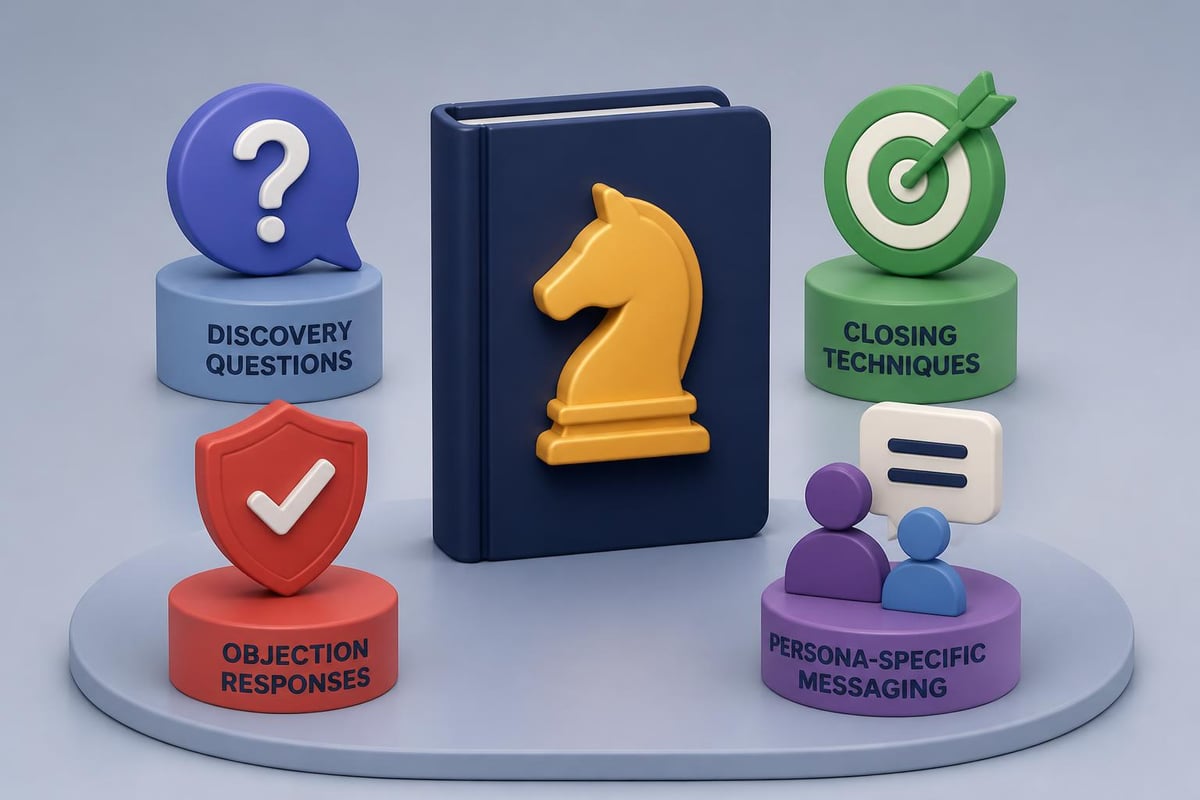
Your sales playbook serves as the definitive guide for how your inside sales team operates. This living document should include call scripts, email templates, discovery question frameworks, and proven responses to common objections. The playbook evolves as you learn what messaging resonates with prospects and which approaches drive the highest conversion rates.
Include specific sections for different buyer personas you encounter. A marketing agency owner has different priorities and pain points than a business coach, even though both might purchase your service. Your team needs tailored approaches for each segment.
Performance Management and Metrics That Matter
Managing an inside sales team requires tracking the right metrics while avoiding overwhelming your team with too many KPIs. Focus on leading indicators that predict future revenue rather than only measuring lagging indicators like closed deals.
Critical metrics for inside sales performance include:
Number of conversations or calls completed daily
Appointment booking rate from initial conversations
Show rate for scheduled appointments
Close rate from qualified opportunities
Average deal size and sales cycle length
Revenue per sales representative
Research from LeadsSquared indicates that top-performing inside sales teams review these metrics weekly rather than monthly, allowing for quick course corrections. When a salesperson's booking rate drops from 30% to 20%, immediate coaching intervention prevents weeks of continued underperformance.
Compensation Structures That Drive Results
Your compensation plan directly influences the behaviors and outcomes you see from your inside sales team. Most high-ticket businesses use a combination of base salary and commission to balance stability with performance incentives.
For appointment setters, consider paying a base salary plus bonuses for booked appointments and additional bonuses when those appointments convert to sales. This creates alignment between setting quality appointments rather than just maximizing quantity.
Closers typically receive lower base salaries but higher commission percentages, reflecting their direct impact on revenue. A common structure provides 10-15% commission on closed deals, though this varies based on your margins and sales complexity. Understanding effective commission structures helps you attract and retain top performers.
Technology Stack Essentials
Your inside sales team needs the right tools to operate efficiently in a remote environment. The foundation includes a customer relationship management (CRM) system that tracks every interaction and maintains pipeline visibility.
Beyond the CRM, modern inside sales organizations rely on video conferencing platforms, automated dialers, email sequencing tools, and conversation intelligence software that records and analyzes sales calls. These technologies multiply productivity while providing managers with coaching opportunities.
Tool Category | Purpose | Impact on Performance |
|---|---|---|
CRM Platform | Pipeline management, activity tracking, forecasting | 25-35% increase in sales productivity |
Video Conferencing | Virtual meetings, screen sharing, presentations | Enables remote high-ticket sales |
Email Automation | Sequences, follow-ups, nurture campaigns | 3x more meetings booked |
Call Recording | Quality assurance, training, compliance | 40% faster new hire ramp time |
When evaluating sales technology, prioritize tools that integrate seamlessly rather than creating isolated data silos. Your CRM should automatically log calls, emails, and meetings without requiring manual data entry that reduces selling time.
The importance of technology in remote sales cannot be overstated. Teams that leverage modern tools consistently outperform those relying on outdated systems or manual processes.
Managing Remote Inside Sales Teams
Leading a distributed inside sales team presents unique challenges compared to managing office-based employees. You cannot rely on physical presence to gauge engagement, requiring more structured communication and accountability systems.

Implement daily standup meetings where team members share their goals, progress, and obstacles. These 15-minute sessions create accountability while fostering team cohesion among geographically dispersed salespeople. Research on managing remote sales teams shows that consistent communication routines reduce turnover by 28%.
Building Sales Team Culture Remotely
Culture development requires intentional effort in remote environments. Create opportunities for informal interaction through virtual coffee chats, team competitions, and recognition programs that celebrate wins publicly. Your inside sales team should feel connected to a larger mission rather than operating as isolated individuals.
Weekly team calls should include training segments, peer learning sessions, and celebration of recent victories. When a team member closes a significant deal, have them share their approach so others can learn and replicate their success. This knowledge sharing accelerates collective improvement.
Effective remote culture-building activities include:
Monthly virtual social events unrelated to work discussions
Peer mentoring programs pairing experienced sellers with newer team members
Gamification with leaderboards tracking key activities and wins
Regular company updates keeping sales teams informed about broader business progress
Scaling Your Inside Sales Operation
Once your initial inside sales team demonstrates consistent performance, strategic scaling becomes possible. However, growth must be methodical rather than haphazard. Adding salespeople faster than your management capacity expands creates chaos and underperformance.
The general rule suggests one sales manager can effectively oversee six to eight individual contributors. Beyond that span of control, coaching quality deteriorates and performance suffers. As you grow, promote your top performers into management roles or bring in experienced leaders who understand high-ticket sales dynamics.
Scaling also requires evaluating whether your current processes work at larger volumes. What succeeded with three salespeople might break down with fifteen. Document and systematize everything before expanding, ensuring new team members can replicate proven approaches without constant hands-on guidance.
Addressing Performance Issues and Turnover
Even with excellent hiring practices, some inside sales team members will underperform or prove to be poor fits. Establishing clear performance expectations and timelines helps identify issues early while providing objective criteria for improvement plans or termination decisions.
When a salesperson consistently misses targets despite coaching and support, making a change benefits everyone involved. However, the replacement process consumes significant time and resources. This reality makes Sales Match's replacement guarantee particularly valuable for businesses that cannot afford extended periods of underperformance while searching for new talent.
According to industry data from Prospeo's inside sales management research, sales organizations experience average annual turnover rates of 35%, making talent pipeline management as important as customer pipeline management. Successful businesses maintain relationships with potential hires even when not actively recruiting.
Collaboration Between Inside and Outside Functions
While this article focuses specifically on inside sales teams, these groups often work alongside marketing teams, customer success departments, and occasionally field sales representatives for enterprise accounts. Seamless collaboration between these functions prevents prospects from falling through cracks or receiving inconsistent messaging.
Establish clear handoff processes defining when marketing-qualified leads transfer to sales, what information accompanies each lead, and how quickly sales must follow up. Similarly, document the transition from sales to customer success after deal closure, ensuring new clients receive proper onboarding.
Regular cross-functional meetings should address these topics:
Lead quality and quantity flowing from marketing to sales
Common objections indicating messaging misalignment
Customer feedback revealing product or service improvement opportunities
Market trends and competitive intelligence gathered during sales conversations
Information flows bidirectionally in effective organizations. Your inside sales team hears customer concerns and competitive insights daily that should inform marketing strategy and product development. Create formal mechanisms capturing and distributing this intelligence.
Strategic Approaches for Revenue Growth
Beyond operational execution, your inside sales team needs strategic direction aligned with broader business objectives. Revenue growth strategies should balance new customer acquisition with expansion within existing accounts.
Many high-ticket businesses focus exclusively on closing new customers while neglecting upsell and cross-sell opportunities within their current client base. Your inside sales team can drive significant revenue growth by periodically checking in with past customers, identifying new needs, and presenting additional solutions.
Consider implementing an account management function where certain team members focus on growing existing relationships rather than only hunting new prospects. These roles often experience higher close rates and shorter sales cycles since trust and credibility already exist.
Adapting to Market Changes
Markets shift, competition evolves, and buyer preferences change over time. Your inside sales team operates on the front lines of these shifts, often recognizing trends before they appear in formal market research. Creating feedback loops that capture these insights keeps your approach current and effective.
Quarterly strategy sessions should review win/loss analysis, competitive positioning, messaging effectiveness, and emerging opportunities or threats. What worked brilliantly in 2024 might prove ineffective in 2026 as markets mature and buyer sophistication increases.
The businesses thriving with inside sales teams regularly test new approaches, measure results objectively, and quickly scale what works while eliminating ineffective tactics. This experimental mindset separates growing organizations from stagnant competitors.
Investment Required and Return Expectations
Building an inside sales team requires significant financial investment before generating returns. Budget for salaries, commissions, benefits, technology subscriptions, training costs, and management overhead. A single inside sales representative typically costs $60,000 to $90,000 annually when accounting for all expenses.
However, the return on this investment can be substantial for businesses with proven product-market fit and sufficient deal sizes. An inside sales team member generating $500,000 in annual revenue while costing $75,000 delivers a 6.7x return. These economics become even more attractive as salespeople ramp to full productivity and average deal sizes increase.
Timeline expectations matter significantly when evaluating success. New inside sales team members rarely reach full productivity before 90 days, and six months represents a more realistic timeframe for consistent performance. Businesses needing immediate revenue results should consider experienced sales professionals who can compress ramp times.
Making Build vs. Buy Decisions
Every business faces the decision whether to build an inside sales team internally or partner with external resources. Building internally provides complete control over culture, processes, and talent development. However, it demands significant management attention and carries substantial risk when hires underperform.
Working with specialized sales recruitment services reduces time-to-productivity while mitigating hiring risks through pre-vetted candidates. This approach works particularly well for businesses without existing sales leadership or those expanding into high-ticket sales for the first time.
Consider starting with a hybrid approach where you bring on experienced professionals who can establish processes and culture, then gradually build internal capabilities around that foundation. This methodology reduces risk while accelerating results compared to starting completely from scratch.
Building and managing a high-performing inside sales team requires strategic planning, rigorous execution, and ongoing optimization across recruitment, training, technology, and performance management. For businesses selling high-ticket products and services remotely, these teams represent the engine driving predictable revenue growth and sustainable scaling. Rather than spending months navigating complex hiring processes and risking costly mis-hires, Sales Match provides pre-vetted sales talent ready to perform in your specific market, backed by replacement guarantees that eliminate the traditional risks of building your sales organization.
FAQs
How do I hire inside sales reps without months of interviewing?
Sales Match keeps an always-ready pipeline of pre-vetted setters and closers, screened through an 8-step process with live call tests. First shortlisted candidates land in 7–10 days, so you skip the resume pile entirely.
Should I build my inside sales team in-house or use a recruiter?
You don't have to trade control for speed. Sales Match places reps who become your in-house employees, who you own and manage, without the recruiting grind. There's $0 upfront, and you only pay when you hire.
What if an inside sales hire underperforms or leaves?
Turnover is real, but you're protected. Every placement carries the longest replacement guarantee in the industry, so a bad fit or departure means a free replacement rather than another costly search.
