
Match for Talent: Finding Sales Stars for Your Team
Discover how to match for talent effectively in 2026. Learn proven strategies to find, vet, and hire top sales professionals for high-ticket businesses.
published
TL;DR: The ability to match for talent effectively determines whether high-ticket businesses thrive or struggle with revenue goals. This guide explores proven strategies for identifying, vetting, and securing top sales professionals who can close deals over $2,500 through virtual channels like Zoom and Google Meet.
Author Bio: Marcus Henderson is a sales recruitment strategist with over 12 years of experience placing high-performing sales professionals in digital-first businesses. He specializes in helping agencies, coaches, and consultants build remote sales teams that consistently exceed revenue targets.
The landscape of sales recruitment has fundamentally transformed in 2026, particularly for businesses selling high-value products and services through digital channels. Companies offering solutions priced above $2,500 face unique challenges when attempting to match for talent with their specific needs. Traditional hiring approaches often fall short, leaving marketing agencies, consultants, and service-based businesses struggling with underperforming sales teams and costly turnover.
What Is the Match for Talent Approach?
The match for talent methodology represents a strategic shift from conventional hiring practices to a precision-based recruitment framework. Rather than posting job ads and hoping qualified candidates apply, this approach involves actively identifying sales professionals whose skills, experience, and proven track records align precisely with your business model.
This framework considers multiple dimensions beyond basic qualifications. Sales environment compatibility examines whether candidates have successfully sold in virtual settings using platforms like Zoom or Google Meet. Price point experience evaluates if they have closed deals in your revenue range, particularly for high-ticket offerings. Industry alignment assesses their familiarity with your sector, whether that is coaching, consulting, marketing services, or other professional services.
The importance of this strategic approach cannot be overstated. According to research on strategic alignment models for talent acquisition, organizations that align their recruitment strategies with specific business objectives experience significantly better hiring outcomes and reduced time-to-productivity for new sales hires.
Why Traditional Recruitment Fails High-Ticket Businesses
Most businesses struggle to match for talent effectively because they rely on outdated recruitment methods designed for commodity sales roles. Job boards attract hundreds of applicants, but quantity rarely translates to quality. Hiring managers spend weeks reviewing resumes, conducting initial screenings, and scheduling interviews, only to discover that candidates lack the specific competencies required for consultative, high-value sales.
Common pitfalls include:
Hiring based on resume credentials rather than proven sales performance
Failing to assess experience with complex sales cycles and objection handling
Overlooking cultural fit and self-motivation requirements for remote work
Underestimating the importance of industry-specific knowledge
Neglecting to verify actual closing ratios and revenue generation history

How Do You Identify Top Sales Talent in 2026?
The process of identifying exceptional sales professionals requires a systematic approach that goes beyond surface-level qualifications. Modern talent acquisition demands a combination of data-driven assessment and human insight to separate true performers from those who simply interview well.
Defining Your Ideal Sales Profile
Before you can effectively match for talent, you must clearly articulate what success looks like in your specific context. High-ticket businesses selling through virtual channels need sales professionals with distinct characteristics that differ from traditional field sales or low-ticket inside sales roles.
Start by analyzing your top performers. What backgrounds do they share? Which skills consistently correlate with closed deals? What personality traits enable them to build trust during virtual consultations? This analysis creates a benchmark against which to evaluate candidates.
Evaluation Category | Key Indicators | Red Flags |
|---|---|---|
Virtual Selling Experience | Proven track record closing deals via Zoom/Google Meet | Only in-person or phone sales experience |
Price Point History | Consistent success with $2,500+ transactions | Primarily low-ticket or transactional sales |
Sales Cycle Management | Experience with 2-8 week consultative processes | Exclusively single-call closes |
Industry Knowledge | Understanding of professional services or related sectors | No transferable industry context |
Sourcing Beyond Traditional Channels
Talent acquisition trends for 2026 emphasize the growing importance of proactive sourcing strategies. Rather than waiting for candidates to apply, successful organizations actively recruit passive candidates who are currently employed and performing well.
Professional networks, industry-specific communities, and direct outreach to high performers at competitor organizations yield better results than job postings. This proactive approach allows you to match for talent based on demonstrated success rather than hopeful potential.
What Should Your Vetting Process Include?
The vetting process separates organizations that build elite sales teams from those that cycle through mediocre performers. A comprehensive evaluation framework examines multiple competency areas through structured assessments and real-world simulations.
Performance-Based Assessments
Traditional interviews reveal how well candidates can talk about sales, but they provide limited insight into actual selling ability. Performance-based assessments place candidates in realistic scenarios that mirror your actual sales environment.
Effective assessment components include:
Role-play exercises simulating common objections for your price point
Discovery call demonstrations showing consultative selling capabilities
Presentation evaluations assessing their ability to articulate value propositions
Follow-up strategy reviews revealing their persistence and process discipline
Reference verification confirming actual performance metrics from previous roles
These assessments must reflect your specific sales model. A candidate who excels at selling $500 software subscriptions may struggle with $5,000 consulting packages that require relationship building and multiple touchpoints.
Evaluating Remote Work Capabilities
For businesses operating primarily through virtual channels, the ability to match for talent includes assessing remote work competencies. Not all successful salespeople transition effectively to remote environments, where self-motivation and time management become critical success factors.

Look for candidates who have demonstrated success in remote or hybrid sales roles. Ask specific questions about their daily routines, how they manage their pipeline without direct supervision, and their strategies for staying motivated during challenging periods.
How Do You Reduce Hiring Risk and Turnover?
The cost of a bad sales hire extends far beyond salary and benefits. When businesses fail to match for talent effectively, they experience lost revenue from unfilled pipelines, damaged customer relationships from poor interactions, and the opportunity cost of time invested in training someone who ultimately leaves or underperforms.
The True Cost of Sales Turnover
Research from comprehensive talent acquisition strategy analyses demonstrates that replacing a sales professional costs organizations between 1.5 to 2 times the annual salary when accounting for lost productivity, training investments, and recruitment expenses. For high-ticket businesses, the revenue impact multiplies these costs significantly.
A single underperforming salesperson in a role for six months can represent hundreds of thousands in lost revenue opportunities. Meanwhile, the business owner or sales leader must divert attention from strategic initiatives to manage the situation, conduct another search, and restart the onboarding process.
Implementing Replacement Guarantees
Progressive recruitment approaches include replacement policies that protect businesses from the risk inherent in any hiring decision. These guarantees ensure that if a newly hired sales professional does not meet performance expectations or leaves the organization within a specified period, the recruitment partner provides a replacement at no additional cost.
This risk mitigation strategy transforms the hiring equation. Rather than hoping a candidate works out, businesses can make confident hiring decisions knowing they have protection against the inevitable uncertainties of human performance and organizational fit.
Risk Mitigation Strategy | Implementation | Business Impact |
|---|---|---|
Comprehensive vetting | Multi-stage assessments, role-plays, reference checks | 60-70% reduction in early-stage failures |
Trial periods | 30-90 day performance evaluation windows | Clear exit points before full integration |
Replacement guarantees | No-cost replacement within specified timeframes | Eliminates financial risk of bad hires |
Ongoing support | Regular check-ins and performance coaching | Higher retention and faster ramp-up |
What Role Does Specialization Play in Sales Recruitment?
Generic recruitment firms rarely succeed in helping high-ticket businesses match for talent effectively. The nuances of virtual consultative selling for premium-priced services require specialized knowledge that generalist recruiters typically lack.
Industry-Specific Expertise
Businesses selling through digital channels need recruiters who understand the specific challenges and opportunities of this sales model. How do you build rapport on a video call? What objection-handling techniques work for $10,000 coaching programs? How do you create urgency without in-person interaction?
Specialized sales recruiting firms focus exclusively on these questions. They maintain talent pools of professionals who have already demonstrated success in similar environments, dramatically reducing the learning curve and time-to-productivity.
Pre-Vetted Talent Pools
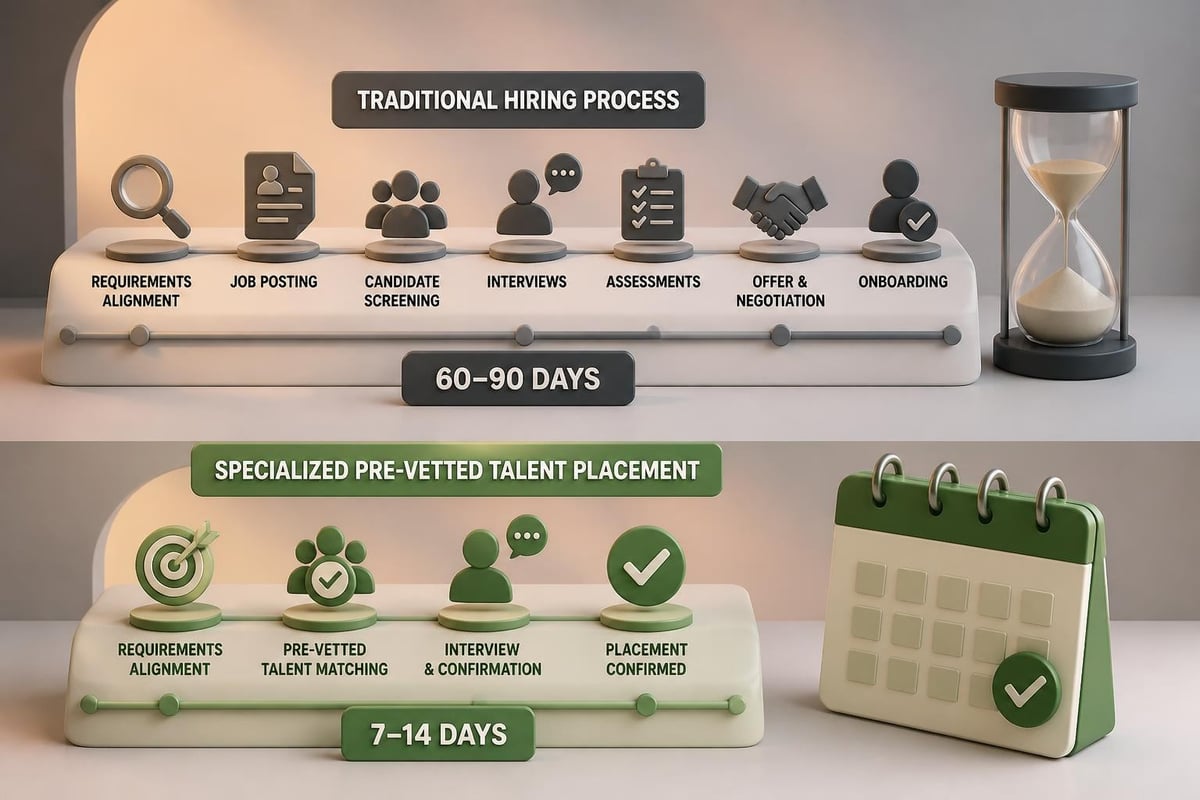
The traditional recruitment timeline extends for weeks or months while job ads run, applications accumulate, interviews are scheduled, and assessments are conducted. High-growth businesses cannot afford these delays when revenue depends on sales capacity.
Access to vetted candidates who have already completed rigorous screening processes accelerates hiring timelines from months to days. These professionals have verified track records, confirmed references, and demonstrated competencies in the specific skills required for high-ticket virtual selling.
How Are Modern Technologies Reshaping Talent Matching?
The recruitment landscape has evolved dramatically with the integration of advanced technologies into talent acquisition processes. According to the iCIMS report on recruitment technology adoption, candidates are now utilizing sophisticated tools in their job searches faster than many employers are adapting their hiring processes.
Data-Driven Candidate Assessment
Modern recruitment leverages extensive data points to predict candidate success more accurately than traditional interview-based approaches. Performance analytics, behavioral assessments, and skills validations create comprehensive candidate profiles that go far beyond resume credentials.
These methodologies enable more precise talent matching by quantifying factors that historically relied on subjective judgment. Rather than guessing whether a candidate can handle objections effectively, assessment data provides concrete evidence of their capabilities under pressure.
Streamlined Matching Processes
Emerging talent acquisition technologies are transforming how organizations connect with qualified candidates. Automated screening tools filter applicants based on specific criteria, while advanced matching algorithms identify candidates whose profiles align with job requirements.
For businesses focused on high-ticket sales, these technologies must be calibrated to recognize the unique competencies required for consultative virtual selling. Generic screening tools miss critical nuances that separate adequate performers from revenue-generating stars.
What Does the Future Hold for Sales Talent Acquisition?
The ability to match for talent will become increasingly critical as competition for top sales professionals intensifies. Businesses that master this capability will build sustainable competitive advantages, while those relying on outdated approaches will struggle with constant turnover and underperformance.
The Rise of Specialized Sales Roles
Sales organizations are moving away from generalist positions toward specialized roles that align with specific stages of the customer journey. Remote appointment setters focus exclusively on qualifying prospects and scheduling consultations, while high-ticket closers specialize in converting those appointments into signed agreements.
This specialization requires even more precise talent matching. A professional who excels at initial outreach and qualification may lack the consultative skills required for closing complex sales. Organizations must clearly define role requirements and match candidates to positions that leverage their specific strengths.
Building Scalable Sales Teams
Growth-focused businesses need recruitment solutions that scale with their expansion. The ability to quickly hire a sales team without sacrificing quality becomes a strategic imperative when market opportunities demand rapid capacity increases.
Scalable recruitment requires:
Access to deep talent pools of pre-qualified candidates
Standardized assessment frameworks that maintain consistency across hiring volumes
Onboarding processes that efficiently integrate multiple new hires simultaneously
Performance tracking systems that identify successful hires and inform future matching criteria
The Importance of Continuous Optimization
Successful organizations treat talent matching as an ongoing optimization process rather than a one-time transaction. They continuously refine their ideal candidate profiles based on performance data, adjust their assessment methods to better predict success, and strengthen their talent pipelines through strategic partnerships.
This iterative approach enables businesses to stay ahead of market changes and competitor moves. As customer expectations evolve and sales methodologies advance, recruitment strategies must adapt accordingly to ensure continued access to sales professionals who can meet emerging demands.
How Do You Maintain Competitive Advantages Through Talent?
In markets where products and services can be replicated, exceptional sales talent becomes a primary differentiator. Businesses that consistently match for talent more effectively than competitors will capture disproportionate market share regardless of product parity.
Creating Talent Magnets
Top sales professionals seek organizations that support their success and provide growth opportunities. Companies that develop reputations as preferred employers attract stronger candidate pools, creating a virtuous cycle where talent attracts more talent.
Key elements of magnetic sales organizations include:
Competitive compensation structures that reward performance
Clear career progression pathways
Ongoing training and skill development programs
Supportive management that provides coaching rather than micromanagement
Technology and tools that enable rather than hinder sales effectiveness
Strategic Recruitment Partnerships
Building internal recruitment capabilities requires significant investments in recruiting staff, assessment tools, and candidate sourcing infrastructure. For many high-ticket businesses, partnering with specialized recruitment firms that focus exclusively on sales recruiting provides better returns on investment.
These partnerships offer access to extensive talent networks, proven assessment methodologies, and recruitment expertise that would take years to develop internally. The ability to quickly scale hiring capacity up or down based on business needs provides operational flexibility that permanent internal teams cannot match.
Partnership Model | Best For | Key Benefits |
|---|---|---|
On-demand placement | Variable hiring needs | Pay only when hiring, no fixed costs |
Retained search | Executive sales leadership | Dedicated focus on critical roles |
Recruitment process outsourcing | High-volume hiring | Scalable capacity with quality controls |
Hybrid support | Mixed requirements | Flexibility to address diverse needs |
What Are the Critical Success Factors?
Ultimately, the ability to match for talent successfully depends on clarity, process discipline, and strategic focus. Organizations that approach sales recruitment with the same rigor they apply to product development or customer acquisition achieve superior results.
Defining Non-Negotiables
Every hiring decision involves trade-offs, but certain criteria should remain non-negotiable for high-ticket sales roles. These typically include demonstrated success at similar price points, proven virtual selling capabilities, and verified performance metrics from previous positions.
Understanding which qualifications are essential versus desirable prevents the common mistake of hiring candidates who excel in some areas but lack critical competencies. A charismatic individual with excellent presentation skills but no experience handling objections for $5,000+ services will likely struggle regardless of their potential.
Measuring and Improving
What gets measured gets managed. Tracking key metrics around hiring success enables continuous improvement in talent matching capabilities. Monitor time-to-productivity for new hires, 90-day retention rates, revenue per salesperson, and the correlation between assessment scores and actual performance.
These metrics reveal patterns that inform future hiring decisions. If candidates from certain backgrounds consistently outperform others, adjust sourcing strategies accordingly. If specific assessment components fail to predict success, refine or replace them.
The most successful organizations treat recruitment as a strategic capability worthy of ongoing investment and optimization. They recognize that in knowledge-based businesses selling premium services, talent quality directly determines business outcomes in ways that no amount of marketing or product development can overcome.
Building a high-performing sales team for your high-ticket business requires more than posting job ads and hoping for the best. The strategic ability to match for talent with precision determines whether you consistently hit revenue targets or struggle with underperformance and costly turnover. Sales Match specializes in connecting businesses selling premium products and services over $2,500 with pre-vetted sales professionals who have proven track records in virtual consultative selling, eliminating the guesswork and delays of traditional hiring while providing replacement guarantees that protect your investment.
