
High Ticket Sales Remote: Build Elite Virtual Teams
Discover how to build and manage high ticket sales remote teams that close premium deals online. Expert strategies for hiring top talent.
published
The landscape of premium sales has fundamentally shifted. Companies selling products and services valued above $2,500 no longer need physical offices or local sales teams to close substantial deals. High ticket sales remote positions have become the backbone of modern revenue generation for marketing agencies, consulting firms, coaching businesses, and service-based companies operating entirely online. This transformation requires a strategic approach to building and managing sales teams capable of converting prospects through digital channels while maintaining the relationship depth necessary for premium transactions.
The Remote High-Ticket Sales Environment
Remote sales operations for premium offerings require different capabilities than traditional field sales or low-ticket e-commerce. When deals exceed $2,500, buyers expect consultative conversations, detailed demonstrations, and strategic problem-solving. Remote high-ticket sales positions demand professionals who can build trust through video calls, articulate complex value propositions without in-person rapport, and navigate multi-stakeholder decisions across digital communication channels.
The shift toward remote operations has created unique opportunities and challenges. Geographic limitations no longer restrict talent acquisition, allowing businesses to access top sales professionals regardless of location. However, this same borderless environment increases competition for elite performers who can consistently close premium deals through Zoom, Google Meet, or similar platforms.
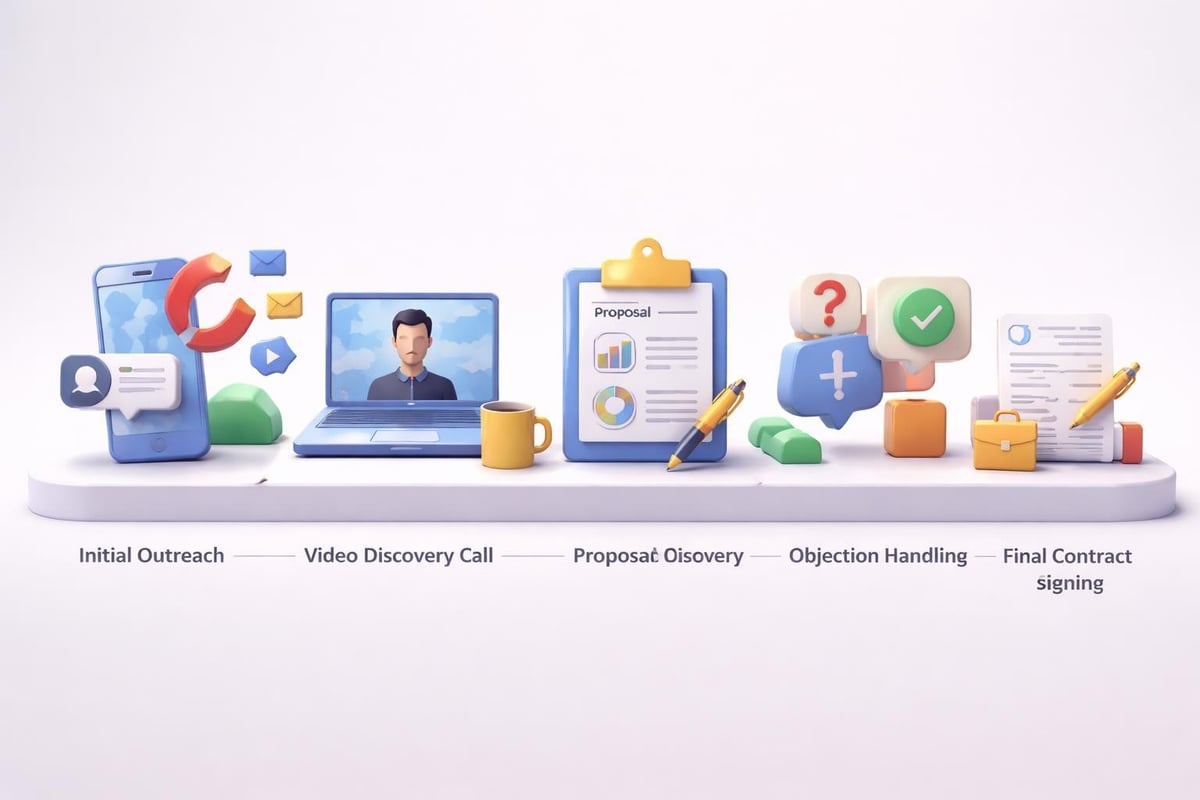
Key Characteristics of Successful Remote Closers
Elite remote sales professionals possess specific attributes that translate to success in virtual environments. These individuals demonstrate exceptional written and verbal communication skills, as every email, message, and video interaction carries significant weight in the buying journey. They master video presence, understanding camera positioning, lighting, background selection, and non-verbal communication that builds credibility through screens.
Essential competencies include:
Digital fluency: Seamlessly navigating CRM systems, video platforms, screen sharing, and digital presentation tools
Self-motivation: Maintaining productivity without physical office structure or direct supervision
Relationship building: Creating authentic connections through virtual channels that mirror in-person rapport
Time management: Coordinating across time zones while managing pipeline activities independently
Technical troubleshooting: Resolving connectivity issues quickly to maintain professional credibility
According to research from the Bridge Group, inside sales teams (which include remote operations) now represent 50% of all B2B sales organizations, demonstrating the widespread adoption of virtual selling models. This trend accelerated significantly after 2020 and continues expanding as companies recognize the efficiency and scalability advantages.
Building Your Remote Sales Infrastructure
Creating an effective high ticket sales remote operation requires more than simply allowing salespeople to work from home. The infrastructure supporting these teams directly impacts performance, conversion rates, and retention. Companies must establish clear processes, communication protocols, and technological systems before bringing remote closers onboard.
Technology Stack Requirements
Your remote sales team needs specific tools to function effectively. A robust CRM system serves as the foundation, tracking every prospect interaction, pipeline stage, and conversion metric. Video conferencing platforms with recording capabilities allow for quality assurance, training opportunities, and performance analysis. Communication tools like Slack or Microsoft Teams facilitate real-time collaboration among distributed team members.
Tool Category | Purpose | Critical Features |
|---|---|---|
CRM Platform | Pipeline management, activity tracking | Custom fields, automation, reporting dashboards |
Video Conferencing | Sales calls, demos, presentations | Screen sharing, recording, breakout rooms |
Communication | Team coordination, quick questions | Channels, direct messaging, file sharing |
Proposal Software | Contract delivery, e-signatures | Templates, tracking, mobile signing |
Training Platform | Onboarding, skill development | Video hosting, assessments, certification |
The vetting process for remote candidates must assess technical proficiency alongside sales skills. Candidates who struggle with basic technology will face constant friction in virtual selling environments, regardless of their interpersonal abilities or product knowledge.
Recruitment Strategies for Remote Sales Talent
Finding professionals capable of consistently closing high-value deals remotely presents distinct challenges. Traditional recruitment methods often fail to identify candidates with the specific blend of sales expertise and remote work competencies required for success. According to Remote Worker Girl, many candidates fail to secure these positions because they approach the opportunity with a traditional mindset rather than demonstrating the self-directed work ethic remote roles demand.

Identifying Qualified Candidates
The candidate pool for high ticket sales remote positions includes both experienced field salespeople transitioning to virtual work and digital natives who built their careers entirely online. Each group brings advantages and potential gaps. Field sales veterans understand complex sales cycles and relationship management but may need development in digital communication techniques. Remote-first professionals excel at virtual engagement but might lack exposure to enterprise-level deal structures.
Evaluation criteria should include:
Track record verification: Confirmed quota attainment in previous roles with specific metrics
Sales methodology knowledge: Familiarity with consultative selling, SPIN, Challenger, or similar frameworks
Remote work history: Demonstrated success managing time and productivity independently
Communication assessment: Writing samples, recorded pitch examples, live presentation evaluation
Cultural alignment: Values matching your organization's approach to customer relationships
The challenge intensifies when recruiting for high-ticket businesses because premium sales require longer development periods than transactional roles. New hires need 60-90 days minimum to understand product nuances, buyer personas, objection patterns, and internal processes before reaching full productivity.
The Replacement Challenge
Employee turnover in sales roles averages between 25-30% annually according to DePaul University research, creating constant pressure on revenue operations. When a high-performing remote closer leaves, businesses face immediate pipeline disruption, lost institutional knowledge, and expensive recruitment cycles. The remote nature of these positions can sometimes accelerate turnover, as geographic barriers to switching employers essentially disappear.
Many businesses address this vulnerability by partnering with specialized recruitment firms that maintain pre-vetted candidate pools ready for immediate deployment. This approach dramatically reduces time-to-productivity and provides backup options when unexpected departures occur. Some recruitment partners even offer replacement guarantees that protect businesses from the costs and disruptions of early-stage turnover.
Training and Development for Virtual Teams
Onboarding remote sales professionals requires structured programs that address both product knowledge and virtual selling techniques. Unlike office-based teams where informal learning occurs through observation and hallway conversations, remote team members need explicit training on every aspect of their role. Konnector.ai outlines the importance of comprehensive training programs that cover technology proficiency, sales process mastery, and self-management skills for remote success.
Onboarding Framework
The first 30 days determine whether a new remote hire will succeed or struggle. During this critical period, new team members should complete product training, shadow successful calls, participate in mock sales scenarios, and begin engaging prospects under supervision. Documentation becomes essential in remote environments since new hires cannot simply turn to a colleague for quick answers.
Week-by-week onboarding structure:
Week 1: Company orientation, product training, CRM and technology setup, introduction to team members
Week 2: Sales process training, ideal customer profiles, objection handling frameworks, competitive positioning
Week 3: Call shadowing, role-playing exercises, recorded pitch practice with feedback, initial prospect research
Week 4: First live calls with manager observation, pipeline development, goal setting, performance expectations review
Ongoing development maintains skills and prevents stagnation. Top-performing remote sales organizations conduct weekly team calls for strategy sharing, monthly one-on-one coaching sessions, and quarterly training updates covering market changes, new objection patterns, or refined messaging approaches.
Compensation and Performance Management
Structuring compensation for high ticket sales remote positions requires balancing competitive base salaries with performance incentives that drive results. According to data from the Sales Management Association, high-performing sales organizations typically structure compensation with 40-60% base salary and 40-60% variable pay tied to quota attainment. This ratio provides financial stability while maintaining strong motivation for exceeding targets.
The commission structure for remote teams should reflect deal complexity, sales cycle length, and customer lifetime value. Premium transactions often involve multi-month sales cycles with several touchpoints before closing. Compensation plans must account for this reality rather than expecting immediate revenue generation from new hires.
Performance Metrics That Matter
Metric | Purpose | Target Range |
|---|---|---|
Monthly quota attainment | Overall revenue performance | 80-120% |
Average deal size | Value maximization | Above company average |
Sales cycle length | Efficiency measurement | 30-90 days depending on product |
Conversion rate by stage | Pipeline health | Discovery to close: 15-25% |
Activity metrics | Leading indicators | Calls, emails, demos per week |
Remote environments require transparent performance tracking since managers cannot observe daily activities firsthand. Clear metrics prevent misunderstandings about expectations and provide objective data for coaching conversations. However, Activated Scale warns that over-emphasis on activity metrics can create quantity-over-quality problems where salespeople prioritize volume rather than strategic relationship building.
Management Techniques for Distributed Teams
Leading high ticket sales remote teams demands different approaches than managing office-based salespeople. Without physical proximity, managers must intentionally create connection, accountability, and support structures. The absence of casual interactions means scheduled communication becomes the primary relationship-building mechanism between managers and their teams.

Communication Cadence
Effective remote sales managers establish predictable rhythms that balance autonomy with connection. Daily stand-ups lasting 15 minutes provide opportunity for quick wins, obstacle identification, and peer learning. Weekly one-on-ones dive deeper into pipeline strategy, skill development needs, and individual performance trends. Monthly team meetings address larger strategic initiatives, market feedback, and collaborative problem-solving.
Critical management practices include:
Call recording review: Analyzing actual sales conversations to identify coaching opportunities
Pipeline inspection: Detailed examination of each deal's status, next steps, and risk factors
Skill development planning: Personalized growth strategies addressing individual strengths and gaps
Recognition programs: Public acknowledgment of achievements to maintain motivation and model success
Obstacle removal: Proactive identification and elimination of barriers preventing sales success
According to 21st Century Classroom, successful remote sales teams benefit from managers who focus on outcomes rather than micromanaging activities. Trust-based management approaches that emphasize results while providing support when needed create environments where top performers thrive.
Scaling Your Remote Sales Operation
Growth in high ticket sales remote operations requires systematic approaches to team expansion. Adding new sales professionals without corresponding improvements in processes, training programs, and management capacity creates diminishing returns. Each new hire should increase total revenue capacity without degrading team performance or customer experience.
Expansion Considerations
Before scaling beyond initial team members, businesses should document everything that makes current performers successful. This includes call scripts, email templates, objection handling frameworks, competitive battle cards, and qualification criteria. These resources become the foundation for training subsequent hires while maintaining consistency in customer interactions.
The decision to hire a sales team versus adding individual contributors depends on revenue targets, market opportunity size, and management capacity. Teams require dedicated leadership, coordination systems, and internal communication protocols that individual contributors working directly with founders do not need.
Team Size | Management Structure | Support Requirements |
|---|---|---|
1-3 closers | Founder-led | Basic CRM, weekly check-ins |
4-7 closers | Sales manager | Dedicated leadership, training program, documented processes |
8-15 closers | Sales director + managers | Multiple managers, specialized training, career development paths |
16+ closers | VP of Sales, multiple managers | Formal sales operations, advanced analytics, multi-tier leadership |
Future Founders emphasizes that successful scaling requires investment in sales enablement resources including updated training materials, enhanced technology tools, and expanded management capacity before adding significant headcount.
Common Challenges and Solutions
Operating high ticket sales remote teams presents predictable obstacles that can derail even well-planned initiatives. Understanding these challenges and implementing proactive solutions prevents small issues from becoming major problems that impact revenue and team morale.
Isolation and Disconnection
Remote salespeople often experience professional isolation that affects motivation and performance. Without colleagues nearby, they miss the energy of collaborative environments and informal peer learning. Regular video-based team interactions, virtual coffee chats, and occasional in-person gatherings help maintain connection and shared purpose.
Strategies to combat isolation:
Create dedicated Slack channels for non-work conversation and relationship building
Implement peer mentorship programs pairing experienced and newer team members
Schedule optional virtual co-working sessions where team members work silently together on video
Organize quarterly in-person team gatherings when financially feasible
Celebrate wins publicly through team channels and regular recognition
Quality Control and Consistency
Ensuring every customer interaction meets quality standards becomes challenging when salespeople operate independently across different locations. Dripify's guide to high-ticket sales emphasizes the importance of maintaining consistent messaging and process adherence regardless of who conducts the sales conversation. Call recording, regular quality reviews, and standardized sales frameworks help maintain consistency across distributed teams.
Time Zone Complexity
Teams spanning multiple time zones face coordination challenges for internal meetings and prospect engagement. Establishing core hours when all team members are available ensures synchronous collaboration opportunities. Asynchronous communication tools and documented processes allow work to continue across time zones without constant delays waiting for responses.
Technology Optimization for Remote Sales
The right technology stack multiplies remote sales effectiveness while poor tool choices create constant friction. Beyond basic requirements, advanced teams leverage specialized software that enhances specific aspects of the high ticket sales remote process. Screen recording tools like Loom enable asynchronous video communication for follow-up messages and personalized outreach. Digital whiteboarding platforms facilitate collaborative problem-solving during discovery calls.
Proposal and contract management systems streamline the final stages of complex deals. These tools allow sales professionals to deliver professional proposals, track engagement metrics showing which sections prospects review most carefully, and facilitate electronic signatures that eliminate delays from physical paperwork. Integration between various tools prevents data silos and reduces manual entry that wastes time and introduces errors.
Advanced technology considerations:
Marketing automation platforms for nurture sequences between sales touchpoints
Conversation intelligence software that analyzes calls for sentiment, keywords, and coaching opportunities
Sales engagement platforms automating multi-channel outreach sequences
Customer data platforms consolidating information from various sources into unified prospect profiles
Revenue intelligence tools providing forecasting accuracy and pipeline insights
Regular technology audits ensure your stack evolves with team needs rather than accumulating unused subscriptions that drain budgets without delivering value. Annual reviews of tool usage, feature adoption, and alternative solutions keep your infrastructure optimized for current requirements.
Legal and Compliance Considerations
Operating remote sales teams across state or national boundaries introduces regulatory complexity that businesses must address proactively. Employment law varies significantly by jurisdiction, affecting everything from worker classification to required benefits. Companies hiring remote salespeople must ensure compliance with labor regulations in each location where team members reside.
Data privacy regulations like GDPR, CCPA, and industry-specific requirements impose obligations on how sales teams collect, store, and use prospect information. Remote work amplifies these concerns since salespeople access sensitive data from various networks and locations. Security protocols including VPN requirements, device encryption, and regular security training protect both customer information and company intellectual property.
Tax implications of remote workforces vary based on employee locations and company structure. Businesses must withhold appropriate taxes, potentially register in multiple jurisdictions, and navigate complex regulations around remote work taxation. Consultation with legal and accounting professionals specializing in distributed workforces prevents costly compliance failures.
Future Trends in Remote High-Ticket Sales
The evolution of high ticket sales remote operations continues accelerating as technology advances and buyer preferences shift. Video selling will become increasingly sophisticated with augmented reality features allowing virtual product demonstrations that approach physical experience quality. Virtual reality meeting spaces may eventually replace traditional video conferencing for particularly complex sales requiring immersive collaboration.
Buyer expectations for self-service information continue rising, pushing more of the sales cycle toward digital channels before human interaction occurs. Successful remote sales professionals will excel at entering conversations with highly informed prospects, focusing on strategic consultation rather than basic education. This shift elevates the skill requirements for premium sales roles while potentially reducing overall headcount needs through improved efficiency.
The competitive landscape for elite remote sales talent will intensify as more companies embrace distributed operations. Organizations that invest in comprehensive recruitment infrastructure and retention programs will maintain access to top performers while competitors struggle with constant turnover and underperformance.
Building and maintaining elite high ticket sales remote teams requires strategic planning, rigorous recruitment, comprehensive training, and ongoing management commitment. The complexity of these operations challenges businesses focused primarily on product development and customer delivery rather than sales infrastructure. Sales Match specializes in eliminating this burden by providing pre-vetted, world-class sales professionals ready to close premium deals through digital channels. Whether you need to build an entire team or replace underperforming talent, our unlimited replacement guarantee ensures your sales operation never suffers from turnover disruptions that impact revenue growth.