
Hiring Co: Building Your Sales Team with Confidence
Discover strategic approaches to hiring co-founders and building sales teams. Learn key considerations for partnerships and talent acquisition.
published
Building a successful high-ticket business requires strategic decisions about team composition and leadership structure. One critical decision many entrepreneurs face early on involves whether to bring on a co-founder or build a dedicated sales team. The term "hiring co" encompasses both the process of finding a co-founder and the broader considerations of hiring collaborators who share your business vision. For companies selling products or services over $2,500 through digital channels, these decisions directly impact revenue generation and long-term sustainability. Understanding the nuances between hiring co-founders for strategic partnership and hiring collaborative team members for execution determines your path to scalable growth.
Understanding the Hiring Co Decision Framework
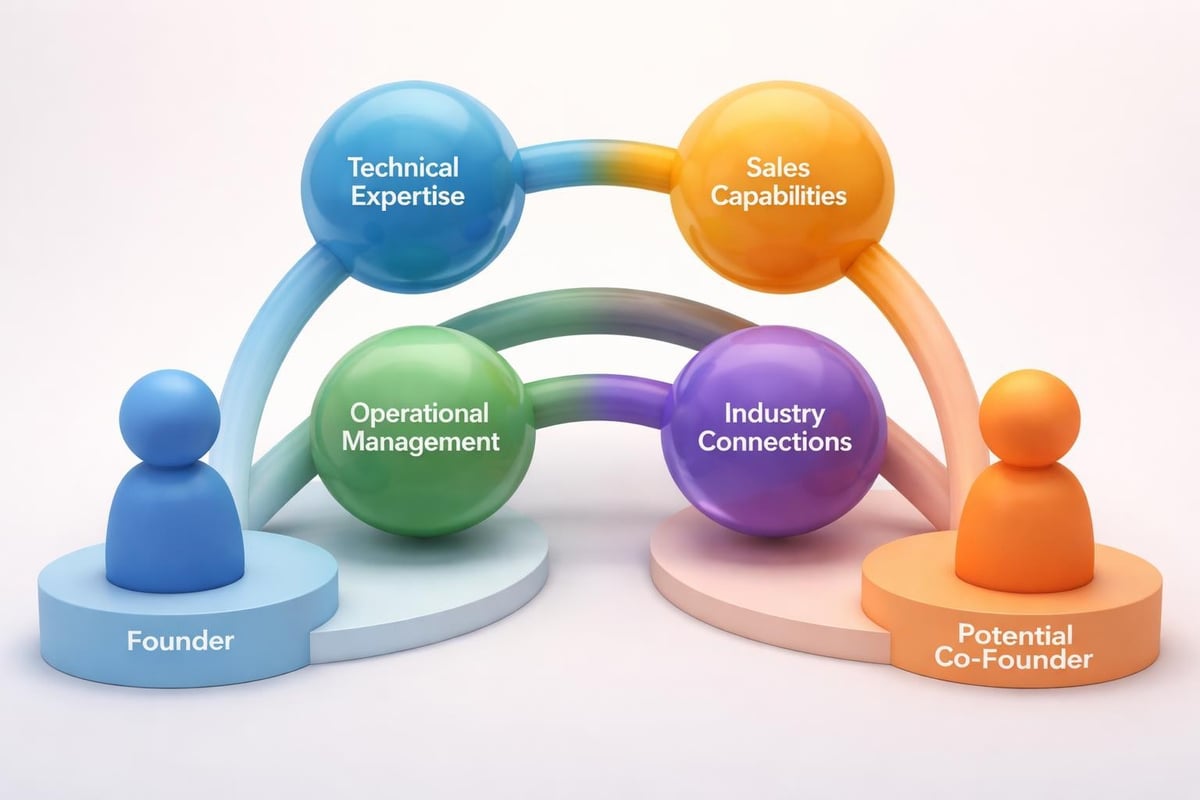
When entrepreneurs consider a hiring co strategy, they often conflate two distinct needs: strategic partnership and operational capacity. A co-founder brings equity, shared risk, and complementary expertise to guide company direction. A sales team member brings specialized skills to execute revenue generation strategies without diluting ownership.
The decision framework requires honest assessment of your business gaps. If you lack industry connections, technical expertise, or operational knowledge that's fundamental to your business model, choosing a co-founder becomes strategic. However, if your primary need centers on execution-specifically closing deals and generating revenue-building a sales team through targeted recruitment often proves more efficient.
Critical Factors in the Hiring Co Evaluation
Before pursuing either path, examine these fundamental questions:
Skillset Gaps: What capabilities are missing from your current leadership?
Equity Considerations: Are you willing to share ownership and decision-making authority?
Timeline Urgency: How quickly do you need to scale revenue operations?
Risk Tolerance: Can you afford the extended timeline of finding the right co-founder?
Business Stage: Are you in ideation, validation, or scaling phase?
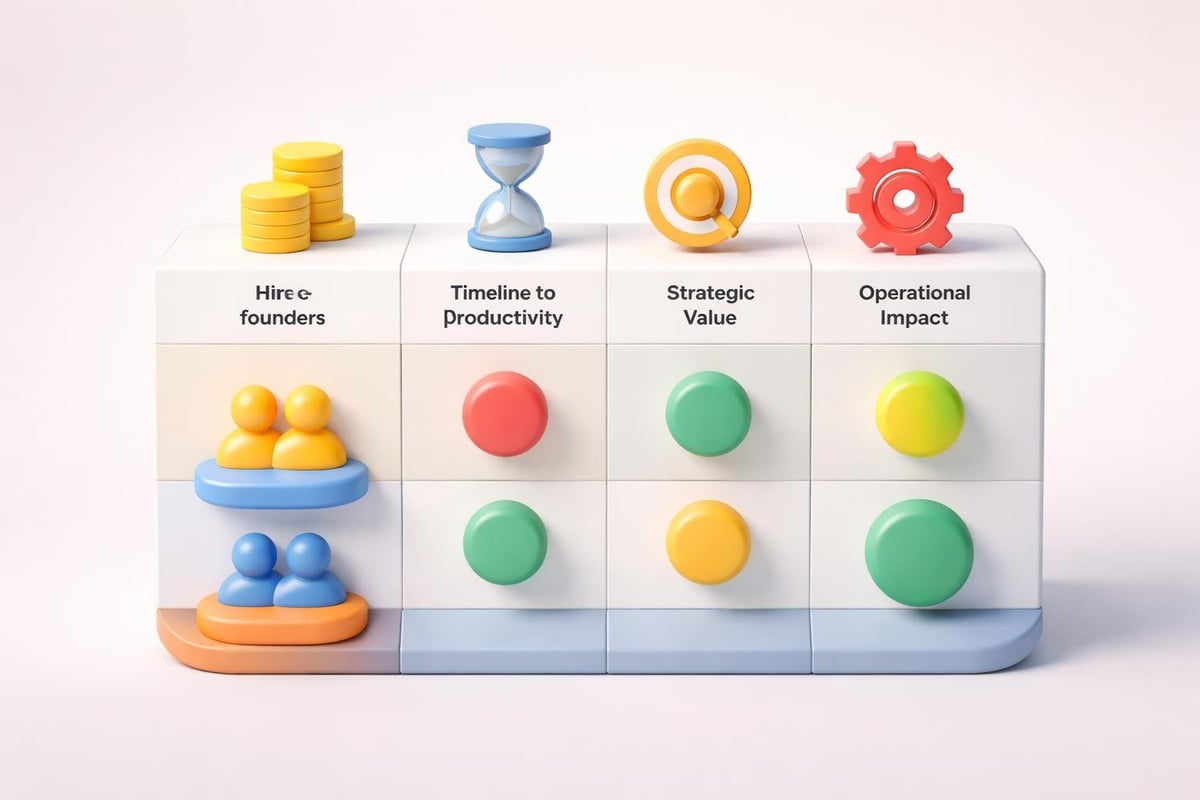
Each factor carries different weight depending on your business model. Marketing agencies, coaching programs, and consultancies selling high-ticket services over Zoom or Google Meet typically benefit more from sales execution capacity than from additional strategic partners. The vetting process for sales professionals focuses on proven performance metrics rather than cultural fit alone.
Legal and Structural Considerations for Hiring Co Partnerships
Formalizing any hiring co relationship demands careful legal planning. Employment law considerations for founders in emerging companies highlight the importance of proper classification and documentation. Whether you're bringing on a co-founder or building a sales team, ambiguity in relationships creates future liability.
Relationship Type | Equity Impact | Legal Documentation | Decision Authority | Time to Productivity |
|---|---|---|---|---|
Co-founder | 20-50% dilution | Founders' agreement, vesting schedule | Shared strategic control | 6-12 months |
Equity sales hire | 0.5-5% dilution | Option grant, employment agreement | Limited to sales function | 2-3 months |
Commission-only sales | No dilution | Independent contractor or employment agreement | None | 1-2 months |
Salaried sales team | No dilution | Employment agreement | None | 1-2 months |
The legal framework for co-founder relationships requires explicit documentation of roles, responsibilities, equity splits, and exit provisions. Key considerations in co-founders' agreements include vesting schedules that protect the business if the partnership dissolves early. Vesting typically occurs over four years with a one-year cliff, ensuring commitment before equity fully transfers.
Documentation Requirements for Different Hiring Co Scenarios
For Co-founder Relationships:
Founders' agreement outlining equity distribution
Vesting schedules with cliff provisions
IP assignment agreements
Buy-sell provisions for departure scenarios
Decision-making and dispute resolution processes
For Sales Team Members:
Clear employment classification
Commission structure documentation
Non-compete and non-solicitation provisions where applicable
Performance metrics and termination conditions
Intellectual property assignment for sales methodologies
High-ticket businesses must recognize that sales professionals operate under different motivations than co-founders. While co-founders seek long-term equity appreciation, sales team members prioritize immediate compensation and career advancement. Understanding this distinction shapes realistic expectations for each hiring co approach.
Finding the Right Co-Founder Match
If strategic partnership addresses your core business needs, recruiting your co-founder requires systematic evaluation beyond chemistry and shared enthusiasm. The romance phase of co-founder relationships inevitably gives way to operational stress, making complementary skills and work styles essential.
Successful hiring co partnerships typically emerge from existing professional relationships rather than speed-dating events. Research from venture capital firms suggests co-founders who've worked together previously have 24% higher success rates in reaching Series A funding compared to those who met specifically to start a company.
The Co-Founder Evaluation Matrix
When assessing potential co-founders, create a structured evaluation across multiple dimensions:
Skills and Expertise:
What unique capabilities does this person bring?
Do their strengths offset your weaknesses?
Can they execute independently in their domain?
Work Style and Values:
How do they handle conflict and disagreement?
What's their risk tolerance and financial runway?
Do they share your vision for company culture and growth trajectory?
Commitment and Availability:
Can they work full-time immediately?
What financial obligations might compromise their focus?
Do they have the resilience for the startup journey?
Finding a co-founder who checks all boxes proves challenging, which explains why many successful companies started with solo founders who later built strong executive teams. For high-ticket service businesses, the need for strategic partnership often matters less than the need for consistent revenue generation.
Building Sales Teams as an Alternative to Hiring Co Founders
For businesses selling high-ticket products and services through digital channels, building a dedicated sales team often delivers faster returns than seeking a co-founder. The hiring decision between partnership and team-building fundamentally depends on your primary constraint.
Strategic constraints favor co-founders. Execution constraints favor sales team expansion. If you've validated your offer, established your pricing, and proven your sales process works, you don't need another strategist. You need closers who can replicate your results at scale.
Advantages of Sales Team Development Over Co-Founder Search
Building a sales team provides several strategic benefits:
Preserved Equity: You maintain ownership and decision-making control
Faster Deployment: Experienced sales professionals contribute immediately
Scalable Structure: You can expand or contract based on market conditions
Specialized Focus: Sales professionals concentrate solely on revenue generation
Performance Management: Clear metrics enable objective evaluation and optimization
The timeline difference proves particularly significant. Finding the right co-founder typically requires six to twelve months of networking, evaluation, and negotiation. Hiring a sales team through specialized recruitment can deliver qualified candidates within weeks.
Structuring Your Sales Team for High-Ticket Success
High-ticket sales environments demand different team structures than transactional models. When your average sale exceeds $2,500 and occurs through consultative selling on video calls, your team composition should reflect this complexity.
Typical High-Ticket Sales Team Structure:
Sales Development Representatives: Qualify inbound leads and book appointments
Account Executives: Conduct discovery calls and close deals
Sales Managers: Coach team members and optimize processes
Sales Operations: Manage CRM, reporting, and enablement tools
Many companies make the hiring co mistake of seeking a "sales co-founder" when they actually need systematic recruitment of sales professionals with proven track records. The distinction matters because co-founder relationships involve shared ownership and strategic authority, while sales team relationships involve performance-based compensation and role clarity.
The Vetting Process for Both Hiring Co Options
Whether you're evaluating a potential co-founder or building a sales team, rigorous vetting separates successful hires from costly mistakes. However, the vetting criteria differ substantially between these hiring co scenarios.
Co-Founder Vetting Criteria
Co-founder considerations before making a commitment include personality assessments, working trials on small projects, and reference checks with previous colleagues. The stakes of a bad co-founder match far exceed those of a poor sales hire because dissolving a founders' agreement involves legal complexity, potential litigation, and reputation damage.
Key vetting steps for potential co-founders:
Work together on a defined project for 30-60 days before formalizing partnership
Conduct mutual reference checks with former employers and colleagues
Discuss worst-case scenarios and exit strategies explicitly
Align on financial expectations and personal runway
Test decision-making styles through real business challenges
Sales Team Vetting Criteria
Sales professional vetting focuses on demonstrated results, industry knowledge, and process adherence. Vetted candidates for high-ticket sales roles should provide verifiable quota attainment records, recorded sales calls demonstrating methodology, and references from previous managers.
Essential Sales Vetting Components:
Vetting Stage | Purpose | Timeline | Success Indicators |
|---|---|---|---|
Resume Review | Verify track record | 1 day | Consistent quota achievement, relevant industry |
Initial Interview | Assess communication skills | 1 hour | Clear articulation, consultative approach |
Role-Play Exercise | Test sales methodology | 30 minutes | Needs-focused discovery, objection handling |
Reference Checks | Confirm performance claims | 2-3 days | Manager verification of quota, work ethic |
Final Interview | Evaluate cultural fit | 1 hour | Alignment with values, team dynamics |
The vetting process for sales professionals should be thorough but efficient. Unlike the extended courtship of hiring co-founders, sales recruitment demands speed balanced with quality assessment. Companies that sell high-ticket services need revenue generation quickly, making prolonged vetting counterproductive.

Risk Mitigation in Hiring Co Relationships
Every hiring co decision carries inherent risks. Co-founder relationships risk irreconcilable differences, unequal contribution, and messy separations. Sales team relationships risk underperformance, cultural mismatch, and turnover disruption. Strategic risk management addresses these concerns proactively.
For co-founder relationships, legal considerations for startup founders emphasize proper documentation from day one. Verbal agreements and handshake deals inevitably create problems when stress, success, or failure changes relationship dynamics. Written founders' agreements with attorney review represent non-negotiable protection.
Managing Sales Team Turnover Risk
Sales team turnover presents a different challenge. According to the Bridge Group's 2025 SaaS Sales Compensation Report, average sales rep tenure decreased to 1.8 years, creating constant recruitment pressure. High-ticket businesses face particular vulnerability because individual salespeople often control significant client relationships.
Smart companies mitigate this risk through several mechanisms:
Process Documentation: Systematize sales methodology so it's not personality-dependent
Team Selling: Involve multiple team members in major accounts
CRM Discipline: Ensure all client interactions are recorded and accessible
Replacement Guarantees: Partner with recruitment firms offering performance guarantees
Competitive Compensation: Structure pay to retain top performers
The replacement policy offered by specialized sales recruitment firms addresses the turnover challenge directly. Rather than treating each hire as a discrete transaction, guaranteed replacement models ensure continuity when inevitable departures occur.
When to Prioritize Co-Founder Search vs. Sales Team Building
The hiring co decision ultimately depends on your company's current stage and primary constraints. Early-stage companies with unproven business models benefit from co-founders who share the validation journey. Growth-stage companies with proven offers benefit from sales team expansion that scales revenue systematically.
Prioritize Co-Founder Search When:
Your business model requires deep expertise you lack
You're in pre-revenue validation phase
Strategic decisions require complementary perspective
You need credibility with investors or partners
Your technical or operational gaps prevent basic execution
Prioritize Sales Team Building When:
You've validated your offer and pricing
Revenue generation is your primary constraint
You have a repeatable sales process
You need to scale quickly to capture market opportunity
Your business operates profitably but needs accelerated growth
For most high-ticket service businesses-marketing agencies, coaching programs, consultancies-the answer skews toward sales team development. These companies already have domain expertise through their founder. They've proven their service delivery. Their constraint isn't strategy; it's execution capacity.
Alternative Approaches to Traditional Hiring Co Models
Beyond the binary choice between hiring co-founders and building internal sales teams, several hybrid models deserve consideration. These approaches balance the benefits of partnership with the efficiency of specialized recruitment.
Fractional Sales Leadership
Rather than hiring co-founders or building teams independently, some companies engage fractional sales executives who provide strategic guidance without equity dilution. These professionals work part-time across multiple clients, bringing expertise from larger organizations to smaller businesses.
Fractional arrangements work particularly well when:
You need sales strategy development but not full-time leadership
Your revenue doesn't yet justify a full-time sales executive salary
You want to test sales leadership before committing to permanent hire
You need interim coverage during leadership transitions
Recruitment Partnership Models
Specialized sales recruitment firms offer another alternative to both hiring co-founders and managing internal recruitment. Services that provide pre-vetted sales talent on demand eliminate the time investment and risk of traditional hiring processes.
These partnerships prove valuable when:
Your core competency is service delivery, not recruitment
You need to scale sales capacity quickly
You want guaranteed performance or replacement options
You lack internal HR infrastructure for effective hiring
For businesses selling products over $2,500 through digital channels, recruitment partnerships remove the hiring co burden entirely. Rather than spending months evaluating candidates or seeking co-founders, you access proven sales professionals who've already demonstrated high-ticket closing capabilities.
Making Your Hiring Co Decision
The hiring co framework-whether seeking a strategic partner or building a sales team-requires brutal honesty about your business needs. Romanticizing the co-founder relationship or underestimating the complexity of sales team management both lead to expensive mistakes.
Start with clear-eyed assessment:
What does your business need most right now? Strategic direction or execution capacity? If you know what to do but lack people to do it, you don't need a co-founder. You need sellers.
What's your timeline for impact? Co-founder searches require patience. Sales team building through specialized recruitment delivers results within weeks. Your runway and market opportunity determine which timeline you can afford.
What are you willing to give up? Co-founders require equity and authority. Sales teams require compensation and management. Neither is free. Calculate the true cost of each approach against your expected returns.
What does success look like in 12 months? If success means validated business model with strategic positioning, a co-founder might accelerate that journey. If success means $500,000 in new revenue, sales team expansion offers the direct path.
For high-ticket businesses where the offer is proven and the sales process works, the answer typically points toward ready-to-hire sales professionals rather than co-founder searches. The strategic guidance a co-founder provides matters less than the consistent revenue generation that scales your business.
Understanding the hiring co landscape in 2026 means recognizing that traditional models aren't your only options. Strategic recruitment partnerships, fractional leadership, and guaranteed replacement programs offer compelling alternatives to both traditional co-founder searches and the complexity of building sales teams independently. Your choice should align with your specific business constraints, growth timeline, and willingness to share either equity or revenue.
Building the right team structure-whether through co-founder partnerships or dedicated sales professionals-determines your ability to scale revenue and capture market opportunity. For high-ticket businesses selling over digital channels, execution capacity typically matters more than additional strategic partnership, making specialized sales recruitment the faster path to growth. Sales Match eliminates the complexity of building sales teams by providing pre-vetted, high-ticket sales professionals who deliver results immediately, backed by performance guarantees that ensure you never worry about turnover or underperformance again.